Gattaca
"Your DNA is a resume you can't rewrite."
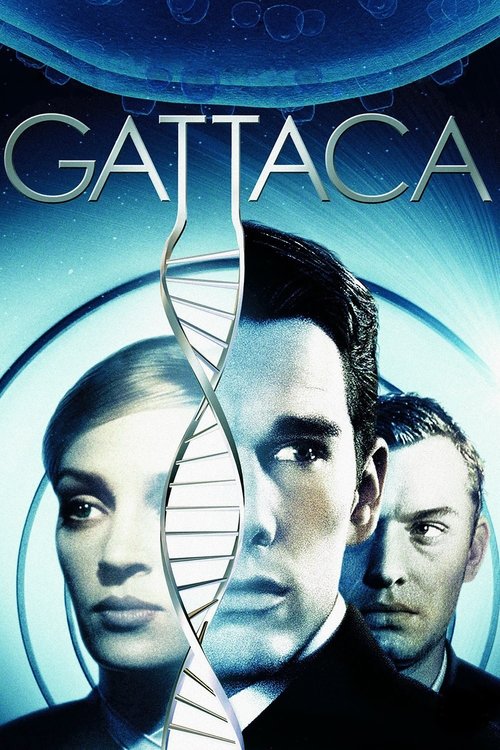
The 1990s were weirdly obsessed with the end of the world, but while every other blockbuster was busy blowing up the White House or sending Bruce Willis to a comet, Andrew Niccol was worried about a vacuum cleaner. Specifically, the one used to suck up every stray eyelash and skin flake from an office workstation. Gattaca didn't arrive with a bang in 1997; it arrived with a quiet, sterile shiver. It was a box office dud that looked at the looming millennium and didn't see digital monsters, but rather a world where your entire destiny is decided by a drop of blood before you’ve even left the womb.
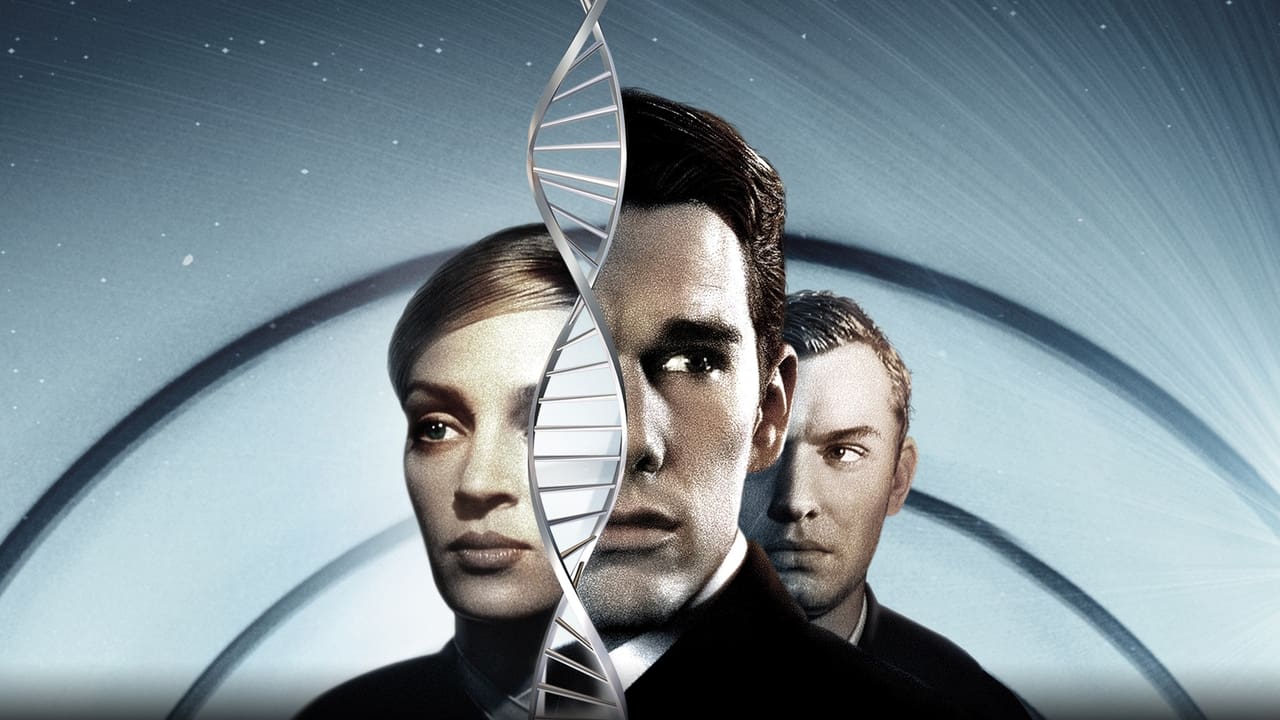
I rewatched this last night while sitting on a beanbag chair that has lost about 40% of its structural integrity, and the contrast between my sagging furniture and the film’s geometric perfection was almost physically painful. This is a movie where everyone stands perfectly straight, the suits are perpetually pressed, and the architecture looks like it was designed by a god who hates circles.
The Retro-Future Aesthetic
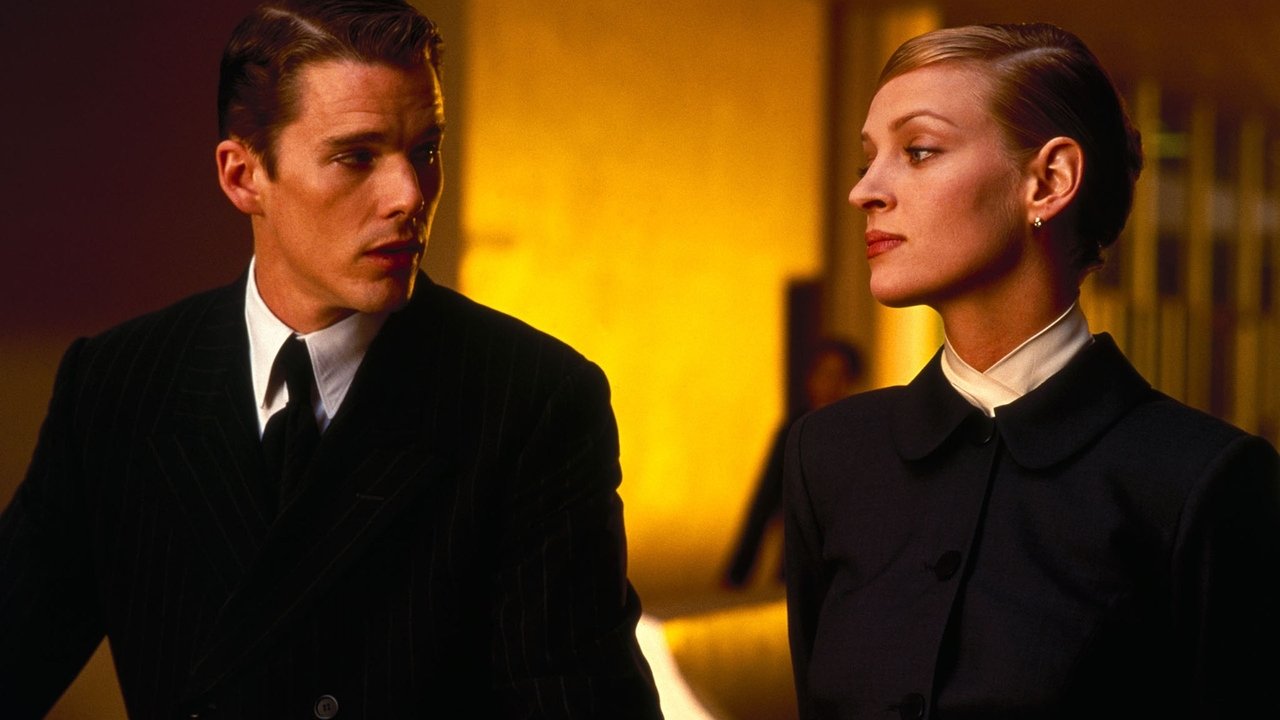
What strikes me most about Gattaca decades later is how it avoided the "dated CGI" trap of the late 90s by simply refusing to use it. While The Phantom Menace was gearing up to drown us in pixels, Andrew Niccol and cinematographer Slawomir Idziak went the other way. They bathed everything in a jaundiced, golden-green hue and filmed in locations like the Marin County Civic Center. The result is "Retro-Futurism"—a future that looks like a high-end 1950s fashion magazine.
Ethan Hawke plays Vincent Freeman, a "God-child" (born the old-fashioned way) in a world of "Valids" (genetically engineered super-people). Vincent’s heart is weak, his lifespan is estimated at 30 years, and his dream is to go to the stars. To do it, he has to become a "borrowed ladder," using the genetic identity of Jerome Eugene Morrow, played by a young, searingly arrogant Jude Law.
The tension doesn't come from explosions. It comes from the threat of a stray eyebrow hair falling onto a keyboard. It’s a thriller where the "bomb" is a sequence of DNA. The romantic subplot with Uma Thurman is easily the least interesting part of the movie, serving mostly as a way to show that even "perfect" people have flaws, but the chemistry between Ethan Hawke and Jude Law is where the real soul lives. Law, paralyzed after a suicide attempt, provides the blood and urine; Hawke provides the sweat and ambition.
Why the Cult Came Calling

So, why did a movie that cost $36 million and made back barely a third of that become a staple of high school biology classes and sci-fi Top 10 lists? It’s because Gattaca feels more like a prophecy than a fantasy. In the era of CRISPR and 23andMe, the idea of "genoism"—discrimination based on your genetic code—doesn't feel like "the year 20XX." It feels like next Tuesday.
The film has developed a massive following because it’s one of the few sci-fi stories that prioritizes the human spirit over the gadgetry. It’s a "Dark Sci-Fi" entry that isn't about robots taking over, but about us surrendering our humanity to a spreadsheet.
Stuff You Didn't Notice:
The name "Gattaca" is composed entirely of the letters G, A, T, and C, which represent Guanine, Adenine, Thymine, and Cytosine—the four DNA nitrogen bases. During production, the marketing team ran a fake ad in The New York Times for a company offering to genetically engineer your children. Thousands of people actually called the number, wanting to place orders. The "futuristic" cars are actually modified 1960s classics, like the Citroën DS and the Studebaker Avanti. They used them because their designs were so idiosyncratic they felt timeless. Jude Law’s character is named "Eugene," which comes from the Greek for "well-born"—a literal nod to eugenics. The spiral staircase in Jerome’s apartment is a deliberate visual double-helix, representing the DNA structure that defines his life. The iconic "three-fingered pianist" scene was achieved by digitally blending the hands of a real pianist with the actor's, but the music itself (a modified Schubert piece) was specifically arranged to be impossible for a ten-fingered person to play.
The Weight of Perfection
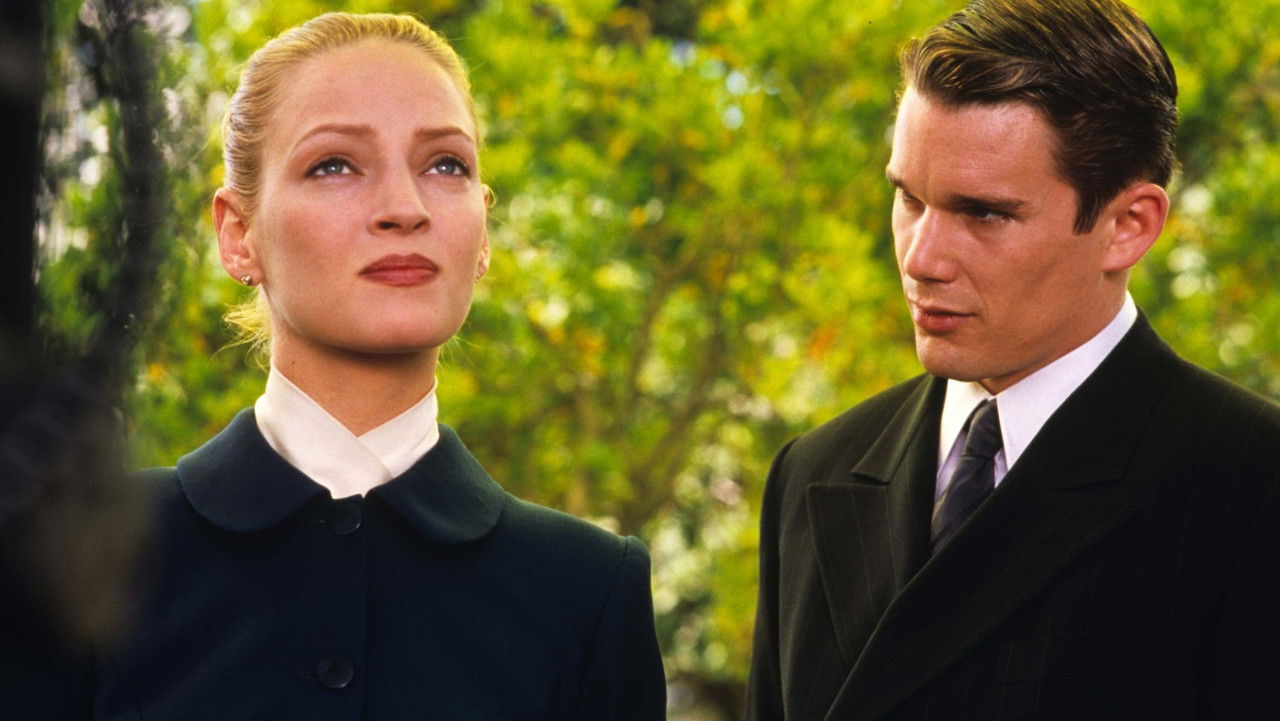
The score by Michael Nyman is what really seals the deal for me. It’s mournful, repetitive, and deeply moving. It carries the weight of Vincent’s exhaustion—the literal scrubbing of his skin every morning to remove any trace of his "in-valid" self. There’s a scene where Vincent and his genetically superior brother, Anton (Loren Dean), have a swimming match in the dark ocean. When Anton asks how Vincent is winning, Vincent says, "I never saved anything for the swim back."
That line still hits like a freight train. It’s the ultimate middle finger to a world that tells you your ceiling is predetermined by your biology. Alan Arkin pops up as a detective, adding a bit of noir grit to the proceedings, but the movie belongs to the two Jeromes. One who has everything and wants to die, and one who has nothing and refuses to stay on the ground.
Looking back, Gattaca is the rare 90s film that hasn't aged a day. Its "future" was never meant to be realistic; it was meant to be a mood. It captures that post-9/11 anxiety before 9/11 even happened—the fear of being watched, categorized, and found wanting by a system that doesn't care about your heart.
Gattaca is a masterclass in doing more with less. It’s a thriller that trades gunfights for skin scrapings and somehow makes the latter more terrifying. It’s the kind of film that leaves you feeling a bit cold, a bit watched, but strangely hopeful. If you haven't seen it, watch it for Jude Law's career-defining bitterness alone. Just make sure you vacuum the floor first.
Keep Exploring...
-

Lord of War
2005
-
Twelve Monkeys
1995
-
The Thirteenth Floor
1999
-
Predestination
2014
-
Lost Highway
1997
-

Memento
2000
-
Equilibrium
2002
-
Ghost
1990
-
Vanilla Sky
2001
-
Limitless
2011
-
The Maze Runner
2014
-

Starship Troopers
1997
-

The Game
1997
-
Sleepy Hollow
1999
-

28 Days Later
2002
-
Pandorum
2009
-

In Time
2011
-
Source Code
2011
-
Identity
2003
-
The Butterfly Effect
2004