Geri's Game
"Winning isn't everything, especially when you’re playing yourself."
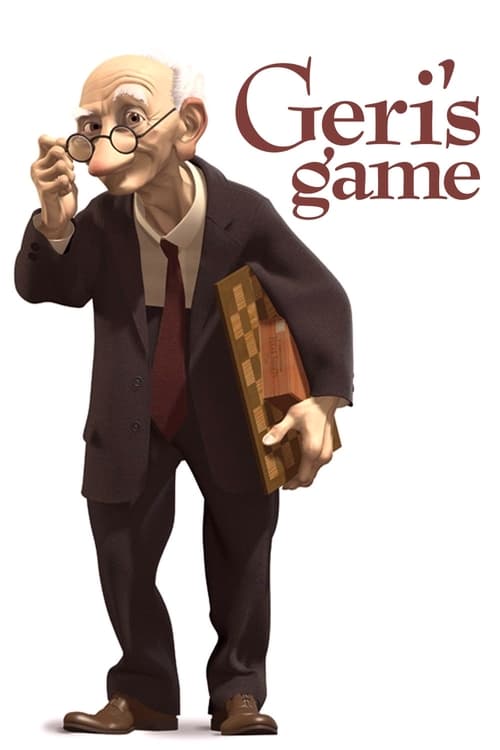
I remember the first time I saw that twitchy, wrinkled face. It wasn't in a theater, actually. I was sitting on my floor, leaning against a beanbag chair that had lost most of its structural integrity, clutching a lukewarm Capri Sun while a massive, boxy CRT television hummed with static. I’d popped in a VHS copy of A Bug’s Life, and before the main event, this four-minute miracle flickered to life. At the time, I didn't care about "subdivision surfaces" or "cloth simulation algorithms." I just thought it was hilarious that an old man was cheating at a game where he was his own opponent.
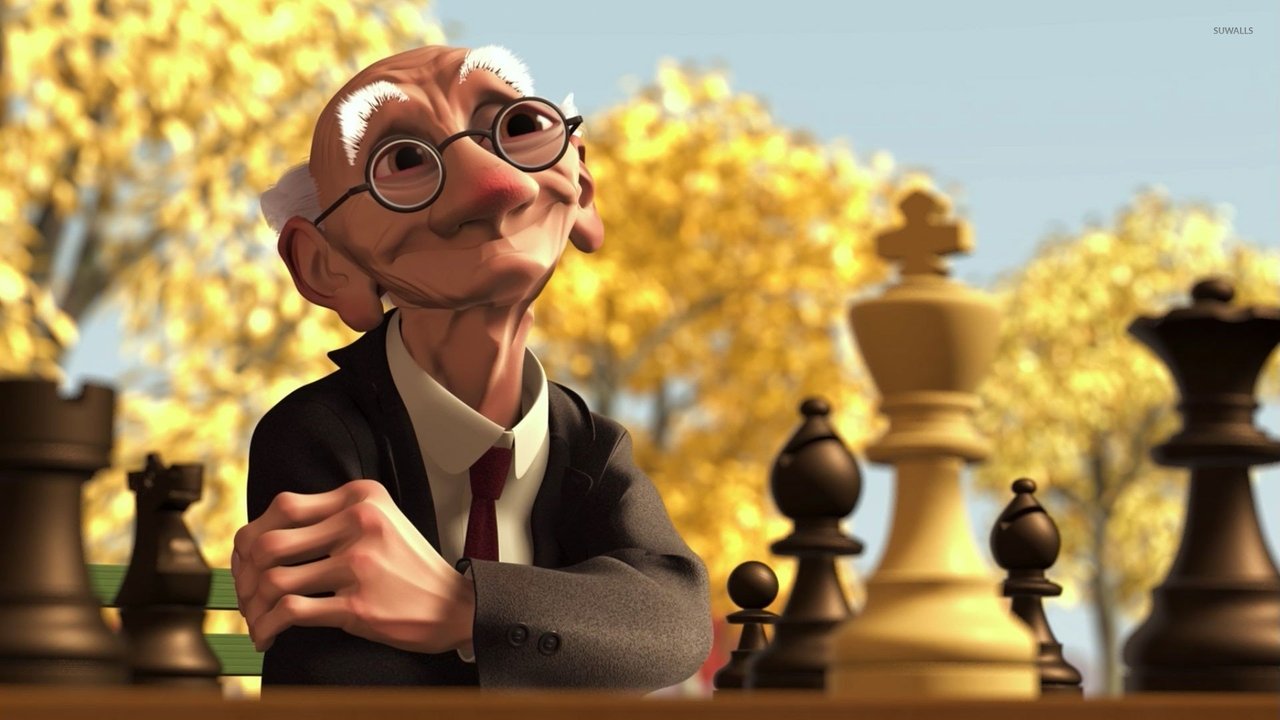
Looking back, Geri’s Game is more than just a charming snack of a film; it’s the moment Pixar decided to stop hiding behind plastic toys and fuzzy monsters and finally look us in the eye.
The Ghost in the Machine
In the mid-90s, humans were the "Final Boss" of CGI. If you revisit the original Toy Story (1995), the humans—specifically Andy and that terrifying neighbor kid, Sid—look like they were forged in a factory that specializes in haunted porcelain dolls. Their skin is too smooth, their movements are jerky, and their eyes have the vacant stare of someone who’s seen the heat death of the universe.
Enter Jan Pinkava, the director who looked at those limitations and said, "Let's give a guy a thousand wrinkles." Geri’s Game was Pixar’s R&D project disguised as a comedy. They needed to figure out how skin moved over bone and how a jacket should bunch up when an elbow hits a table. The result was a character who felt more alive than any digital human before him, mostly because he looked like he’d actually survived eighty years of autumns and bad knees.
I watched this again recently on a tablet while my neighbor was leaf-blowing his driveway at 7:00 AM, and even on a small screen, the texture of Geri’s nose is still a triumph. It’s got that slightly bulbous, weathered look that makes you want to ask him for a Werther's Original.
A Masterclass in One-Man Slapstick
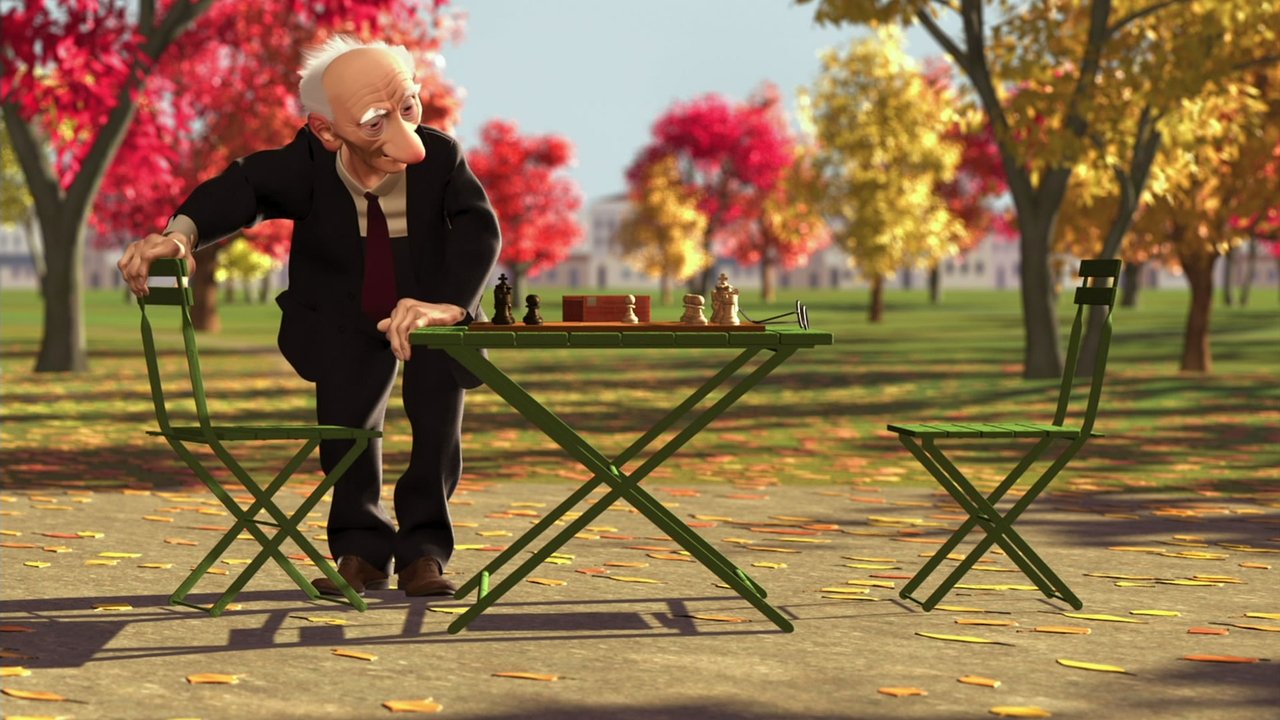
The brilliance of the film lies in its rhythm. We open on a quiet park—vibrant oranges and yellows that feel like a Bob Ross painting come to life—and Geri setting up his chess board. For the first minute, it’s a slow-burn character study. Geri moves, then walks to the other side of the table, puts on his glasses, and becomes "The Opponent."
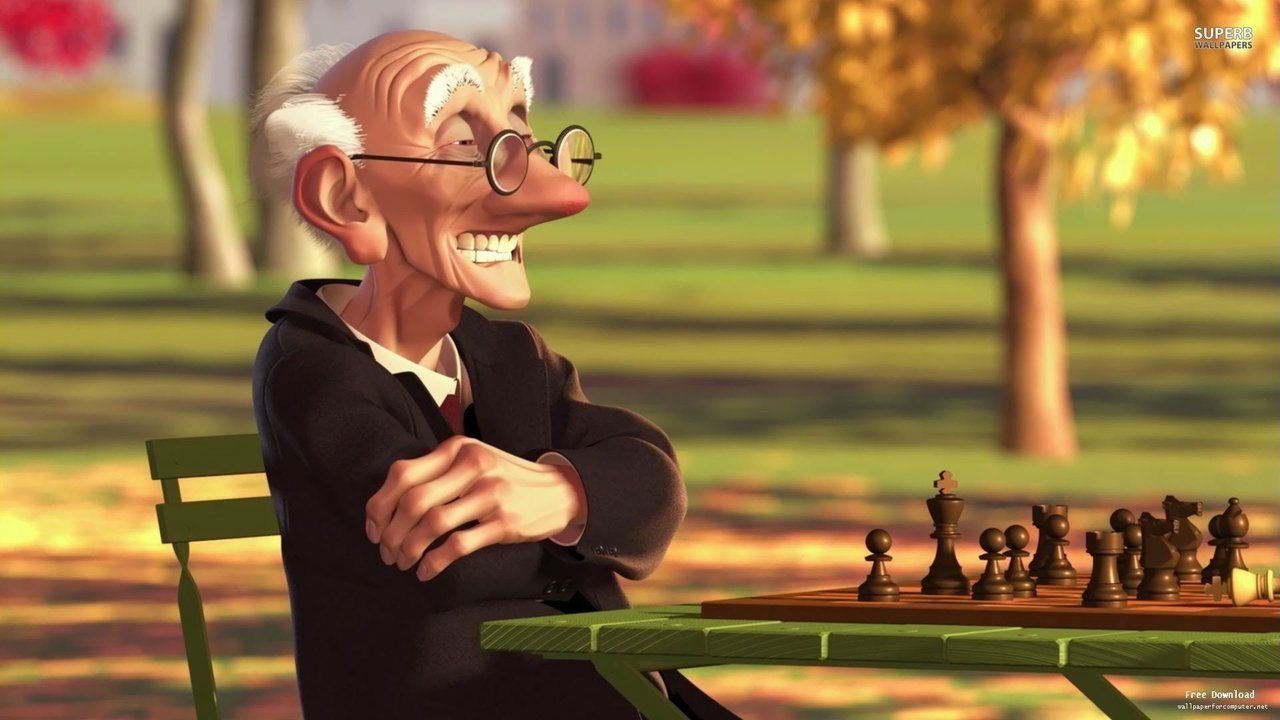
But then the editing kicks into overdrive. The cuts get faster. The "two" personalities become distinct through nothing but posture and facial expressions. The "Aggressive Geri" is a cackling menace; the "Passive Geri" is a fumbling, panicked mess. It’s a silent movie in the vein of Buster Keaton, relying entirely on the physical performance captured by the animators and the subtle vocal grunts of Bob Peterson.
Peterson, who would later go on to voice the iconic Dug in Up and Roz in Monsters, Inc., gives Geri a soul through nothing but wheezes and chirps. There’s a specific "He-heh!" that Aggressive Geri lets out when he takes a piece that is pure cinematic serotonin. It captures that specific brand of "grandpa sass" that everyone recognizes but rarely sees translated to animation.
The Legacy of the Denture Swap
What’s truly fascinating about Geri’s Game is how it signaled the end of the "Indie Pixar" era and the beginning of the "Titan" era. This won the Academy Award for Best Animated Short, and it felt like a victory lap for the technology. But more importantly, it established the "Short Film" as a staple of the Pixar experience. It turned the theater-going experience into a two-course meal.
There’s a bit of trivia that fans of the era often swap like trading cards: Geri didn't just retire after his big win. If you look closely at Toy Story 2 (1999), the "Cleaner" who comes to fix Woody—the man with the various drawers of eyes and the steady hand—is actually the Geri model repurposed for a cameo. It’s a bit of digital DNA that connects the Pixar universe, a reminder that Pixar never throws anything away, especially a good character model.
The comedy here is timeless because it’s rooted in a universal truth: we are often our own worst enemies, but we can also be our own best friends if we know how to cheat the system. The moment Geri fakes a heart attack to distract his "opponent" is one of the greatest comedic beats in the studio's history. It’s cynical, it’s clever, and it’s deeply, deeply human.
In an age where we’re inundated with two-hour sequels and "extended cinematic universes," there is something profoundly refreshing about a four-minute story that knows exactly when to quit. Geri’s Game represents a pivotal bridge between the clunky digital experiments of the early 90s and the emotional powerhouses of the 2000s. It’s a tiny, perfect piece of clockwork that still manages to pull a genuine laugh out of me twenty-seven years later. If you have five minutes to spare before your coffee gets cold, there isn't a better way to spend them than watching an old man play a high-stakes game of "Gotcha!" with his own reflection.
Keep Exploring...
-
A Goofy Movie
1995
-

For the Birds
2000
-
A Close Shave
1996
-
DuckTales: The Movie - Treasure of the Lost Lamp
1990
-
Lilo & Stitch 2: Stitch Has a Glitch
2005
-
Presto
2008
-
Partly Cloudy
2009
-
Day & Night
2010
-
Winnie the Pooh
2011
-

Tangled Ever After
2012
-
Toy Story of Terror!
2013
-
Feast
2014
-
The Boxtrolls
2014
-
Toy Story That Time Forgot
2014
-
Toy Story
1995
-
Hercules
1997
-

A Bug's Life
1998
-

Toy Story 2
1999
-
Chicken Run
2000
-

The Emperor's New Groove
2000