Hard Eight
"Class is in session, but the house always wins."
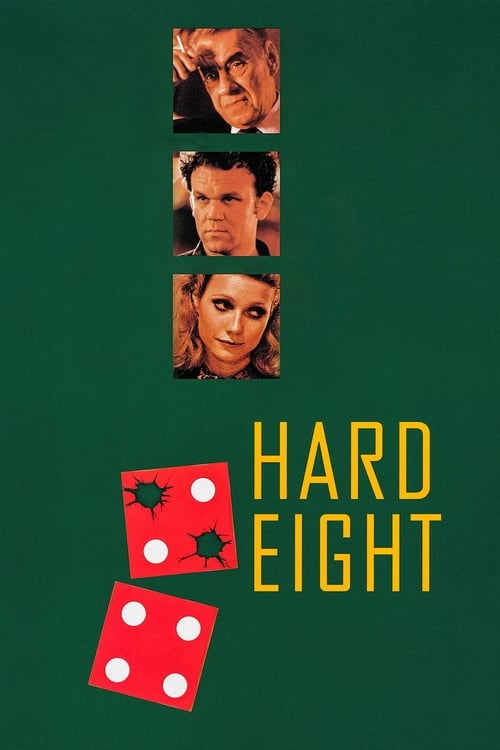
There is a specific kind of silence that only exists at 6:00 AM outside a roadside diner—a quiet so heavy you can almost hear the neon hum of the "Open" sign. That is exactly where we meet Sydney, a man who looks like he was born wearing a tailored charcoal suit and a weary expression. He finds John, a younger man looking like a kicked dog, sitting on the curb. Sydney doesn’t offer him a sermon; he offers him a cigarette and a lesson on how to turn fifty bucks into a room for the night.
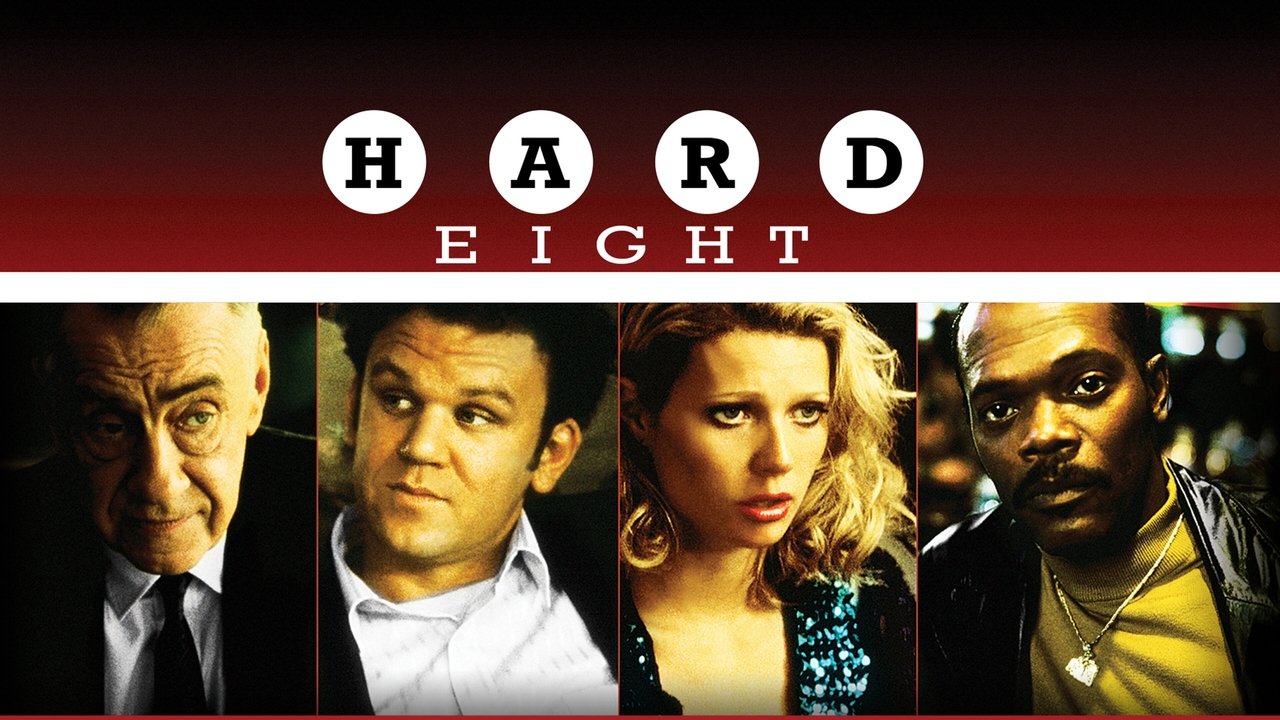
This isn't your typical high-stakes casino caper. Hard Eight is a 1990s indie masterclass in restraint, serving as the debut feature for a young Paul Thomas Anderson. Before he was the guy giving us oil-prospecting epics or psychedelic detective stories, he was a kid from the Valley with a short film called Cigarettes & Coffee and enough audacity to tell Philip Baker Hall exactly how to sit in a chair.
The Dignity of the Grifter
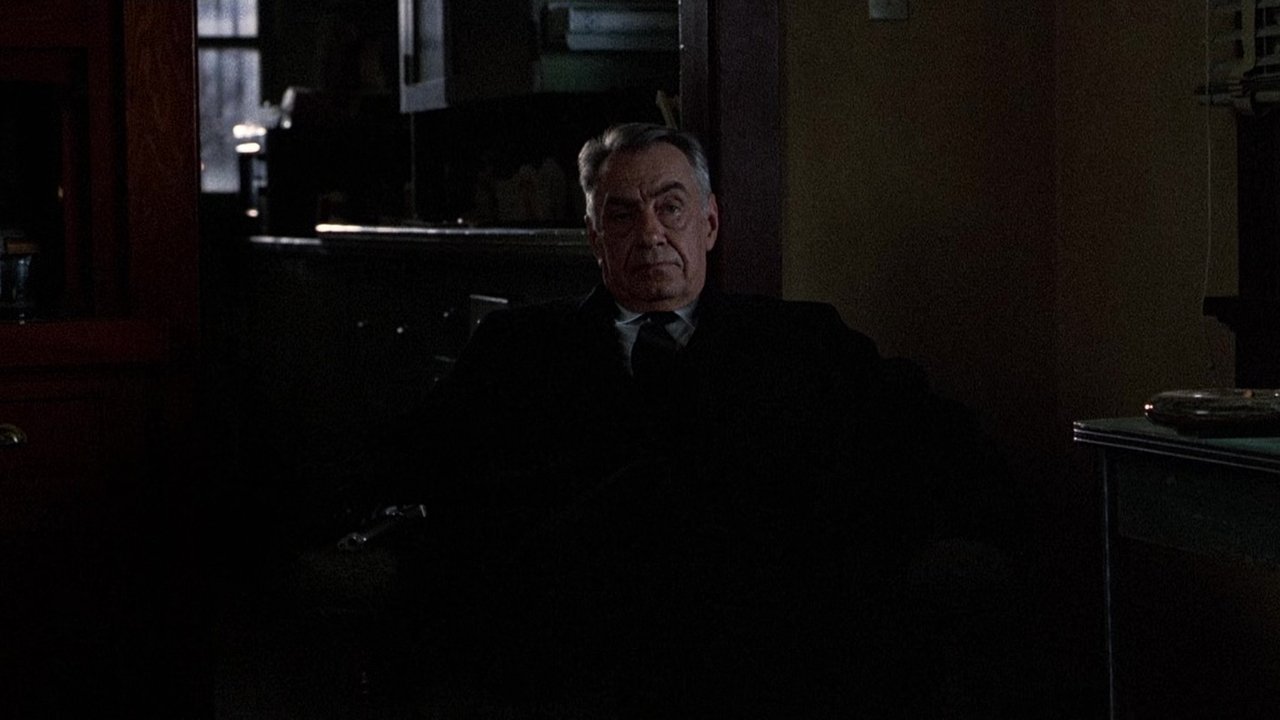
The film is built entirely on the stoic shoulders of Philip Baker Hall. Most people recognize him as "that guy from that thing" (usually the library investigator from Seinfeld), but here, he is a revelation. As Sydney, he carries an aura of old-school Vegas dignity that feels completely alien to the tracksuit-and-fanny-pack crowd. He’s a professional in a world of amateurs.
When he takes John (John C. Reilly) under his wing, the relationship feels less like a partnership and more like a rescue mission for a stray animal. Reilly is the ultimate human golden retriever here, playing John with a mix of dim-witted sincerity and desperate loyalty. Watching them navigate the Reno floor—not the glitzy Vegas Strip, but the gritty, carpet-stained reality of Northern Nevada—is where the movie finds its groove. I watched this most recently while nursing a lukewarm ginger ale that had gone completely flat, and honestly, the lack of carbonation perfectly matched the film's dry, unhurried atmosphere.
The Indie Battle for "Sydney"
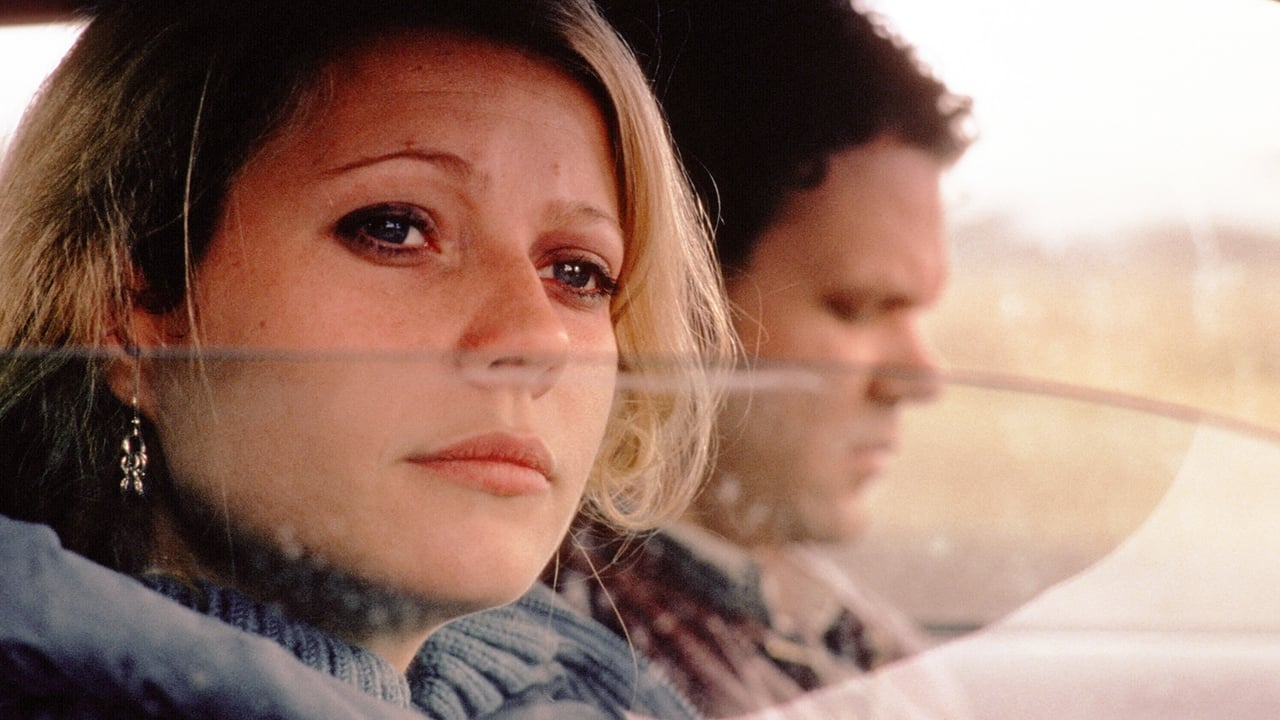
Part of the charm of Hard Eight is knowing it almost didn’t exist in this form. In the mid-90s, the indie film renaissance was in full swing, but it was still a playground of "suits vs. visionaries." The production company, Rysher Entertainment, hated Anderson’s cut. They thought it was too slow, too quiet, and they loathed the original title, Sydney. They wanted a generic thriller. They actually took the film away from him, re-editing it into something unrecognizable.
In a move that feels like something out of a heist movie itself, Anderson managed to get his original print back (some stories say he "borrowed" the negatives) and submitted it to the Cannes Film Festival. He eventually raised the $200,000 needed to finish the post-production himself with the help of his loyal cast. It’s a testament to the "Sundance Generation" hustle—a time when a director’s vision could still triumph over a corporate committee’s desire for a "marketable" product. The result is a film that breathes. It doesn't rush to a climax; it lingers in the smoke-filled rooms and the uncomfortable silences of hotel hallways.
A Masterclass in the "Almost" Scene
The supporting cast is a 90s dream team. Gwyneth Paltrow delivers a raw, shaky performance as Clementine, a cocktail waitress who doubles as a sex worker. She’s not "the girl with the heart of gold" cliché; she’s a person who is profoundly bad at making decisions, and your heart breaks for her even as she’s dragging the plot into a ditch.

Then there’s Samuel L. Jackson as Jimmy. Released right in the wake of Pulp Fiction, Jackson brings a different kind of menace here—Jimmy is the most punchable character Samuel L. Jackson ever played, a vulgar small-timer who thinks he’s a big fish in a very small pond. His confrontation with Sydney in the second half of the film is a masterclass in tension, highlighting the generational gap between the "silent professional" and the "loudmouth punk."
And we have to talk about the Philip Seymour Hoffman cameo. He’s on screen for maybe three minutes as a "Young Craps Player," but he absolutely hijacks the movie. Wearing an absurd mullet and a loud shirt, he barks at Sydney, calling him "old man" and "sir" in the same breath. It’s the first real spark of the legendary Anderson-Hoffman partnership, and it’s pure lightning in a bottle. Hoffman’s "big winner" energy is so obnoxious you can practically smell the cheap cologne through the screen.
Hard Eight is a reminder of what made 90s cinema so exciting—the focus on character over spectacle. It doesn't rely on CGI or twist-heavy gimmicks. Instead, it relies on Robert Elswit’s moody, naturalistic cinematography and a script that respects the audience’s intelligence. It’s a small, perfect noir that proves you don't need a massive budget to tell a story that lingers. If you've only seen PTA's later, grander works like There Will Be Blood, going back to this is like finding an artist's first sketchbook and realizing they were a genius from the very first stroke.
The film ends not with a bang, but with a quiet realization about what we owe the people we've "saved." It’s a melancholic, beautiful debut that holds up better than almost any other indie darling from its year. Pull up a chair, order a coffee, and let Sydney show you how the game is played.

Keep Exploring...
-
Boogie Nights
1997
-
Magnolia
1999
-
Punch-Drunk Love
2002
-
The Master
2012
-
Bad Lieutenant
1992
-
Kids
1995
-
The Basketball Diaries
1995
-
Bound
1996
-
Inherent Vice
2014
-
Ghost Dog: The Way of the Samurai
1999
-
The Talented Mr. Ripley
1999
-

The Hole
2001
-
Irreversible
2002
-
Elephant
2003
-
Felon
2008
-

Blood and Bone
2009
-

Fanboys
2009
-
Undisputed III: Redemption
2010
-

Robot & Frank
2012
-
Patriot Games
1992