L.A. Confidential
"Off the record, on the QT, and very hush-hush."
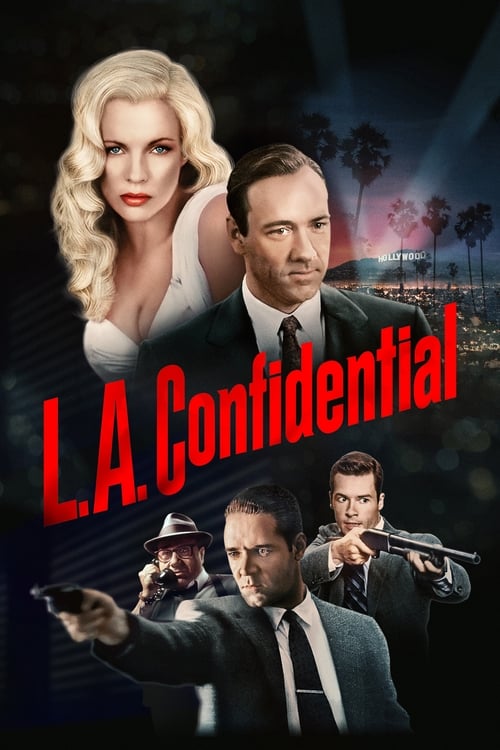
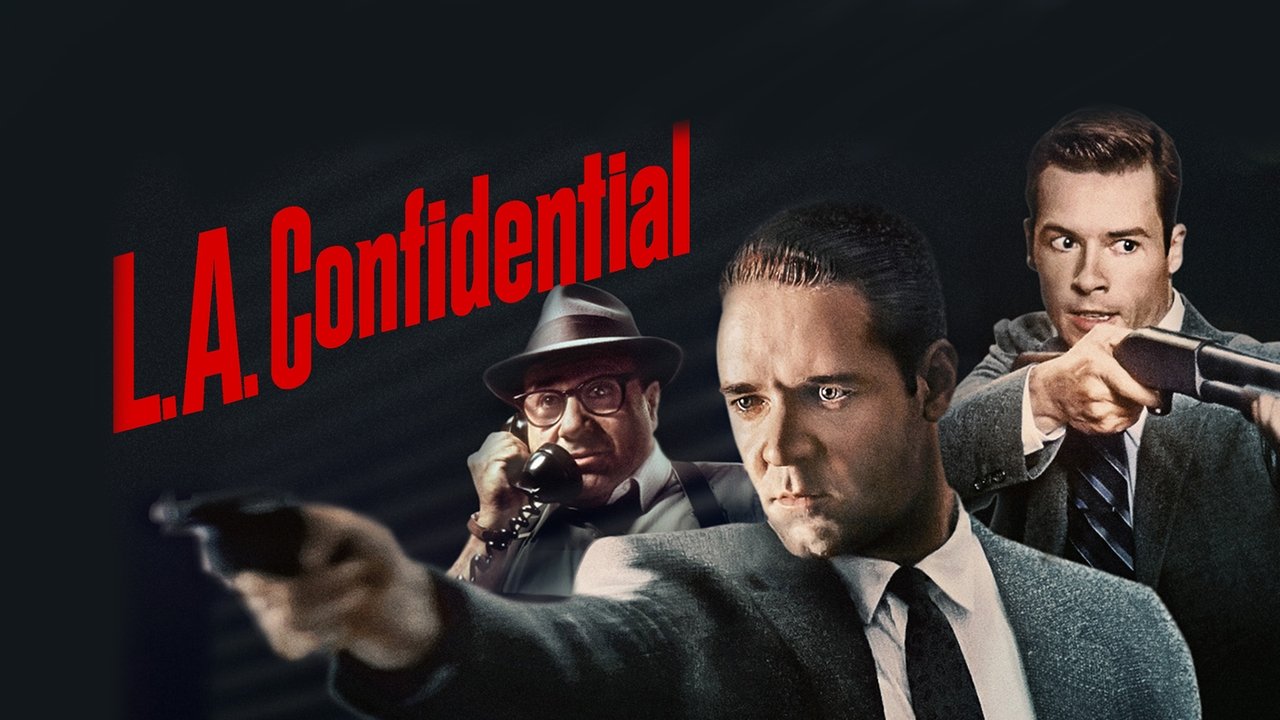
In the late 90s, Hollywood was obsessed with the future. We had aliens in Men in Black, dinosaurs in The Lost World, and the impending doom of whatever a "Y2K bug" was supposed to be. Then, seemingly out of nowhere, Curtis Hanson dropped a film that smelled like stale cigarettes, cheap perfume, and orange blossoms. L.A. Confidential didn’t just revisit the film noir; it dragged the genre out into the California sun, kicked the teeth out of its romanticized tropes, and rebuilt it into something leaner and much more dangerous.
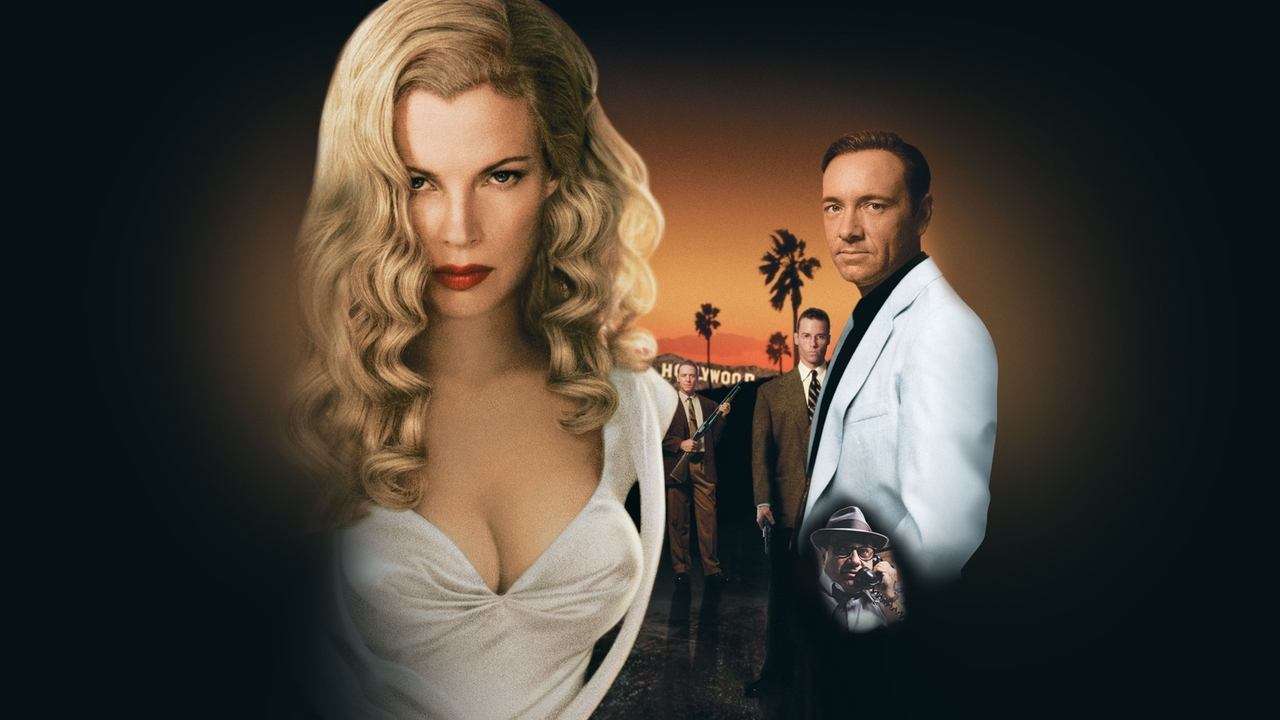
I’ll admit, I’m a sucker for a well-paced procedural, but this is something else entirely. The old snapper-style DVD case I own still has a coffee ring on the cover from a 2004 viewing session, which feels strangely appropriate for a noir this grimy. Watching it again recently, I realized that while the tech of 1997 has aged—shoutout to those bulky CRT monitors and pagers—the craftsmanship of this film remains sharp enough to draw blood.
The Three-Headed Beast of Justice
The brilliance of the script, co-written by Brian Helgeland and Curtis Hanson, lies in how it forces three diametrically opposed personalities into the same orbit. You have Guy Pearce as Ed Exley, the "shot-caller" who is so straight-edged he makes a ruler look crooked. Then there’s Russell Crowe as Bud White, a man who functions as a human wrecking ball with a savior complex for women in distress. Finally, Kevin Spacey rounds it out as Jack Vincennes, a celebrity cop who’s more concerned with his wardrobe and his side hustle on the TV show Badge of Honor than actually solving crimes.
At the time, casting two relatively unknown Australians—Russell Crowe and Guy Pearce—in a major American period piece was the kind of ballsy move that modern studios are too cowardly to attempt. Crowe is a revelation here; he carries a quiet, simmering brutality that feels like a coiled spring. When he finally snaps, you don't just see the violence—you feel the air leave the room. Pearce, conversely, plays Exley with a brittle ambition that makes you want to slap him and root for him simultaneously.
Their chemistry is a jagged, uncomfortable thing. There’s a scene in an interrogation room where they finally stop barking and start listening, and you can see the moment the film shifts from a "cop movie" into a genuine epic. It’s about the soul of a city that was sold for a postcard.
Postcards from the Gutter
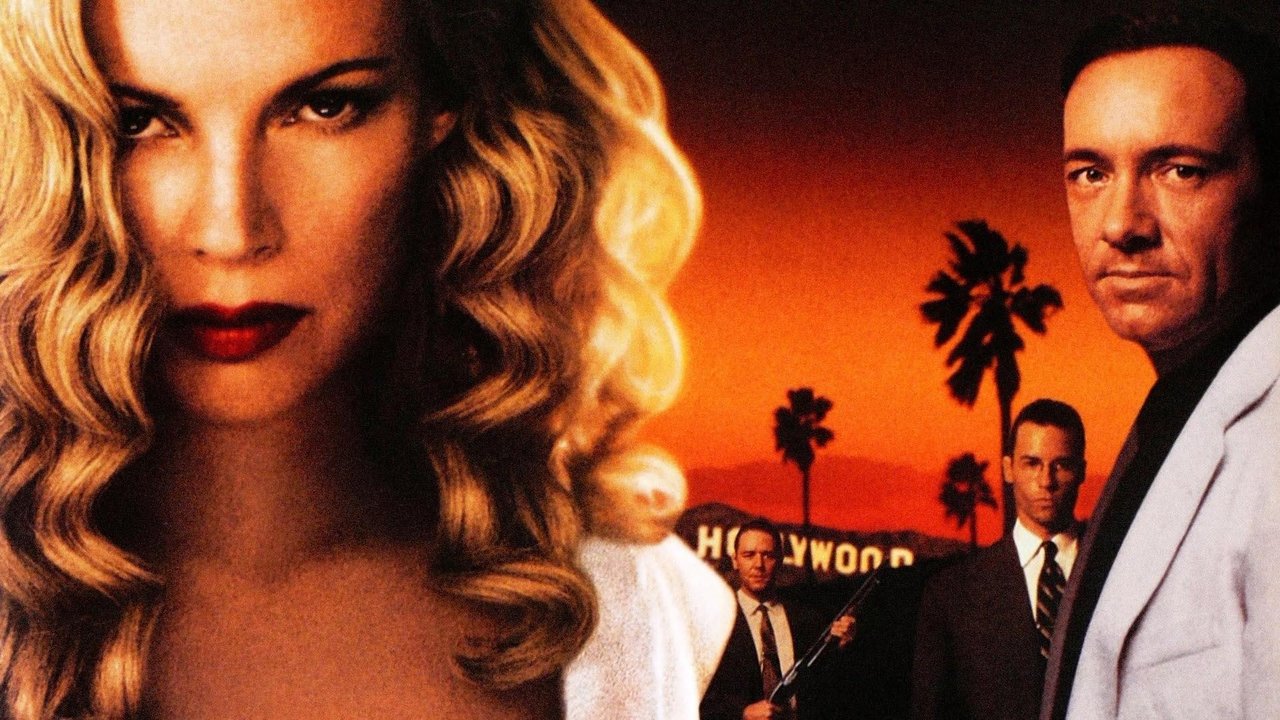
Visually, this film is a knockout without being showy. Dante Spinotti, the cinematographer who also gave us the cool blues of Heat, opts for a palette that feels sun-drenched but somehow suffocating. Everything in this version of 1950s Los Angeles looks beautiful from a distance—the palm trees, the sleek cars, the blonde bombshells—but the closer the camera gets, the more you see the rot.
The production design doesn’t lean into the neon-soaked "neonoir" clichés. Instead, it feels lived-in. When we see the "Nite Owl" diner, the site of the central massacre, it’s a sterile, cold environment that makes the ensuing violence feel shockingly clinical. The film earned a staggering nine Oscar nominations, including a Best Supporting Actress win for Kim Basinger. While some critics at the time felt she was a "standard" femme fatale, I think her Lynn Bracken is the only character with a shred of honest dignity in the whole two-hour-and-eighteen-minute runtime. She’s playing a woman who looks like Lana Turner but acts like a weary accountant, and that subversion is exactly why it works.
The Prestige of the Grime

It’s impossible to talk about L.A. Confidential without mentioning its "Best Picture" heartbreak. It famously lost to Titanic at the 70th Academy Awards. Now, I like James Cameron’s boat movie as much as the next guy, but history has shown that the Nite Owl case had way more staying power than the iceberg. This was the peak of the 90s prestige drama—a film that didn’t rely on CGI spectacles but on a labyrinthine plot that actually expected the audience to pay attention.
The trivia behind the scenes is just as fascinating as the plot. Curtis Hanson actually pitched the film to the studio by showing them a series of vintage postcards of 1950s L.A., emphasizing that he wanted to capture the "illusion" of the city. He also famously forbade Crowe and Pearce from hanging out together during the shoot to keep their on-screen tension authentic. It worked. There’s a scene where James Cromwell, playing the paternal but terrifying Captain Dudley Smith, interacts with the leads, and you can feel the hierarchies of power shifting in real-time.
Looking back, the film captures that mid-90s sweet spot where the "indie" spirit of the Sundance generation (like Tarantino’s influence on dialogue) met the high-budget polish of the studio system. It’s a movie that rewards repeat viewings because the clues are all there, hidden in plain sight or buried under Danny DeVito’s deliciously sleazy narration as Sid Hudgens.
L.A. Confidential is a reminder of what happens when every department—acting, writing, lighting, and score—is firing at a Tier-1 level. It’s a dark, intense ride that manages to be both a cynical critique of the American Dream and a thrilling mystery. If you haven't seen it in a decade, it’s time to head back to Victory City. Just watch your back.
Keep Exploring...
-
Mystic River
2003
-
Primal Fear
1996
-
Arlington Road
1999
-
Infernal Affairs
2002
-
Carlito's Way
1993
-
The Usual Suspects
1995
-
Fargo
1996
-
The Sixth Sense
1999
-
Mulholland Drive
2001
-
Lucky Number Slevin
2006
-
The Rainmaker
1997
-
Tell No One
2006
-
The Girl with the Dragon Tattoo
2009
-

The Silence of the Lambs
1991
-
Prisoners
2013
-
In the Line of Fire
1993
-
Breakdown
1997
-

The Negotiator
1998
-
I'm Not Scared
2003
-
Chinatown
1974