Life Is Beautiful
"The most beautiful lie ever told."

I still remember the 1999 Academy Awards—not because of who won Best Picture (it was Shakespeare in Love, for those keeping track of Harvey Weinstein’s old trophy shelf), but because of the man who literally crawled over the upholstery. When Roberto Benigni won Best Foreign Language Film, he didn't just walk to the stage; he stood on the backs of the seats, arms outstretched, a chaotic ball of Italian joy threatening to topple onto Steven Spielberg’s head.
At the time, it felt like the ultimate "movie moment," but looking back, it was the only appropriate way to celebrate Life Is Beautiful (La vita è bella). This is a film that operates on a level of manic, desperate energy that shouldn't logically exist in the same zip code as the Holocaust. It is a cinematic tightrope walk performed during a hurricane.
The Fairy Tale Before the Fall
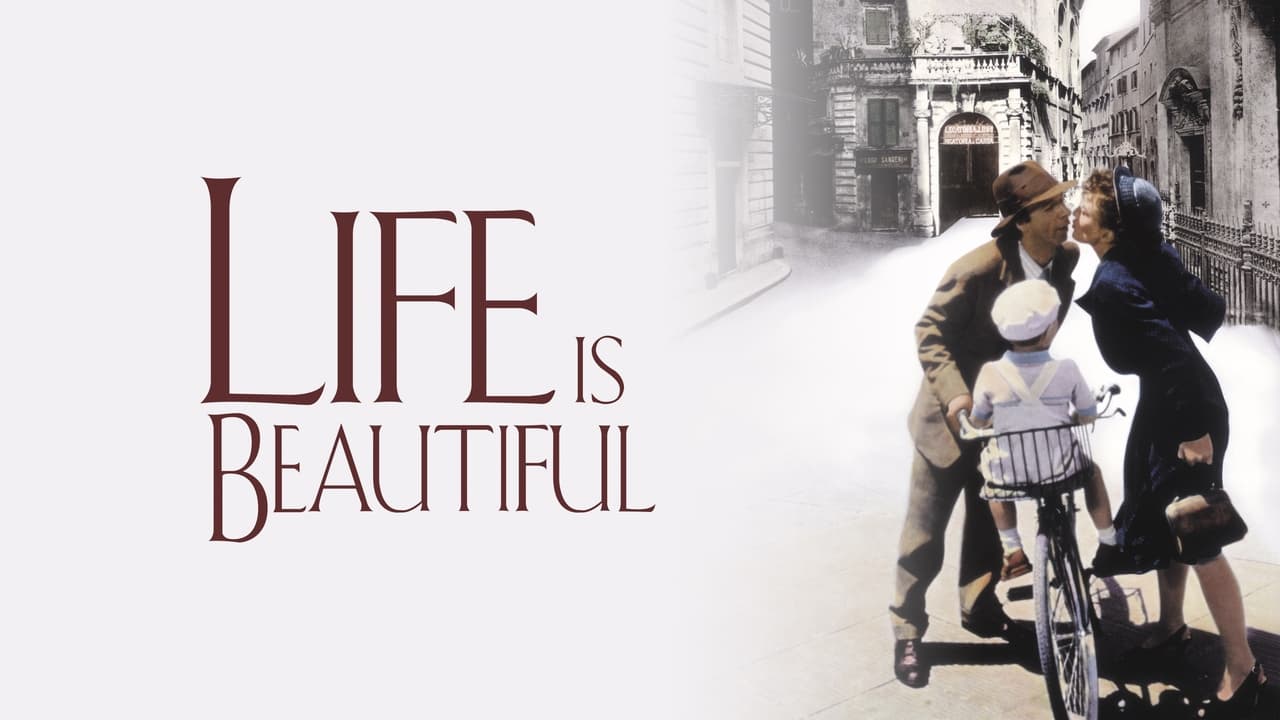
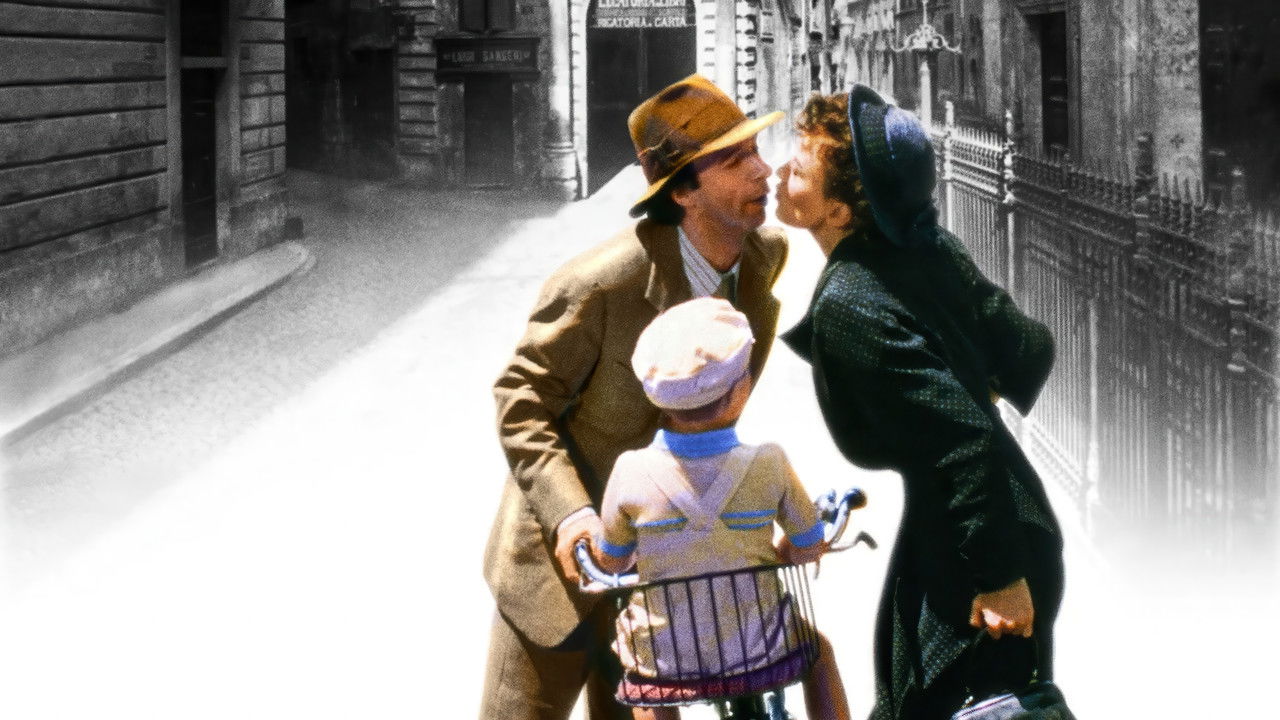
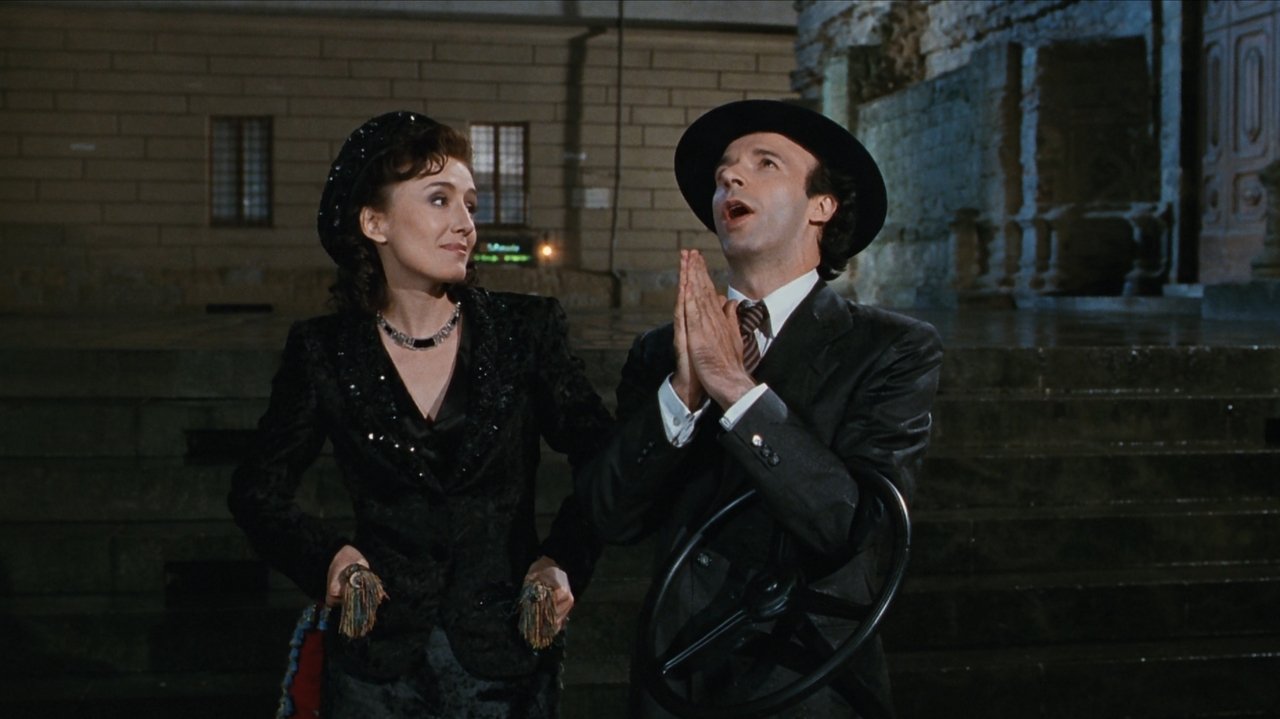
The first hour of Life Is Beautiful is a masterclass in the kind of breezy, physical comedy that Hollywood had largely forgotten by 1997. We meet Guido, played by Roberto Benigni with the rubber-limbed grace of a caffeinated Charlie Chaplin. He’s a Jewish waiter in 1930s Tuscany, pursuing a local schoolteacher named Dora (Nicoletta Braschi, Benigni’s real-life wife) with a series of elaborate, coincidental gags.
I watched this recently on a Tuesday afternoon while my radiator was making a rhythmic clanking sound that strangely synced up with the slapstick timing, and it hit me just how much this first half feels like a Technicolor dream. It’s all "Principessa!" and runaway horses and falling flowerpots. It’s light, it’s charming, and it’s a deliberate trap designed to make the second half hurt twice as much.
This was the era of the Miramax prestige machine, where "important" foreign films were polished for American audiences, but Benigni’s vision feels less like a calculated awards play and more like a personal exorcism. His own father had survived three years in the Bergen-Belsen concentration camp, and you can feel that DNA in the script. He isn't making light of history; he’s weaponizing comedy against it.
The Game of Survival
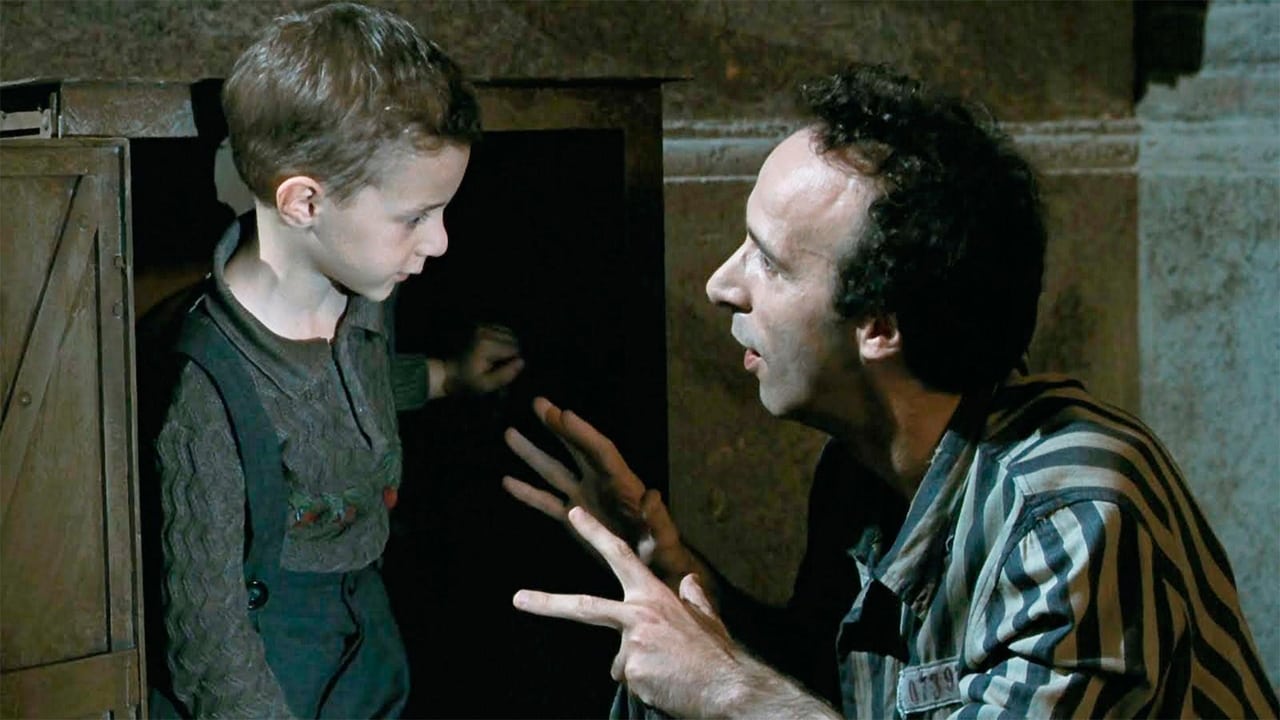
The tonal shift happens with the abruptness of a slammed door. Guido, Dora, and their young son Giosué (Giorgio Cantarini) are deported to a concentration camp. To shield his son from the soul-crushing reality of their situation, Guido invents an elaborate lie: the entire experience is a giant game. The guards are mean because they want the prize (a real tank), the hunger is just a test of willpower, and the rules are strictly enforced.
This is where the film's "Modern Cinema" identity really shines. In a post-Spielberg landscape, we were used to the stark, unflinching realism of Schindler's List. Benigni took a different path, opting for a fable-like quality that felt revolutionary. Guido’s frantic "translations" of the German officer's orders are the most stressful comedy I’ve ever sat through. He’s translating threats of death into rules about hiding and earning points, his eyes darting around like a man who knows his life depends on a punchline.
Giorgio Cantarini is remarkable here. Child actors can often be the "kryptonite" of serious dramas, either too precocious or too wooden, but he plays Giosué with a quiet, wide-eyed trust that makes Guido’s deception feel both heroic and agonizingly fragile. You spend the entire runtime waiting for the lie to break, and the tension is located entirely in the gap between what the audience sees and what the child believes.
The Politics of Prestige
When looking back at the 90s indie explosion, Life Is Beautiful stands as a titan. It grossed over $230 million worldwide—an unheard-of number for a subtitled film at the time. It was a cultural phenomenon that sparked heated debates: Was it "Holocaust Lite"? Was it disrespectful to use slapstick in a death camp?
I used to be more cynical about it, but rewatching it now, those criticisms feel misplaced. The film doesn't pretend the camp isn't a factory of death. The cinematography by Tonino Delli Colli—who worked with legends like Pasolini and Leone—shifts from the warm, golden hues of Tuscany to a cold, ashen grey that feels like a tomb. The score by Nicola Piovani, which rightfully won an Oscar, carries a bittersweet yearning that tells you exactly how this story has to end, even while Guido is still joking.
The craft here is impeccable. The production design by Danilo Donati creates a version of the camp that feels like a twisted stage play, emphasizing the "fable" aspect of the tagline. It’s not a documentary; it’s a story about the psychological armor we build for the people we love.
Life Is Beautiful remains a staggering achievement because it dares to be sentimental in the face of the absolute void. It’s easy to be grim; it’s much harder to be hopeful when the world is ending. While the first half might feel a bit sugary to modern viewers accustomed to a more cynical "A24-style" pacing, the payoff is one of the most emotionally devastating and life-affirming sequences in cinema history. It’s a film that earns its tears by reminding me that sometimes, the only way to survive the truth is to tell a better story.
***
Stuff You Didn't Notice
Family Ties: The chemistry between Guido and Dora is so palpable because Nicoletta Braschi and Roberto Benigni have been married since 1991. They’ve collaborated on nearly all of his directorial efforts. The Oscar Sweep: The film was nominated for seven Academy Awards, including Best Picture and Best Director. It won three: Best Actor, Best Foreign Language Film, and Best Original Dramatic Score. A Real Survivor: Benigni consulted with the Center for Contemporary Jewish Documentation in Milan throughout production to ensure that while the "game" was fictional, the environment felt historically grounded. The Tank: The tank seen at the end of the film is a real M4 Sherman, a detail that provided a sense of massive, mechanical scale to the final moments of the "game." * Historical Accuracy (Sort Of): While some critics pointed out that a child likely wouldn't have survived that long in a camp, Benigni argued that the film is a fable (as stated in the opening narration), not a literal history.
Keep Exploring...
-
Johnny Stecchino
1991
-

Dilwale Dulhania Le Jayenge
1995
-
Forrest Gump
1994
-
The Truman Show
1998
-
All About My Mother
1999
-
The Intouchables
2011
-
The Grand Budapest Hotel
2014
-
My Cousin Vinny
1992
-
Ed Wood
1994
-
The Postman
1994
-
10 Things I Hate About You
1999
-
Billy Elliot
2000
-
The Royal Tenenbaums
2001
-
The Wolf of Wall Street
2013
-

Love, Rosie
2014
-
Wild Tales
2014
-
Chungking Express
1994
-
Three Colors: White
1994
-
A Dog's Will
2000
-
Nothing Left to Do But Cry
1984