Seven Years in Tibet
"A mountain of ego meets a world of peace."
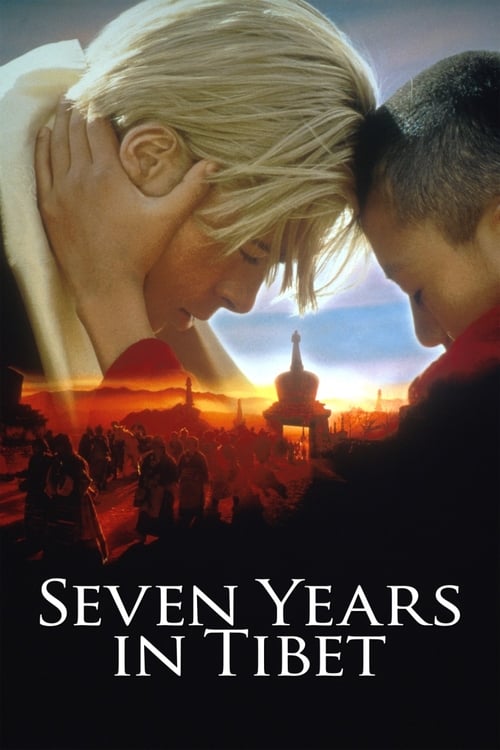
I vividly remember watching Seven Years in Tibet for the first time on a grainy VHS tape while sitting in a beanbag chair that smelled vaguely of old basement. At the time, I was mostly there for the 1990s-era Brad Pitt hair, which, let’s be honest, remains the most indestructible special effect of the decade. But as the credits rolled, I realized I’d just sat through a very strange, very beautiful anomaly: a big-budget Hollywood epic that actually cares more about a man’s internal plumbing than how many explosions he can outrun.

Coming out in 1997, this film arrived at the peak of the "Movie Star Epic" era. This was the same year as Titanic, a time when studios were still willing to throw $70 million at a 136-minute character study about an arrogant Austrian mountaineer. Looking back, it feels like a relic from a lost civilization—a bridge between the sweeping practical landscapes of the 60s and the digital wizardry that was about to take over the industry.
The Ego, the Ice, and the Accent
The story follows Heinrich Harrer (Brad Pitt), a man who is, to put it bluntly, a colossal jerk. He abandons his pregnant wife to go climb Nanga Parbat because his ego needs its own zip code. When World War II breaks out, he ends up in a British POW camp in India, escapes, and treks across the brutal Himalayan plateau to the forbidden city of Lhasa.
Pitt’s performance here is fascinating because he isn't trying to be likable. He leans into Harrer’s prickly, selfish nature, though I have to say, his Austrian accent sounds like a man trying to swallow a bratwurst while reciting Shakespeare. It’s a bit distracting at first, but once the film moves into the meat of his relationship with the young Dalai Lama (Jamyang Jamtsho Wangchuk), you stop caring about the phonetics.
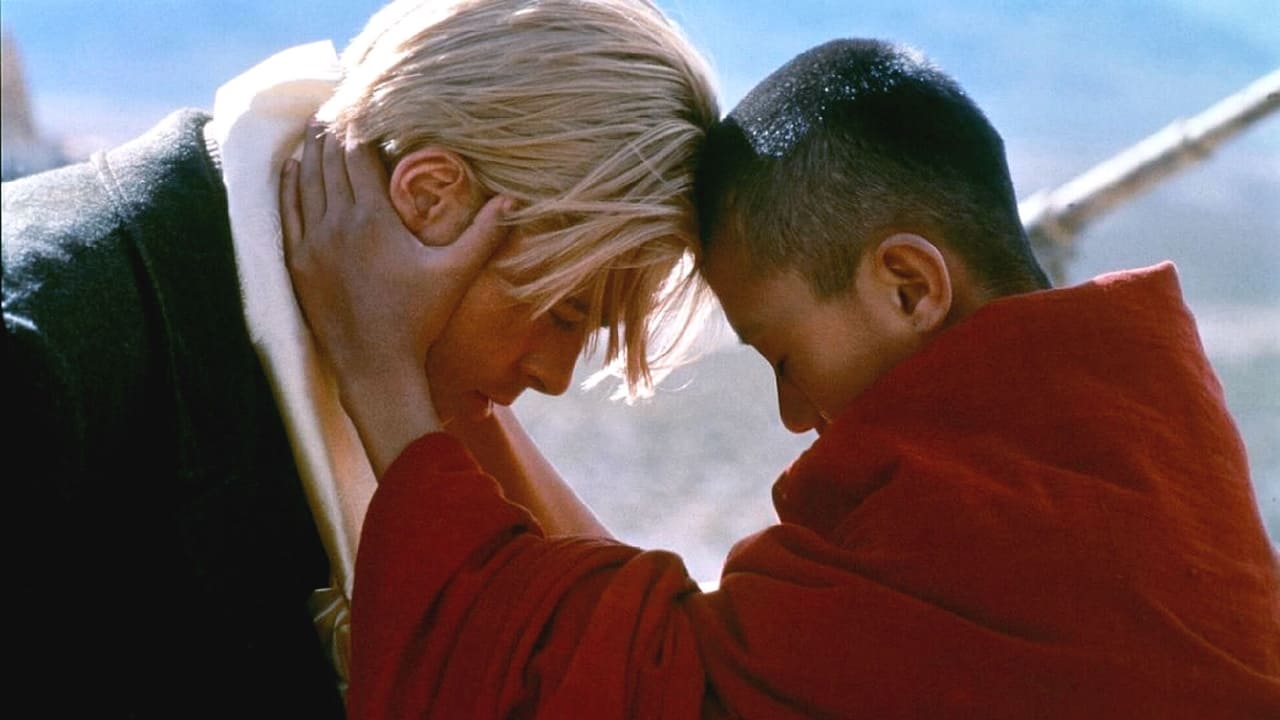
The chemistry between them is the film's heartbeat. Jamyang Jamtsho Wangchuk (who was a non-professional actor at the time) brings this incredible, serene curiosity to the role. He doesn't play the Dalai Lama as a stone statue of wisdom; he plays him as a lonely kid who happens to be a spiritual leader and really wants to know how a music box works. It’s in these quiet moments—teaching the boy about the world while the boy teaches him about his soul—that the drama feels genuinely earned.
Smuggling Tibet into Argentina
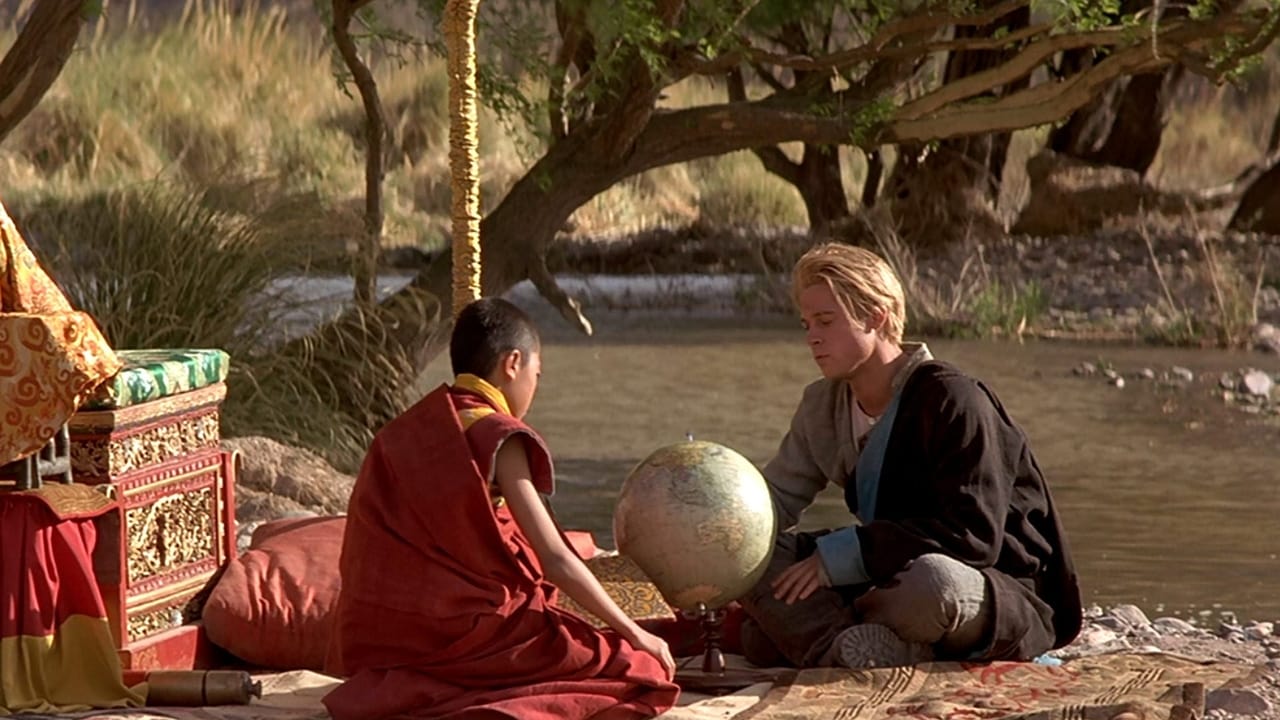
One of the most impressive things about Seven Years in Tibet is the sheer craft behind the "fake" Himalayas. Director Jean-Jacques Annaud (who also gave us the wonderfully weird Quest for Fire) couldn't film in Tibet for obvious political reasons. Instead, he moved the entire production to the Andes in Argentina.
The cinematography by Robert Fraisse is breathtaking, capturing that high-altitude, thin-air clarity that makes you feel like you need a glass of water just watching it. It’s a great example of the late-90s transition; while there is some early CGI used to touch up the city of Lhasa, the bulk of what you see is old-school, large-scale production design. They built a massive recreation of the Potala Palace in the foothills of the Andes. There's a texture to the sets and the costumes (the heavy wools, the yak butter lamps) that feels lived-in and authentic in a way that modern green-screen epics often miss.
I’ve always felt David Thewlis (most people know him as Remus Lupin from Harry Potter) is the secret weapon of this movie. As Peter Aufschnaiter, Harrer’s climbing partner and eventual rival-in-exile, he provides the perfect grounded foil to Pitt’s flashy intensity. Their bickering over a tailor, Pema Lhaki (Lhakpa Tsamchoe), adds a human, slightly petty dimension to their survival story that keeps it from becoming too "preachy."
The Movie That Got Everyone Banned
The "cult" legacy of this film isn't just about the fans; it’s about the massive political ripple it caused. It’s a famous piece of trivia that this movie, along with Martin Scorsese’s Kundun (also 1997), resulted in Brad Pitt, David Thewlis, and Jean-Jacques Annaud being banned from China for life. While the ban for Annaud was eventually lifted, it cemented the film as a brave, if slightly Hollywood-ized, stand for Tibetan autonomy.
A few more details from the mountain pass:
The real Heinrich Harrer was actually a member of the Nazi Party and the SS, a fact that didn’t come to light until the movie was already deep in production. The film tries to address this by making his "redemption" arc steeper, but it’s a dark shadow over the real history. The production crew actually managed to smuggle a camera crew into Tibet to get about 20 minutes of authentic footage, which was seamlessly edited into the Argentinian shots. Two of the Dalai Lama's real-life sisters appear in the film, playing his mother and a relative. Talk about keeping it in the family. John Williams delivered a score that is surprisingly restrained for him, featuring haunting cello solos by Yo-Yo Ma that perfectly capture the isolation of the mountains.
Seven Years in Tibet is a movie that demands you slow down. It’s a "slow cinema" epic hidden inside a movie star vehicle. It isn't perfect—it's a bit long, and the Western-savior tropes are definitely present—but it’s a sincere, visually stunning exploration of how a person can actually change. It’s about the moment you realize the world doesn't revolve around you, and sometimes it takes a 14-year-old kid and a very long walk to figure that out. If you’ve only ever seen the memes of Brad Pitt’s hair, give the actual movie a shot; it’s got a lot more soul than the tabloids of 1997 would have led you to believe.

Keep Exploring...
-
Enemy at the Gates
2001
-
Kingdom of Heaven
2005
-

King Arthur
2004
-
DragonHeart
1996
-
Alive
1993
-

The Messenger: The Story of Joan of Arc
1999
-
The Count of Monte Cristo
2002
-
Dante's Peak
1997
-
The Thin Red Line
1998
-
Dinosaur
2000
-
The Patriot
2000
-

The Perfect Storm
2000
-
A Knight's Tale
2001
-
A.I. Artificial Intelligence
2001
-
Gangs of New York
2002
-
Spirit: Stallion of the Cimarron
2002
-

Memoirs of a Geisha
2005
-
Agora
2009
-

1492: Conquest of Paradise
1992
-
Meet Joe Black
1998