Starship Troopers
"Pretty people, giant bugs, and the gloriously violent death of irony."
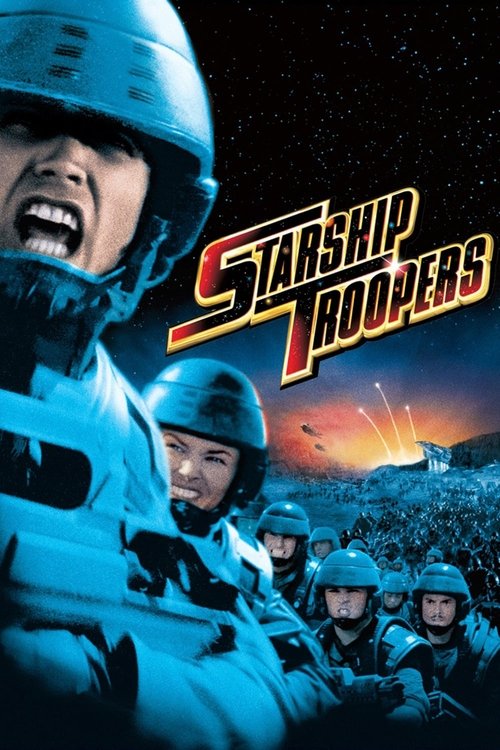
The first time I saw a giant arachnid pierce a hole through a soldier’s chest while a chipper narrator asked if I’d like to know more, I realized Paul Verhoeven wasn't just making a space movie; he was performing a cinematic autopsy on the American psyche. When Starship Troopers landed in 1997, critics treated it like a shallow, big-budget disaster—a "90210 in space" that somehow missed the point of Robert A. Heinlein's source material. They were half right about the "90210" part, but they completely missed that the vapid, jaw-clenched perfection of the cast was the entire point of the joke.
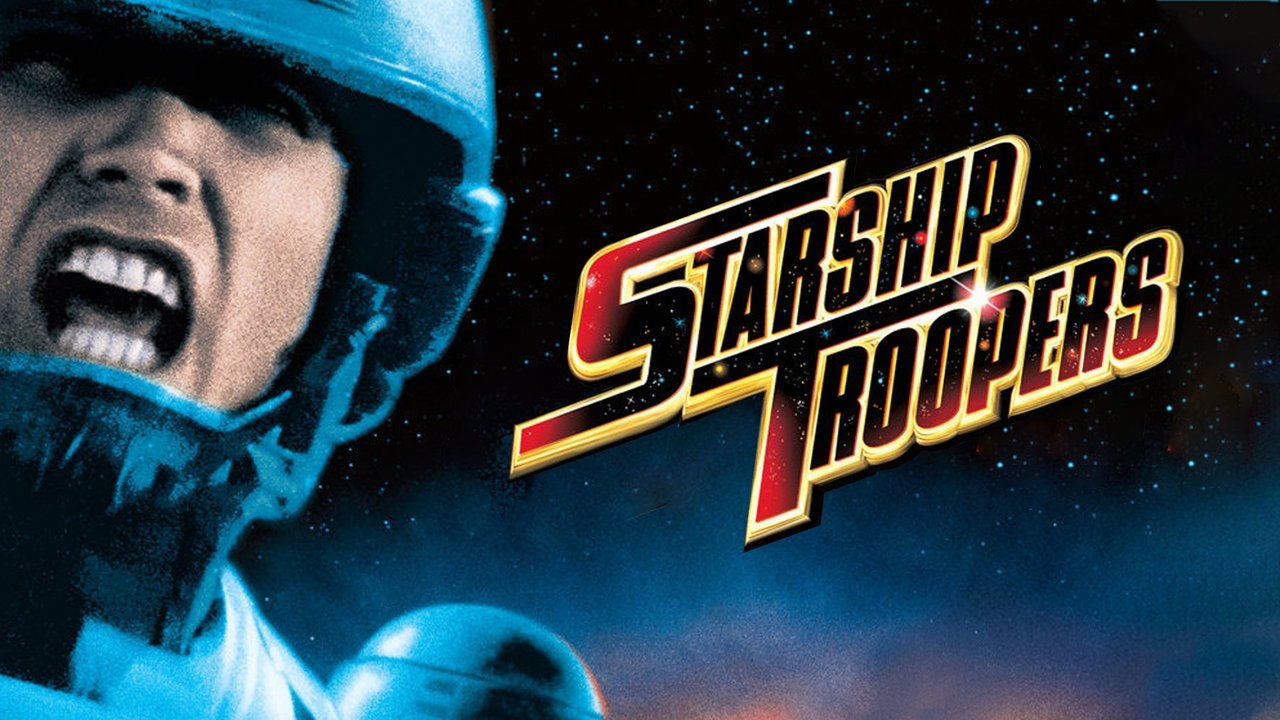
I revisited this recently on a humid Tuesday evening while nursing a lukewarm ginger ale that had lost its fizz—an appropriately unglamorous setting for a film that strips away the glamor of war with surgical precision. Looking back from our current era of "prestige" blockbusters, it’s staggering how much Verhoeven got away with. He took $105 million of TriStar’s money and built a towering, blood-soaked monument to the absurdity of military jingoism, dressed up in the shiny plastic aesthetics of a late-90s soda commercial.
The Most Beautiful Fascists You’ll Ever See
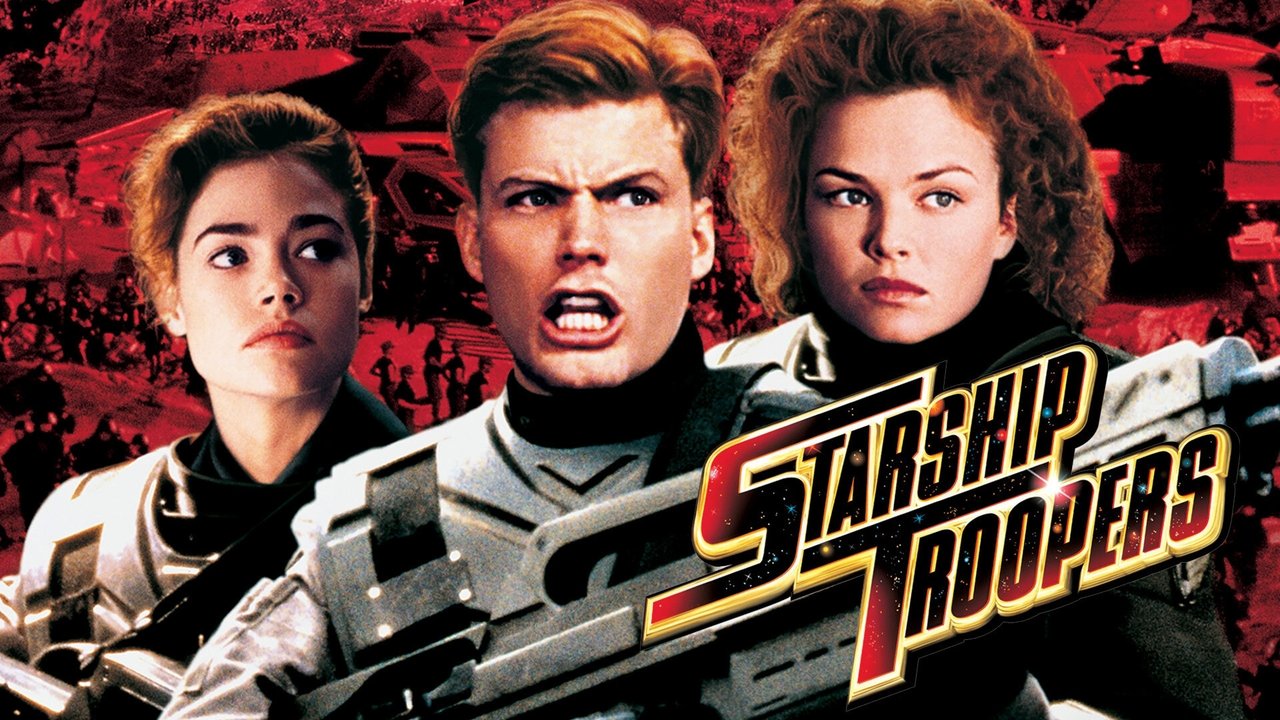
The casting is a stroke of subversive genius. Casper Van Dien, playing Johnny Rico, possesses the kind of symmetrical, vacant handsomeness that looks like it was 3D printed by a committee of recruiters. He is perfectly flanked by Denise Richards as the pilot Carmen Ibañez, whose smile remains blindingly white even as the galaxy burns, and Dina Meyer as the tough-as-nails Dizzy Flores. These aren’t just actors; they are archetypes of Aryan "perfection" thrown into a meat grinder.
Then you have Neil Patrick Harris, long before his How I Met Your Mother days, showing up in the final act wearing a long leather coat that is one silver skull away from a full SS uniform. The film doesn't wink at you; it stares you dead in the eye with a terrifyingly straight face. Verhoeven—who grew up in the Nazi-occupied Netherlands—knew exactly what imagery he was playing with. He wasn't celebrating this world; he was showing us how easily we could be seduced by its "us vs. them" simplicity.
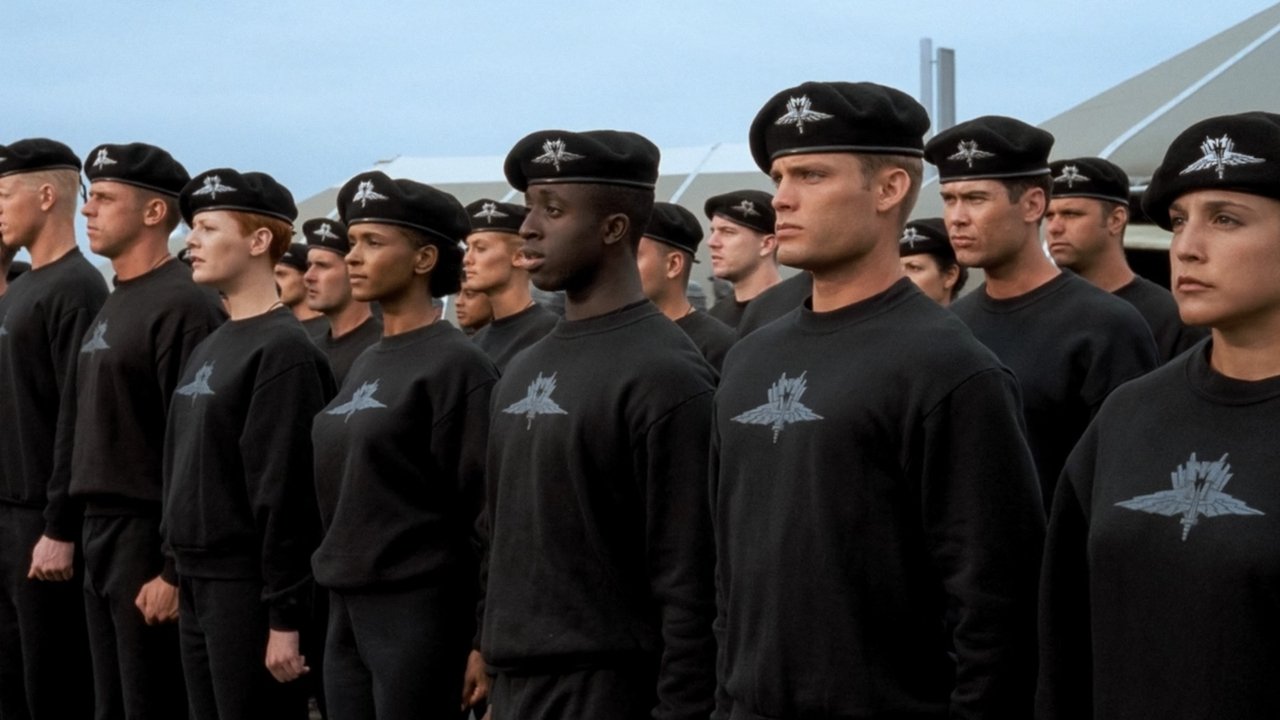
The performances of the seasoned character actors provide the necessary grit to ground the soap opera leads. Clancy Brown (the legendary voice of Mr. Krabs and the villain from Highlander) is spectacular as Career Sergeant Zim. He treats the recruits like raw meat, but there’s a professional respect there that makes the eventual carnage feel earned. Meanwhile, Jake Busey brings a frantic, toothy energy to Private Ace Levy that keeps the barracks scenes from feeling too stiff.
When Practical Meets Digital Perfection
We often talk about the "CGI revolution" of the 90s, usually citing Jurassic Park as the gold standard. But Starship Troopers deserves to be in that same conversation. The work done by Phil Tippett and the effects team still puts modern $300 million superhero slogs to shame. There’s a weight to the "Bugs" that is missing in today’s digital creatures. When a Tanker Bug spews fire or a Warrior Bug impales a nameless infantryman, you feel the physical impact.
The "Klendathu Drop" sequence remains one of the most intense action set pieces of the decade. It’s a chaotic symphony of screaming metal, green blood, and dismemberment. The cinematography by Jost Vacano (who worked with Verhoeven on RoboCop and Total Recall) uses wide shots to show the sheer scale of the incompetence. Thousands of soldiers are dropped into a meat-grinder with no air support and no plan, and the camera doesn't shy away from the results. It’s an action movie where the heroes are essentially human-shaped target practice.
The score by Basil Poledouris is the secret weapon here. It’s heroic, brassy, and unironically epic. It’s the kind of music that makes you want to enlist, which is precisely why it’s so unsettling when played over images of teenagers being liquefied by alien insects.
Stuff You Didn't Notice (The Cult of Detail)
Part of the joy of being a Starship Troopers fan is the treasure trove of "how did they do that?" stories. For instance, the infamous co-ed shower scene—which was groundbreaking for a mainstream film—was only filmed because Verhoeven and his cinematographer, Jost Vacano, agreed to get naked themselves to make the cast feel comfortable. It’s a bizarre bit of directing lore that perfectly encapsulates the "we're all in this together" madness of the production.

Then there’s the "recycling" legacy. If you’re a fan of the cult show Firefly or the movie Power Rangers, you might recognize the infantry armor. After Troopers wrapped, the production sold off the costumes, and they’ve appeared in dozens of sci-fi properties since. Even the "Bug" sound effects were recycled; the scream of the Warrior Bug is actually a distorted recording of Paul Verhoeven himself yelling into a microphone.
Initially, the film was a bit of a box office disappointment and a critical punching bag. It was "too violent," "too dumb," or "too fascist." It took years of DVD rentals and late-night cable airings for the general public to realize the joke was on them. It’s the ultimate cult classic because it demands you engage with it on two levels: as a thrilling, high-stakes monster movie, and as a razor-sharp satire of the very genre it inhabits.
Starship Troopers is a rare beast—a big-studio gamble that is both a masterpiece of special effects and a biting political commentary. It manages to be visceral and hilarious, grim and vibrant, all at once. It captures a specific moment in the late 90s where CGI was becoming a dominant force, but directors like Verhoeven still knew how to use it to serve a singular, twisted vision. If you haven't seen it since the VHS days, watch it again. You’ll find it’s aged better than almost any other action film of its era.
The bugs are still scary, the satire is even more relevant, and service still guarantees citizenship. Would you like to know more?

Keep Exploring...
-
RoboCop
1987
-
Serenity
2005
-
Total Recall
1990
-
Star Trek: First Contact
1996
-

The Matrix Reloaded
2003
-

The Hunger Games
2012
-
Equilibrium
2002
-
The Island
2005
-

Star Trek VI: The Undiscovered Country
1991
-

V for Vendetta
2006
-
Armageddon
1998
-
9
2009
-
Mission: Impossible
1996
-
The Rock
1996
-

Enemy of the State
1998
-
Hollow Man
2000
-
Minority Report
2002
-
Children of Men
2006
-
Push
2009
-
Waterworld
1995