The Devil's Advocate
"Where the billable hours last for eternity."
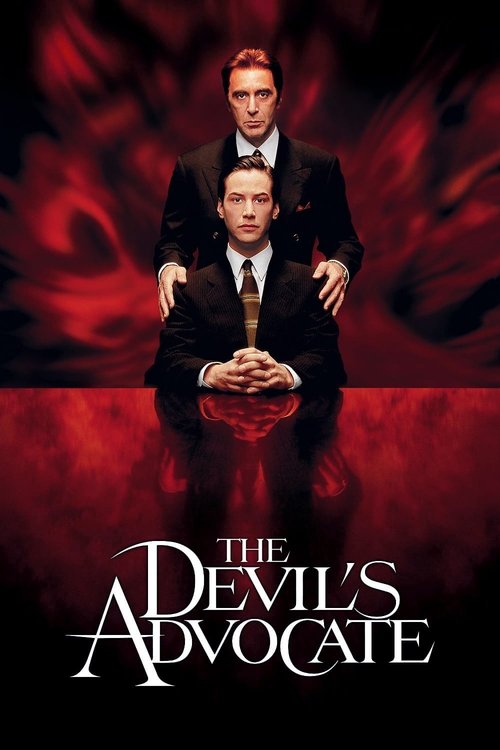
There was a specific kind of high-gloss, supernatural arrogance that only 1990s cinema could truly pull off. It was an era where the legal thriller—usually a dry affair involving mahogany desks and hushed depositions—decided to get weird. You had John Grisham adaptations dominating the box office, but Taylor Hackford (who gave us An Officer and a Gentleman) decided to take that prestige formula and drag it straight into the sulfurous pits of hell. The result is The Devil’s Advocate, a film that feels like a $57 million fever dream fueled by New York hubris and the kind of operatic acting that just doesn't happen anymore.

I watched this again recently on a rainy Tuesday while trying to ignore a stack of unpaid parking tickets, and honestly, the bureaucratic dread of the film hit harder than it did when I was a teenager. There’s something deeply unsettling about the way it presents evil not as a horned beast in a cave, but as a corner office with a view of Central Park.
The High Gloss of Pre-Millennial Sin
In the late 90s, we were obsessed with the "sell-out." Before the internet democratized every facet of our lives, the ultimate fear was losing your soul to a corporate monolith. Keanu Reeves plays Kevin Lomax, a Florida defense attorney who has never lost a case—mostly because he’s willing to dismantle a victim on the stand even when he knows his client is a predator. Reeves often gets flak for his performance here, and let’s be honest: his Southern accent is a precarious tightrope walk where he falls off and hits every branch on the way down. But as the movie progresses, his "stiffness" actually works. He is the blank slate upon which the city of New York and his new boss, John Milton, write their various sins.
The film excels at building an oppressive atmosphere. Andrzej Bartkowiak (cinematographer of Speed) shoots Manhattan as a golden, cold, and vertical labyrinth. Every room is too big; every ceiling is too high. It captures that specific Y2K-era anxiety where technology was accelerating, the skyline was dominating, and humans felt increasingly small. When the horror elements do kick in—those brief, flickering moments where a stranger’s face distorts into something demonic—they are genuinely jarring. The "morphing" CGI was cutting-edge in 1997, and while it lacks the texture of modern digital effects, there’s an uncanny, rubbery quality to it that actually makes the demons feel more "wrong" than if they were perfectly rendered.
The Al Pacino Opera
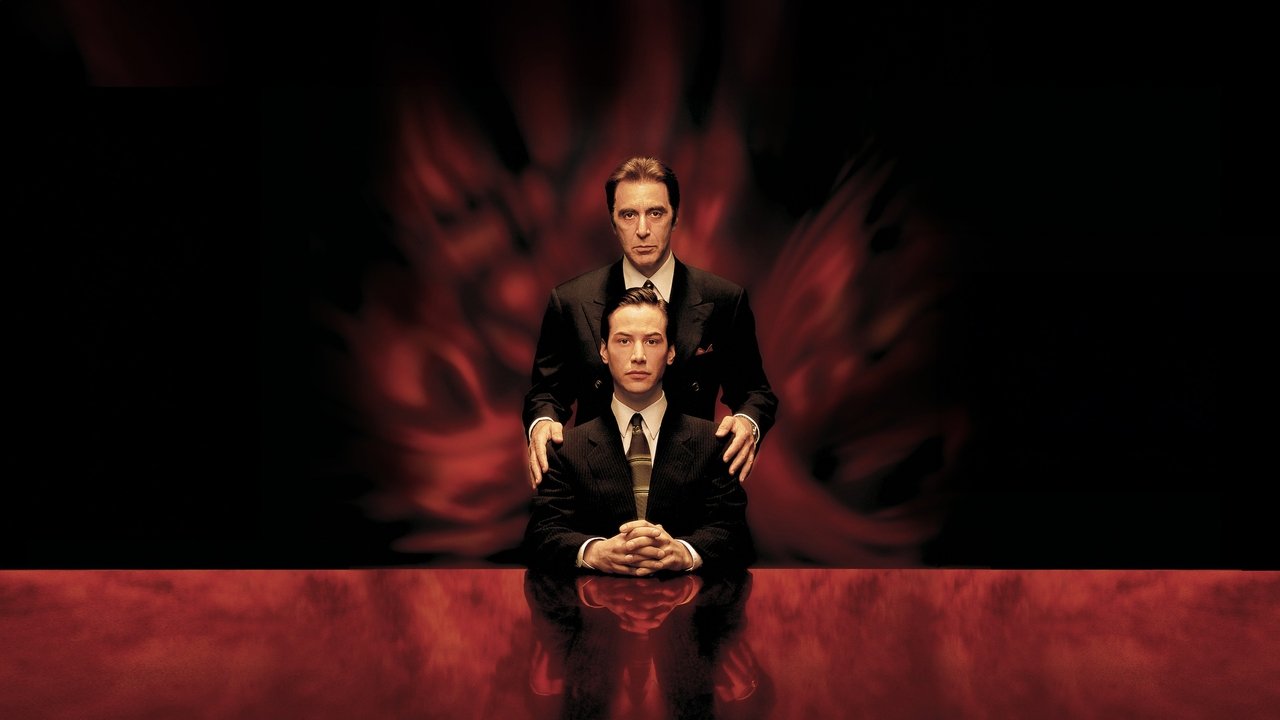
Then, there is Al Pacino. If this movie were a meal, Pacino is the chef dumping an entire gallon of hot sauce onto a single cracker. As John Milton, the head of the world’s most powerful law firm, he is a force of nature. For the first two acts, he’s charming, witty, and paternal. By the third act, he is a screaming, fire-breathing avatar of pure ego. His final monologue—a scathing indictment of God as an "absentee landlord"—is a masterclass in scenery-chewing. It is perhaps the most "Pacino" performance in existence. He isn't just playing the Devil; he’s auditioning to replace him in actual hell.
While Pacino is the spectacle, Charlize Theron provides the actual soul of the film. Playing Mary Ann, Kevin’s wife, she undergoes a harrowing transformation from a confident, vibrant woman to a shattered shell. Her descent into madness, fueled by supernatural gaslighting and the isolation of her husband’s ambition, is the most effective horror element in the movie. It’s a grounded, painful performance that prevents the film from floating away into pure camp. Watching her realize that her new life is a gilded cage is far scarier than any CGI face-shift.
Infernal Trivia and Production Secrets
The cult status of The Devil's Advocate has only grown because of the strange stories behind its making. It’s a film that shouldn't have worked—a 144-minute R-rated legal horror drama is a tough sell—but several factors aligned to make it a classic of the genre:

The Pay Cut: Keanu Reeves famously took a multi-million dollar pay cut so the production could afford to hire Al Pacino, who had turned down the role of John Milton three times before finally agreeing. The Boxer: The heavyweight boxer seen in the ringside scene is Roy Jones Jr., and the fight he’s participating in was a real-life match filmed specifically to be used in the movie. The Sculpture Lawsuit: The "human" sculpture wall in Milton’s office was so similar to Frederick Hart’s "Ex Nihilo" at the Washington National Cathedral that the artist sued Warner Bros. As a result, for the initial home video releases, certain scenes had to be edited or stickered to avoid legal repercussions. The Preparation: To prepare for her character’s mental collapse, Charlize Theron spent an hour a day for three months with a psychotherapist to understand the symptoms of schizophrenia. * Brad Pitt’s Near-Miss: Earlier versions of the script had Brad Pitt in the lead role with a much more action-oriented plot before Taylor Hackford steered it toward a character-driven psychological thriller.
Ultimately, The Devil’s Advocate is a movie about the choices we make when we think no one is looking. It’s a loud, proud, and occasionally ridiculous exploration of vanity that succeeds because it commits 100% to its premise. It treats the legal profession with the same dread that a slasher movie treats a dark basement, and in doing so, it created one of the most memorable versions of the Devil ever put to screen.
If you can get past the fluctuating accents and the somewhat dated CGI, you’re left with a heavy-hitting drama that understands that the scariest things aren't under the bed—they’re in the mirror. It’s a film that asks how much of yourself you’re willing to shave away for a better title and a nicer apartment. By the time the credits roll and Al Pacino gives his final wink to the camera, you might find yourself checking your own reflection just a little more closely.
Keep Exploring...
-
Twin Peaks: Fire Walk with Me
1992
-
Sleepy Hollow
1999
-
The Skin I Live In
2011
-

The Game
1997
-
The Bourne Identity
2002
-
Bound by Honor
1993
-
Lost Highway
1997
-
Eyes Wide Shut
1999
-

Jacob's Ladder
1990
-

Inland Empire
2006
-
The Bourne Ultimatum
2007
-

Changeling
2008
-
Funny Games
1997
-
The Skeleton Key
2005
-

Let Me In
2010
-

A Tale of Two Sisters
2003
-
Constantine
2005
-
Interview with the Vampire
1994
-
Unbreakable
2000
-
Lucky Number Slevin
2006