Three Men and a Leg
"Three friends, one wedding, and a very expensive limb."
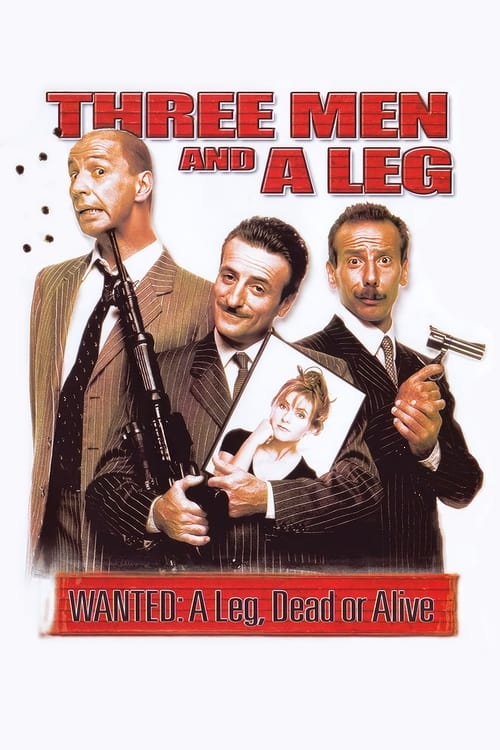
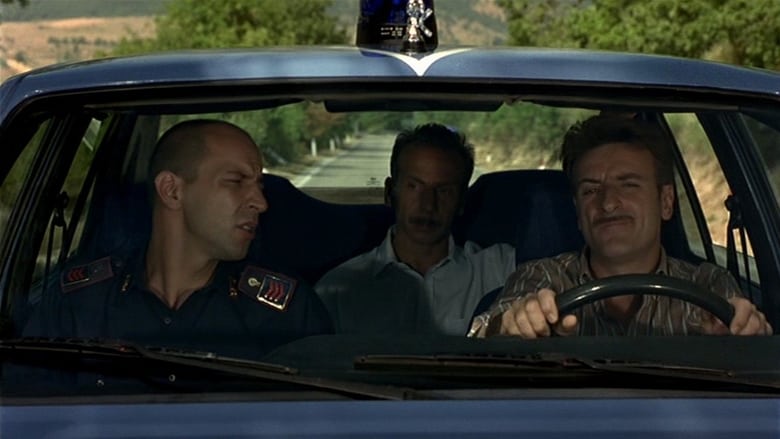
A wooden leg is a strange thing to build a cinematic legacy on, but in 1990s Italy, that hunk of timber became a holy relic of the zeitgeist. When Aldo Baglio, Giovanni Storti, and Giacomo Poretti—the holy trinity of Italian sketch comedy—decided to jump from the small screen to the big one, the industry held its breath. Skeptics expected a string of disconnected gags that would fail the "90-minute test." Instead, we got Three Men and a Leg, a road movie that managed to be both a slapstick masterstroke and a quiet, existential sigh about the "golden cages" we build for ourselves.
I watched this most recently on a regional train heading toward Rome, while the woman sitting across from me aggressively knitted what appeared to be a sweater for a very small dog. The rhythmic clicking of her needles felt like a countdown to the film's famous "Ajeje Brazorf" sketch, and I realized that even twenty-five years later, I still know every beat of the dialogue by heart.
The Anatomy of the Sketch-Film
The film’s genius lies in its Russian-doll structure. It isn't just a road trip from Milan to Gallipoli; it’s a delivery mechanism for a series of "mini-films." We get a noir parody, a silent-film pastiche, and a campy take on Bram Stoker’s Dracula (1992). This was a daring move for a debut. Looking back, this reflects the "DVD Culture" that was just beginning to bloom—the idea that a movie could be a collection of highlight reels you’d want to skip back to and rewatch with friends.
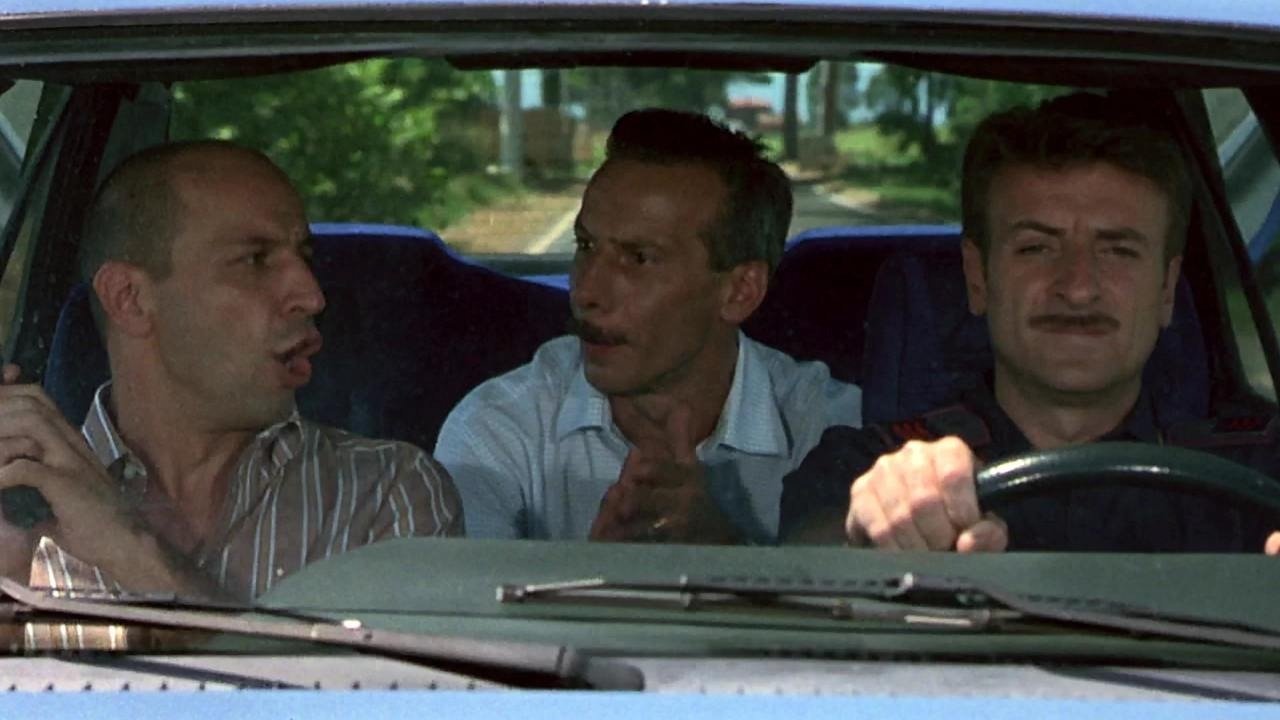
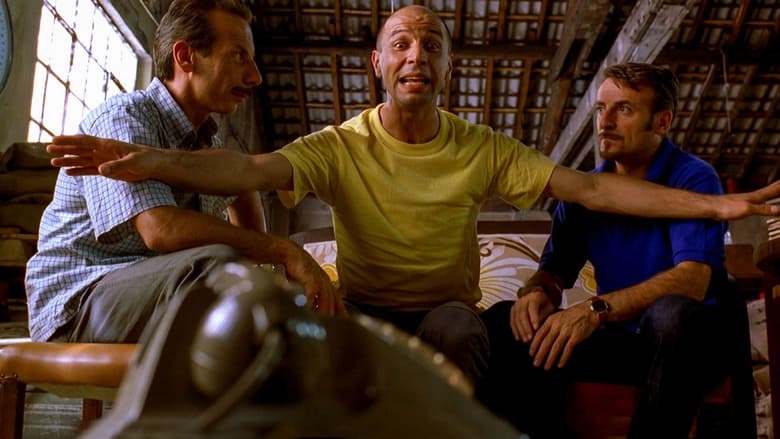
The chemistry between Aldo, Giovanni, and Giacomo is telepathic. They don't just trade lines; they trade rhythms. Aldo is the chaotic id, Giovanni the neurotic ego, and Giacomo the perpetually exasperated superego. They are being forced into a family dynasty by a despotic father-in-law, played with terrifyingly funny intensity by Carlo Croccolo. Their mission is to transport a "Garutti"—a piece of high-concept modern art that is literally just a wooden leg—to the wedding where Giacomo will marry the third sister of the Cecconi clan. The leg is actually a better actor than most of the 90s rom-com leads, serving as a silent witness to their slow-motion nervous breakdowns.
A Prosthetic for the Soul

While the film is celebrated for its comedy, there is a cerebral undercurrent that rewards a second look. The "Leg" is the ultimate MacGuffin, but it’s also a metaphor for the protagonists' lives. They are all "married" to a business and a family they didn't choose, propped up by the wealth of a man they despise. They are living prosthetic lives—functional but artificial.
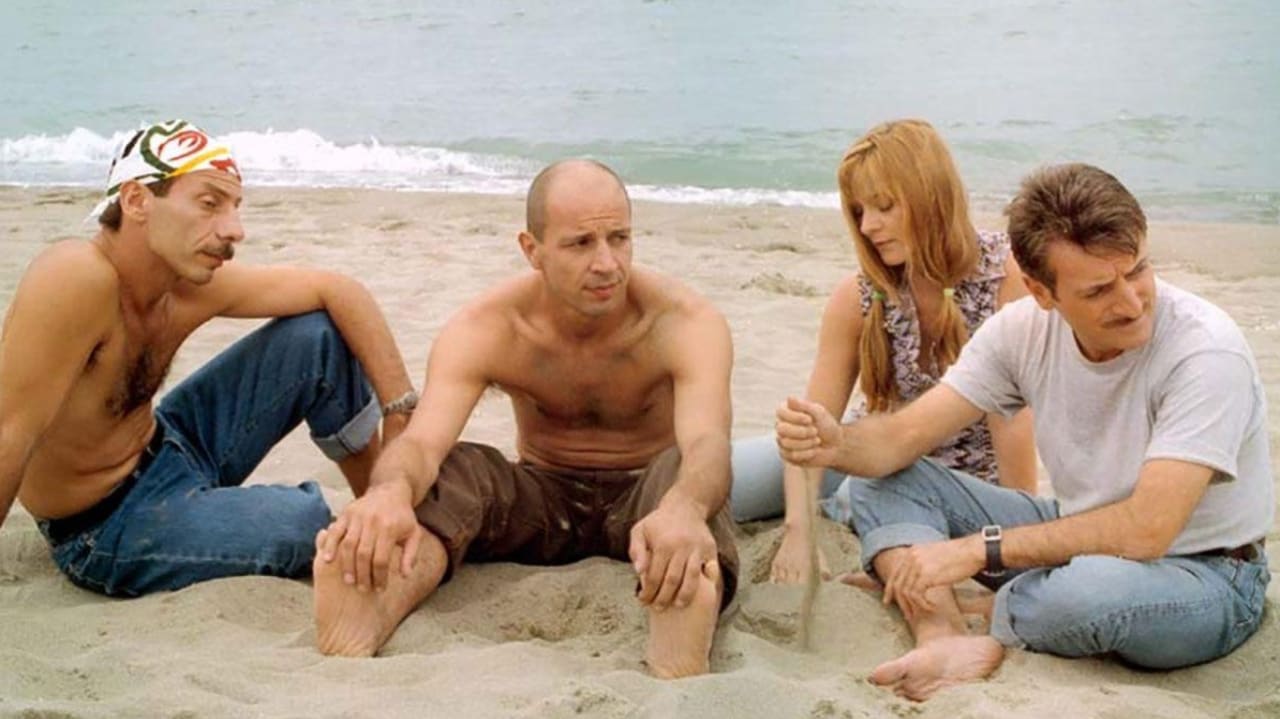
The introduction of Marina Massironi as Chiara, a woman they meet along the way, acts as the catalyst for their awakening. She represents the "unplanned life." The scene where they play a high-stakes game of beach soccer against a group of Moroccan men—set to the soaring sounds of Negrita—is arguably the peak of 90s Italian cinema. It’s a moment of pure, unadulterated joy that has nothing to do with the "Leg" or the wedding. It’s the trio realizing that they can, for a moment, just exist. It’s also the only time in cinematic history that a lost shoe becomes a genuine plot point that makes me want to cry and laugh simultaneously.
The Legend of the Leg: Cult Status and Trivia
Despite a modest budget of roughly 2 million dollars, the film became a runaway sleeper hit, eventually outperforming massive Hollywood blockbusters in the Italian market. It bypassed the high-brow critics and went straight to the people, fueled by a generation that had grown up watching the trio on Mai dire Gol.
The "Ajeje Brazorf" Legacy: The sketch involving a ticket-less passenger and a pedantic tram controller was a staple of their live theater shows. It was inserted into the film as a "movie within a movie" that the characters are watching, a meta-nod to their own origins. The Subbuteo Obsession: The flick-to-kick football game featured in the movie sparked a minor resurgence of the hobby in Italy. Fans still obsessively track down the specific teams used in the film. A Low-Fi Miracle: Due to budget constraints, many of the "exterior" driving shots were actually filmed with the car on a trailer or in a studio, yet the editing by Marco Spoletini (who later became a favorite of Matteo Garrone) gives it a seamless, breezy energy. The Soundtrack: The use of "Ho imparato a sognare" by Negrita transformed the band into national icons, perfectly capturing the bittersweet "Y2K anxiety" of wanting more from life than a paycheck and a father-in-law’s approval.
Ultimately, Three Men and a Leg succeeds because it trusts its audience to enjoy the absurdity without needing to explain the joke. It captures that specific late-90s transition where we were all moving from the analog comfort of the past into an uncertain, digital future. It’s a film about the fear of "getting there" and the realization that the "there" isn't nearly as important as the idiots you’re traveling with. If you haven't seen it, find a copy, grab some focaccia, and prepare to have "Ajeje Brazorf" stuck in your head for the next decade.
Keep Exploring...
-
Ask Me If I'm Happy
2000
-
That's Life
1998
-
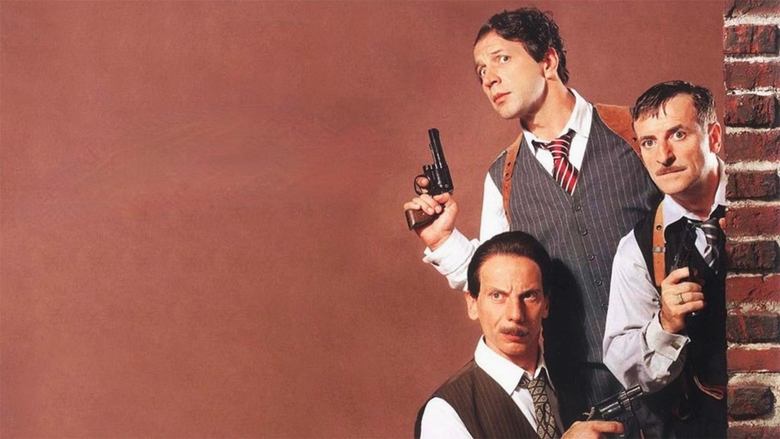
The Legend of Al, John and Jack
2002
-
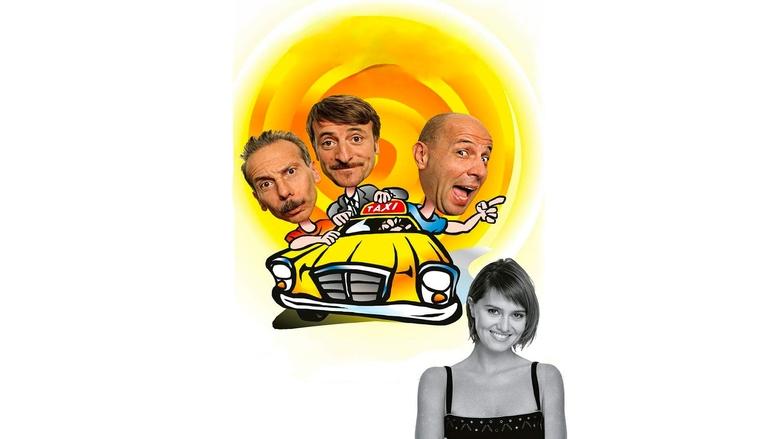
Have You Met Claudia?
2004
-

The Rich, the Pauper and the Butler
2014
-

I Hate Summer
2020
-
The Dinner Game
1998
-
10 Things I Hate About You
1999
-
All About My Mother
1999
-

The Santa Claus Gang
2010
-
The Postman
1994
-
Moonrise Kingdom
2012
-
My Cousin Vinny
1992
-
Fear City: A Family-Style Comedy
1994
-

Dilwale Dulhania Le Jayenge
1995
-
A Dog's Will
2000
-
The Legend of 1900
1998
-
Army of Darkness
1992
-
Porco Rosso
1992
-
Addams Family Values
1993