Tomorrow Never Dies
"Print is dead. Bond is forever."
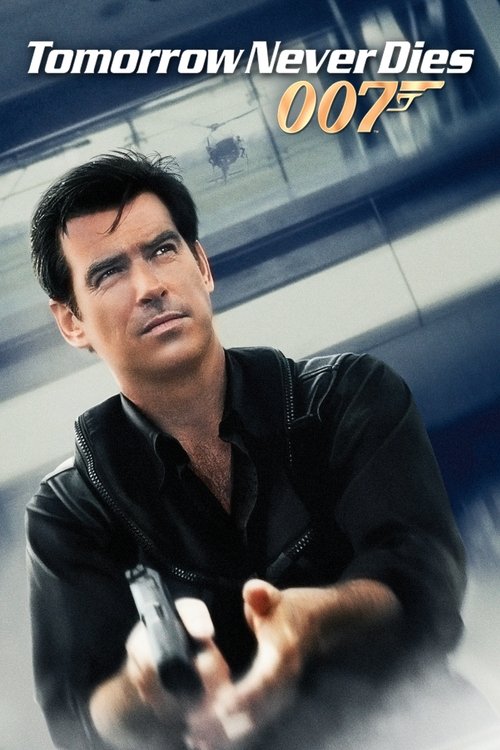
Most Bond villains want to blow up the moon or hijack a nuke to hold the world for ransom. Elliot Carver just wanted higher ratings. Watching Tomorrow Never Dies today feels like looking at a time capsule that accidentally predicted the 21st century’s obsession with information warfare. It’s a loud, brassy, $110 million attempt to prove that 007 could survive in a world where the headline was more dangerous than the bullet. I actually watched this while wearing a pair of itchy wool socks I immediately regretted putting on, but the sheer momentum of the film eventually made me forget about my uncomfortable ankles.

Remote Controls and Ruined Rental Cars
By 1997, Pierce Brosnan had fully settled into the tuxedo. If GoldenEye was his audition, this was his victory lap. He plays Bond with a specific kind of "catalogue model" slickness that I find endlessly watchable. He’s less a blunt instrument and more a high-end fountain pen that occasionally explodes. The film’s action peaks early with the Hamburg parking garage sequence. Seeing Bond drive a BMW 750iL from the backseat via a touchpad remote feels quintessentially 90s—it was the peak of "gadget-era" Bond before the series pivoted to the grit of the Daniel Craig years.
I’ve always been impressed by the practical logistics of that scene. Apparently, the production team went through 15 different BMWs to get those shots right. There’s a weight to the crunch of metal that today’s CGI-heavy chases often lack. When that car goes off the roof and into the Hertz dealership, you feel the insurance premiums skyrocketing. It’s the kind of stunt work that reminds me why the 90s were such a sweet spot for action; the budgets were massive enough for spectacle, but the technology still required a stuntman to actually jump a motorcycle over a helicopter.
The Yeoh Factor
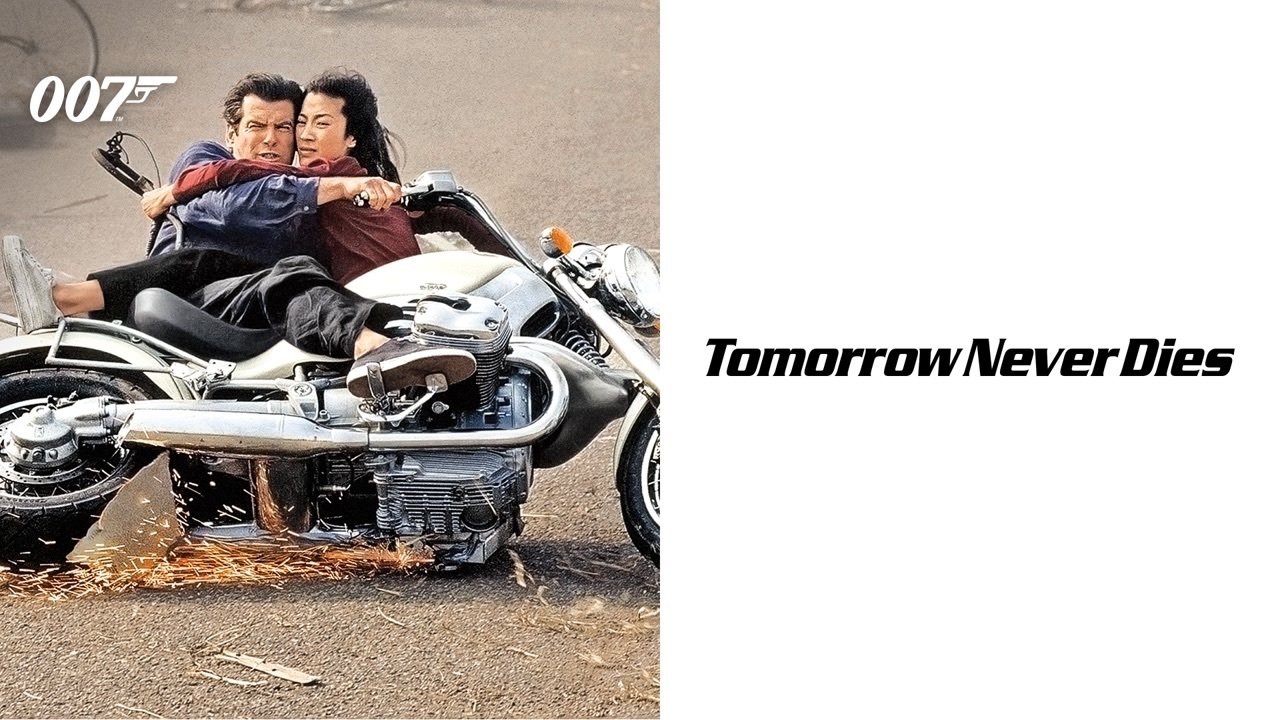
If there is a single reason this movie sits higher in my personal rankings than most "middle-tier" Bond flicks, it’s Michelle Yeoh. As Wai Lin, she isn't just a "Bond Girl"; she’s a peer. Looking back, she makes Brosnan look like he’s moving in slow motion. Their chemistry during the handcuffed motorcycle chase through Saigon is the film’s high point. It’s a masterclass in action choreography that uses the environment—laundry lines, tight alleyways, and rooftop jumps—to build tension rather than just blowing things up.
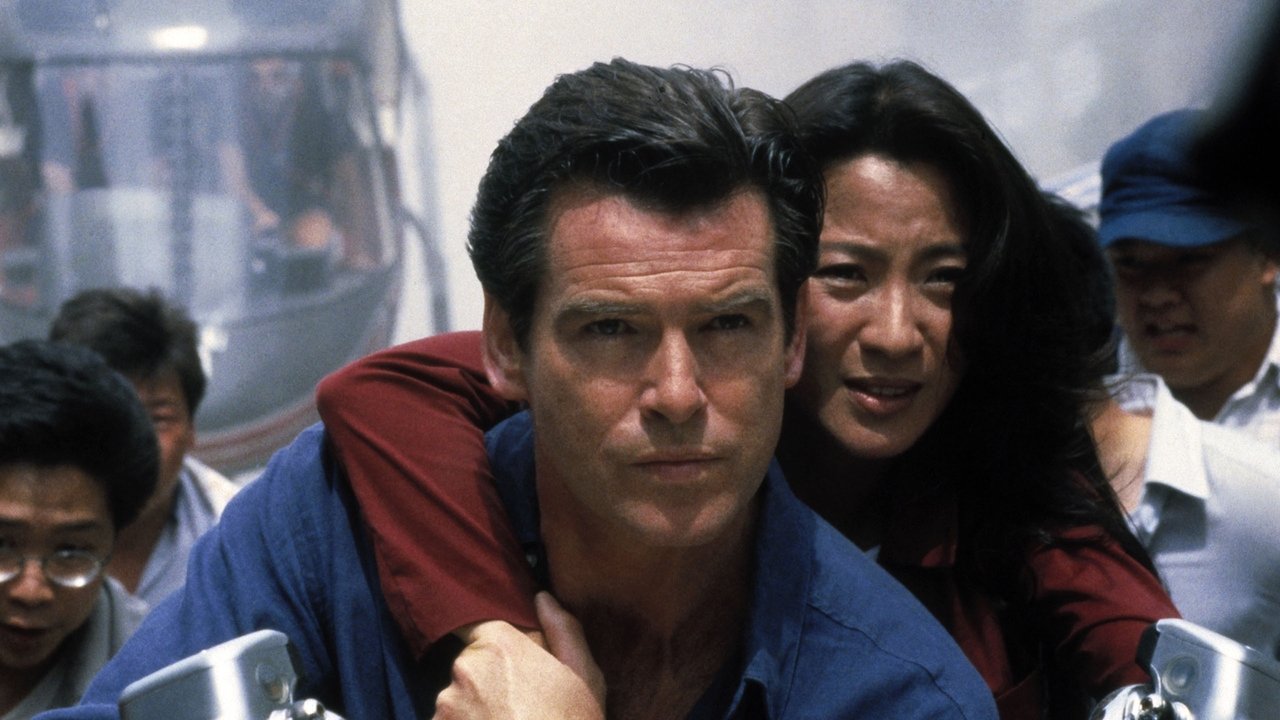
Yeoh came into this after cementing her legend in Hong Kong cinema with films like Supercop (alongside Jackie Chan), and she brought a level of physicality that Bond movies hadn't seen before. The producers originally wanted her to do fewer stunts for safety, but she essentially told them she knew what she was doing. The result is a character who feels like she has her own movie happening off-screen, and Bond just happened to stumble into it.
A Villain for the 24-Hour News Cycle
Jonathan Pryce plays Elliot Carver with the manic energy of a man who has had sixteen espressos and just discovered Twitter fifteen years too early. He’s a Rupert Murdoch surrogate who realizes that it’s cheaper to start a war than to report on one. Jonathan Pryce’s "typing" style is the most menacing thing about him, as he hammers away at his keyboard like a caffeinated woodpecker.
The film's plot—Carver using a "stealth boat" to sink ships and trick China and the UK into a conflict—is admittedly a bit thin. It was a notoriously difficult production, with writer Bruce Feirstein allegedly turning in script pages on the day of filming. You can see the seams sometimes; Teri Hatcher is sadly underserved as Paris Carver, a character who exists mostly to provide Bond with a brief moment of pathos before being swept aside for more explosions.

Yet, the film’s cultural impact was undeniable. It had the misfortune of opening on December 19, 1997—the exact same day as James Cameron's Titanic. While it didn't sink the iceberg, it still raked in over $333 million worldwide. It proved that the Bond franchise wasn't just a relic of the Cold War; it was a flexible brand that could adapt to the burgeoning digital age. The marketing was everywhere, from Ericsson mobile phone tie-ins to the Sheryl Crow theme song that dominated VH1 for months.
Tomorrow Never Dies is the ultimate "Saturday afternoon" Bond movie. It doesn't have the emotional depth of Casino Royale or the franchise-resetting power of GoldenEye, but it delivers on the promise of its era. It’s a slick, professional, and wildly entertaining piece of blockbuster filmmaking that captures the moment just before the world went digital and action movies went green-screen. It’s the last time a Bond movie felt truly, unapologetically fun before the weight of the world started to press down on the character’s shoulders. If you can ignore the villain’s questionable 1997 haircut, you’re in for a great time.
Keep Exploring...
-
GoldenEye
1995
-

The World Is Not Enough
1999
-
Die Another Day
2002
-

Skyfall
2012
-
Quantum of Solace
2008
-
Casino Royale
2006
-
The Living Daylights
1987
-
Thunderball
1965
-
You Only Live Twice
1967
-
Moonraker
1979
-
Octopussy
1983
-
Spectre
2015
-
No Time to Die
2021
-

Goldfinger
1964
-
Live and Let Die
1973
-
The Spy Who Loved Me
1977
-
For Your Eyes Only
1981
-
Never Say Never Again
1983
-
A View to a Kill
1985
-
Licence to Kill
1989