Armageddon
"Oil, sweat, and the fate of the world."
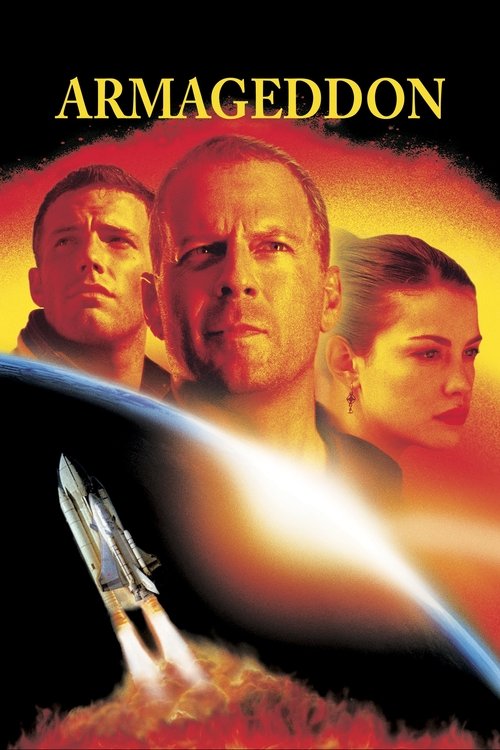
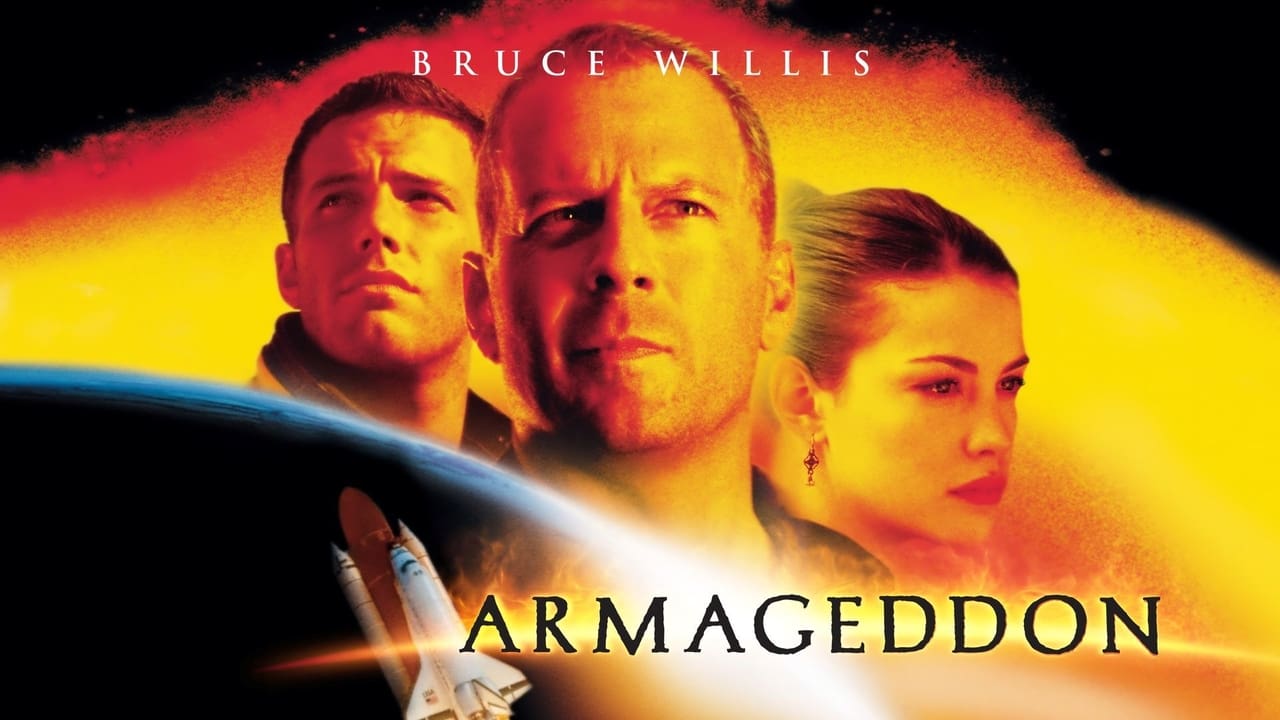
There is a specific frequency of cinematic noise that only Michael Bay can tune into, and in 1998, he hit the literal motherlode. Looking back at Armageddon, it’s not just a movie; it’s a time capsule of pre-9/11 American bravado, saturated in a sunset-orange hue that makes every character look like they’ve been basted in honey and grit. It’s loud, it’s scientifically illiterate, and it is arguably the most "movie" movie ever made. I watched this most recently on a Tuesday night while procrastinating on a grocery list, fueled by a bag of slightly stale generic-brand cheese puffs, and honestly, the orange dust on my fingers felt like a proper aesthetic tribute to the film’s hyper-saturated color palette.
The Blue-Collar Space Opera
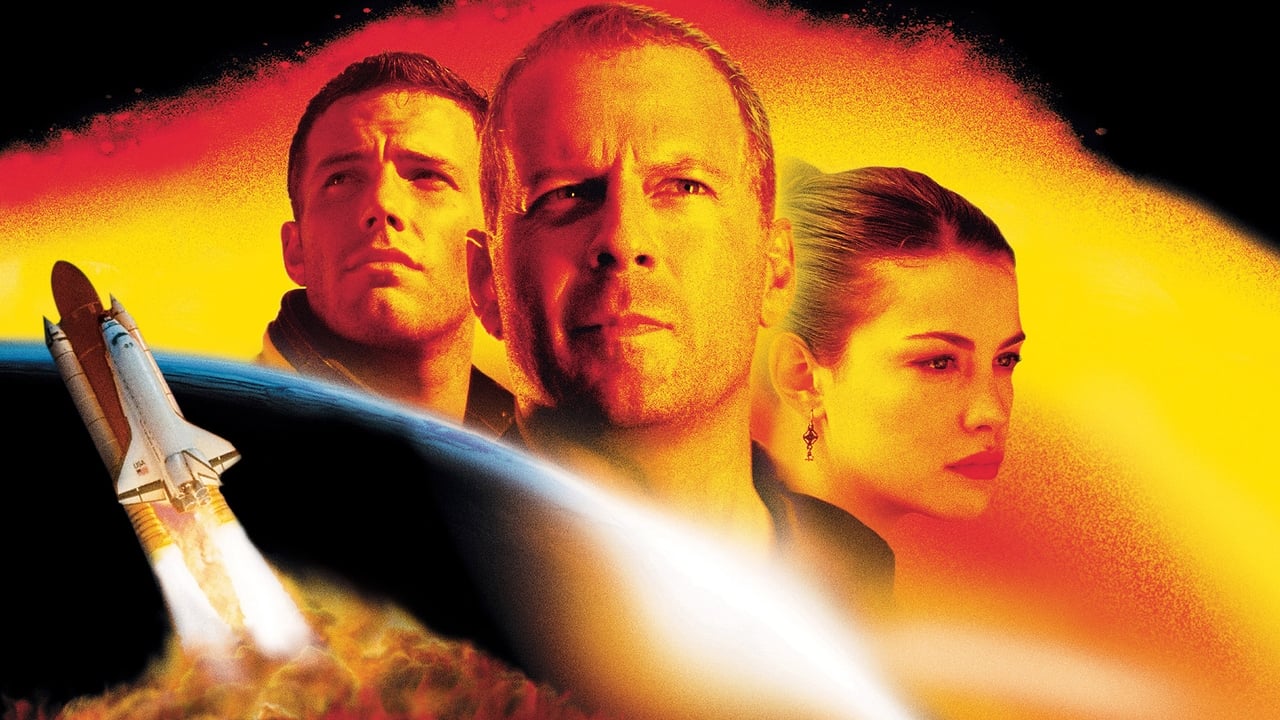
The premise is the stuff of high-concept legend: a "global killer" asteroid is heading for Earth, and for some reason, NASA decides it’s easier to train roughneck oil drillers to be astronauts than to teach astronauts how to use a drill. It’s a logic gap so wide you could fly two space shuttles through it—which the movie does—but Michael Bay (fresh off The Rock) doesn't care about your physics degree. He cares about Bruce Willis looking rugged in a flight suit.
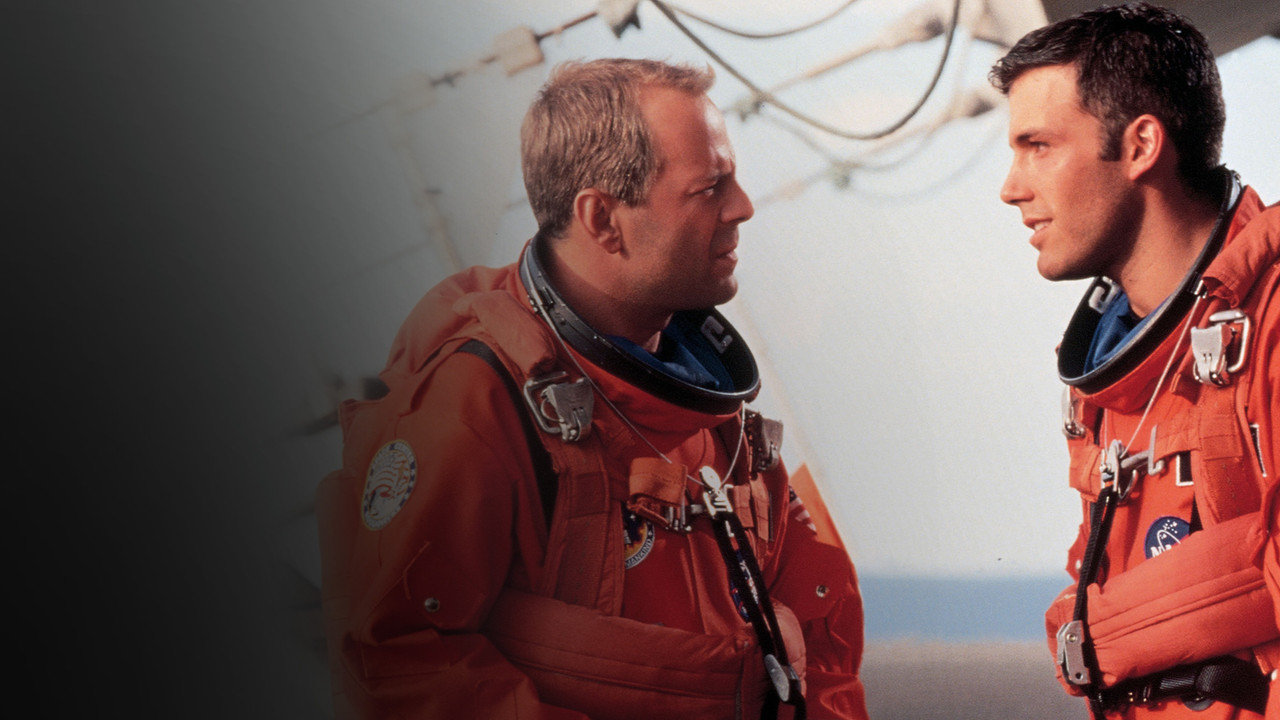
Bruce Willis, playing Harry Stamper, is at the absolute peak of his "smirking savior" era here. He brings a weirdly grounded weight to a film that features a sequence where Steve Buscemi (as the unhinged Rockhound) goes "space crazy" and starts firing a machine gun on the lunar surface. The chemistry between the crew—including a very young, very enthusiastic Ben Affleck and the always-reliable Will Patton—is what actually keeps the engine running. They feel like a real team of functional degenerates, which makes the inevitable, tear-jerking sacrifices actually land.
Gravity-Defying Spectacle
From a technical standpoint, Armageddon is a fascinating relic of the late-90s transition from practical effects to CGI. While the asteroid surfaces were massive, physical sets built on stages, the destruction of Paris and the chaotic shuttle launches utilized the bleeding edge of Digital Domain’s capabilities at the time. Michael Bay treats a camera like a toddler treats a birthday cake—he just wants to smash it into the frosting until everything is a blurry, sugary mess. His signature "Bayhem"—low-angle spinning shots, rapid-fire editing, and constant lens flares—is at its most frantic here.
The sound design is equally oppressive in the best way possible. Every hiss of a hydraulic press and every roar of a rocket engine is dialed to eleven. When you pair that with Trevor Rabin’s soaring, heroic score and the ubiquitous Aerosmith power ballad "I Don't Want to Miss a Thing," the film becomes an assault on the senses that demands you stop asking questions and just start cheering. It’s a masterclass in pacing; even at 151 minutes, it moves with the momentum of a runaway freight train.
The $553 Million Ego Trip
The behind-the-scenes lore of Armageddon is almost as entertaining as the film itself. This was a massive $140 million gamble for Touchstone Pictures and Jerry Bruckheimer, but it paid off spectacularly, grossing over $553 million worldwide and becoming the highest-grossing film of 1998. It even beat out its "twin" film, the more somber Deep Impact, by leaning into spectacle over science.
The trivia is endless: NASA reportedly uses this film in their management training program to see how many scientific inaccuracies trainees can spot (the current count is north of 160). Then there’s the famous story of Ben Affleck asking Michael Bay why it was easier to train drillers to be astronauts, only for Bay to tell him to "shut the f* up." Also, if Ben Affleck**’s teeth look particularly pearly in the film, it’s because Bay reportedly spent $20,000 of the budget on dental work for the actor because he didn't think he looked like a "leading man" yet. That’s the kind of peak-Hollywood excess that defined the era.

Ultimately, Armageddon is the definitive 90s blockbuster. It captures a moment where CGI was becoming a superpower but films still felt heavy and metallic. It’s unashamedly sentimental, fiercely patriotic, and features Billy Bob Thornton giving a surprisingly nuanced performance as a NASA chief while everything around him literally explodes. Is it "good" cinema? Maybe not by a critic’s yardstick. But as a piece of pure, unadulterated entertainment meant to be consumed with a large soda and zero cynicism, it’s a supernova.
The film remains a testament to a time when we wanted our heroes to be blue-collar gods and our disasters to be solved with a nuclear bomb and a one-liner. It’s big, it’s dumb, and it’s beautiful. If you can watch the final goodbye between Bruce Willis and Liv Tyler without feeling a tiny tug on your heartstrings, you might actually be made of asteroid rock. Harry Stamper gave his life for us; the least we can do is appreciate the glorious, chaotic mess he left behind.
Keep Exploring...
-
The Rock
1996
-
The Island
2005
-
Transformers
2007
-
Transformers: Revenge of the Fallen
2009
-

Transformers: Dark of the Moon
2011
-
Transformers: Age of Extinction
2014
-
The Saint
1997
-

Jurassic Park III
2001
-

The Matrix Reloaded
2003
-
Star Trek: Generations
1994
-
Star Trek: First Contact
1996
-
Escape from L.A.
1996
-
Final Fantasy: The Spirits Within
2001
-

The Hunger Games
2012
-
Die Hard: With a Vengeance
1995
-
Planet of the Apes
2001
-
Bad Boys
1995
-

RED
2010
-

Starship Troopers
1997
-

The Lost World: Jurassic Park
1997