Deep Impact
"The asteroid movie for people who actually like crying."
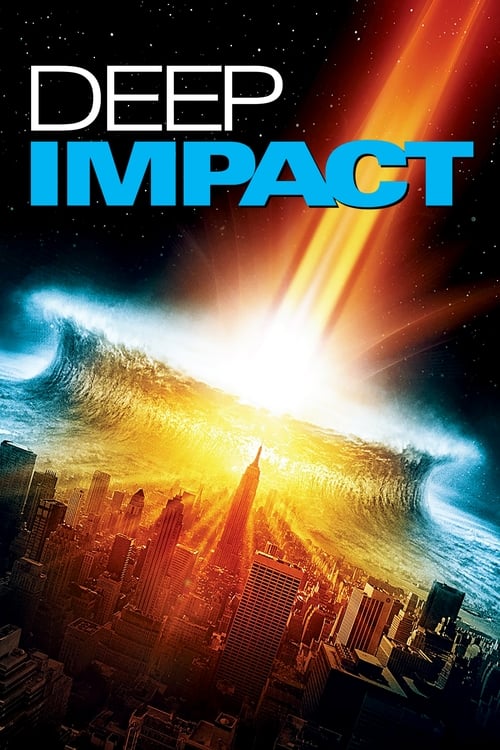
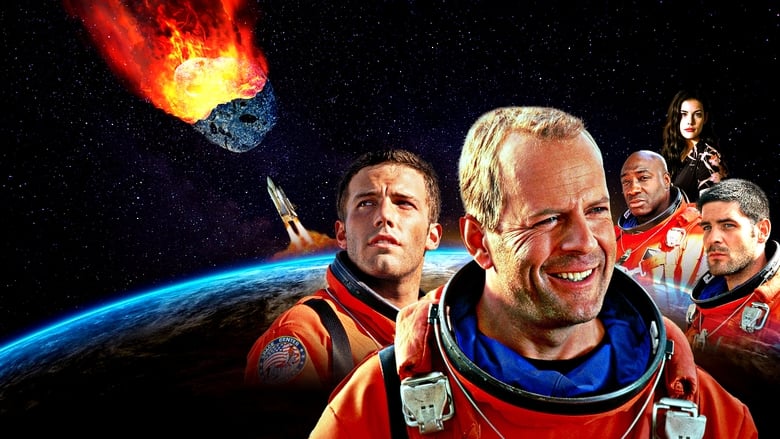
If you lived through the summer of 1998, you were legally required to have an opinion on space rocks. It was the year of the "Twin Asteroid Movies," a bizarre Hollywood phenomenon where two studios spent hundreds of millions of dollars to tell us we were all going to die by celestial impact. On one side, you had Michael Bay’s Armageddon—a loud, gasoline-soaked fever dream where oil drillers become astronauts because teaching miners to fly is apparently easier than teaching pilots to use a drill. On the other side, we had Deep Impact, a film that actually bothered to ask: "If we’re all about to be pulverized, who are we going to call to say goodbye?"
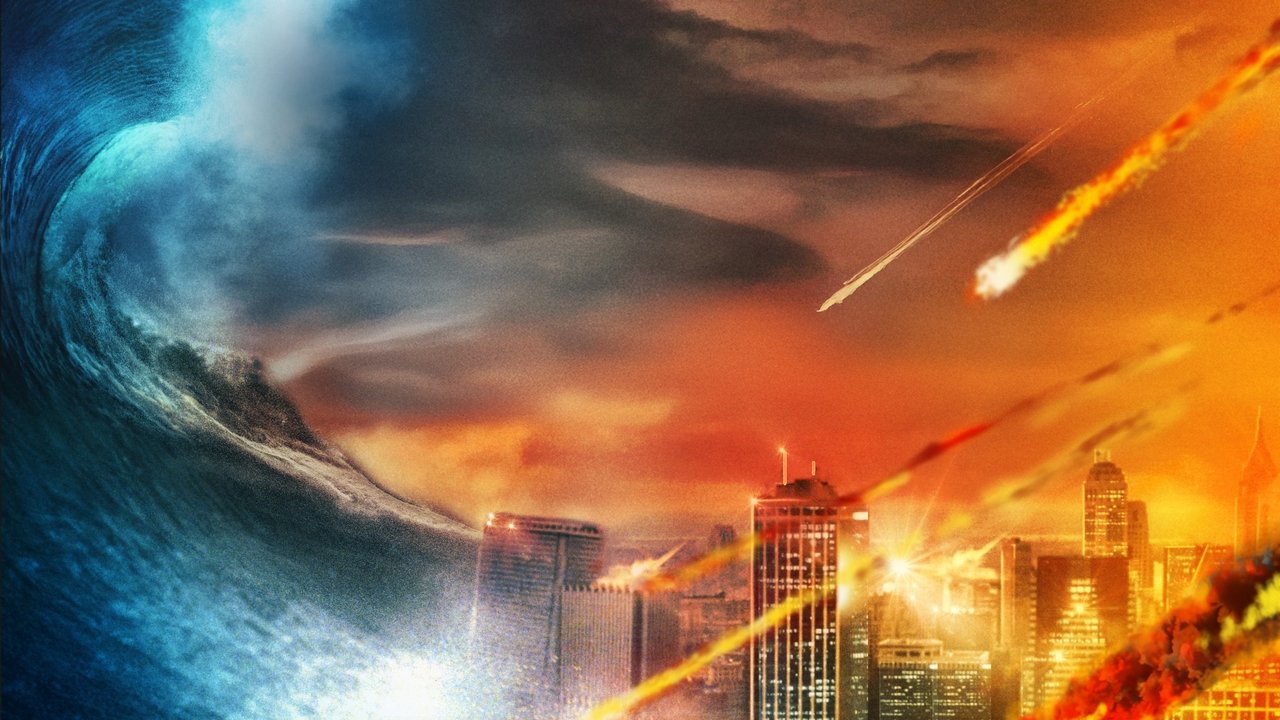
I watched this recently on a Tuesday night while my neighbor was loudly practicing the tuba, which provided a strangely heroic, if slightly off-key, score to the apocalypse. It turns out that twenty-five years later, Deep Impact isn't just a "disaster movie." It’s a surprisingly somber drama that just happens to have a seven-mile-wide rock hurtling toward the Atlantic.
The Journalism of the End Times
The movie kicks off not with an explosion, but with a spreadsheet. A young Elijah Wood (playing Leo Biederman) spots a smudge in the sky that shouldn't be there. This leads us to Téa Leoni as Jenny Lerner, an ambitious MSNBC reporter who accidentally stumbles onto the story of the millennium while investigating what she thinks is a sex scandal involving someone named "Ellie." Turns out, "E.L.E." stands for Extinction Level Event. The journalistic subplot feels like a high-stakes game of Clue where the prize is a front-row seat to the end of the world.
What I’ve always appreciated about Mimi Leder’s direction here is the restraint. While Bay would have had the camera spinning 360 degrees around a laptop, Leder lets the dread simmer. Téa Leoni gives a performance that feels grounded in 90s career-woman tropes but evolves into something genuinely moving as she reconnects with her estranged father, played by Maximilian Schell. Her realization that the "scoop of the century" doesn't matter if there’s no one left to read it is the emotional spine of the film.
A Presidential Masterclass
We have to talk about Morgan Freeman. Long before he was playing God, he was President Tom Beck, and quite frankly, I’m still ready to vote for him. In the late 90s, movie presidents were either action heroes (Harrison Ford in Air Force One) or buffoons. Morgan Freeman chose a third option: the calm, authoritative grandfather of a dying nation.
When he goes on television to announce "The Messiah" mission—a joint US-Russian attempt to blow up the comet—he doesn't use hyperbole. He treats the American public like adults. Looking back, there’s a certain nostalgia in seeing a fictional government handle a global crisis with such transparency and coordinated logistics. The film’s "Lottery" system—where 800,000 citizens are randomly selected to live in underground caves while everyone over age 50 is left behind—is chilling. It moves the film away from "How do we stop it?" and into "Who gets to survive?" territory, which is far more haunting.
The Craft of the Crash
From an action standpoint, Deep Impact delivers a different kind of thrill than its contemporaries. The space mission led by Robert Duvall (playing Capt. Spurgeon 'Fish' Tanner) feels claustrophobic and dangerous. Robert Duvall brings a crusty, veteran weight to the role, acting as the stabilizer for a group of younger, flashier astronauts. The sequence on the surface of the comet—with its outgassing vents and shifting terrain—is a great example of late-90s practical effects meeting emerging CGI.
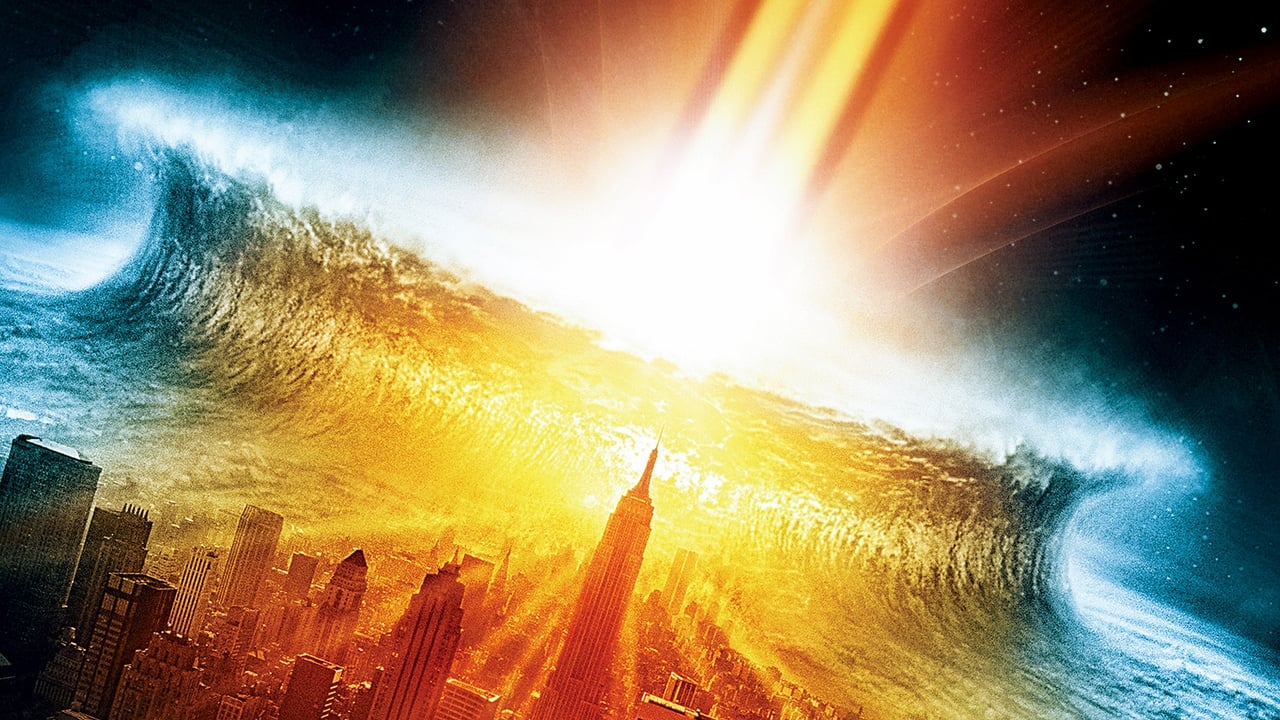
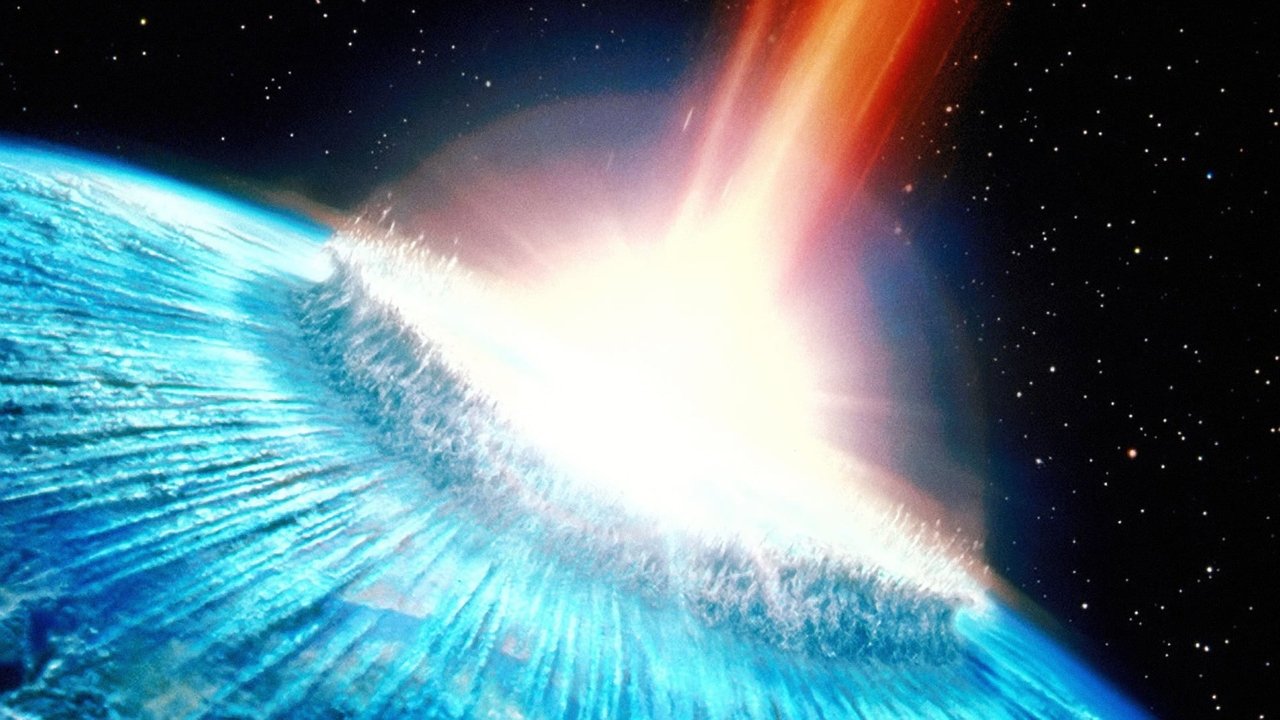
The tidal wave sequence at the end was, for 1998, the pinnacle of digital destruction. Does it hold up against the pixel-perfect water physics of Avatar? No. But there is a physical weight to the way the water consumes New York City that still feels impactful. It was produced by Industrial Light & Magic during that sweet spot in the CGI revolution where digital tools were used to enhance massive physical sets and miniatures.
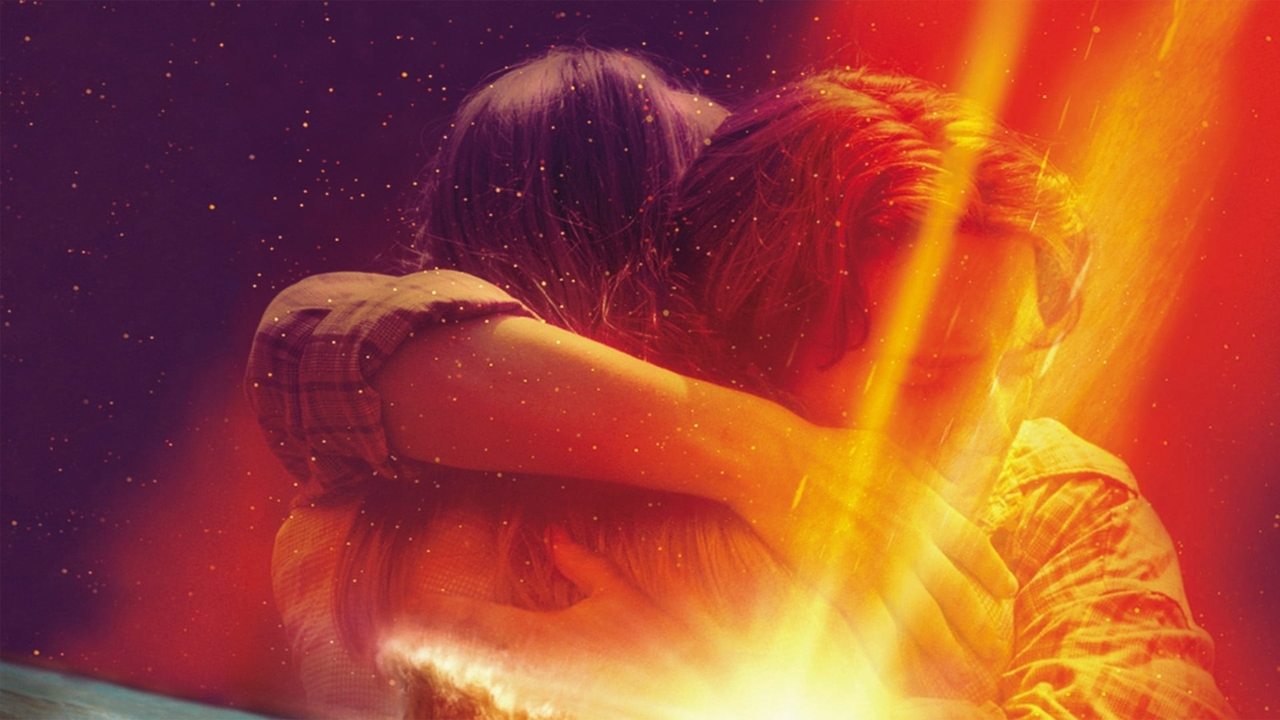
Interestingly, the film had a budget of $75 million and went on to make nearly $350 million worldwide. It was a massive hit, but it often gets overshadowed by the $550 million behemoth that was Armageddon. To me, that’s a shame. While Michael Bay gave us a theme park ride, Mimi Leder gave us a eulogy. The scene where Téa Leoni stands on the beach with her father as the wave approaches is, quite honestly, one of the most effective "final moments" in blockbuster history.
Stuff You Didn't Notice
One of the cooler details is that the production actually hired real astronomers to consult. Gene Shoemaker, one of the co-discoverers of the Shoemaker-Levy 9 comet, was an advisor. This is why the comet looks like a dirty snowball rather than a glowing fireball—which is scientifically accurate. Also, keep an eye out for a young Jon Favreau as one of the astronauts; it’s a reminder that before he was the architect of the MCU, he was just another guy trying to survive a space rock.
The film also captures that specific pre-9/11, Y2K-adjacent anxiety. There was a feeling in the late 90s that we had reached the "end of history" and the only thing that could possibly stop us was a literal act of God from the heavens. Deep Impact taps into that, but it replaces cynicism with a very 90s brand of earnestness.
In the end, Deep Impact is the "adult" disaster movie. It’s less about the explosion and more about the silence that follows the news. While the pacing can be a bit lopsided—moving from a political thriller to a space mission to a family drama—it all converges on a singular, powerful idea: when the clock runs out, the only thing that matters is who you’re holding onto. It’s a film that earns its tears by treating its characters like people instead of props, and that’s why it’s still worth a watch today.

Keep Exploring...
-

Outbreak
1995
-
Godzilla
2014
-
Volcano
1997
-
Soldier
1998
-
The 6th Day
2000
-

Jurassic Park III
2001
-
Clear and Present Danger
1994
-
Stargate
1994
-
Congo
1995
-
Independence Day
1996
-
Twister
1996
-
Face/Off
1997
-
Men in Black
1997
-

The Lost World: Jurassic Park
1997
-
The Peacemaker
1997
-
Armageddon
1998
-
Star Wars: Episode I - The Phantom Menace
1999
-

X-Men
2000
-
Planet of the Apes
2001
-
Men in Black II
2002