Godzilla
"Size isn't everything."
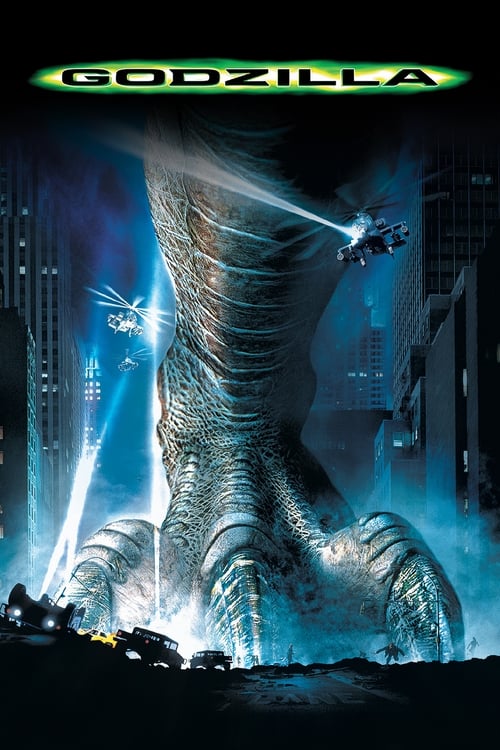
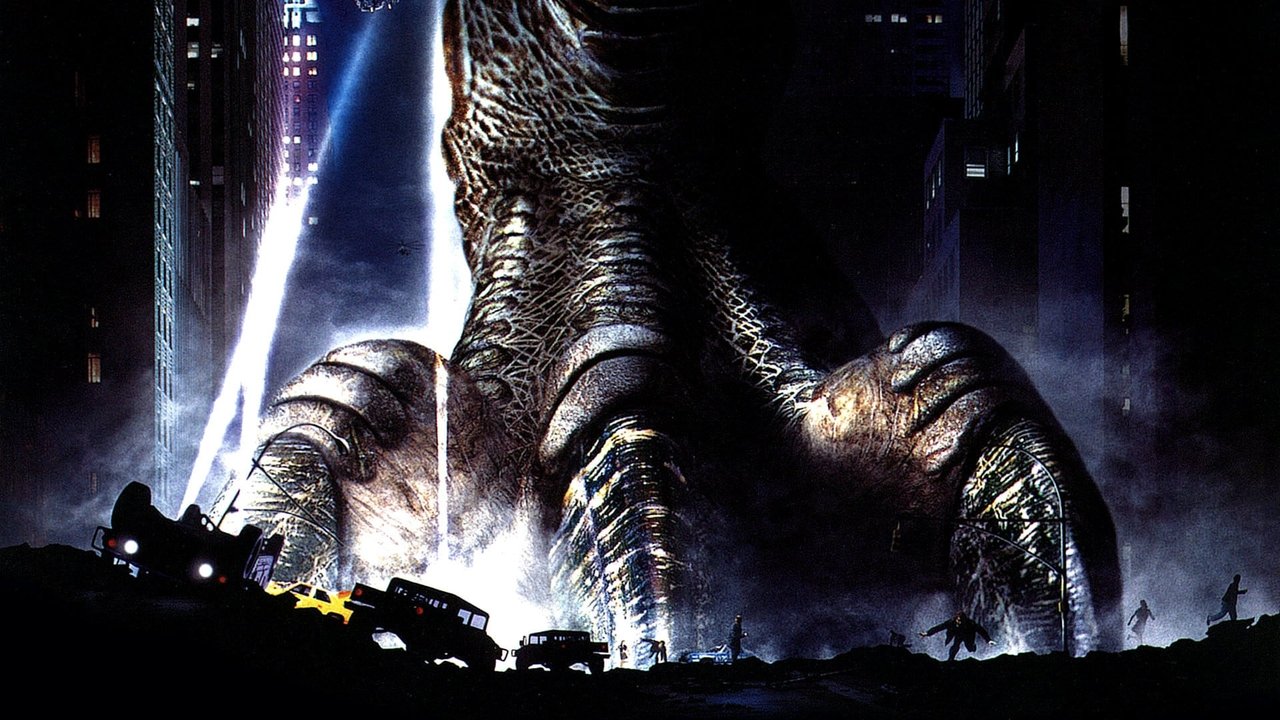
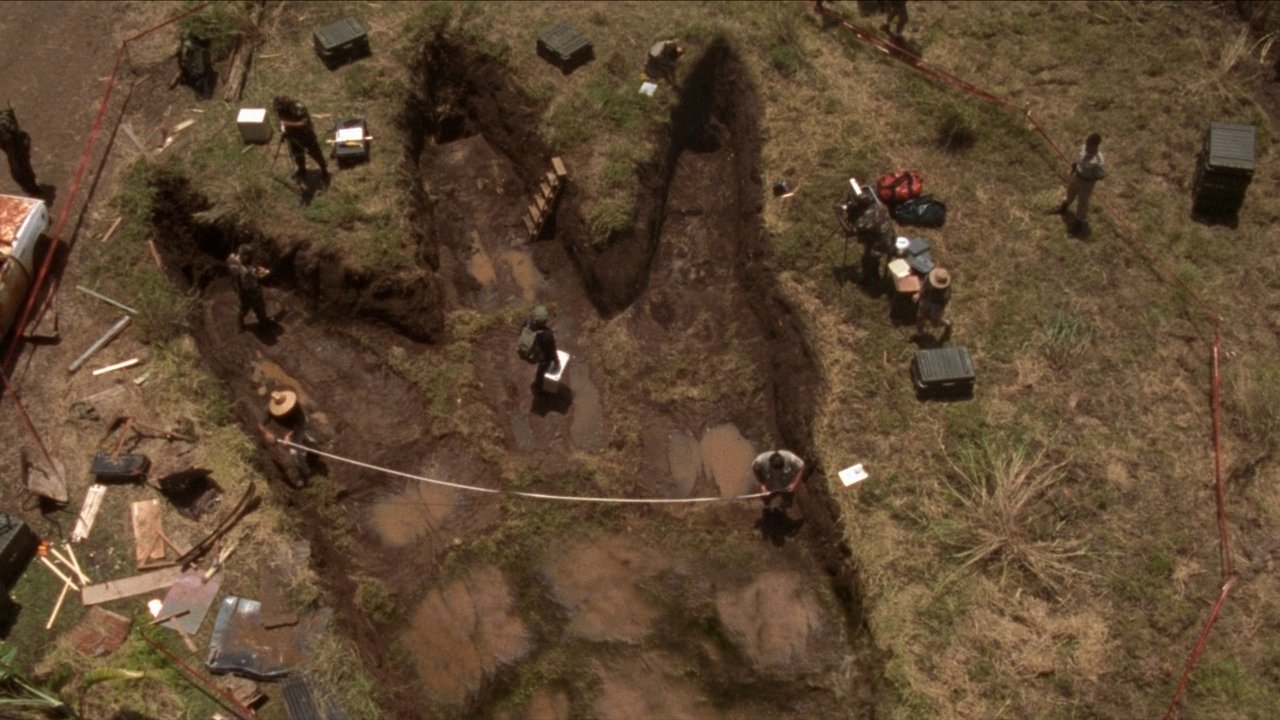
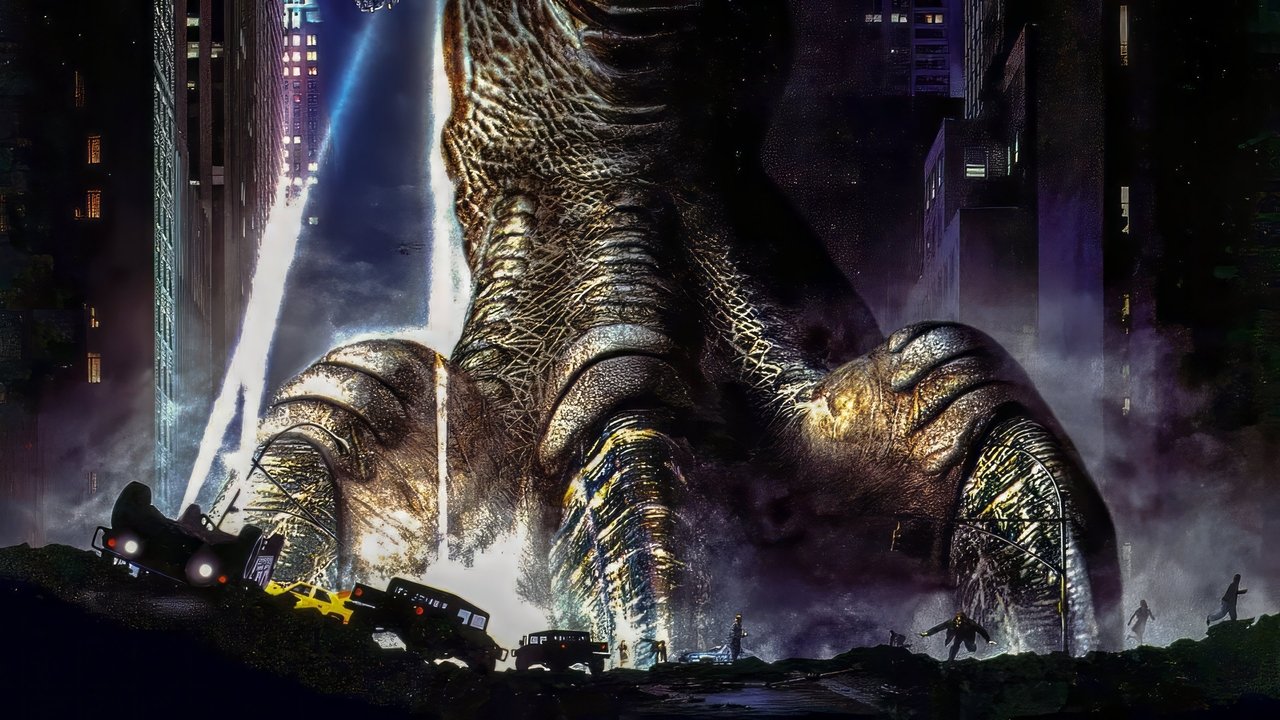
The marketing for 1998’s Godzilla was arguably the most confident flex in cinema history. I remember the bus wraps and giant billboards that simply read "Size Does Matter," showing nothing but a massive, scaly foot crushing a bus. It was the peak of the 90s "event movie" era—a time when you didn't need a cinematic universe or a multiverse; you just needed a director who liked blowing up landmarks and a budget that could buy a small country.
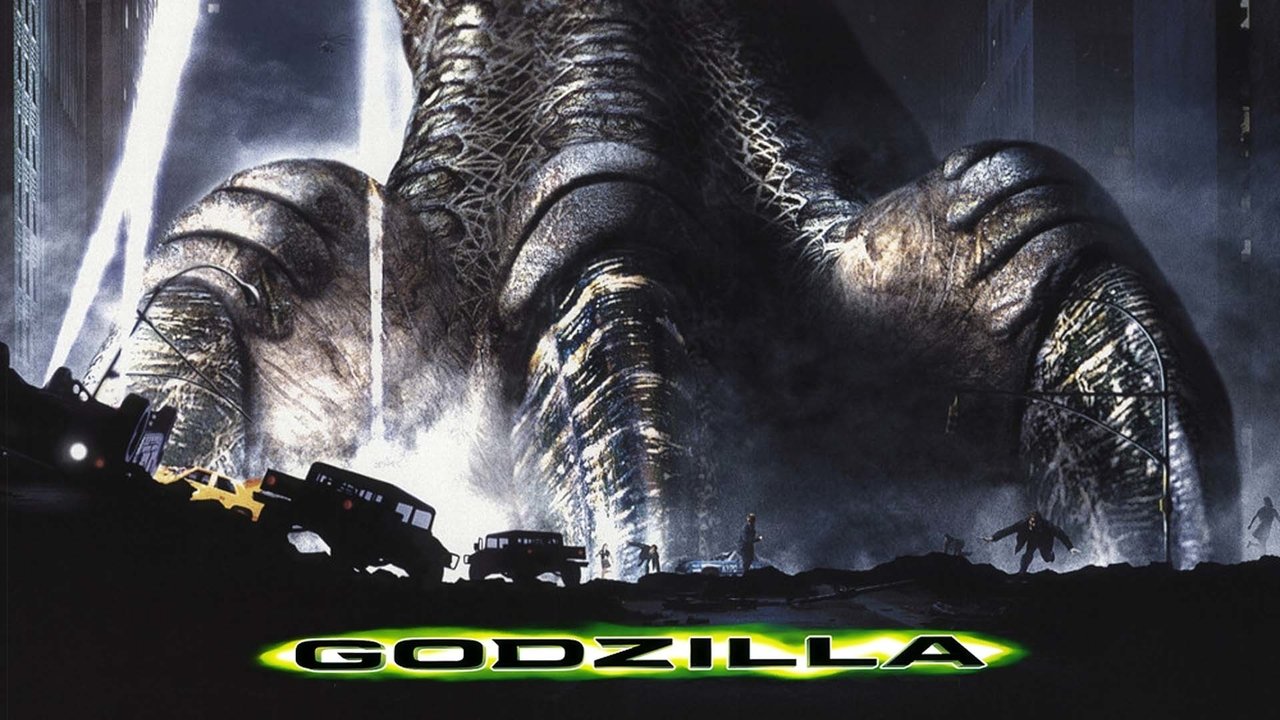
Watching it again recently, while unsuccessfully trying to navigate a bag of incredibly stale pretzel sticks, I realized that this film is the ultimate time capsule. It sits right at the awkward puberty of the CGI revolution. It’s too digital to feel grounded, but too early to look polished. It is a movie that desperately wants to be Jurassic Park, yet settles for being a disaster flick with a giant iguana problem.
The Monster in the Room (Literally)
Let’s address the irradiated lizard in the room: this isn't Godzilla. Toho, the Japanese studio that owns the Big G, eventually felt so betrayed by this redesign that they officially renamed this creature "Zilla" in later appearances, mocking it for being a monster that "takes the God out of Godzilla."
Director Roland Emmerich and producer Dean Devlin—fresh off the massive success of Independence Day—weren't interested in a metaphor for nuclear trauma. They wanted a sleek, fast predator. What they delivered was a glorified remake of The Beast from 20,000 Fathoms with a Jurassic Park budget and a script written on a napkin during a lunch break. While the CGI was groundbreaking for its time, it hasn't aged with the same grace as the practical effects in 1993's Jurassic Park. There are moments where the creature looks like a blurry screensaver, especially when it’s sprinting through the concrete canyons of Manhattan.
A Cast of Cartoon Characters
The human element is where things get truly bizarre. Matthew Broderick plays Dr. Niko Tatopoulos (everyone just calls him "Nick" because "Tatopoulos" is apparently the hardest word in the English language to pronounce), an earthworm specialist who is suddenly the world’s leading expert on giant reptiles. Broderick brings a sort of "clueless professor" energy that feels like he wandered off the set of a different, much smaller movie.
The real MVP, however, is Jean Reno as Philippe Roaché, a French secret service agent who is essentially in the movie to remind us that French people love coffee and Elvis. His performance is the only one that understands the assignment: this is a campy monster movie. His disguise as an American insurance adjuster is one of the film's few genuine comedic highlights. On the flip side, the romantic subplot with Maria Pitillo’s Audrey feels like a vestigial limb from a 1980s rom-com that refuses to fall off.
There’s also a strange obsession with The Simpsons here. If you close your eyes, you’ll hear familiar voices everywhere. Hank Azaria, Harry Shearer, and Nancy Cartwright all appear or provide voices, making you half-expect the monster to step on a giant rake and let out a Sideshow Bob shudder.
The Siskel and Ebert Vendetta
One of the weirdest bits of trivia involves the villains—or rather, the human annoyances. The Mayor of New York is played by Michael Lerner as "Mayor Ebert," and his sycophantic assistant is "Gene" (Lanny Flaherty). Emmerich was so annoyed by the real-life critics Gene Siskel and Roger Ebert’s negative reviews of his previous films that he turned them into bumbling, thumb-gesturing caricatures. Ironically, Ebert (the real one) actually gave the movie a negative review anyway, noting that if he was going to be in a Godzilla movie, the least they could do was have the monster eat him.
The Action and the Legacy
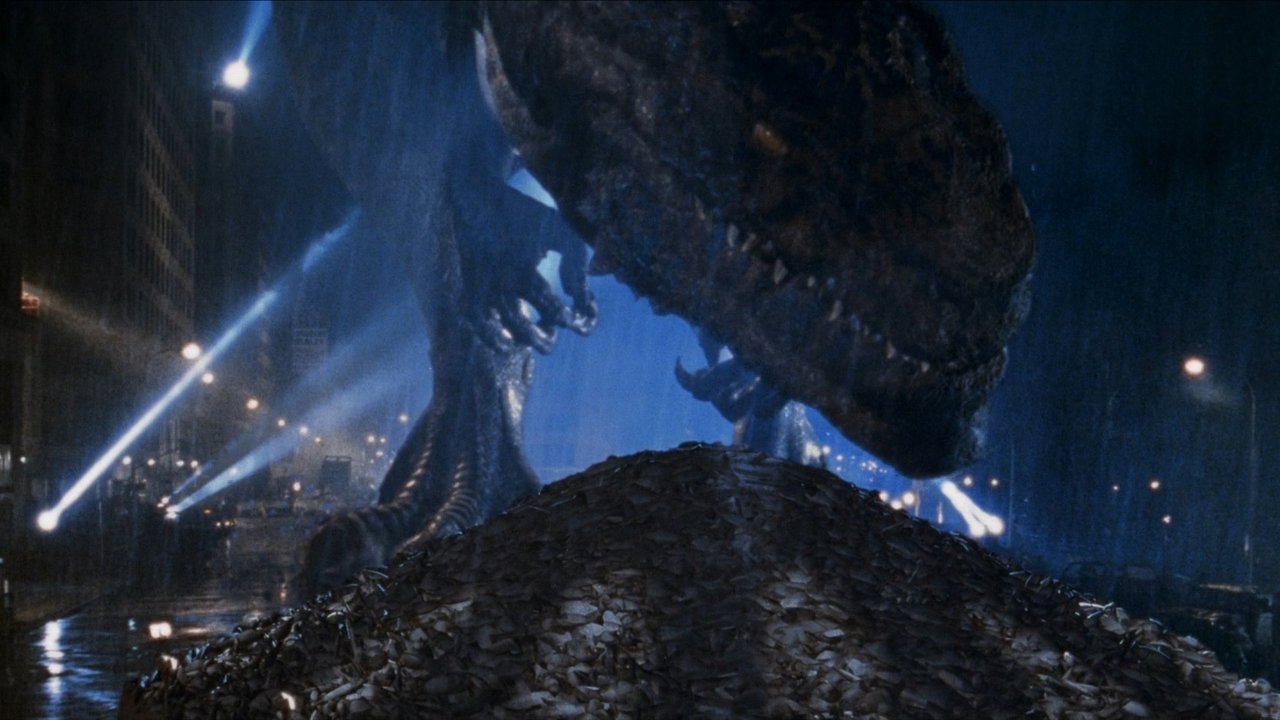
In terms of pure action, the film is a masterclass in "more is more." The Madison Square Garden sequence, where hundreds of baby Godzillas (looking suspiciously like Velociraptors) chase our heroes, is a blatant attempt to capture the tension of Spielberg’s kitchen scene. It works on a purely adrenaline-fueled level, even if it feels derivative. The cinematography by Ueli Steiger captures a rainy, perpetually dark Manhattan that feels moody and atmospheric, even if the physics of a skyscraper-sized lizard hiding behind a Chrysler building don't quite track.
Looking back, Godzilla 1998 represents the exact moment Hollywood realized that "brand recognition" was more important than "character depth." It was a massive financial success, but a cultural disaster that delayed a serious American Godzilla reboot for sixteen years.
Despite its flaws, there is a weird, nostalgic comfort to be found here. It’s a loud, messy, rain-soaked spectacle that reminds me of a time when we were just happy to see things get crushed in digital 1080p. It’s not "good" cinema, but as a piece of late-90s blockbusting hubris, it’s fascinating. It’s the kind of movie you leave on when you find it on cable at 2:00 PM on a Sunday, mostly because Jean Reno is having a great time and you’ve already finished your pretzels.
Keep Exploring...
-
Universal Soldier
1992
-

The Day After Tomorrow
2004
-
2012
2009
-
Hollow Man
2000
-
The 6th Day
2000
-
The Tuxedo
2002
-
Terminator 3: Rise of the Machines
2003
-

10,000 BC
2008
-
The League of Extraordinary Gentlemen
2003
-
Chain Reaction
1996
-
Moonfall
2022
-

Æon Flux
2005
-

X-Men: The Last Stand
2006
-
Next
2007
-
Babylon A.D.
2008
-
Gamer
2009
-

G.I. Joe: The Rise of Cobra
2009
-
Surrogates
2009
-
Terminator Salvation
2009
-
Cowboys & Aliens
2011