Mercury Rising
"The government has a secret. A boy has the key."
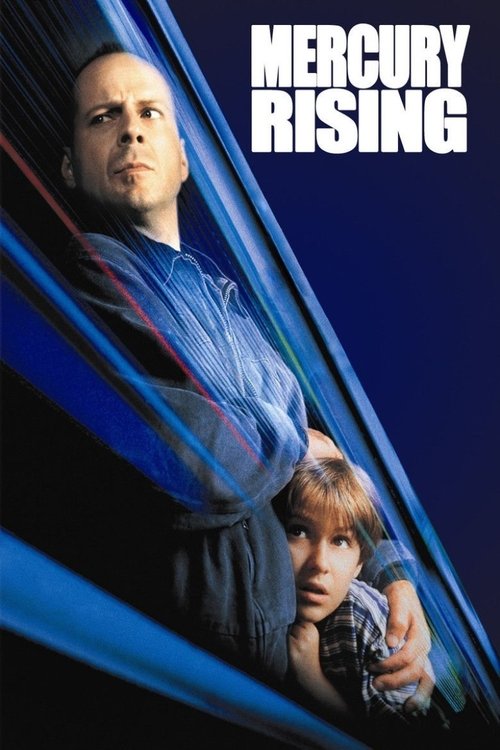
Bruce Willis spent most of 1998 trying to save the planet from a Texas-sized asteroid in Armageddon, but just a few months prior, he was busy navigating a much smaller, quieter, and arguably more stressful catastrophe: a nine-year-old who liked puzzles. There was a specific flavor of Bruce Willis movie in the late 90s—a sort of "Exhausted Dad Action" subgenre where his hairline was receding almost as fast as his character’s patience for federal bureaucracy. In Mercury Rising, he isn't the invincible cowboy of Die Hard; he’s Art Jeffries, an undercover FBI agent who has been relegated to the basement after a botched sting operation. He’s tired, he’s grumpy, and he’s the only thing standing between a kid and a government hit squad.

I watched this recently on a flickering CRT monitor while eating a bowl of lukewarm SpaghettiOs, which felt like the most authentic 1998 way to experience a mid-budget thriller. It’s a film that sits right on the cusp of the digital revolution, where the "Information Superhighway" was still a scary, nebulous concept and "unbreakable codes" were the stuff of national security nightmares.
The Kid Who Broke the Bank
The plot kicks off when Miko Hughes, playing a nine-year-old boy with autism named Simon, solves an "unbreakable" NSA code called Mercury that was hidden in a puzzle magazine as a test. Miko Hughes, who many of us remember as the creepy kid from Pet Sematary or the "Why are you following me?" boy from Wes Craven's New Nightmare, gives a performance that was quite groundbreaking for the time. Looking back, the film’s portrayal of autism leans heavily into the "savant" trope that Rain Man popularized, treating Simon’s neurodivergence almost like a superpower that allows him to see patterns in the noise.
When Simon calls the number hidden in the code, he inadvertently triggers a "clean-up" protocol led by Alec Baldwin’s Nicholas Kudrow. Alec Baldwin plays the kind of villain who probably files his taxes early just to feel the thrill of bureaucratic efficiency. He’s chillingly calm, convinced that the life of one "disposable" child is a fair price for the security of a multi-billion dollar encryption system. It’s the classic 90s "Greater Good" vs. "The Individual" conflict, and Baldwin chews the scenery with a whispery, menacing grace that makes you realize why he was the king of cold-blooded suits in this era.
Practical Panic and Train Tracks
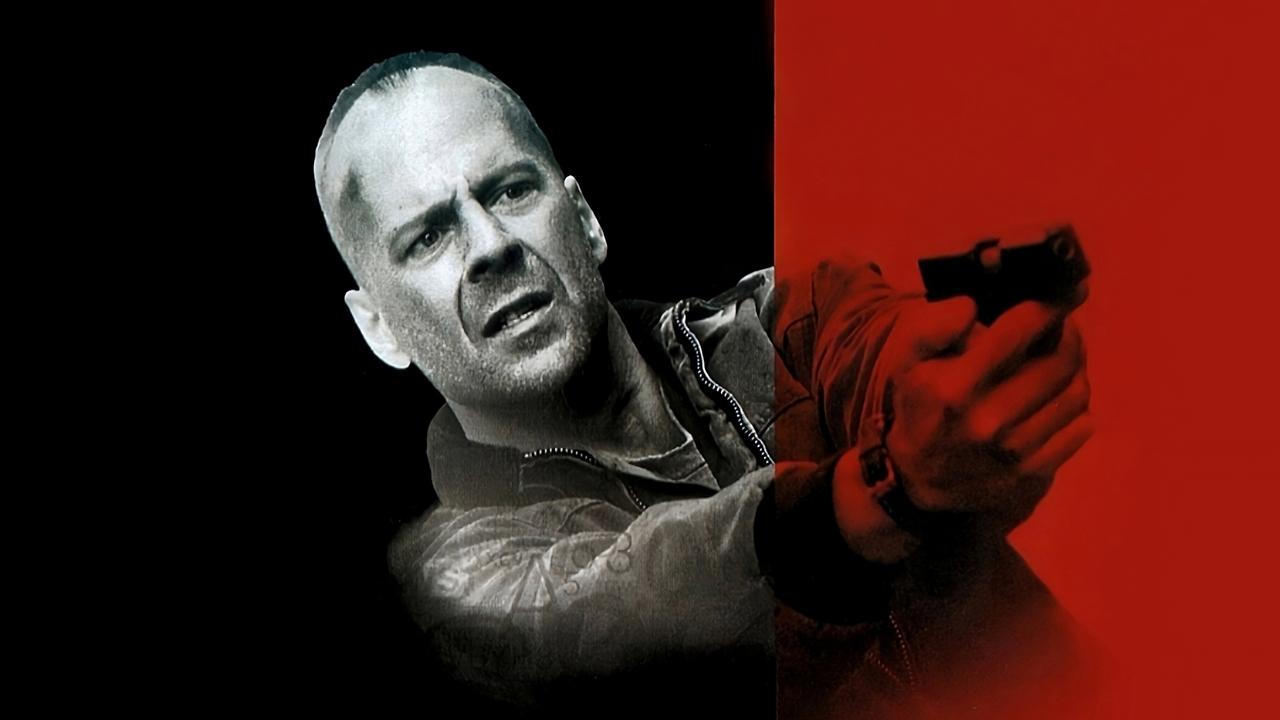
Director Harold Becker, who previously gave us the slick neo-noir Sea of Love, brings a gritty, grounded texture to the action. This was an era before every shootout was polished with digital blood and every car chase was augmented by CGI. When Art Jeffries is protecting Simon in a crowded Chicago street, the stunts feel heavy. There’s a sequence on a moving train that stands out for its clarity and momentum. You can feel the weight of the metal and the genuine danger as Bruce Willis maneuvers through the carriages. Art Jeffries is basically John McClane after a very long weekend and a therapy session that didn't take.
The cinematography by Michael Seresin (who also shot Harry Potter and the Prisoner of Azkaban) gives the film a cold, sterile look that suits the NSA's high-tech world, contrasting with the messy, lived-in apartments and hospitals where Jeffries tries to hide Simon. Adding to the tension is a surprisingly traditional score by the legendary John Barry. Hearing the man behind the James Bond sound apply his sweeping, brassy romanticism to a gritty Chicago thriller is a strange but delightful experience. It elevates the film, making it feel more like an old-school 70s conspiracy thriller rather than a disposable 90s action flick.
Analogue Heroes in a Digital Panic
Revisiting Mercury Rising now reveals a fascinating Y2K-era anxiety. The "Mercury" code is treated with the kind of reverence we now reserve for quantum computing or AI. The idea that a child could "break the internet" via a magazine puzzle is charmingly dated, yet the fear of government overreach feels more relevant than ever. The supporting cast is surprisingly deep, too. Chi McBride (from Pushing Daisies) brings some much-needed warmth as Jeffries’ partner, and a young Kim Dickens (Gone Girl) shows up as a stranger who gets pulled into the chaos.

The film isn't perfect—it's often manipulative, and the pacing drags in the middle as the "on the run" tropes start to repeat—but it has a physical soul that is often missing from modern thrillers. It reminds me of the era when a movie didn't need to set up a cinematic universe; it just needed a guy with a gun, a kid in trouble, and a $60 million budget to blow things up in the third act. It’s a "comfort food" thriller: predictable, a little salty, but ultimately satisfying.
While it never reaches the heights of the decade's best thrillers like The Fugitive, Mercury Rising is a solid example of the late-90s mid-budget programmer. It’s worth a look for Alec Baldwin’s icy performance and to see Bruce Willis in that sweet spot where he still seemed to care about the weary humanity of his characters. If you have 111 minutes to kill and a soft spot for practical stunts and government conspiracies, you could do a lot worse than watching Art Jeffries grumble his way through Chicago.

Keep Exploring...
-
The Siege
1998
-
Payback
1999
-

Basic
2003
-
The Hunted
2003
-

Hackers
1995
-
Breakdown
1997
-
The Score
2001
-

Get the Gringo
2012
-
Backdraft
1991
-

Striking Distance
1993
-
Hostage
2005
-

Double Impact
1991
-

The Negotiator
1998
-

xXx
2002
-

Domino
2005
-

United 93
2006
-

Street Kings
2008
-
Takers
2010
-
Batman: Year One
2011
-

Dead Man Down
2013