Mulan
"One Soldier. One Secret. One Empire to Save."
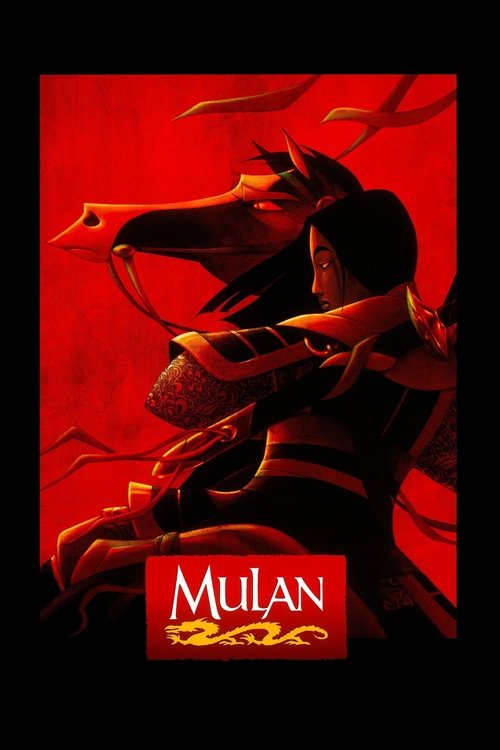
The silence in the middle of Mulan is what usually surprises me most. In an era where Disney was perfecting the Broadway-style animated musical, there is a sequence halfway through the film—the "hair-cutting" scene—that features no dialogue and no singing. It’s just a young woman, a stolen sword, and a heavy rainfall. For a 1998 blockbuster aimed at families, that moment of quiet desperation feels incredibly grounded. It’s a sharp pivot from the "I want" songs of the early 90s; Mulan isn’t singing about finding a prince or seeing the world. She’s trying to keep her father from being slaughtered in a war he can’t survive.
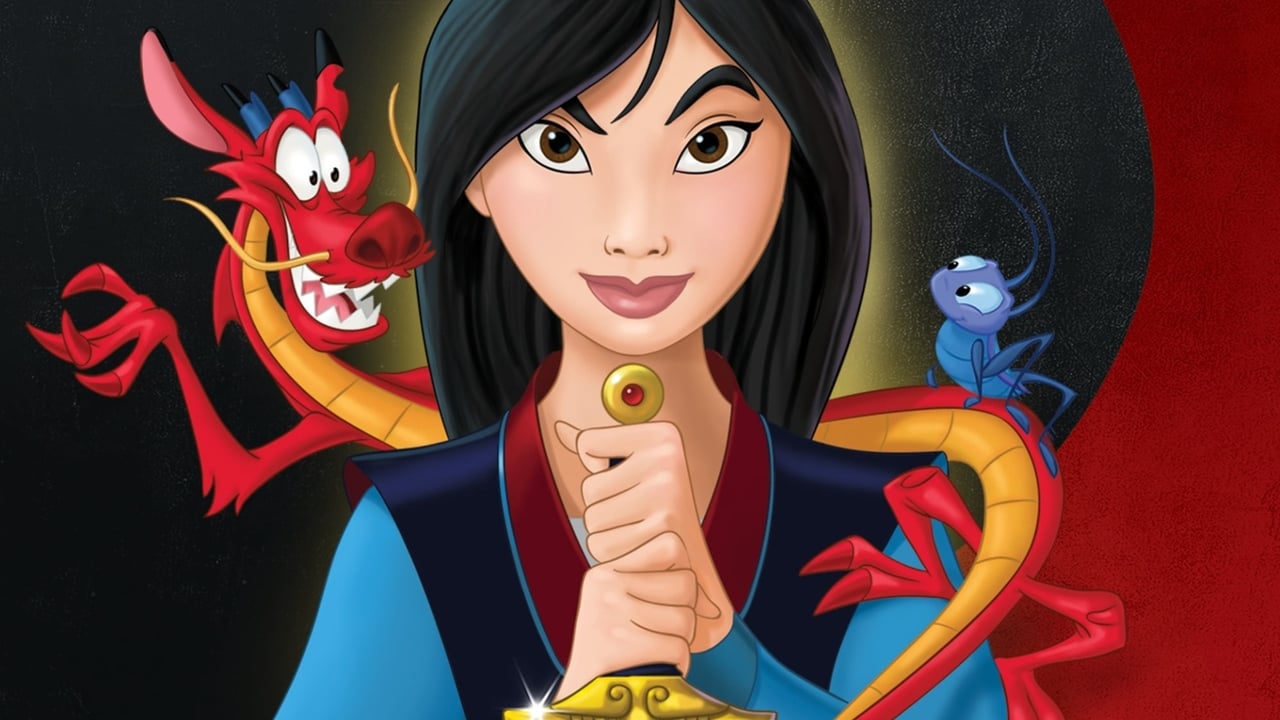
I re-watched this recently on my old laptop, the one with a persistently sticky 'R' key and a screen smudge that looks vaguely like a thumbprint, and even on a sub-par display, the artistic ambition of this film radiates. Mulan arrived at a fascinating crossroads for Walt Disney Feature Animation. It was the first of three features primarily produced at the Disney-MGM Studios in Orlando, and it feels distinct from the "Core Four" (from Mermaid to Lion King). It’s leaner, more visual, and arguably more daring in how it handles its protagonist's agency.
A Different Kind of Princess
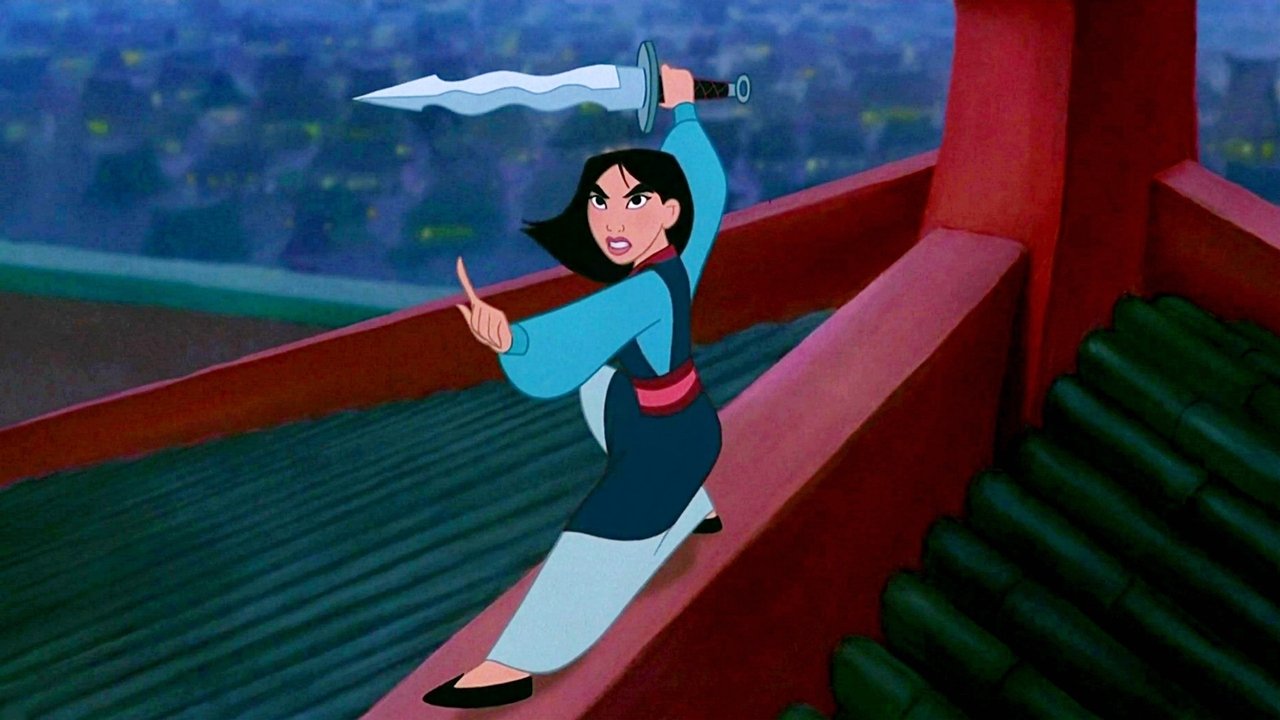
While the marketing machine certainly lumped her in with the "Disney Princess" brand, Ming-Na Wen voices a character who is fundamentally a soldier. Looking back, Mulan is perhaps the most competent hero in the entire Disney Renaissance canon. She doesn't win through magic or a lucky kiss; she wins because she’s a better strategist than the men surrounding her. The film does a fantastic job of showing her "training montage" growth without it feeling unearned. When she finally reaches the top of that pole to retrieve the arrow, it’s a victory of physics and wit, not just grit.
BD Wong provides the voice for Li Shang, and in retrospect, Shang is the only Disney love interest who spends 80% of the movie being an exhausted middle manager. Their chemistry is built on mutual respect and shared trauma, which feels surprisingly mature for a film that also features a talking dragon. Speaking of which, Eddie Murphy as Mushu is the ultimate 90s time capsule. Coming off the heels of Robin Williams’ Genie, the "celebrity sidekick" was a mandatory requirement, and while Mushu’s fast-talking urban energy should technically clash with the Han Dynasty setting, Murphy’s sincerity carries it. He’s not just comic relief; he’s a disgraced ancestor trying to earn his way back, making his stakes just as personal as Mulan’s.
The Digital Avalanche
By 1998, the CGI revolution was in full swing, and Mulan used it to create one of the most terrifying sequences in animation history. To depict the Huns charging down the mountain, the production team developed "Attila," a proprietary software that allowed them to render thousands of individual characters moving independently.
When Miguel Ferrer’s Shan-Yu commands his army to descend, the scale is genuinely intimidating. Unlike modern CGI, which can sometimes feel floaty and weightless, this sequence feels heavy and cold. You can almost feel the temperature drop. Shan-Yu remains one of Disney's most underrated villains specifically because he has no magical powers and no goofy song. He’s just a predatory force of nature with eyes like a hawk and a very clear goal: total conquest. He represents a grounded threat that forces Mulan to be more than just a girl in a costume; she has to become a tactician.
The Legacy of the Blade
The film was a massive hit, raking in over $300 million globally, but its path wasn't entirely smooth. Disney famously struggled to get the film released in China, largely due to political friction following the studio's involvement with the film Kundun. When it finally did land in Chinese theaters, it received a lukewarm reception—audiences there found the Americanized take on their folk hero a bit jarring.
However, in the context of Western animation, it was a bridge-builder. It moved the needle on what a "family film" could explore, touching on gender performativity and the crushing weight of systemic expectation. The score by Jerry Goldsmith is a masterclass in blending traditional Chinese instrumentation with a sweeping Western orchestra, providing a backbone that makes the adventure feel truly epic.
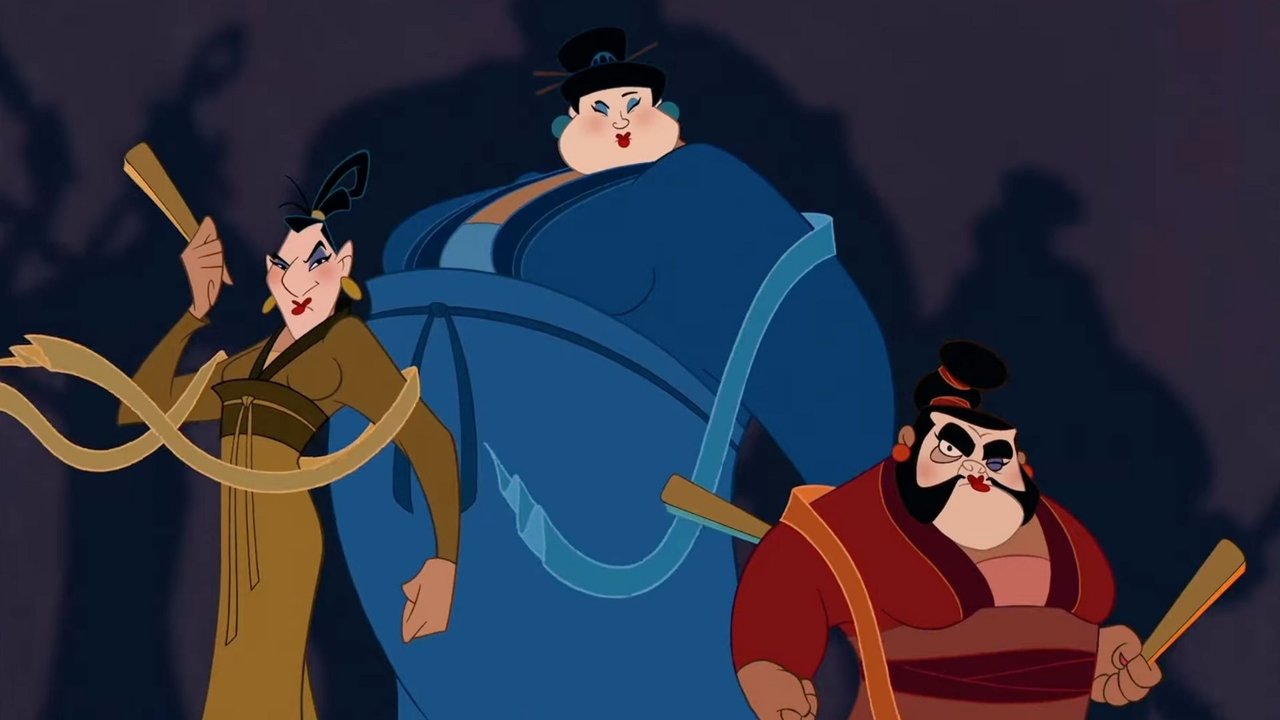
Even the supporting cast, featuring the gravelly tones of Harvey Fierstein and the maternal warmth of Freda Foh Shen, adds layers of texture to a world that feels lived-in. It’s a movie that respects its audience's intelligence, assuming they can handle a story about war and identity without needing it sugar-coated.

Mulan is the rare 90s blockbuster that feels more relevant now than it did at release. It eschews the "happily ever after" trope in favor of "honor restored," focusing on the internal journey of a woman finding her own voice in a world that demanded her silence. It’s funny, it’s visually stunning, and it features the best training montage song ever written. If you haven't seen it since you were a kid, revisit it—you'll find a much more sophisticated film than you remember.
***
Wait, what about the live-action remake? We don't talk about that. The 1998 original remains the definitive version, proving that some stories are best told with the fluid, expressive power of hand-drawn ink and a very loud dragon.
Keep Exploring...
-
Mulan II
2004
-
The Prince of Egypt
1998
-
Shrek
2001
-
How to Train Your Dragon
2010
-
The Croods
2013
-

A Bug's Life
1998
-
Tarzan
1999
-

Ice Age
2002
-
Shrek 2
2004
-
Kung Fu Panda
2008
-
Toy Story
1995
-

Toy Story 2
1999
-

Lilo & Stitch
2002
-
The Incredibles
2004
-

Madagascar
2005
-
Cars
2006
-

Up
2009
-

Frozen
2013
-
Big Hero 6
2014
-
How to Train Your Dragon 2
2014