Patch Adams
"Laughter is the only medicine without a co-pay."
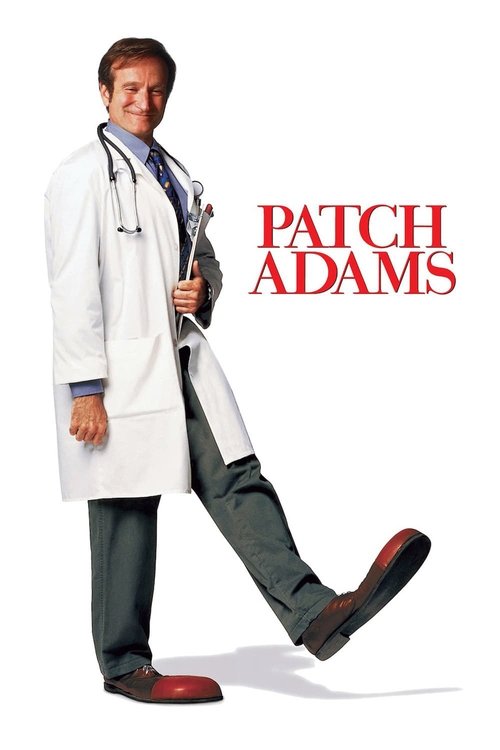
The sight of a grown man in a white lab coat wearing a red rubber nose and oversized clown shoes is, in the sterile context of a 1990s hospital, a radical act of rebellion. Looking back at Patch Adams, it’s easy to see why it became a lightning rod for the Great Sentimentality War of 1998. On one side, you had critics who found it as subtle as a sledgehammer to a funny bone, and on the other, an audience that turned it into a massive $202 million global hit. Revisiting it now, I find it occupies a strange, fascinating middle ground: it’s a film that genuinely wants to heal the world, but it’s so insistent on making you cry that it occasionally forgets to let you breathe.
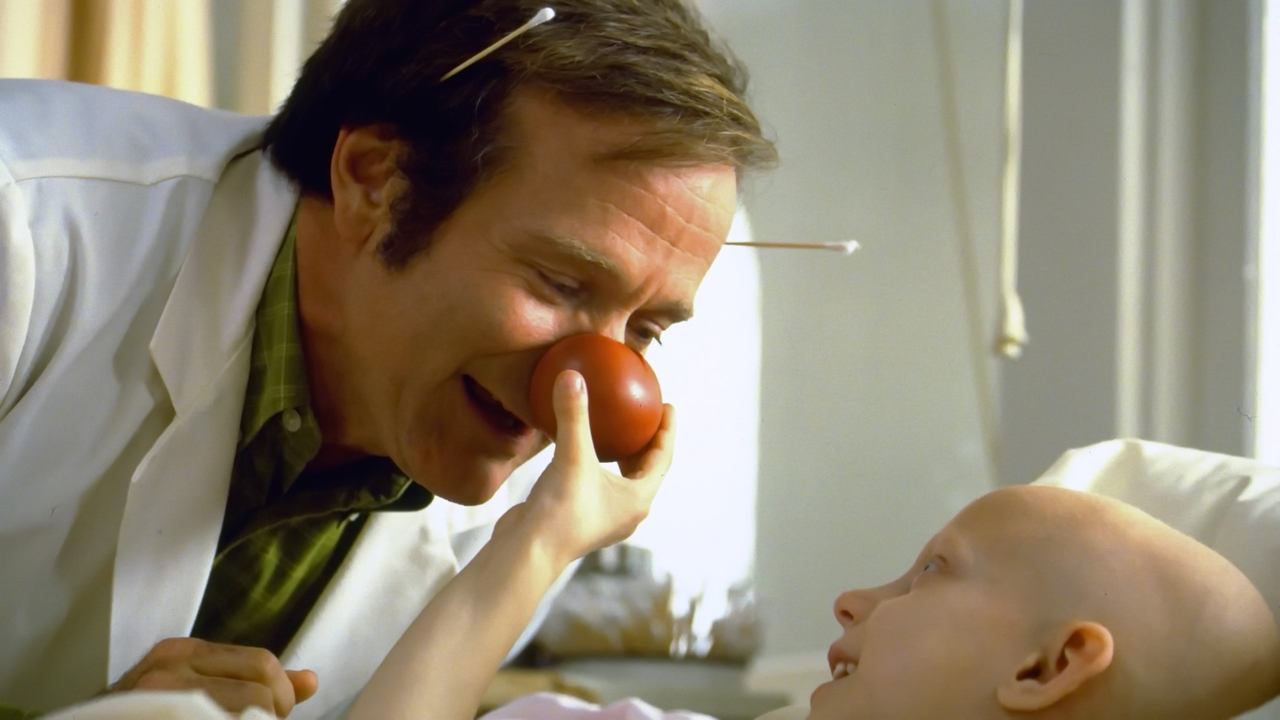
I watched this most recently on a Tuesday afternoon while recovering from a mild head cold, eating a bowl of lukewarm chicken noodle soup that had way too much celery in it. There is something about the "earnest" era of Robin Williams that pairs perfectly with the physical vulnerability of being sick. He doesn’t just play Hunter 'Patch' Adams; he inhabits the role with that specific, manic-yet-vulnerable energy that defined his post-Oscar Good Will Hunting career.
The Manic Doctor and the Grumpy Roommate
The film follows the real-life story of Hunter Adams, a man who checks himself into a mental institution, discovers a knack for connecting with people through humor, and decides to become a doctor. The catch? He’s in his 40s and the medical establishment of the 70s—represented here by the delightfully cold Bob Gunton (who was basically the 90s go-to guy for "Unfeeling Authority Figure" after The Shawshank Redemption)—thinks doctors should be gods, not clowns.
The real meat of the drama, though, isn't just Patch vs. The Dean. It’s Patch vs. Mitch Roman, played by a young, prickly Philip Seymour Hoffman. Watching this now, after Hoffman's incredible career, you can see the sheer weight he brings to a relatively standard "cynical roommate" role. He looks at Patch’s antics not with amusement, but with a weary, intellectual disgust. Their confrontation in the dorm room is one of the few scenes where the movie stops trying to be a "crowd-pleaser" and actually grapples with the terrifying responsibility of being a physician. Hoffman basically acts circles around the script’s more manipulative tendencies, reminding us that sometimes, you actually just need a doctor who knows which artery is leaking.
A Time Capsule of 90s Earnestness

Director Tom Shadyac was coming off a hot streak of high-concept comedies like Ace Ventura: Pet Detective and The Nutty Professor. Bringing that slapstick sensibility to a medical drama was a gamble that clearly paid off at the box office, but it creates a jarring tonal whiplash. One minute, Patch is using a bedpan as a foot-flipper to cheer up a terminal patient; the next, we’re hit with a tragic plot twist involving Monica Potter’s character, Carin, that still feels like a cheap shot designed to harvest tears.
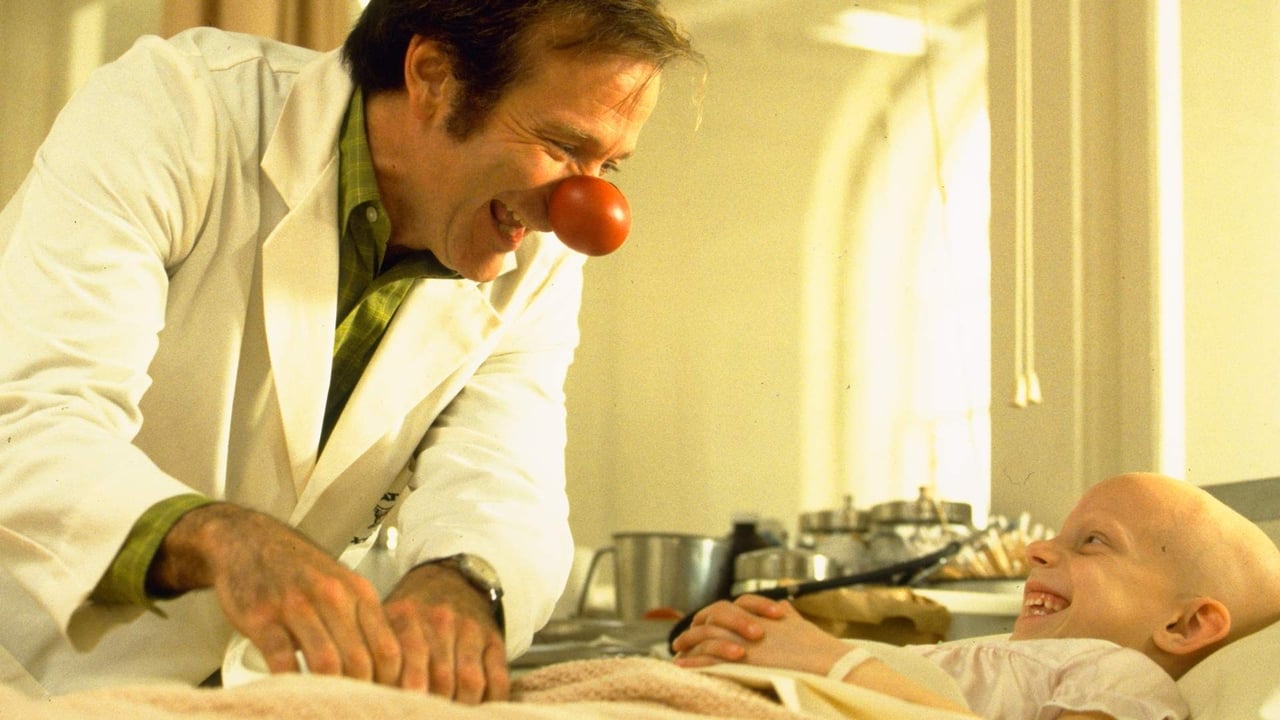
This was the era of the "Pre-CGI" biopic, where the spectacle wasn't in the effects, but in the performance. We were in the thick of the DVD transition, and I remember the special features on the early discs emphasizing how much Williams improvised with the actual child patients. You can feel that authenticity in the hospital scenes. When Williams is riffing, he’s not just a movie star; he’s a force of nature. However, the screenplay by Steve Oedekerk—who, weirdly enough, also gave us the absurdist Kung Pow! Enter the Fist—occasionally leans too hard into the "Laughter is the Best Medicine" mantra, making the actual science of medicine look like a nuisance rather than a necessity.
Behind the Red Nose
For those who love a bit of industry context, it’s worth noting that the real Hunter "Patch" Adams wasn't exactly a fan of his cinematic counterpart. He famously felt the film oversimplified his political activism and turned him into a "funny doctor" rather than a social revolutionary. Still, the production didn't skimp on the details. The budget was a hefty $50 million (roughly $95 million today), and much of that went into creating the lived-in, slightly sepia-toned look of a 1970s Virginia university, captured beautifully by cinematographer Phedon Papamichael.
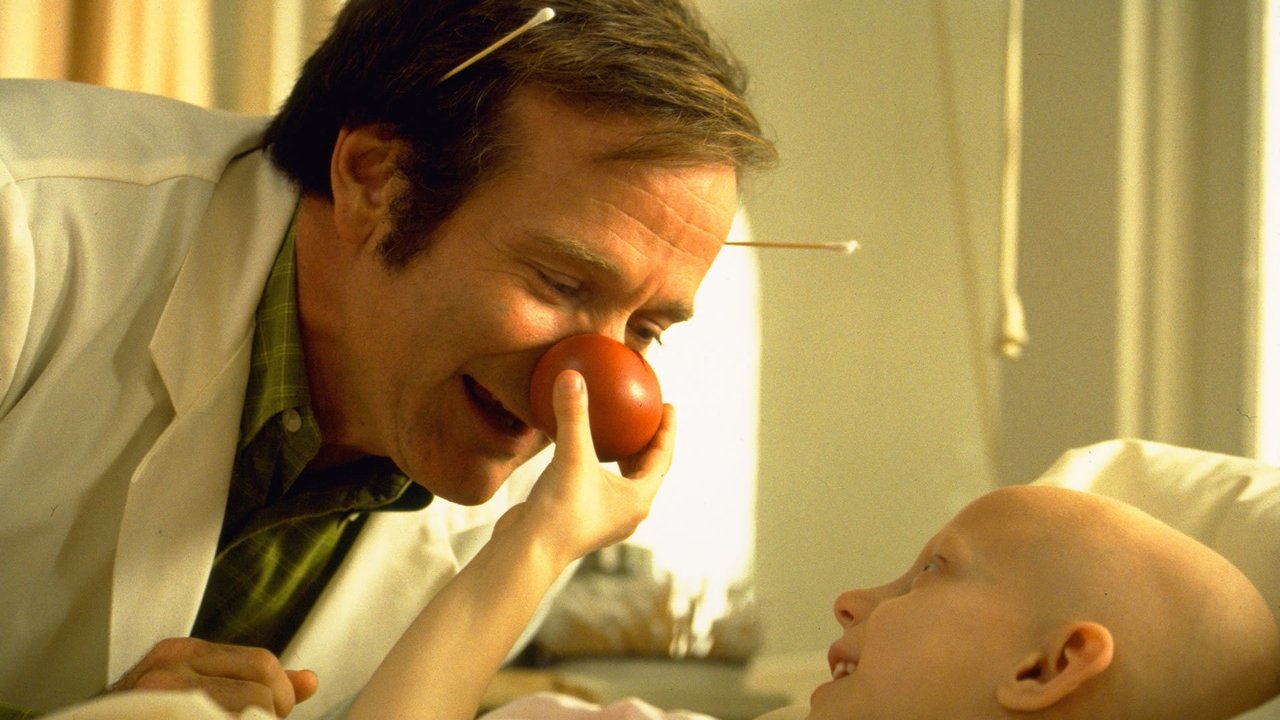
One of my favorite bits of trivia is that the film’s score was composed by Marc Shaiman, the man behind Hairspray and The American President. He knows exactly which heartstrings to yank and when to yank them. If you feel like your emotions are being toyed with, it’s because you’re in the hands of professionals.
Ultimately, Patch Adams is a movie that I can’t quite hate, even when I know it’s manipulating me. It’s a quintessential 90s "Blockbuster Drama"—big, loud, emotional, and anchored by a performance that only Robin Williams could deliver. It’s the kind of film that would never be made for theaters today; it would be a mid-budget streaming original that you’d skip past. But in the late 90s, this was the "watercooler" movie.
Is it a masterpiece? Not by a long shot. It’s often saccharine, and it treats the medical profession with a level of whimsy that would probably get a real doctor sued within twenty minutes. But if you’re looking for a film that champions the radical idea that we should treat people, not just diseases, it still packs a punch. Just keep the tissues—and the cynical roommate—handy.

Keep Exploring...
-

Bruce Almighty
2003
-
Mrs. Doubtfire
1993
-
Ace Ventura: Pet Detective
1994
-
Liar Liar
1997
-
Stepmom
1998
-
Dragonfly
2002
-

Something's Gotta Give
2003
-

The Nutty Professor
1996
-
Cool Runnings
1993
-
Sleepless in Seattle
1993
-

The Santa Clause
1994
-

Ace Ventura: When Nature Calls
1995
-
Big Daddy
1999
-
Chocolat
2000
-
About a Boy
2002
-

About Schmidt
2002
-
Chicago
2002
-

The Family Man
2000
-
Shall We Dance?
2004
-

The Terminal
2004