Pleasantville
"Life is messy, but it looks better in color."
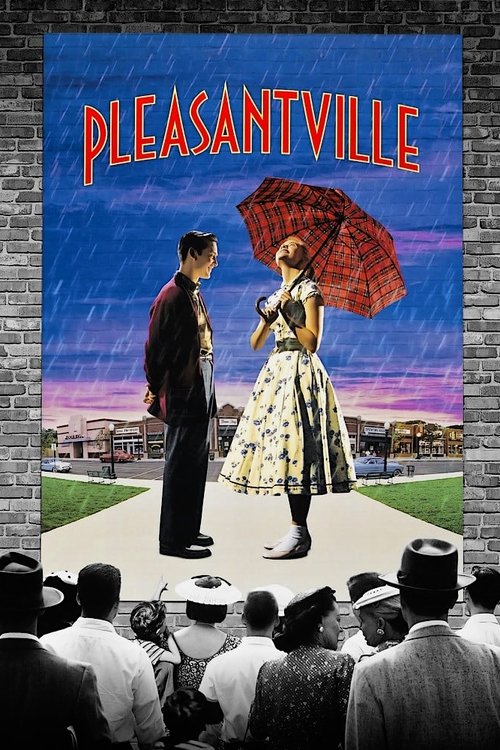
The late 1990s were gripped by a strange, collective anxiety that our reality was actually a beautifully constructed lie. We had The Matrix telling us we were batteries, The Truman Show suggesting we were stars of a 24-hour soap opera, and Dark City turning the lights out on our memories. But nestled among those heavyweights was Pleasantville, a film that took the "reality is a facade" trope and dipped it in a bucket of pastel paint. I remember watching this on a laptop with a cracked screen that made everything look slightly sepia, which ironically added a whole new layer of unintended metaphorical depth to the viewing experience. It’s a movie that feels like a cozy blanket until it starts showing you the moth holes, and looking back from the digital saturation of the 2020s, its ambition is even more striking than I originally gave it credit for.
The First Digital Masterpiece
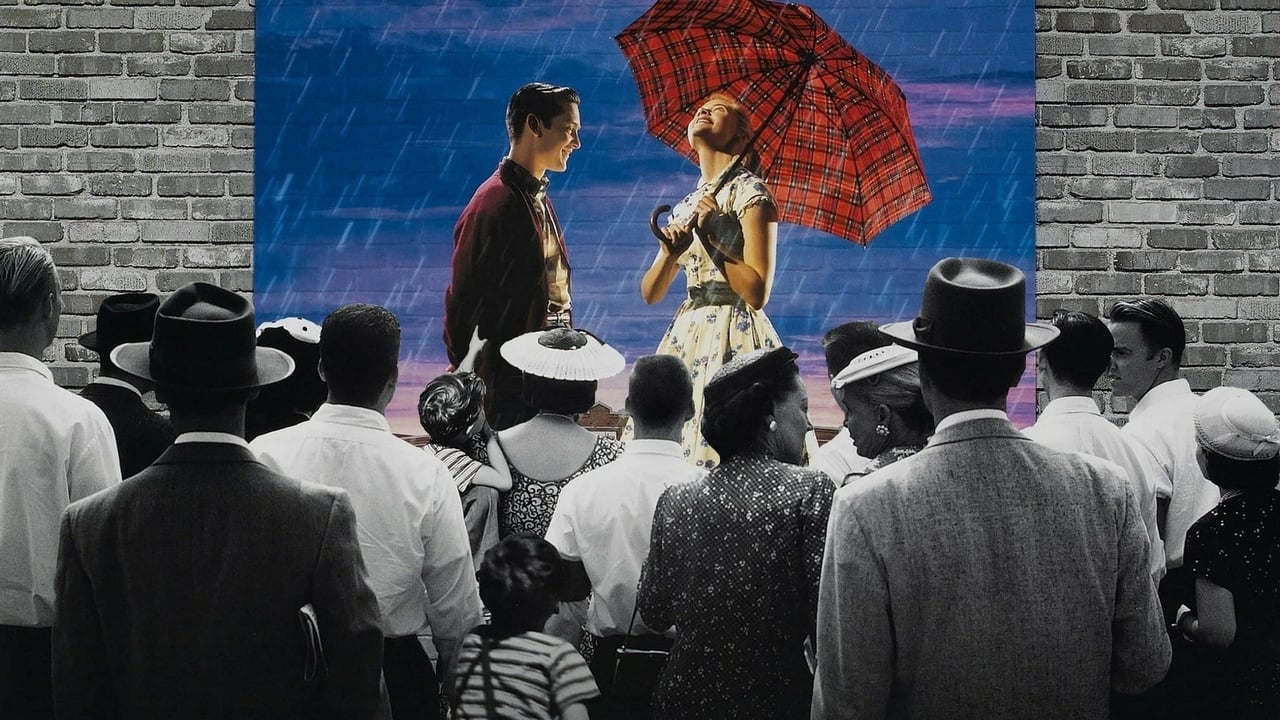
While we often talk about Jurassic Park or Toy Story as the heralds of the CGI revolution, Gary Ross’s directorial debut pulled off a technical feat that was arguably more complex for its time. Pleasantville was the first film to use a digital intermediate for nearly its entire runtime. To get that specific effect where a single red rose pops against a grayscale background, the production had to scan over 160,000 frames of film into a computer—a Herculean task in 1998.
The result is a visual language that still feels crisp today. It’s not just a gimmick; it’s the pulse of the story. Watching Reese Witherspoon’s Jennifer—a quintessential 90s "cool girl" who probably has a Cranberries CD in her Walkman—clash with the rigid, scripted politeness of the 1950s is a delight. But the technical wizardry serves a deeper purpose. When the color starts to bleed into the world, it isn’t just about "enlightenment"; it’s about the terrifying, vibrant chaos of being human. Pleasantville is essentially a horror movie for anyone who values a good, messy argument over a fake, polite smile.
Breaking the Grayscale
The performances here are doing a lot of heavy lifting to keep the film from becoming a preachy "change is good" fable. Tobey Maguire is perfectly cast as David, the shy geek who uses the Pleasantville sitcom as a shield against his own lonely reality. It’s fascinating to see him here, just a few years before he’d become Peter Parker, perfecting that "startled fawn" look that served him so well.
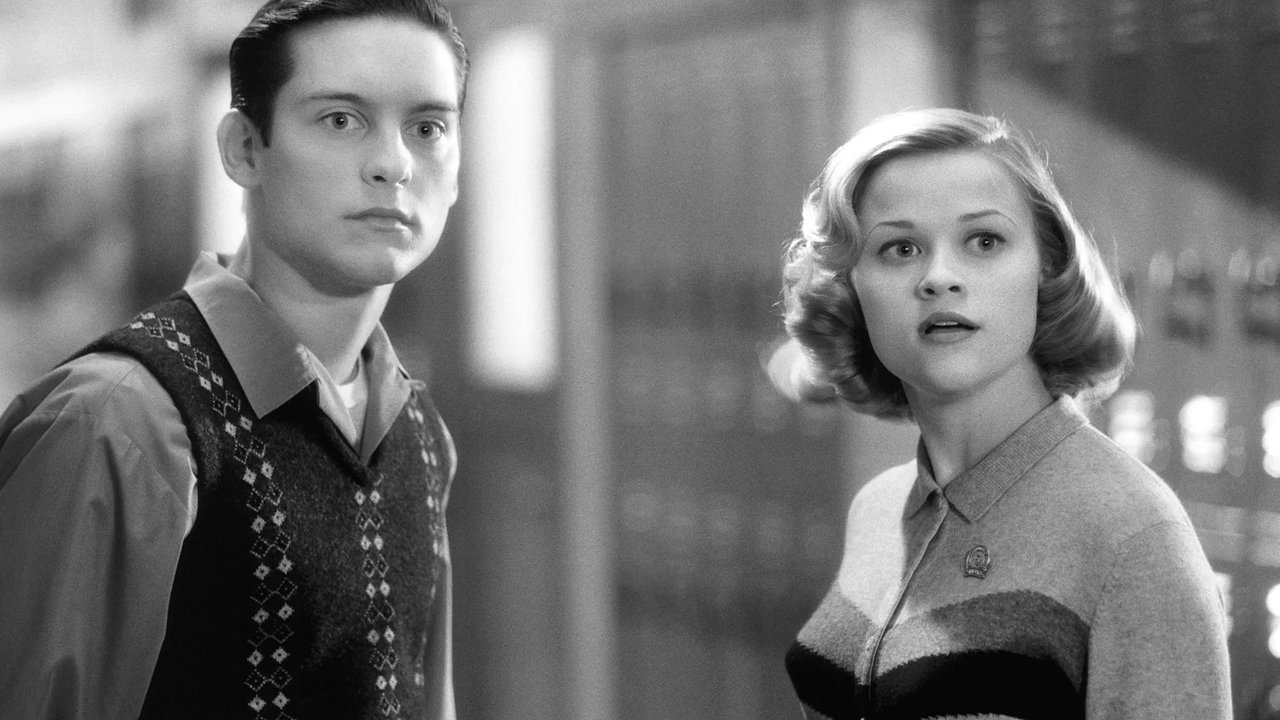
However, the real soul of the film belongs to Joan Allen as Betty Parker and Jeff Daniels as the soda shop owner, Mr. Johnson. Their quiet, forbidden evolution is the film’s emotional anchor. There’s a scene where Joan Allen has to cover her newly "colored" face with gray makeup to hide her change from her husband, played with masterful, oblivious repression by William H. Macy. It’s a heartbreaking moment that shifts the film from a fish-out-of-water comedy into a genuine drama about the cost of conformity. Joan Allen manages to convey a world of awakening with just a slight tremble of her hand while holding a spatula.
On the other side of the coin, we have the late, great J. T. Walsh as Big Bob. As the mayor of this static utopia, he represents the fear that comes with progress. Looking back, the film’s depiction of the "non-coloreds" vs. the "coloreds" is a bit on the nose with its Civil Rights metaphors, but it captures that specific 90s brand of earnestness that wanted to tackle big social issues through the lens of fantasy.
Why Did We Forget This One?
Despite being nominated for three Oscars and featuring a "who’s who" of talent, Pleasantville is often treated as a footnote in the 1998 cinematic record. It was a bit of a financial disaster, clawing back only $49 million against a $60 million budget. I suspect the marketing didn't quite know how to handle it. Was it a teen comedy? A high-concept sci-fi? A heavy social drama? The truth is, it’s all three, and trying to sell a movie about the dangers of nostalgia to a generation currently obsessed with Nick-at-Nite was a bold, failed move.

The film’s score by Randy Newman is another element that deserves a shout-out. It’s whimsical and bouncy when it needs to be, but it carries an underlying melancholy that perfectly matches the visuals. It’s the kind of score that makes you feel like you’re eating a perfect slice of apple pie while realizing your house is on fire.
If you haven’t revisited this one since the days of Blockbuster rentals, it’s time to head back. It captures a specific moment in filmmaking history where technology was finally catching up to our imagination, allowing directors to paint on the screen in ways that were previously impossible. It’s a film that asks us to look at our own "perfect" lives and find the courage to let the color in, even if it means things get a little complicated.
Pleasantville remains a startlingly beautiful piece of late-90s cinema that manages to be both a technical marvel and a deeply human story. It avoids the trap of being a simple parody of the 1950s by treating its characters with genuine empathy, even the ones who are terrified of a little bit of red paint. It’s a testament to the idea that the greatest special effect will always be a well-earned emotional breakthrough. Grab some popcorn, ignore the "perfect" weather outside, and get lost in the grayscale.

Keep Exploring...
-
Seabiscuit
2003
-

The Muppet Christmas Carol
1992
-

Wizards of Waverly Place: The Movie
2009
-
The Odd Life of Timothy Green
2012
-

The Santa Clause
1994
-

Babe
1995
-
Maverick
1994
-

Practical Magic
1998
-
The Kid
2000
-
The Hudsucker Proxy
1994
-
Just Like Heaven
2005
-
The Secret Life of Walter Mitty
2013
-

The Swan Princess
1994
-
To Die For
1995
-

EverAfter
1998
-
Blast from the Past
1999
-
Kate & Leopold
2001
-
Holes
2003
-
Sliding Doors
1998
-
Stranger Than Fiction
2006