Saving Private Ryan
"The cost of one soul in a sea of fire."
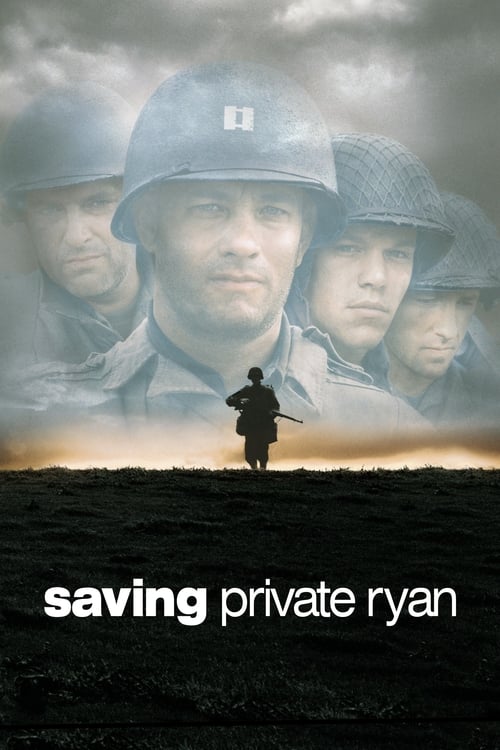
I first watched Saving Private Ryan on a scratched DVD in a basement that smelled faintly of damp laundry and old sneakers. I was sitting on a beanbag chair, eating a bag of lukewarm salt-and-vinegar chips, and within twenty minutes, I had completely forgotten to keep chewing. My jaw just stayed locked. Even on a bulky, low-resolution CRT television, the sheer weight of what Steven Spielberg put on screen felt like it was displacing the oxygen in the room.
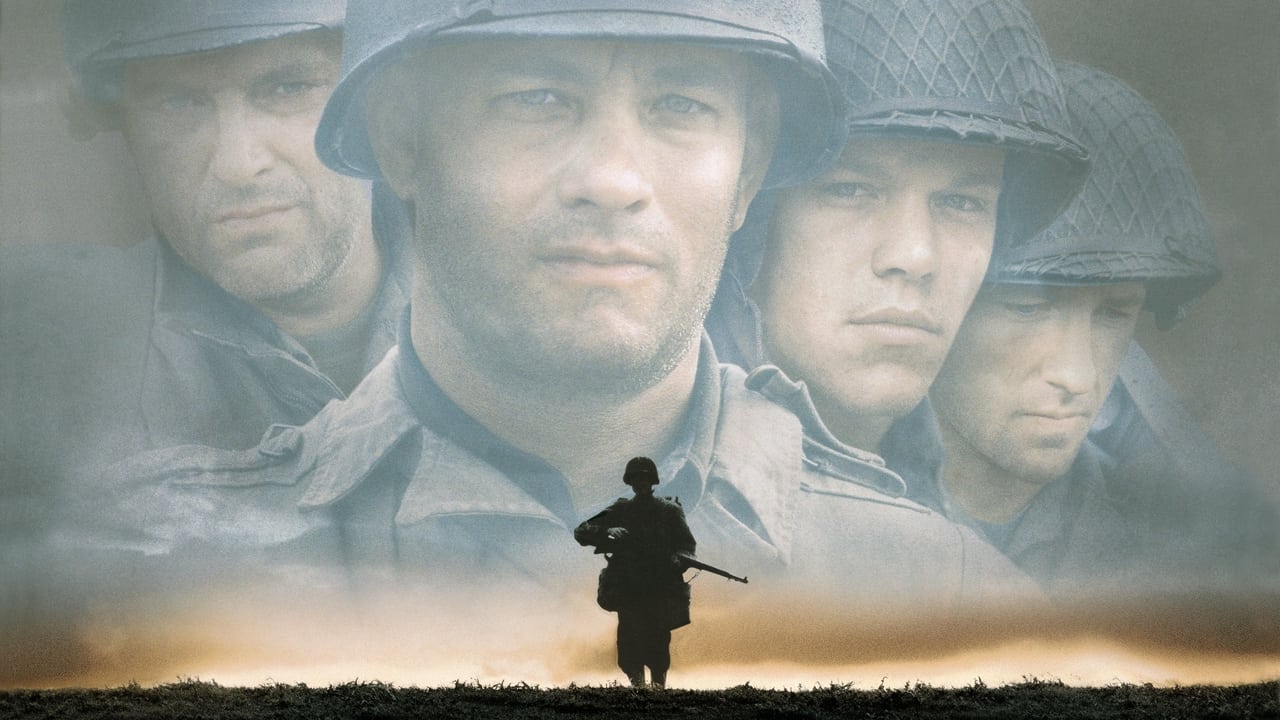
Looking back from a distance of over twenty-five years, it’s easy to forget how much this film re-coded the DNA of the war genre. Before 1998, cinematic combat often felt like a series of tactical maneuvers or heroic vignettes. After Saving Private Ryan, war felt like a chaotic, terrifying lottery where the prize for winning was simply the chance to be shot at again tomorrow.
The Anatomy of a Nightmare
The opening twenty minutes at Omaha Beach are still the gold standard for "unflinching" cinema. Janusz Kamiński, the cinematographer, famously stripped the protective coating off the camera lenses and used a shutter timing that made every explosion look jagged and hyper-real. It doesn’t look like a movie; it looks like recovered newsreel footage from a hell dimension.
What strikes me now, re-watching it in an era where CGI can conjure entire armies with a keystroke, is how much of this was practical. The blood on the lens, the spray of the water, the physical heaving of the boats—it creates a physical density that digital effects often struggle to replicate. It’s not just the sight of the carnage; it’s the sound. The "thwip" of bullets passing through water and the muffled, underwater silence of a dying soldier creates a claustrophobic terror that I still find difficult to sit through. Sound designer Gary Rydstrom deserved every bit of his Oscar for making the air itself sound lethal.
The Schoolteacher in the Storm
Once we move off the beach, the film settles into a moral procedural. The premise—sending eight men to save one to spare a mother further grief—is a "PR mission" that the characters rightfully resent. Tom Hanks, playing Captain Miller, is the anchor that prevents the movie from drifting into pure spectacle.

This was Hanks at the absolute height of his "Everyman" powers. He’s not a Rambo; he’s a composition teacher from Pennsylvania whose hands won't stop shaking. There’s a quiet, devastating scene where he finally reveals his background to his men to stop an internal mutiny, and the way his voice almost cracks is a masterclass in restrained drama. He represents the "Citizen Soldier" in a way that feels deeply authentic rather than patriotic-poster-perfect.
The ensemble around him is equally sharp. Tom Sizemore provides the grit, Edward Burns gives us the necessary cynicism, and a young Vin Diesel offers a surprising moment of tenderness before his sudden, rain-soaked exit. But for me, the standout has always been Barry Pepper as the sniper, Jackson. There’s something haunting about his ritualistic prayers before every shot—a chilling intersection of faith and lethality.
The Prestige and the Politics
In 1998, this was the "important" movie. It arrived with the heavy machinery of a prestige production, backed by DreamWorks and Paramount, and it was widely expected to sweep the Academy Awards. The fact that it lost Best Picture to Shakespeare in Love remains a point of high-octane saltiness for film historians. Harvey Weinstein’s aggressive, scorched-earth campaigning for a romantic comedy over a definitive war epic was the moment the Oscars lost their innocence.
Beyond the awards, the film captured a specific pre-9/11 American sentiment—a desire to honor the "Greatest Generation" before they faded away. It’s a film obsessed with the "math" of war: Is one life worth eight? Does doing a "good" thing in the middle of a "bad" thing actually matter? The film’s final bridge sequence at Ramelle doesn't offer easy answers. It just offers more graves.
Stuff You Didn't Notice
- To ensure the actors looked genuinely exhausted and resentful, Spielberg sent the main cast to a grueling ten-day boot camp—except for Matt Damon. The goal was to make the rest of the squad naturally dislike Damon's character because he got to skip the misery. - Real-life veterans were famously so affected by the Omaha Beach sequence that the Department of Veterans Affairs set up a dedicated 800-number for those who experienced PTSD triggers while watching. - The desaturated, "washed out" look of the film was so extreme that many theaters thought their projectors were broken or the film stock was defective. - John Williams opted for a very minimal score during the action sequences, allowing the sounds of machinery and screaming to provide the "music," which makes the orchestral swells during the quieter moments hit ten times harder.
Saving Private Ryan is a rare beast: a blockbuster that functions as a monument. While the bookend scenes in the modern-day cemetery feel a bit sentimental compared to the raw power of the 1944 footage, the core of the film remains an essential, heavy piece of storytelling. It’s a movie that demands your full attention and, in return, leaves you feeling slightly changed. It reminds us that "earning" our lives isn't a one-time event, but a terrifyingly high bar we have to clear every day.
Upham isn't a villain; he's just the only character honest enough to admit he’s too terrified to move. We all like to think we’d be Miller or Jackson, but in the middle of that noise, most of us would be Upham, frozen on the stairs, listening to the world end.

Keep Exploring...
-
Schindler's List
1993
-

Braveheart
1995
-
Catch Me If You Can
2002
-
The Thin Red Line
1998
-
Enemy at the Gates
2001
-

War Horse
2011
-

The Imitation Game
2014
-
The Green Mile
1999
-
The Patriot
2000
-
Empire of the Sun
1987
-
Downfall
2004
-
The Boy in the Striped Pyjamas
2008
-
Munich
2005
-
Black Hawk Down
2001
-

The Terminal
2004
-
Inglourious Basterds
2009
-
The Pianist
2002
-
Hotel Rwanda
2004
-
Joyeux Noel
2005
-
The Round Up
2010