Soldier
"Abandoned on a junk planet. Reforged for revenge."
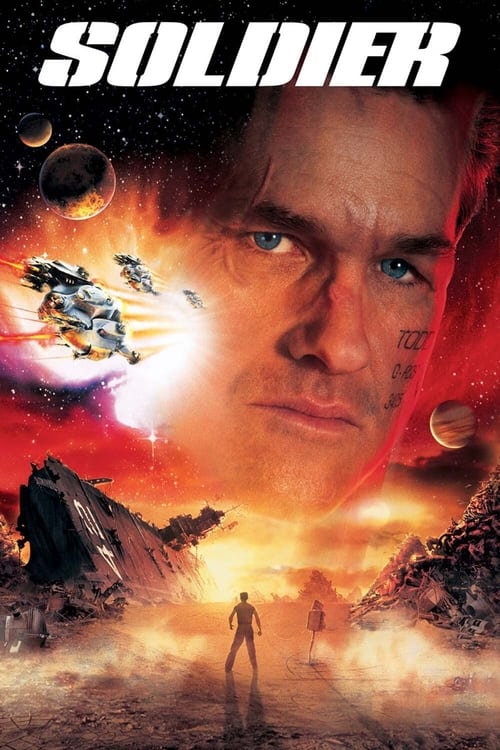
In 1998, the cinematic landscape was undergoing a violent identity crisis. Steven Spielberg had just redefined the war movie with the mud and blood of Saving Private Ryan, while the Wachowskis were months away from plugging us all into The Matrix. In the middle of this shift stood Paul W. S. Anderson’s Soldier, a $75 million sci-fi spectacle that felt like a localized atmospheric disturbance from 1985. It arrived with the thud of a spent shell casing, vanished from theaters almost instantly, and left behind a legacy as one of the most expensive "hidden gems" ever to be buried in the bargain bin.
I recently revisited this while nursing a lukewarm cup of peppermint tea that had a single, floating cat hair in it—an appropriately gritty and slightly disappointing experience for a film set entirely on a literal trash planet. Yet, despite the hair and the film’s box-office failure, there is something undeniably soul-stirring about watching Kurt Russell do more with a twitch of his jaw than most actors do with a ten-minute monologue.
The Art of the Silent Protagonist
The premise is pure 80s distilled into a 90s bottle. Kurt Russell plays Todd 3465, a man raised from birth to be a soulless killing machine. When a new batch of genetically engineered "super-soldiers," led by a glistening, silent Jason Scott Lee (of Dragon: The Bruce Lee Story fame), renders Todd’s generation obsolete, he’s dumped on a waste-disposal planet called Arcadia 234. He’s the ultimate human hardware, suddenly told his operating system is no longer supported.
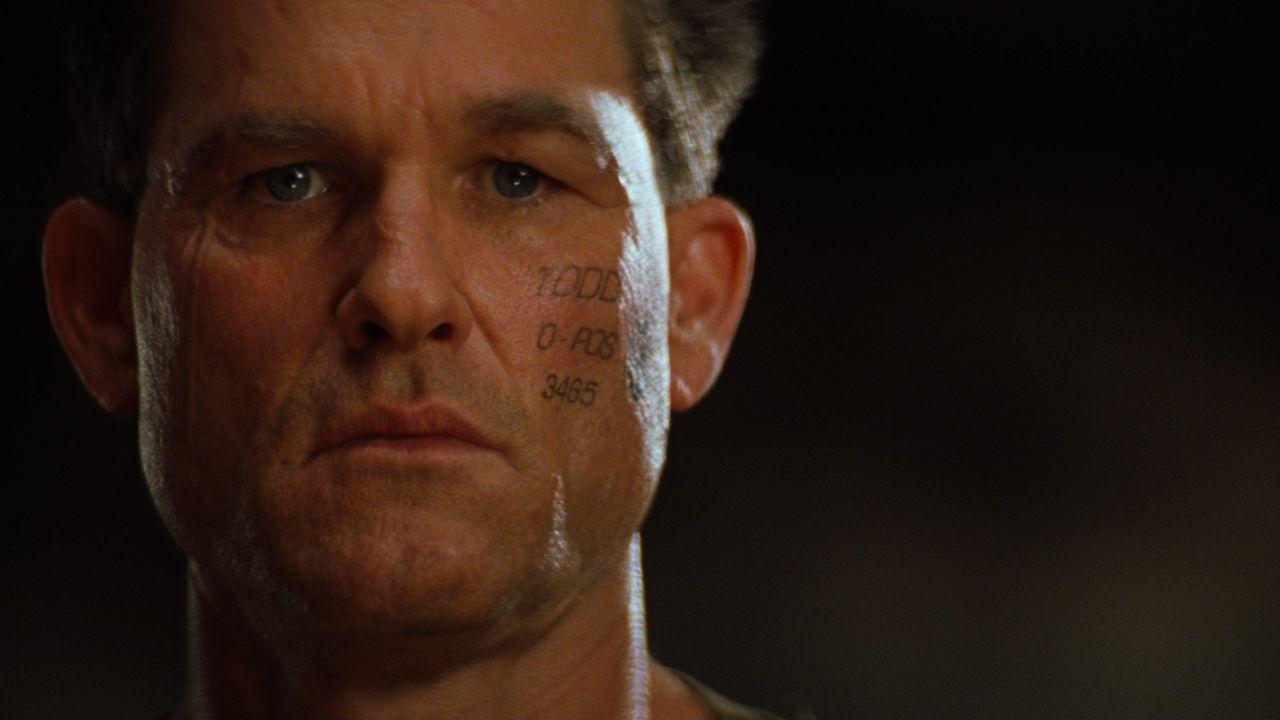
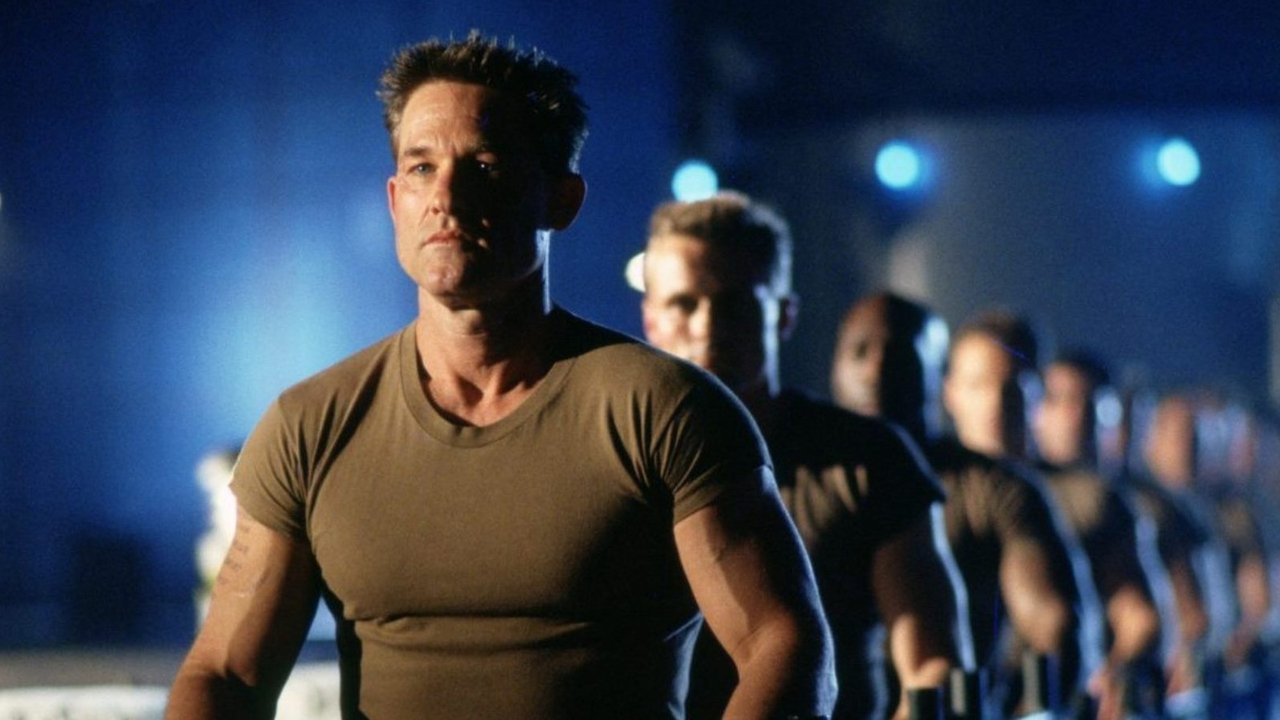
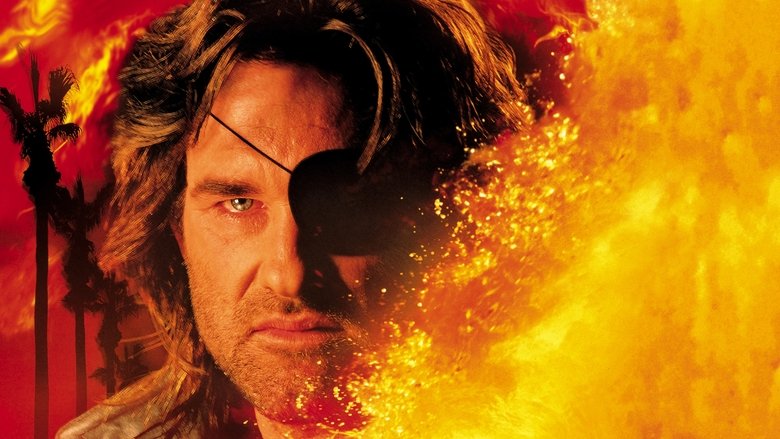
What makes this work isn't the dialogue—mostly because Todd only speaks about 79 words in the entire 99-minute runtime. Instead, it’s Kurt Russell’s sheer physicality. Coming off the high-gloss camp of Escape from L.A., Russell stripped everything back here. He spent eighteen months training to look like a man who had never eaten a carb or felt a feeling, and it shows. He looks like he was sculpted out of granite and PTSD.
His performance is a masterclass in "acting through the eyes." When he encounters a group of civilian crash survivors, including Connie Nielsen (Gladiator) and Sean Pertwee (Event Horizon), we don't need a voiceover to tell us Todd is confused. We see it in the way he holds a bowl of soup like it’s a live grenade. It’s a performance that deserved a better movie, but it’s the reason the movie we did get still carries weight.
A Junkyard Built with Gold
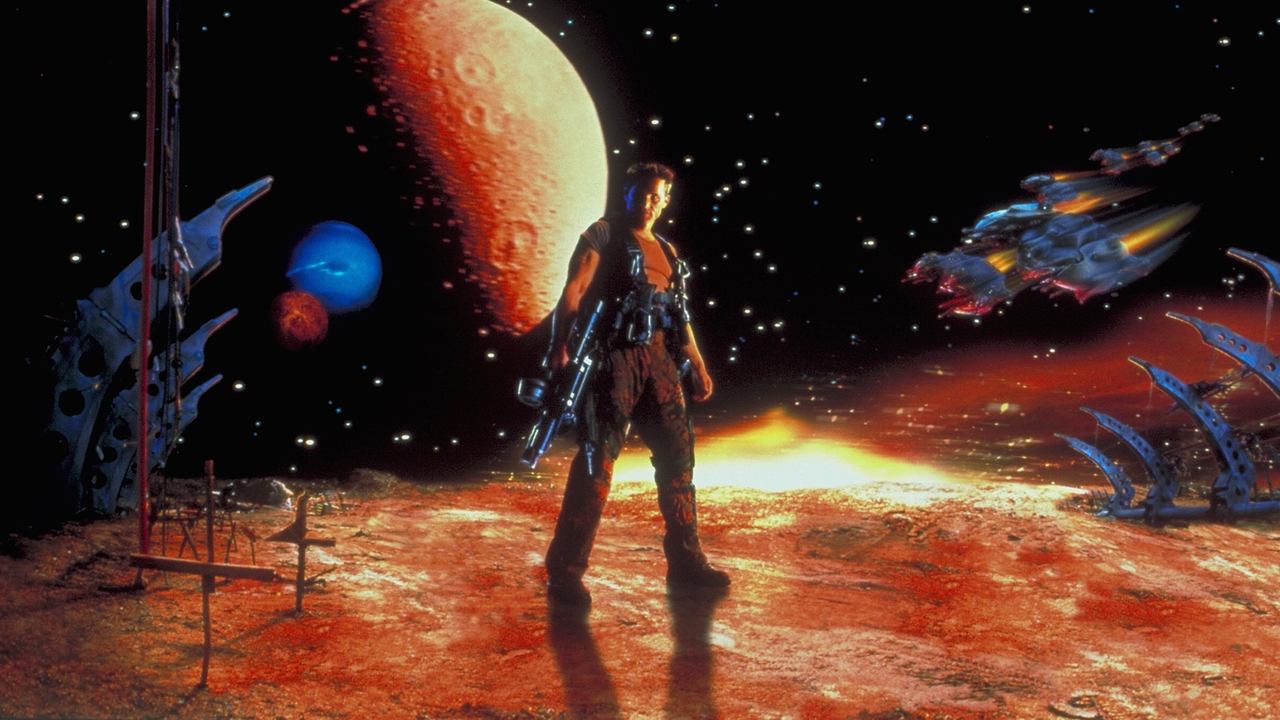
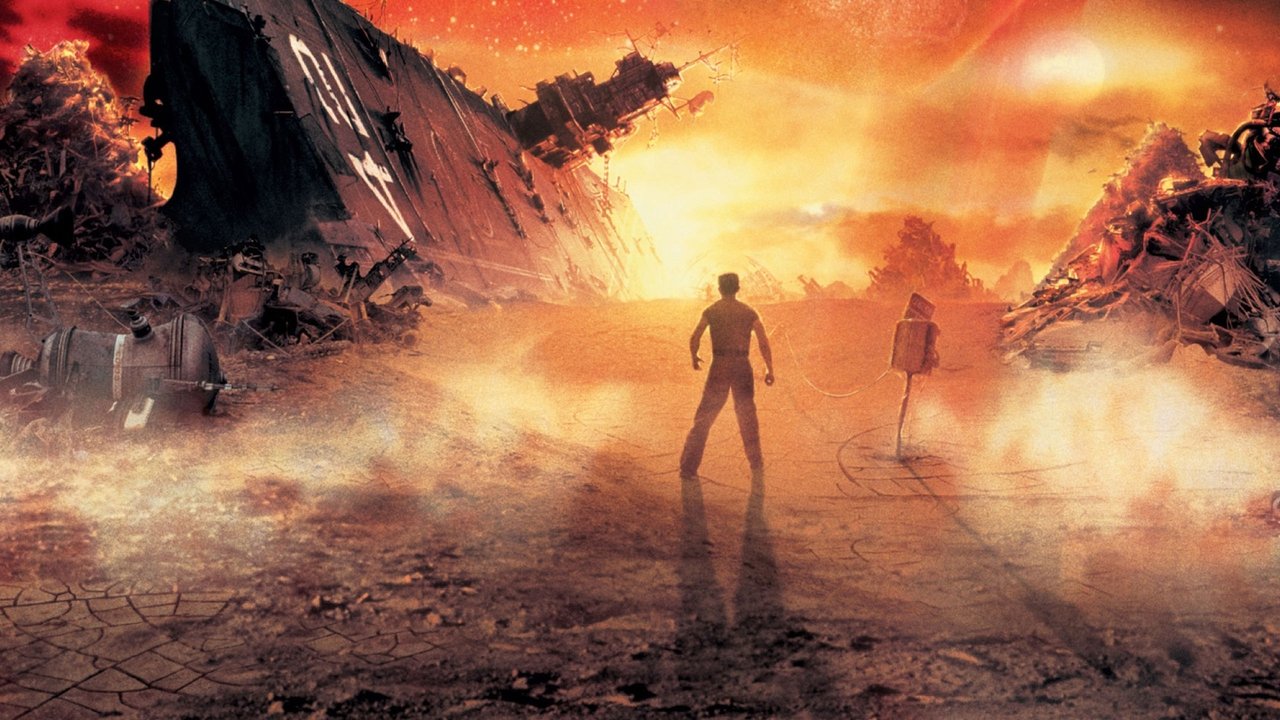
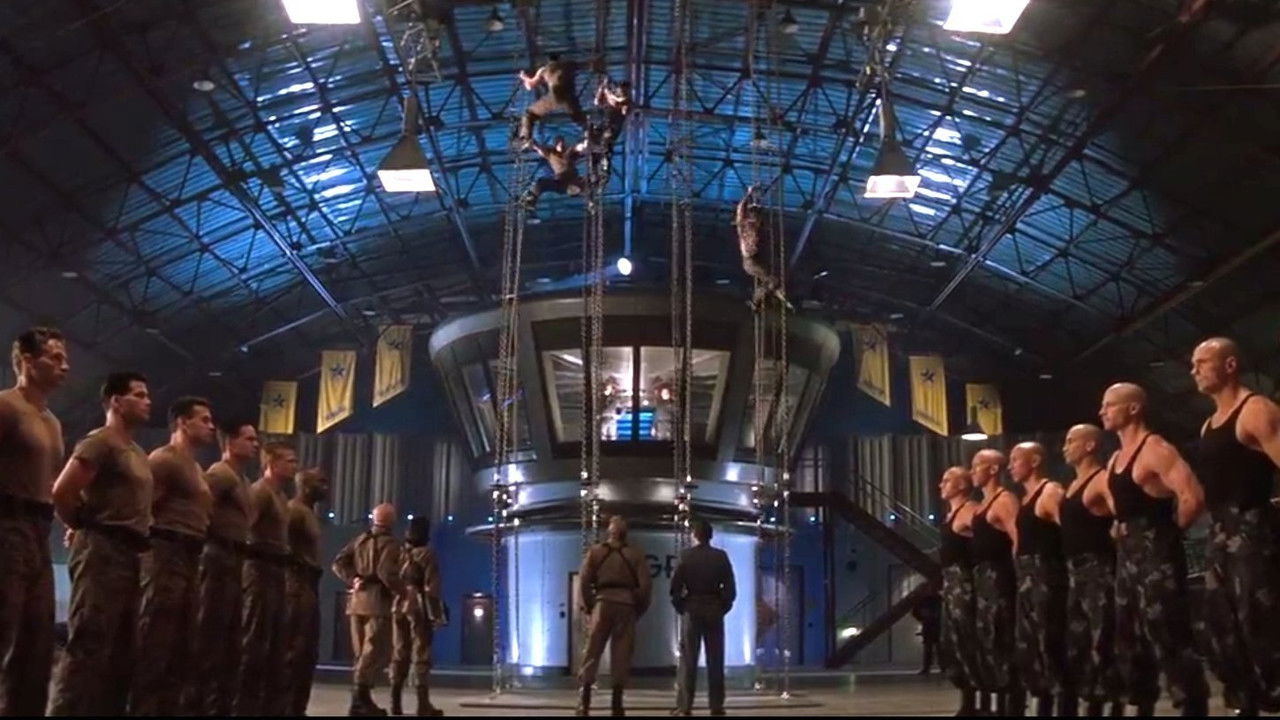
Visually, Soldier is a fascinating relic of that late-90s transition period where practical effects were making their last stand against the digital tide. The budget was astronomical for the time, and you can see every cent of that $75 million on the screen—mostly in the form of massive, physical sets. The planet Arcadia isn't a green-screen void; it’s a towering, tactile mountain of scrap metal and rusted hulks.
Director Paul W. S. Anderson, who had just come off the cult success of Event Horizon, brings his signature eye for industrial grime and oppressive atmospheres. The cinematography by David Tattersall (Star Wars: Episode I) captures the orange-hued, wind-swept desolation of the junk world with a grit that digital cameras of that era just couldn't replicate. When the new-breed soldiers eventually land to use the colony for target practice, the resulting action is heavy, loud, and impactful. The pyrotechnics here aren't just orange pixels; they are actual explosions that look like they’re singeing the actors' eyebrows.
The action choreography is straightforward—less "bullet time" and more "blunt force trauma." Todd utilizes the junk-strewn landscape like a guerrilla fighter, and there’s a satisfying crunch to the way he dismantles his high-tech replacements. It’s a classic "David vs. Goliath" setup, if David was a forty-year-old veteran with a thousand-yard stare and Goliath was a bunch of guys who looked like they lived in a CrossFit gym.
The Blade Runner Connection
One of the coolest details for genre nerds is the script’s DNA. It was written by David Webb Peoples, the man who co-wrote Blade Runner and Unforgiven. Because of this, Soldier is officially considered a "sidequel" to the Ridley Scott classic. If you look closely at the scrap heaps, you’ll spot a burnt-out Spinner vehicle. In Todd’s combat record, mentions of the "Tannhäuser Gate" and "Shoulder of Orion" link him directly to Roy Batty’s famous final speech.
This connection adds a layer of tragic irony to the film. Todd is essentially a Replicant made of flesh and bone—a tool created for a purpose that has now expired. However, the film struggles to fully bridge the gap between "philosophical sci-fi" and "B-movie shoot-em-up." Jason Isaacs (The Patriot) shows up as the villainous Colonel Mekum, and while he’s always a delight to watch, his character is so cartoonishly evil that he belongs in a different movie entirely. He sneers so hard you worry for his facial muscles.
Soldier failed in 1998 because it was an analog heart beating in a digital world. It didn't have the irony of Starship Troopers or the groundbreaking tech of The Matrix. It was just a story about a tired man finding his humanity by shooting a lot of people. But looking back, that’s exactly its charm. It’s a high-budget, beautifully shot, practical-effects-driven actioner that understands the quiet power of its leading man.
If you can track this one down, it’s a perfect Friday night watch. It doesn’t ask much of you, but it gives a lot in return: great sets, a legendary Gary Busey appearance as a grizzled captain, and a reminder that Kurt Russell remains one of the greatest physical actors of his generation. It’s a film that was left for dead on a junk planet, but like its protagonist, it’s got enough grit to survive the years.
Keep Exploring...
-
Volcano
1997
-

Mystery Men
1999
-
Final Fantasy: The Spirits Within
2001
-
Escape from L.A.
1996
-
Executive Decision
1996
-

Mortal Kombat
1995
-

Resident Evil
2002
-
DragonHeart
1996
-
Breakdown
1997
-
AVP: Alien vs. Predator
2004
-
Race to Witch Mountain
2009
-
Resident Evil: Afterlife
2010
-
Resident Evil: Retribution
2012
-
Backdraft
1991
-
Event Horizon
1997
-

Outbreak
1995
-
Deep Impact
1998
-
The 6th Day
2000
-
The Scorpion King
2002
-
Basic
2003