Star Trek: Insurrection
"The fountain of youth has a manual override."
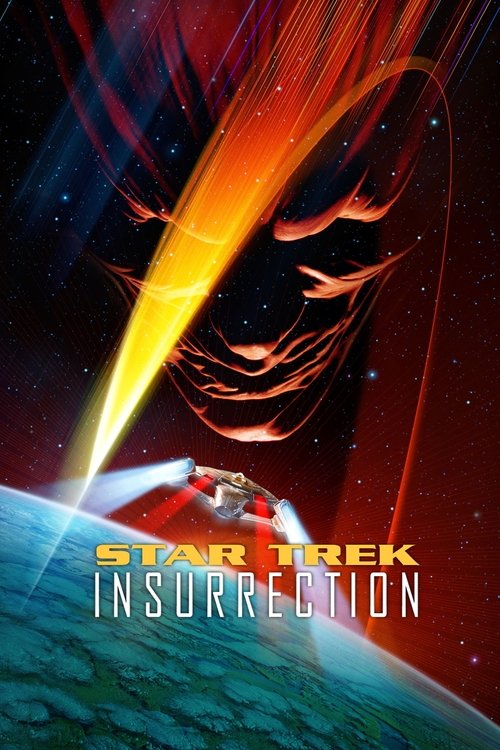
I remember watching Star Trek: Insurrection on a rainy Tuesday afternoon with a bowl of lukewarm ramen, and honestly, the steam from the noodles made the planet Ba’ku look even more ethereal than the mid-tier 1998 CGI intended. Coming off the back of the high-octane, Borg-smashing thrill ride that was First Contact, I recall the initial fan reaction being one of collective confusion. We went from the fate of Earth hanging in the balance to... a property dispute over a fountain of youth? But looking back at it now, through the lens of a franchise that has since become a sprawling cinematic universe, there is something remarkably charming about this "little" movie.

The "Comfort Food" of the Federation
In the late 90s, Star Trek was everywhere. We had two shows on the air and a film franchise that was trying to figure out if it wanted to be Star Wars or The West Wing. Insurrection chooses neither. It’s essentially a high-budget, two-part episode of The Next Generation, and I mean that as a sincere compliment. While the previous film was a dark, metallic nightmare, this one is bathed in golden hour sunlight and lush greens.
The plot feels like a classic ethics seminar: Captain Jean-Luc Picard (Patrick Stewart) discovers that a high-ranking Admiral is conspiring with a crinkly-faced race called the Son'a to forcibly relocate the peaceful Ba’ku people. Why? Because the planet’s rings emit "metaphasic radiation" that keeps you young forever. It’s a classic "needs of the many" versus the rights of the few, but with more Patrick Stewart doing the Mambo. I’ve always felt that Michael Piller (the screenwriter and legendary Trek architect) wanted to capture the soul of the TV show rather than the spectacle of a blockbuster. It’s a film where the biggest stakes are Picard’s moral compass, and seeing the Captain get his groove back is arguably the most human he’s been on the big screen.
Action, Anamorphics, and the Joystick Controversy
Since we're looking at this as an action-adventure, we have to talk about how Jonathan Frakes directs the chaos. Frakes has a great eye for ensemble chemistry, but here he was tasked with blending pastoral beauty with late-90s pyrotechnics. The action sequences have a weird, jerky rhythm to them. One minute we’re watching Brent Spiner (as Data) malfunctioning in a lake, and the next, we’re in a dogfight involving "isolytic bursts" that look like purple glitter exploding in a vacuum.
The standout sequence for me—and the one that always gets a groan from the "hard sci-fi" crowd—is the manual steering column. Yes, the moment where Jonathan Frakes (as Riker) pulls a literal flight stick out of the floor to pilot the Enterprise through a nebula. It’s delightfully goofy, the kind of sequence that feels like it belongs in a 90s arcade game rather than a flagship bridge, but it perfectly captures the era’s "let's try this" attitude toward technology. The stunt work on the Son'a collector ship at the climax also deserves a nod. Seeing Patrick Stewart and F. Murray Abraham (playing the villainous Ru’afo) grappling on a scaffolding while the ship literally pulls a planet apart is the kind of practical-meets-digital hybrid that defined the transition into the new millennium.
The Digital Frontier’s Growing Pains
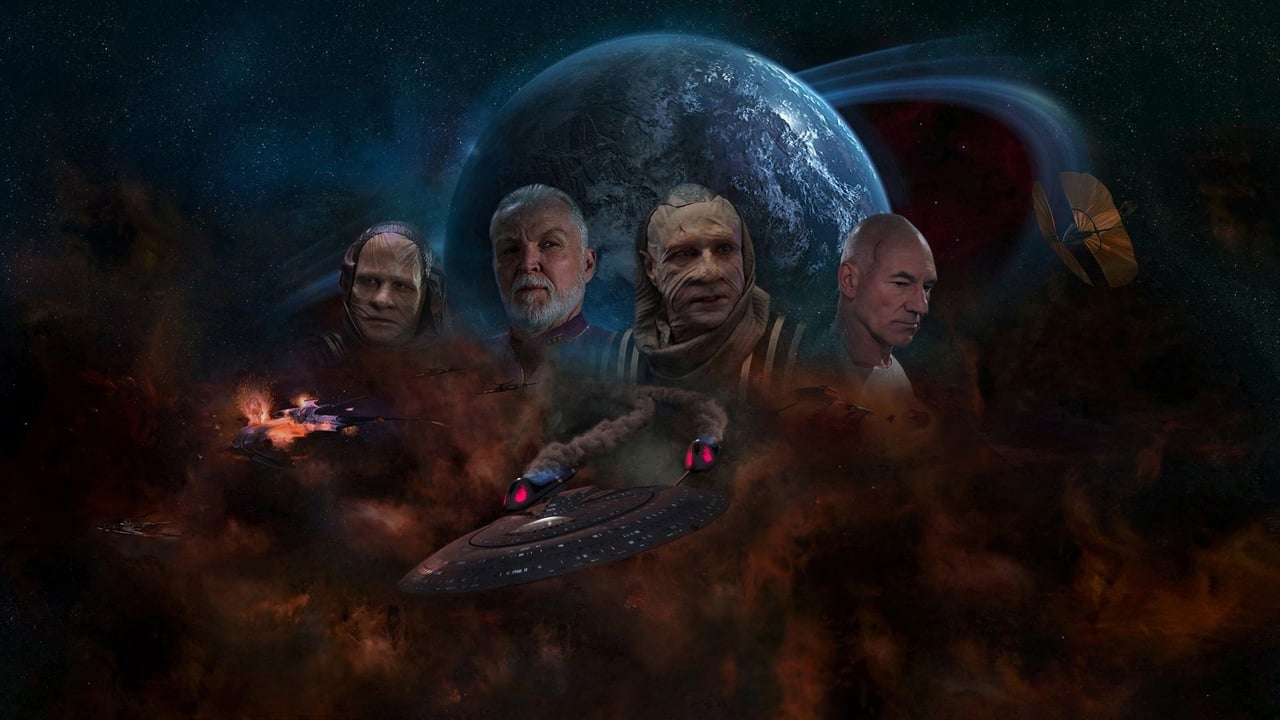
Looking back, Insurrection is a fascinating time capsule of the CGI revolution. This was the first Trek film to move almost entirely away from physical models for its ships. While the Enterprise-E looks sleek, the Son'a ships have that slightly "floaty" quality that plagued late-90s digital effects. They lack the "weight" of the physical miniatures used in Generations. However, the makeup work on F. Murray Abraham is still genuinely unsettling. His character’s obsession with youth leads to scenes of skin-stretching procedures that look like a bad Snapchat filter from a nightmare. It’s a great bit of body horror that offsets the otherwise "vacation" vibe of the film.
The production was famously troubled—documented in Michael Piller’s unreleased book Fade In—with the studio demanding more action and less "talky" philosophy. You can feel that tension in the final cut. There’s a deleted scene featuring Armin Shimerman as Quark from Deep Space Nine that was cut for pacing, which I still think is a tragedy. Without those quirky character beats, the movie occasionally feels like it’s rushing toward a shootout it doesn't really want to have. Yet, the score by Jerry Goldsmith is an absolute triumph, trading the militaristic drums of the previous film for a soaring, romantic theme that makes the Ba’ku village feel like a place you’d actually want to retire to.
Star Trek: Insurrection is the cinematic equivalent of a warm blanket. It isn't going to redefine the genre, and it certainly won't win over anyone who isn't already a fan of the crew, but it treats its characters with a kindness that is rare in modern blockbusters. It's a movie about taking a stand for what's right, even when the "right" thing is just letting some people live in peace on their farm. It might be the "forgotten" Next Generation movie, but it’s the one I find myself revisiting the most when I just want to spend 100 minutes with old friends. Under the orange skies of the Briar Patch, the Enterprise crew finally got to take a breath, and I’m glad I stayed for the view.

Keep Exploring...
-
Star Trek: First Contact
1996
-
Star Trek: Nemesis
2002
-
Star Trek: Generations
1994
-
Escape from L.A.
1996
-
The Saint
1997
-
Final Fantasy: The Spirits Within
2001
-

Paycheck
2003
-
Sky Captain and the World of Tomorrow
2004
-
Race to Witch Mountain
2009
-
Armageddon
1998
-

Jurassic Park III
2001
-
Planet of the Apes
2001
-

The Matrix Reloaded
2003
-
The Matrix Revolutions
2003
-
Assassins
1995
-
Chain Reaction
1996
-
Daylight
1996
-
Executive Decision
1996
-
The Postman
1997
-
Volcano
1997