That's Life
"One stolen car. Three idiots. No map for life."
The film opens with a sequence so visually grand it feels like it wandered in from a Luc Besson epic: a diver plunging into deep blue waters, haunting music swelling, the camera sweeping across a majestic landscape. Then, the diver surfaces, removes his goggles, and it’s Aldo Baglio. He’s not a professional diver; he’s just a guy who escaped prison and is currently hiding in a suburban park fountain. In thirty seconds, That’s Life (or Così è la vita) tells you exactly what it is: a film with the soul of a cinematic masterpiece trapped in the body of a ridiculous, bickering road-trip comedy.
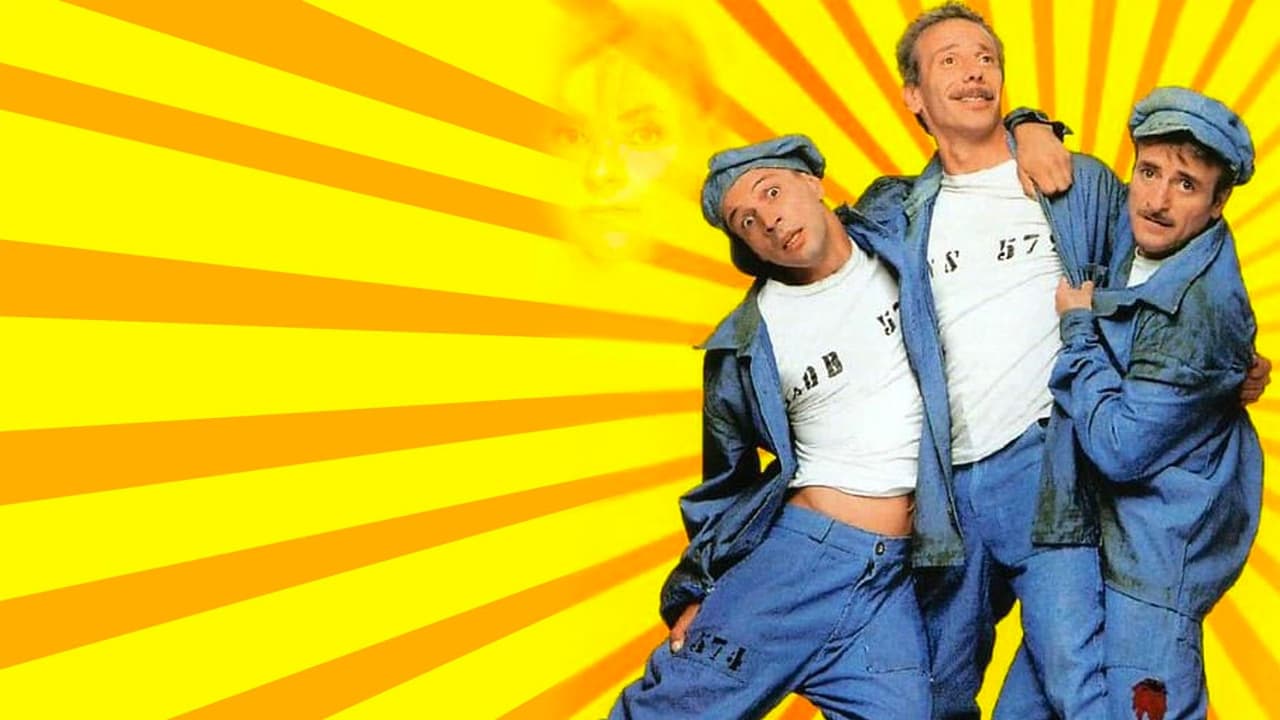
As a fan of the 90s comedy boom, I’ve always felt that the Italian trio of Aldo, Giovanni, and Giacomo represents a specific kind of alchemy that doesn't happen often. They emerged from the Milanese cabaret scene to become the biggest thing in Italy, and this 1998 follow-up to their smash debut Three Men and a Leg caught them at the absolute peak of their creative powers. It’s a film that manages to be both profoundly silly and unexpectedly philosophical about the "big questions," all while traveling in a stolen police car.
The Mechanics of Misery
The setup is a classic comedy of errors. Banter-heavy convict Aldo (Baglio) hijacks a police car during a botched prison transfer. Inside the car is Giovanni (Giovanni Storti), a bumbling, rule-following cop who is more concerned with his snack schedule than the gun pointed at his head. To make matters worse, they accidentally kidnap Giacomo (Giacomo Poretti), a hyper-neurotic civilian who was just trying to report his car being stolen.
The magic here isn't in the "crime" but in the rhythm. If you’ve ever been stuck in a long car ride with people who have diametrically opposed personalities, you’ll recognize the sheer, mounting exhaustion that defines this trio. Giacomo’s blood pressure is basically the fourth main character; his descent from a buttoned-up professional to a screaming mess is a masterclass in slow-burn frustration. Meanwhile, Aldo’s logic is a beautiful, jagged mess, and watching him try to navigate the moral complexities of being a "gentleman kidnapper" provides some of the best laughs in the script.
I watched this recently on a Tuesday evening while my kitchen sink was leaking a steady, rhythmic drip-drop, and honestly, the syncopated sound of the water matched the verbal sparring of the trio so perfectly I almost didn't call the plumber.
A Cinematic Upgrade
What strikes me looking back at That’s Life in the context of the late 90s is how much it rejects the "flat" look of most comedies from that era. While many 90s sitcoms and features were content with bright, boring lighting and static shots, co-director Massimo Venier and the trio actually cared about the frame. The cinematography has a warm, dusty, Italian-Western glow to it. They use the vast landscapes of the Abruzzo region to make these three small men look even smaller against the backdrop of their own failures.
There’s also the soundtrack by the Italian rock band Negrita, which anchors the film firmly in its 1998 release. It’s soulful, slightly gritty, and gives the film a "cool" factor that balances the slapstick. It’s a reminder of a time before comedy soundtracks became generic orchestral swells or wall-to-wall pop hits—this felt like a curated vibe.
The film also features the wonderful Marina Massironi as Clara. She was the "fourth member" of the group for years, and her chemistry with the boys is effortless. She provides the necessary groundedness that keeps the plot from floating away into total absurdity, even when the movie takes a sharp, metaphysical turn in its final act.
The Beauty of the Bicker
Does it hold up? Absolutely. While some of the technology (bulky car phones and early digital pagers) firmly dates the piece, the core of the humor is timeless because it’s based on character, not pop culture references. The scene where the three of them try to use a single cell phone to call their respective loved ones—all while Aldo is still technically holding them hostage—is a choreographed ballet of comedic timing.
There is a specific joy in watching a comedy that isn't afraid to be "small" while thinking "big." It starts as a hostage drama, turns into a buddy-cop movie, and ends as a meditation on the afterlife. It’s ambitious in a way that modern comedies, which often feel like they were written by a committee of social media managers, rarely are. It’s a movie that trusts its audience to find a kidnapping hilarious.
For those who haven't delved into Italian comedy beyond the obvious classics, That’s Life is the perfect entry point. It captures that 1990s transition where filmmakers were realizing they could use "indie" sensibilities (wide shots, atmospheric music, nonlinear beats) to elevate mainstream laughs. It’s a hidden gem that deserves a spot on your shelf next to The Big Lebowski or Midnight Run.
Ultimately, That's Life succeeds because it understands that the funniest thing in the world is three people who absolutely cannot stand each other being forced to share a small space. It’s a testament to the trio's chemistry that by the time they reach their final destination, you’ve stopped rooting for the "good guys" or the "bad guys" and started rooting for the friendship. It’s a messy, loud, and incredibly heart-filled journey that proves, sometimes, the best way to find yourself is to get hopelessly lost with the wrong people.
---
Keep Exploring...
-
Ask Me If I'm Happy
2000
-
The Legend of Al, John and Jack
2002
-

Three Men and a Leg
1997
-
Have You Met Claudia?
2004
-

The Rich, the Pauper and the Butler
2014
-

I Hate Summer
2020
-

The Santa Claus Gang
2010
-
Homeward Bound: The Incredible Journey
1993
-
Manhattan Murder Mystery
1993
-
The Sandlot
1993
-
Fear City: A Family-Style Comedy
1994
-
It Could Happen to You
1994
-
Maverick
1994
-
The Hudsucker Proxy
1994
-
The Legend of Drunken Master
1994
-

The Little Rascals
1994
-

The Swan Princess
1994
-
Three Colors: White
1994
-
A Goofy Movie
1995
-
It Takes Two
1995