The Dinner Game
"Cruelty is on the menu, but karma is the chef."
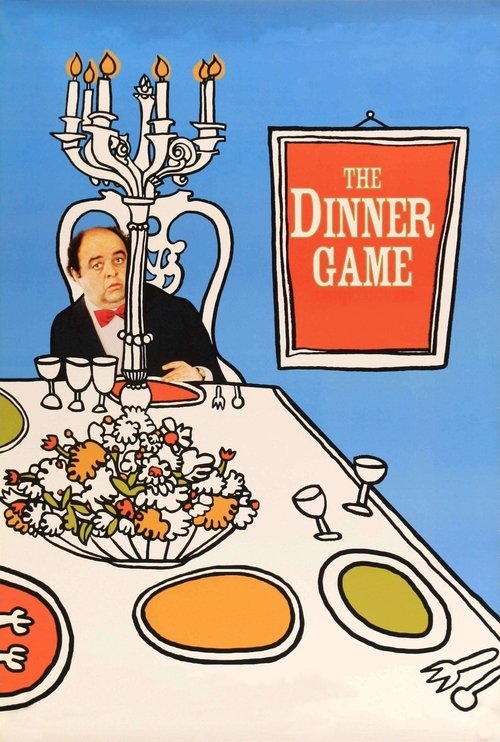
Most comedies try to make you like the protagonist within the first ten minutes. They give them a "save the cat" moment or a relatable flaw. Francis Veber’s The Dinner Game (1998) takes the opposite route: it introduces us to Pierre Brochant and immediately makes us want to see him hit by a bus. Brochant is a wealthy, smug publisher who participates in a weekly "idiots' dinner" where he and his elite friends compete to see who can bring the most pathetic, obsessive "loser" to mock behind their back. It’s a premise rooted in pure, distilled sociopathy, which is exactly why the subsequent 80 minutes of his life falling apart is so deeply satisfying.
I first watched this film on a battered DVD that skipped every time someone raised their voice—which, in a French farce, is approximately every thirty seconds. Even with the technical hiccups, the precision of the writing cut through. Unlike the bloated, slapstick-heavy 2010 American remake (Dinner for Schmucks), the original is a lean, mean, 80-minute masterclass in the "comedy of errors" that feels more like a hostage situation than a sitcom.
The Architecture of a Trainwreck
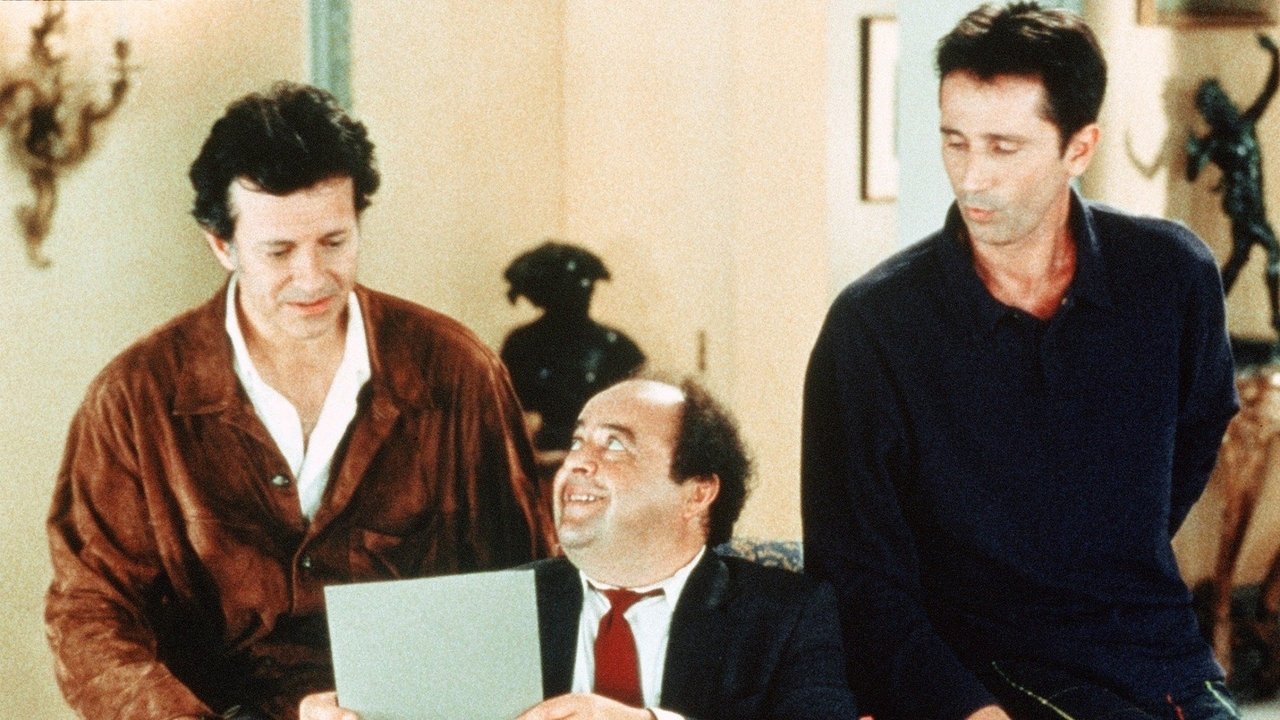
The film barely leaves Brochant’s apartment, betraying its origins as a stage play. But this confinement is its greatest strength. Thierry Lhermitte plays Brochant with a chilling, punchable entitlement. When he meets his "prize" idiot, François Pignon (Jacques Villeret), he thinks he’s found a goldmine. Pignon is a mid-level Ministry of Finance employee whose entire personality is consumed by building famous landmarks out of matchsticks.
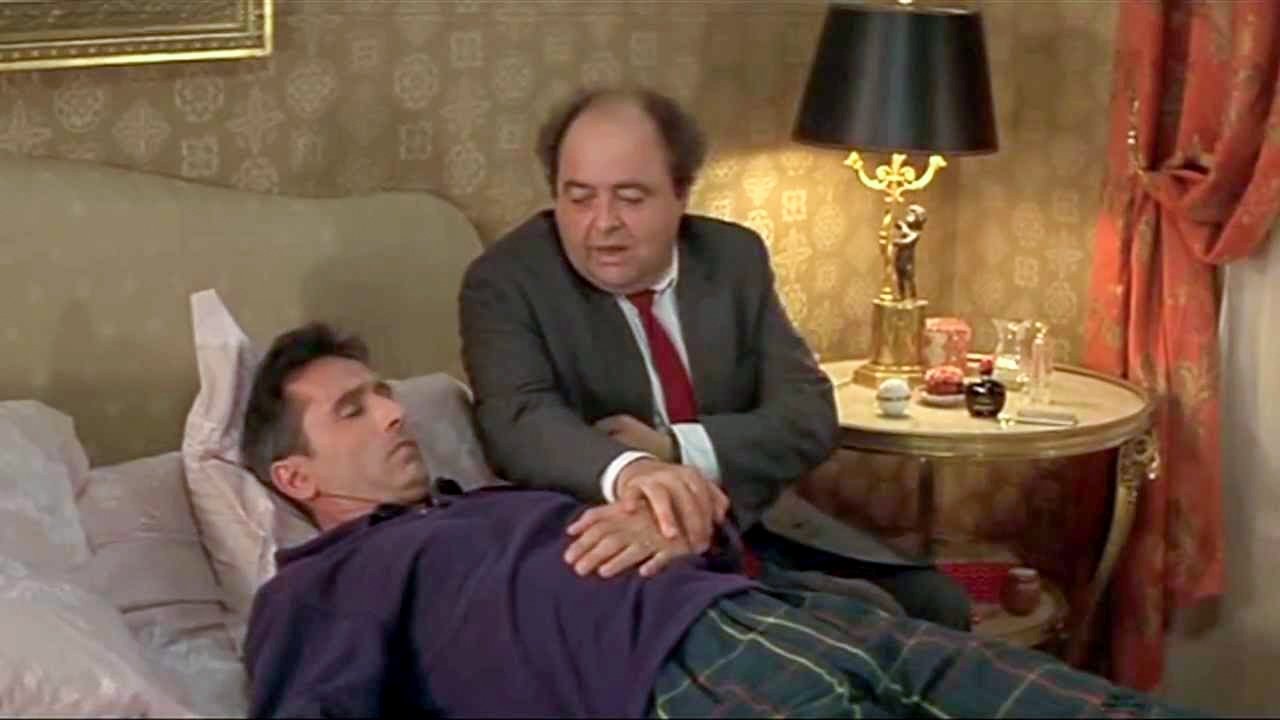
Jacques Villeret is the soul of this movie. He doesn't play Pignon as "stupid" in the traditional sense; he plays him as a man with a singular, devastating lack of social awareness combined with a bottomless desire to be helpful. He is a walking Murphy’s Law. Within minutes of entering Brochant’s home, Pignon—through sheer, well-meaning incompetence—has managed to alienate Brochant’s wife, alert the tax authorities to his illegal assets, and trigger a catastrophic back injury that leaves Brochant helpless on the floor. The American remake is a bloated corpse compared to this lean, mean machine. While the Hollywood version felt the need to add massive set pieces and a CGI mouse, Veber realizes that the funniest thing in the world is just two guys in a room where one is unintentionally dismantling the other’s life.
The Philosophy of the "Con"
While the title translates literally to The Dinner of Cons (with "con" being a much harsher French insult than "idiot"), the film invites a fascinating philosophical question: who is the actual fool? Brochant views himself as the apex predator of the social food chain, yet he is entirely dependent on the structures of his wealth and his "intelligence." The moment he is physically incapacitated and his social life is put in Pignon’s hands, he becomes the subaltern.
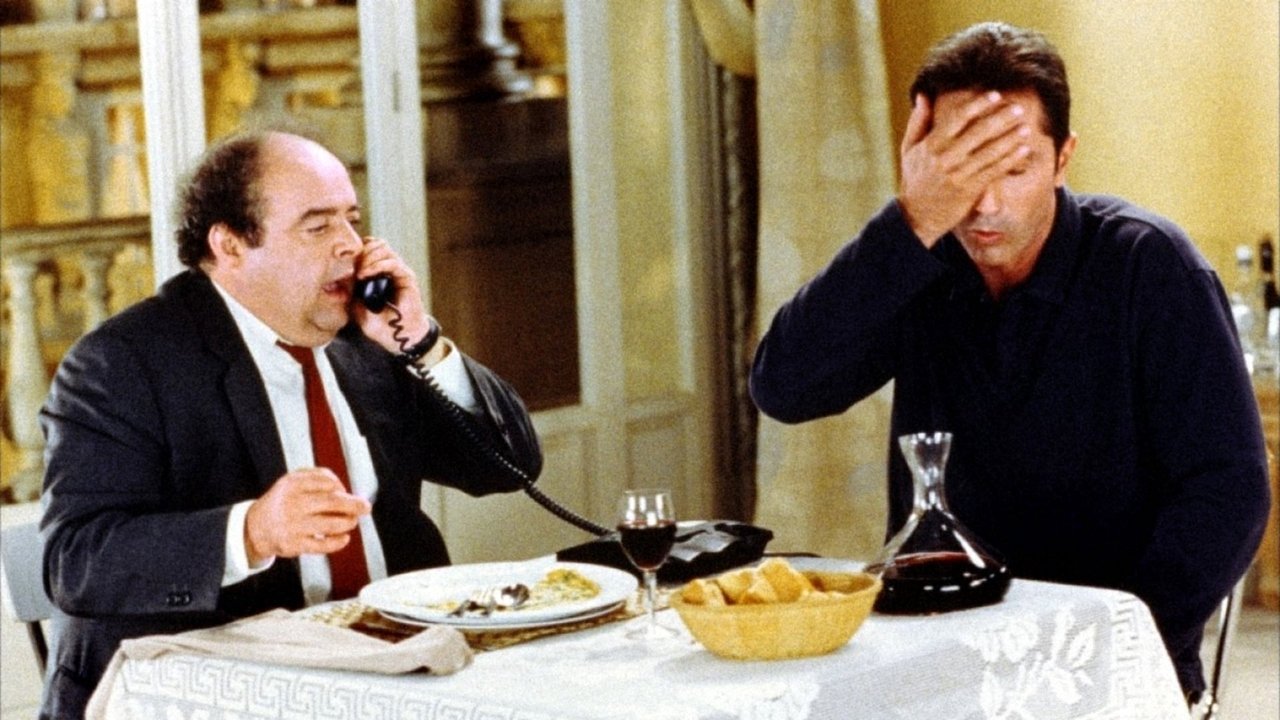
There is a brilliant, almost cruel irony in how Pignon attempts to "fix" the problems he creates. Every phone call he makes to "help" Brochant win back his wife only digs a deeper grave. It’s a meditation on the limits of intellectual elitism. Brochant’s "intelligence" is revealed to be nothing more than a lack of empathy, whereas Pignon’s "idiocy" is actually an excess of it. Pignon wants to help because he genuinely likes Brochant; Brochant wants to hurt Pignon because he finds his humanity tedious. Watching the "idiot" inadvertently strip the "genius" of his dignity is a subversion of class dynamics that feels as sharp today as it did in the late 90s.
The Art of the Setup
From a technical standpoint, the comedic timing here is surgical. Veber, who both wrote and directed, understands that farce requires a logic as rigid as a math equation. There’s a specific sequence involving a tax inspector named Lucien Cheval (Daniel Prévost) that serves as the film’s comedic peak. Daniel Prévost steals every frame he’s in, playing a man who loves auditing people more than he loves his own family. The way the script weaves the tax audit into Brochant’s crumbling marriage is a feat of narrative engineering.
It’s also worth noting how well the film has aged despite the rapid shift in technology. While the lack of cell phones would change the plot today, the core human behaviors—the vanity of the rich, the obsession of the hobbyist, the pettiness of the scorned lover—are universal. It captures that late-90s transition perfectly: a world where you still had to look someone in the eye to ruin their life.
Cool Details & Trivia:
Jacques Villeret played the role of Pignon on stage over 600 times before the cameras ever rolled, which explains why his timing feels almost supernatural. The matchstick Eiffel Tower seen in the film actually required months of work by a specialist, and the production had to be careful not to sneeze near it. The film was a massive "sleeper hit," outperforming Titanic at the French box office for several weeks. The "Pignon" character is a recurring trope in Francis Veber’s movies (like The Fugitives or The Closet), always representing the everyman who triumphs through accidental chaos. * Despite the title, we never actually see the titular dinner; the entire film takes place during the pre-game fallout.
The Dinner Game is a reminder that you don’t need a $100 million budget or a sprawling cast to create a classic. You just need a perfectly tuned script, a few actors who understand the rhythm of a punchline, and a healthy dose of schadenfreude. I once tried to build a matchstick bridge after watching this and nearly burned my eyebrows off with the wood glue fumes, but even that was less painful than the psychological shellacking Brochant receives here. It is a tight, cynical, and ultimately redemptive comedy that proves the smartest person in the room is often the one you shouldn't have invited.
Keep Exploring...
-
Ruby & Quentin
2003
-

10 Things I Hate About You
1999
-
All About My Mother
1999
-

Three Men and a Leg
1997
-

Moonrise Kingdom
2012
-
The Visitors
1993
-
Fear City: A Family-Style Comedy
1994
-

Dilwale Dulhania Le Jayenge
1995
-
Addams Family Values
1993
-

Dazed and Confused
1993
-
Groundhog Day
1993
-
Hocus Pocus
1993
-
Ed Wood
1994
-

Clueless
1995
-
Matilda
1996
-

Fear and Loathing in Las Vegas
1998
-

Rushmore
1998
-
The Big Lebowski
1998
-

The Parent Trap
1998
-

Being John Malkovich
1999