The Man in the Iron Mask
"One star to rule the box office, four legends to save the crown."
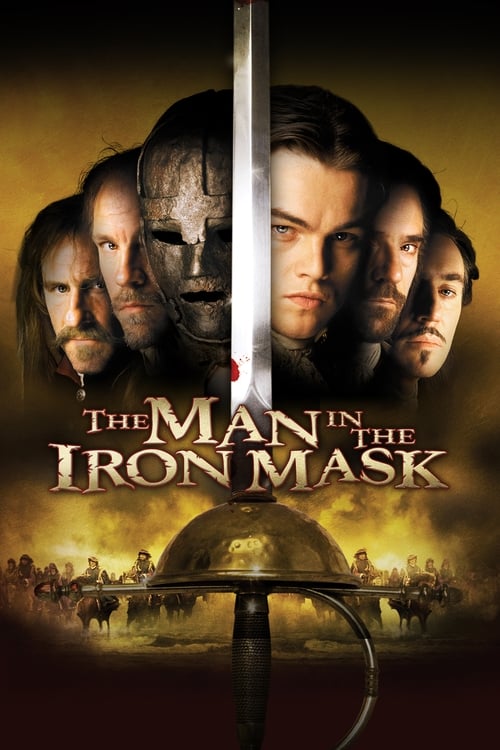
If you want to understand the sheer, unadulterated power of 1998 "Leo-mania," look no further than the marketing for The Man in the Iron Mask. Released just months after Titanic began its systematic destruction of every box office record in existence, this film was essentially sold as "Two Leos for the price of one." It was a savvy move by United Artists to capitalize on a cultural fever dream, but looking back at it now, the movie is far more interesting than a simple teen-idol vehicle. It’s a strange, earnest, and surprisingly heavy-handed "Dad Movie" disguised as a swashbuckling adventure, featuring a cast that has no business being in the same zip code, let alone the same palace.
The Greatest "Dad Cast" Ever Assembled
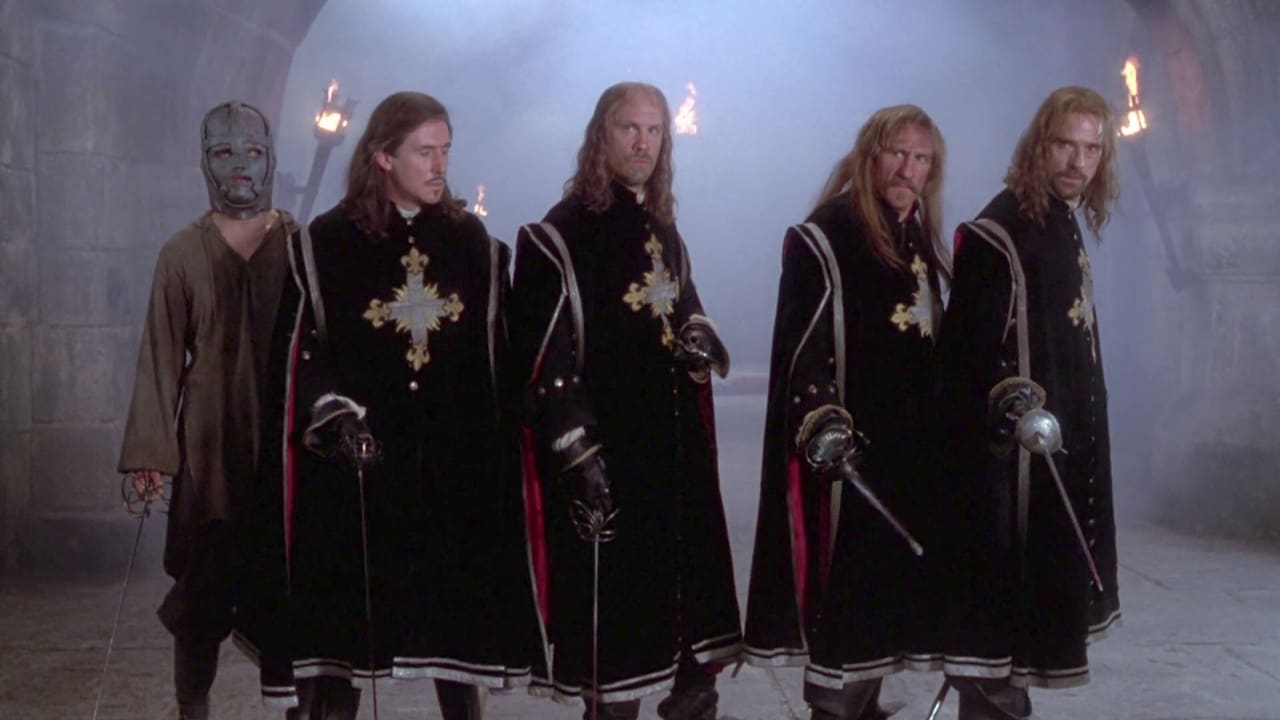
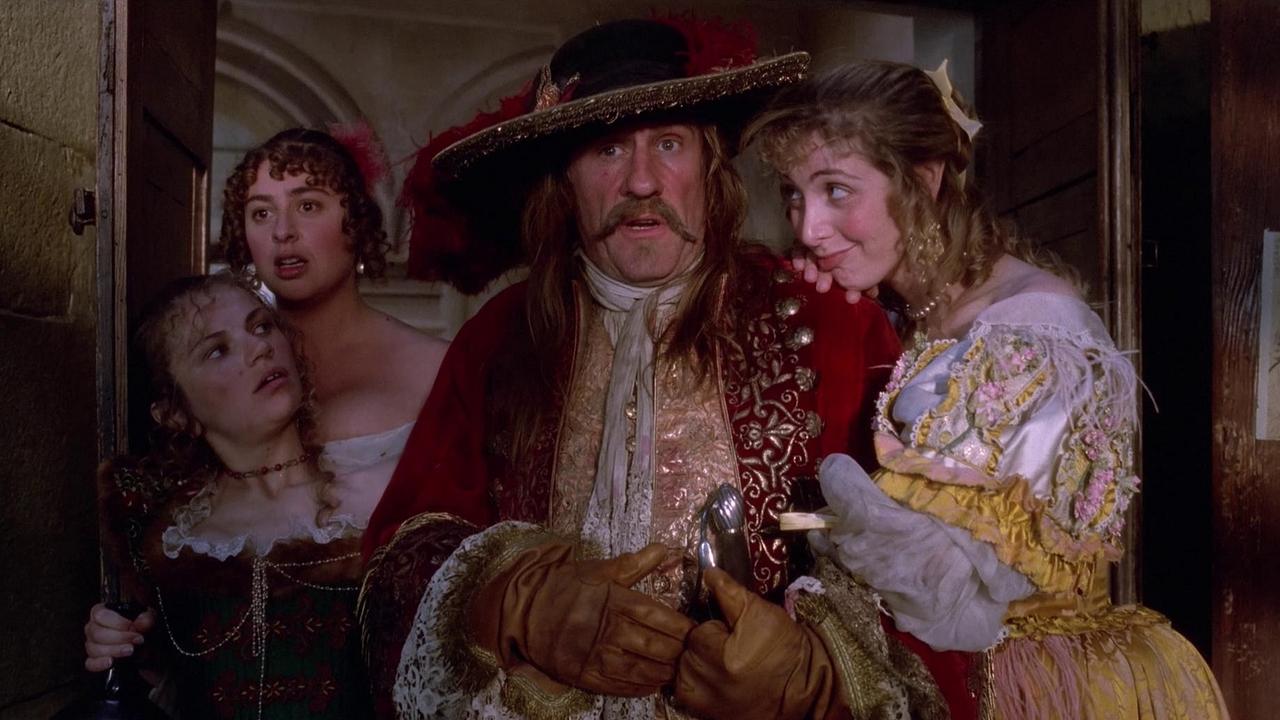
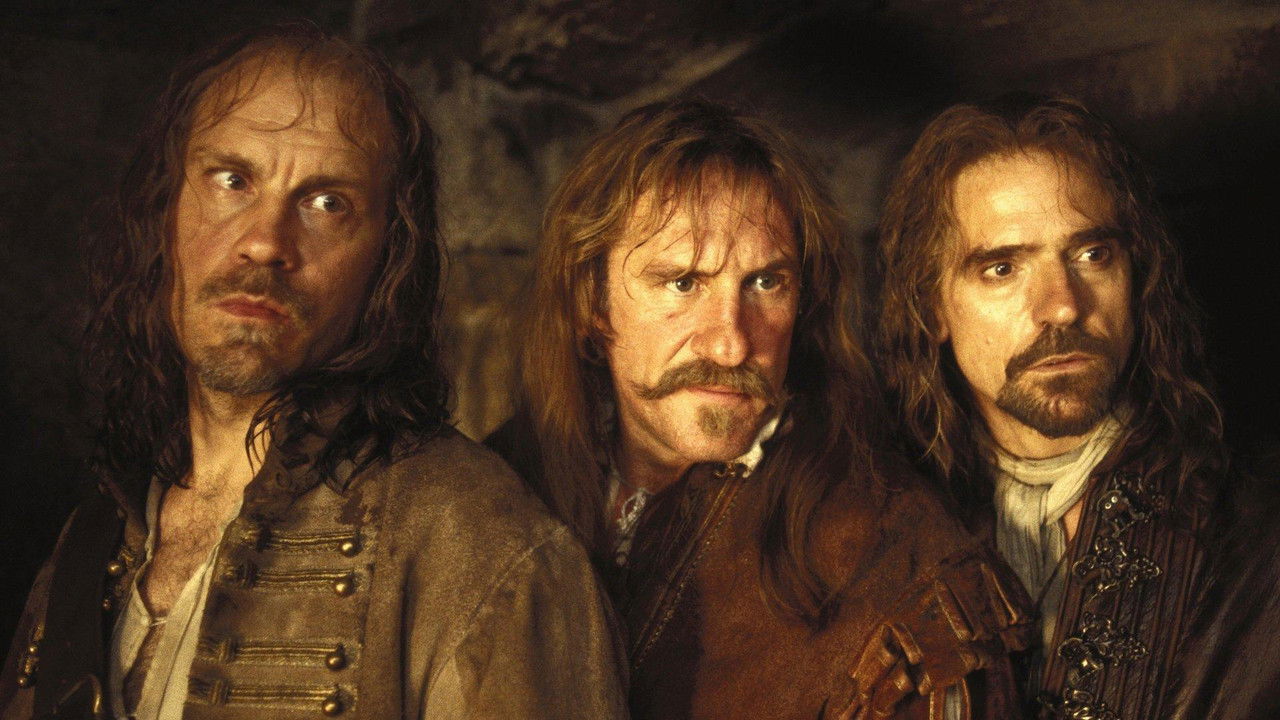
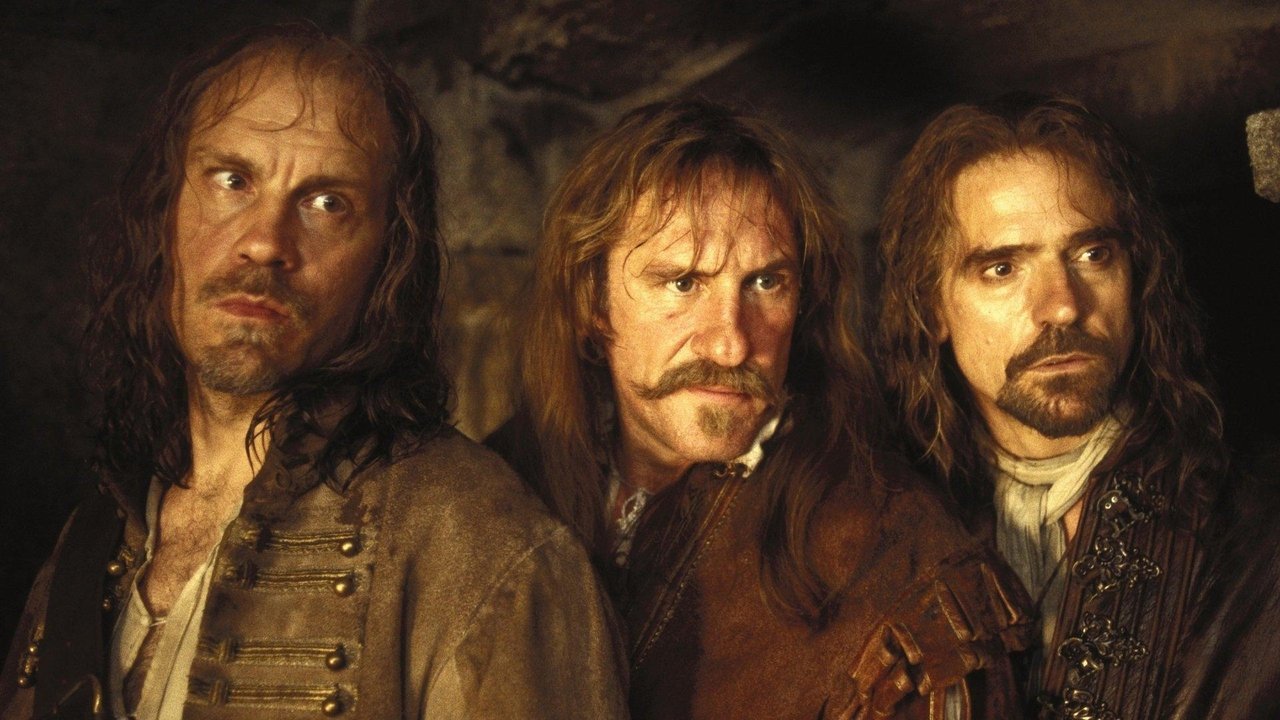
While the posters focused on Leonardo DiCaprio, the actual soul of the film belongs to the seasoned quartet playing the aging Musketeers. I’ve always felt that 1990s blockbusters had a unique way of pairing rising superstars with "Actor’s Actors," and this is the gold standard. You have John Malkovich (coming off Con Air) as a simmering, vengeful Athos; Jeremy Irons (The Lion King) as the calculating, Jesuit-turned-Aramis; and Gérard Depardieu as a ribald, flatulent Porthos.
Then there is Gabriel Byrne, who plays D'Artagnan with such a heavy coat of weary melancholy that you forget he’s in a movie where people jump off balconies for fun. I watched this again recently while nursing a lukewarm cup of peppermint tea that had a single cat hair floating in it, and I found myself completely captivated by Byrne’s chemistry with Anne Parillaud. Their forbidden romance feels like it belongs in a different, much more prestige-leaning film, yet somehow it anchors the ridiculousness of the plot. Malkovich, meanwhile, seems to be playing a version of Athos that is perpetually one second away from a nervous breakdown, which is exactly the kind of unhinged energy a 132-minute epic needs.
Practical Steel in a Digital Dawn
Directed by Randall Wallace—the man who wrote Braveheart—the film carries that same "men in tunics shouting about honor" DNA. What’s fascinating about the 1998 landscape is that we were right on the cusp of the CGI revolution. The Matrix was just a year away, but The Man in the Iron Mask feels decidedly analog. The action choreography isn't about wire-work or digital doubles; it’s about heavy capes, actual dirt, and the distinct clack-clack-clack of rapiers.
The final charge down the hallway is the film’s peak. It’s incredibly melodramatic, featuring slow-motion musketeers running into a hail of musket fire while the score by Nick Glennie-Smith goes absolutely nuclear. It should be cheese, and it is cheese, but it’s high-quality brie. The stunt work feels physical and dangerous. When these guys hit a stone floor, you feel the weight of the armor. There’s a scene where Depardieu tries to hang himself (played for laughs, which is a very 90s tonal choice) that involves some genuinely impressive practical rig work. In an era where a modern remake would just "fix it in post," there’s a tactile joy in seeing these legends actually sweating through their velvet.
A Box Office Juggernaut
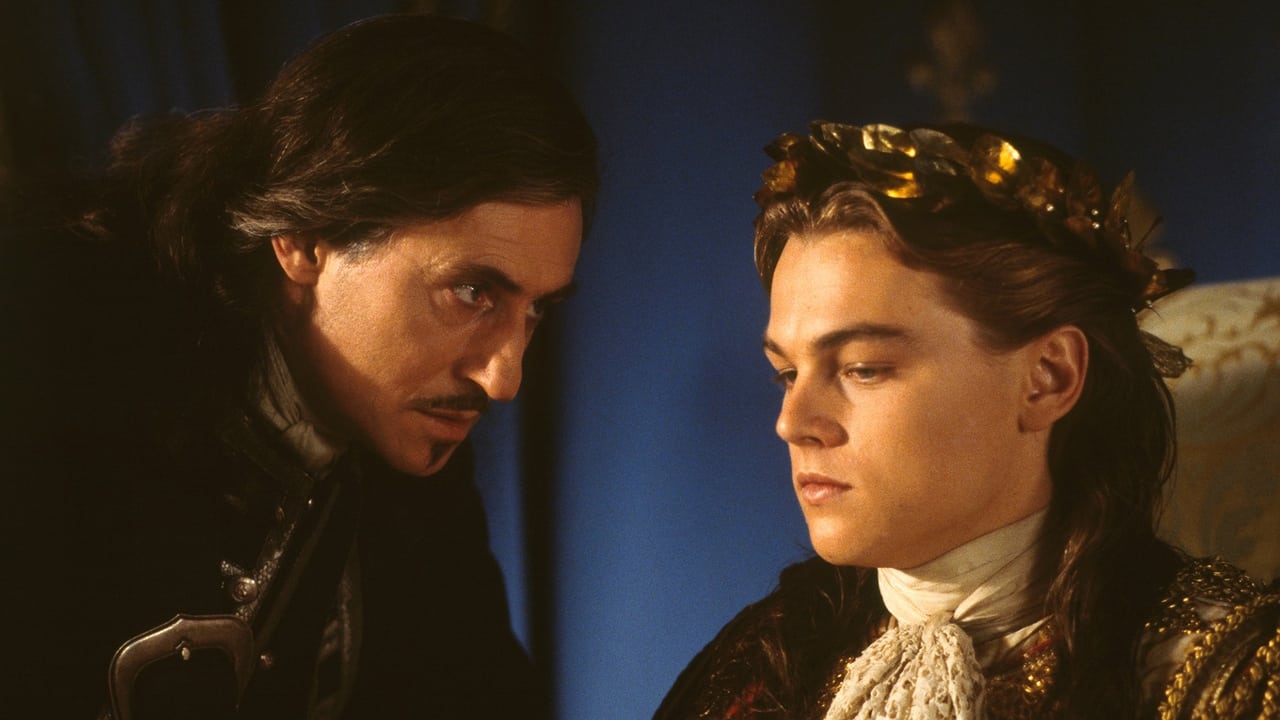
We often forget that this movie was a massive commercial hit. Produced on a relatively modest $35 million budget, it hauled in $183 million worldwide. To put that in perspective, that’s roughly the equivalent of a $350 million take today. It actually managed to knock Titanic off the #1 spot in its opening weekend, ending the boat’s fifteen-week reign. People weren't just going for the Dumas adaptation; they were going for the spectacle of DiCaprio playing the dual roles of the villainous King Louis XIV and the saintly, imprisoned Philippe.
DiCaprio’s performance as Louis is basically a rehearsal for every bratty villain he’d play later in his career, and he’s clearly having more fun being a jerk than being the hero in the mask. The production trivia is just as grand: the film was shot entirely in France, using locations like the Château de Vaux-le-Vicomte, which adds a level of authentic European gloom that you just can't recreate on a soundstage in Burbank. Apparently, the "Iron Mask" itself was so uncomfortable that DiCaprio could only wear it for short bursts, which probably helped fuel the character’s onscreen claustrophobia.
Ultimately, The Man in the Iron Mask is a relic of a time when Hollywood still believed in the "Mid-Budget Epic." It doesn't have the cynical "franchise-starter" energy of modern blockbusters. It’s just a big, loud, emotional story about old friends trying to do the right thing before they die. While the pacing occasionally drags and the tone shifts wildly between Depardieu’s potty humor and Malkovich’s suicidal grief, it remains a wildly entertaining watch. It’s the kind of movie that feels even better on a rainy Sunday afternoon when you’re looking for a reminder of why we fell in love with movie stars in the first place.
Keep Exploring...
-

Twister
1996
-

Hero
2002
-
xXx
2002
-
Heaven Is for Real
2014
-

Robin Hood: Prince of Thieves
1991
-

The Beach
2000
-

The Karate Kid
2010
-

We Were Soldiers
2002
-
In the Line of Fire
1993
-
The Edge
1997
-
Flight of the Phoenix
2004
-
The Messenger: The Story of Joan of Arc
1999
-
Maverick
1994
-
Wyatt Earp
1994
-
First Knight
1995
-
DragonHeart
1996
-
Executive Decision
1996
-
Dante's Peak
1997
-

Crouching Tiger, Hidden Dragon
2000
-

The Perfect Storm
2000