The Siege
"The future arrived three years early."
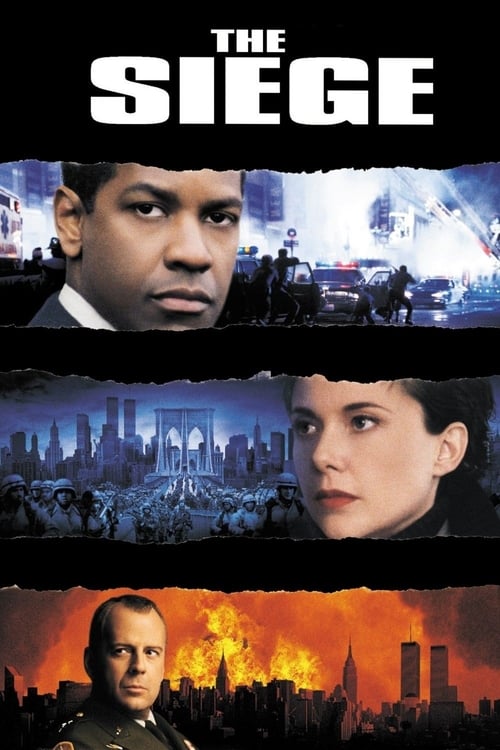
In 1998, moviegoers were busy watching New York City get flattened by Godzilla or a giant asteroid. We were comfortable with "end of the world" scenarios because they felt like impossible, popcorn-munching fantasies. Then came The Siege, a film that swapped radioactive lizards for something far more terrifying: a series of suitcase bombs, a city under martial law, and the terrifyingly thin line between national security and total tyranny. Watching this today feels less like revisiting a 90s thriller and more like uncovering a time capsule buried by someone who had a very dark, very accurate crystal ball.

I recently dug out my old DVD copy—the kind with the clunky "snap-case" that always felt like it was going to break your thumbnail—and watched it while trying to fix a leaky kitchen faucet with a wrench that was clearly the wrong size. Somehow, the mounting frustration of my DIY failure perfectly mirrored the escalating tension on screen. It’s a movie that doesn't just want to entertain you; it wants to make you sweat.
The Prophet of Brooklyn
Directed by Edward Zwick, a filmmaker who usually aims for the "epic and important" (Glory, The Last Samurai), The Siege is a fascinating relic of the pre-9/11 world. It posits a scenario where "blowback" from CIA meddling in the Middle East leads to a wave of terrorist attacks in Manhattan. Looking back, the film’s depiction of domestic cells and the resulting Islamophobia isn't just "prescient"—it’s eerie.
What’s even more striking is how the film handles the "action." This isn't a "Yippee-ki-yay" kind of movie. When a bus explodes in the middle of a crowded street, it isn't a stylized, slow-motion ballet. Thanks to the legendary cinematographer Roger Deakins (The Shawshank Redemption, Blade Runner 2049), the carnage feels tactile and dirty. The camera doesn't shy away from the smoke and the jagged glass. It’s a reminder that before CGI became the go-to for every explosion, practical effects had a weight that actually made you want to duck for cover.
Denzel, Willis, and the Moral Grinder
The film lives and breathes through Denzel Washington as FBI Agent Anthony Hubbard. Denzel is in peak "righteous fury" mode here. He’s the guy who believes in the system, even when the system is collapsing. Facing off against him is Bruce Willis as Major General William Devereaux.
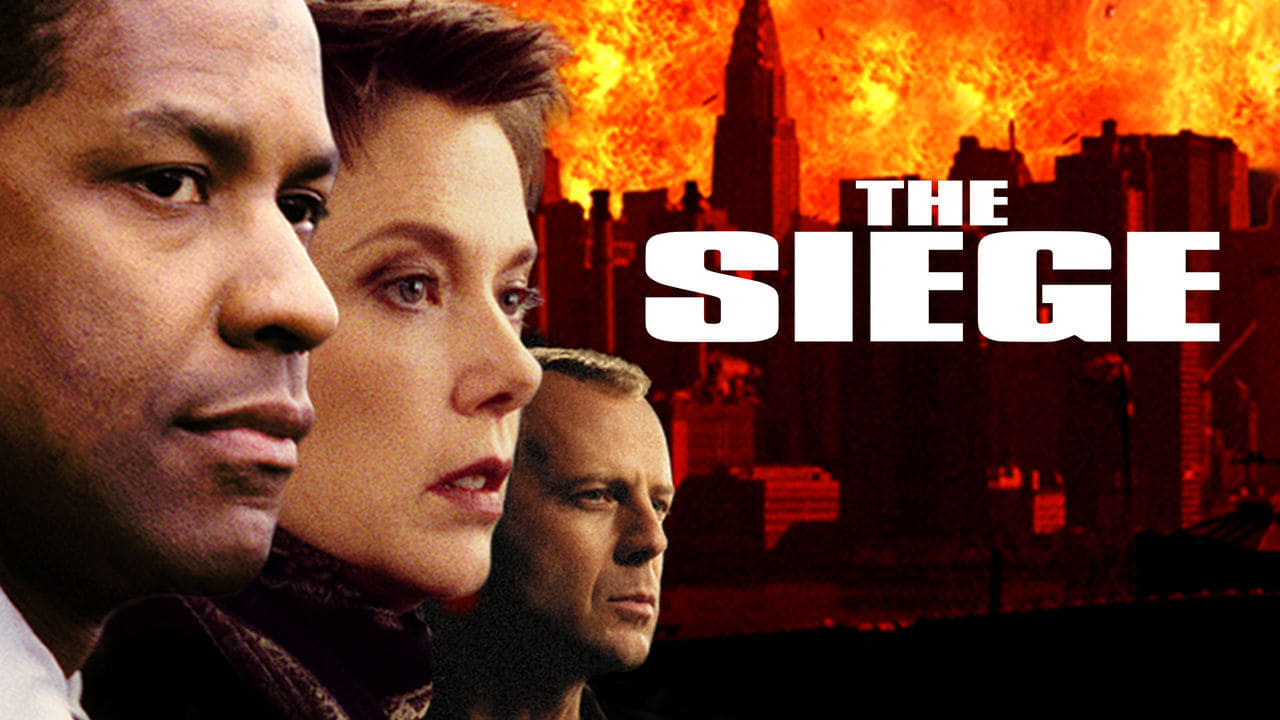
This was a fascinating pivot for Willis. In 1998, he was the world's favorite wisecracking hero, but here he plays a man who is essentially a personified slab of granite. He’s the military solution to a civilian problem, and his cold, bureaucratic approach to "interrogation" (a polite 90s word for torture) is genuinely chilling. Bruce Willis’s buzzcut in this movie is the most menacing thing about the entire third act.
Then there’s Annette Bening as Elise Kraft, a CIA operative whose loyalties are as murky as a New York puddle. Bening plays the role with a frantic, layered energy that keeps you guessing, even if the script occasionally loses the thread of her character's motivations. And we can’t forget a pre-Monk Tony Shalhoub as Hubbard's partner, Frank Haddad. His character provides the film's emotional heartbeat, representing the Arab-American community that finds itself literally caged in by the very government it serves.
Why It Vanished Into the Shadows
For a movie with this much star power and a $70 million budget, The Siege has largely slipped through the cracks of film history. Part of that is timing. When it was released, it was met with significant protests from Arab-American groups who felt the film unfairly demonized their community. Then, three years later, the real world caught up to the fiction in the most tragic way possible. For a long time, The Siege became "too real" to be enjoyed as a Friday night rental.
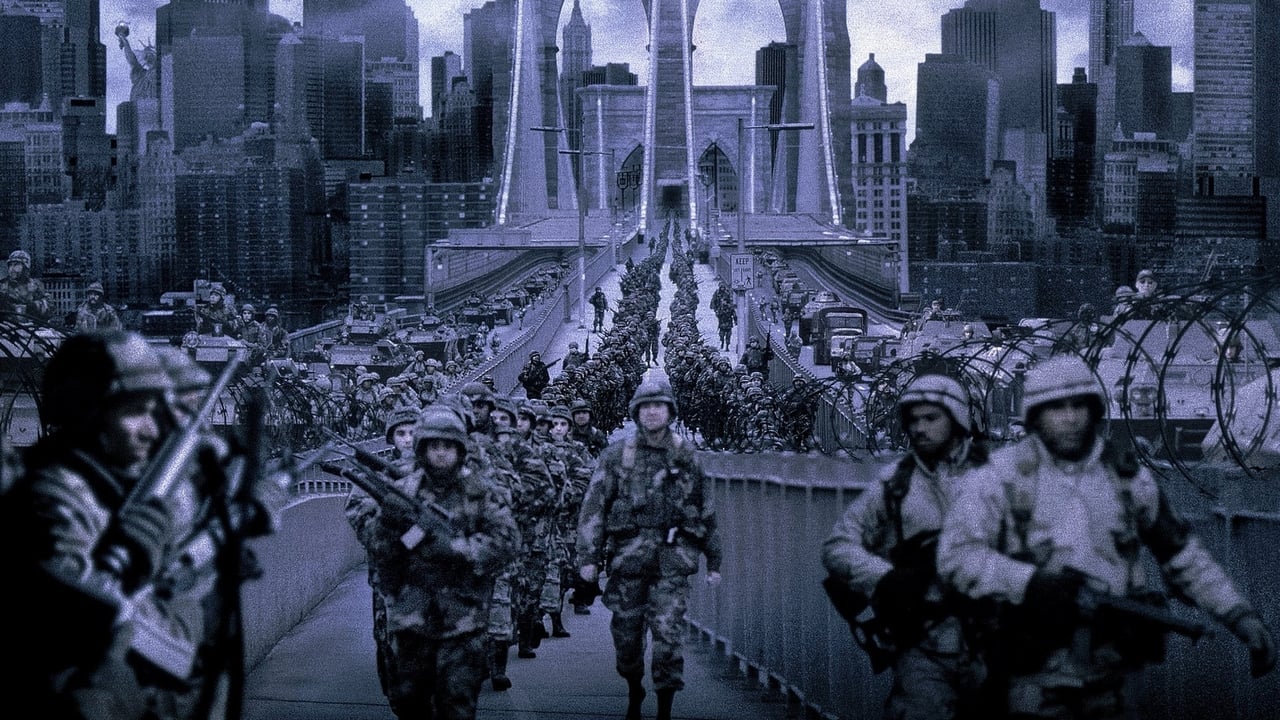
It’s a "half-forgotten oddity" because it occupies an uncomfortable middle ground. It’s too thoughtful to be a mindless action romp, but too "Hollywood" to be a pure political drama. There’s a scene where the Army rounds up young men in Brooklyn and puts them in a barbed-wire stadium—a visual that was intended as a warning against fascism, but one that feels incredibly heavy-handed in hindsight. The movie effectively yells its message at you through a megaphone while Denzel stands in the rain.
Stuff You Didn't Notice
One of the coolest details about the production is that the bus explosion was filmed on a Sunday morning in Manhattan, using a real bus and enough explosives to shatter windows two blocks away. The production actually had to pay for the window replacements for dozens of businesses. Also, look out for a young Aasif Mandvi in a small role; long before he was a Daily Show staple, he was part of this tense ensemble.
The score by Graeme Revell is another hidden gem. It avoids the typical "heroic brass" of 90s action flicks, opting instead for haunting vocalizations and discordant strings that make the city feel like a pressure cooker about to blow. It’s a sonic landscape that perfectly captures the "Y2K anxiety" that was bubbling under the surface of the late 90s.
The Siege is an imperfect, loud, and often brilliantly acted thriller that serves as a jarring reminder of how the movies tried to warn us about the future before it actually happened. It’s worth a watch today not just for the "how did they know?" factor, but to see Denzel Washington and Bruce Willis go toe-to-toe in a battle of ideologies. It might not be a "masterpiece," but it’s a gripping piece of 90s craft that deserves to be pulled off the shelf for a reassessment. Just don't expect to feel particularly relaxed when the credits roll.


Keep Exploring...
-
Courage Under Fire
1996
-
Payback
1999
-
Basic
2003
-
The Hunted
2003
-
Jack Reacher: Never Go Back
2016
-
Crimson Tide
1995
-

Out of Time
2003
-

Hackers
1995
-
Breakdown
1997
-
The Score
2001
-
Defiance
2008
-
Backdraft
1991
-
Fallen
1998
-

Double Impact
1991
-
Mercury Rising
1998
-

The Negotiator
1998
-
xXx
2002
-

Domino
2005
-
United 93
2006
-
Street Kings
2008