Vampires
"High noon in a sun-scorched hell."
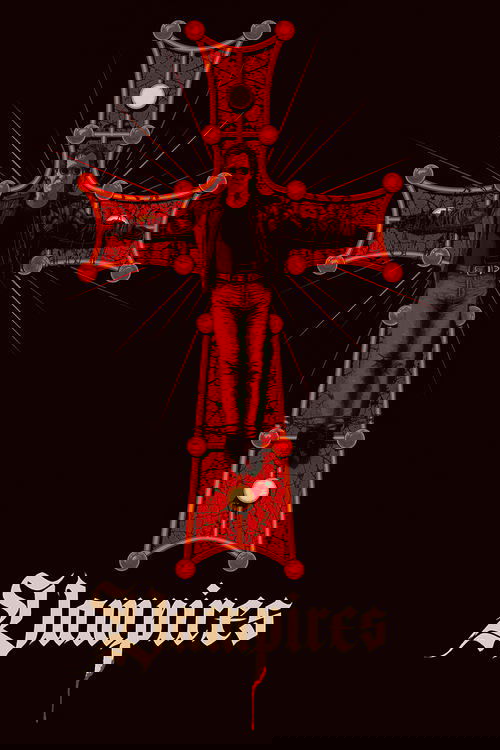
The sun hasn’t even fully set over the New Mexico desert before James Woods starts kicking people. Not just vampires—actual people. In the first ten minutes of John Carpenter’s Vampires, we see a "slayer" team funded by the Vatican treat a house full of undead like a pest control problem. They don't use crucifixes and holy water with hushed prayers; they use harpoon guns, winches, and Chevy trucks to drag bloodsuckers into the light so they can explode into satisfyingly chunky practical-effect fireballs. It’s loud, it’s sweaty, and it’s unapologetically mean.
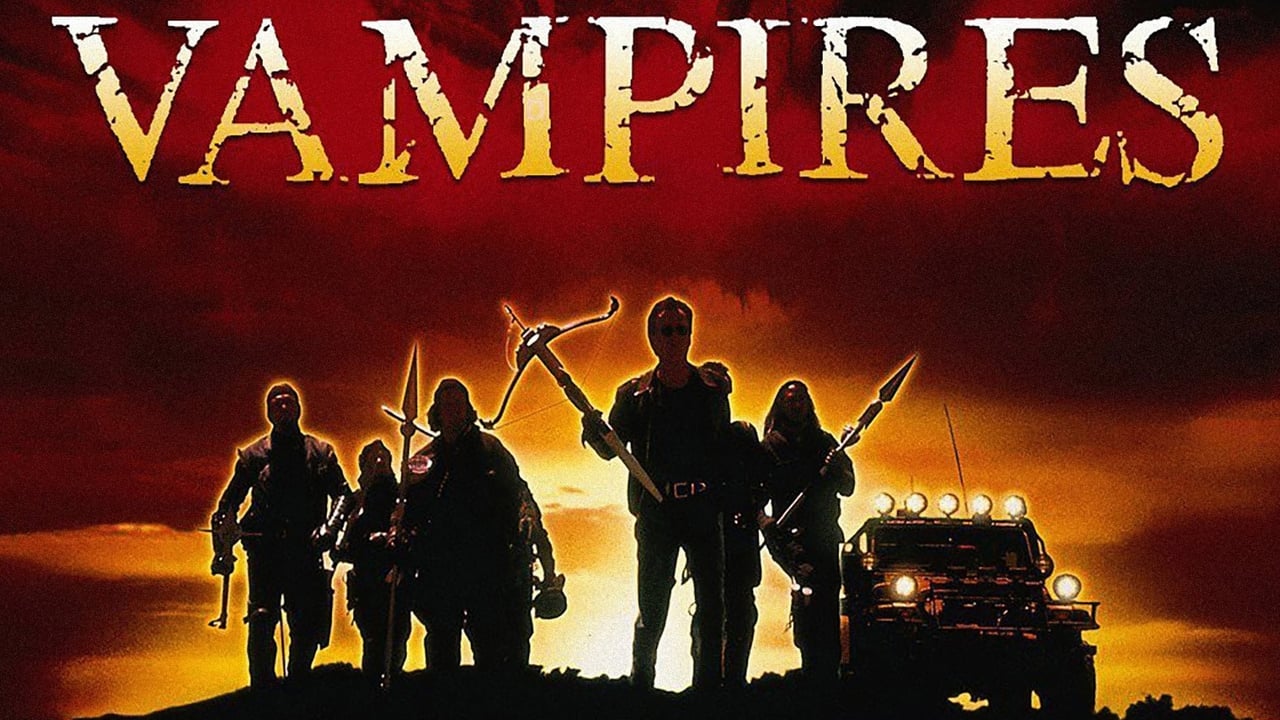
I remember watching this on a scratched DVD back in the early 2000s while drinking a lukewarm ginger ale that had lost its fizz hours ago, and honestly, the flat soda matched the movie’s vibe perfectly. Vampires doesn't care about being sparkling or refreshing. It’s a dusty, leather-clad relic of an era where horror directors were still trying to figure out if they wanted to embrace the coming CGI revolution or double down on the grit of the 80s. Carpenter, ever the rebel, chose the grit.
A Western in Horror’s Clothing
By 1998, the vampire genre was undergoing a massive identity crisis. We had the gothic romance of Interview with the Vampire and the slick, techno-infused action of Blade (released just two months before this). Carpenter ignored both. Instead, he made a Howard Hawks Western where the "Indians" happened to be centuries-old monsters. James Woods plays Jack Crow, a man who seems to have been born with a permanent scowl and a heart made of nicotine. Crow isn't a hero; he’s a blue-collar mercenary who happens to have the Pope on speed dial.
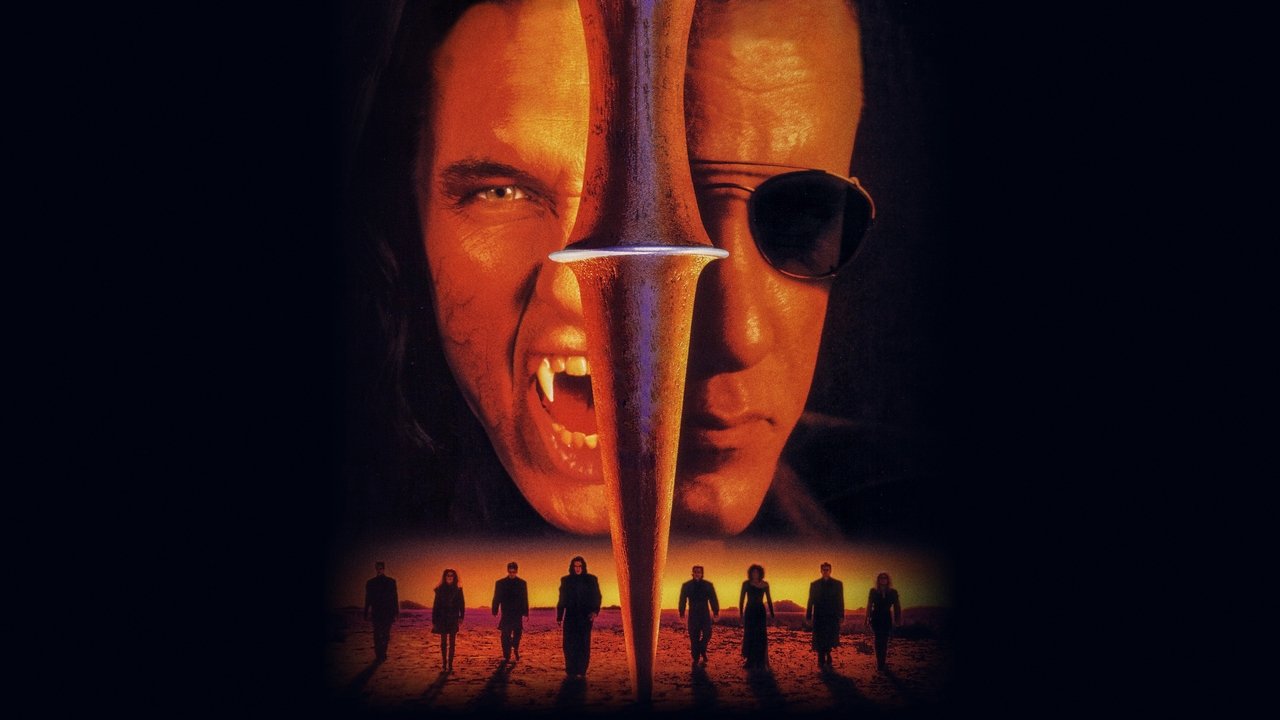
James Woods plays Jack Crow like a man who hasn't had a bowel movement since the Nixon administration. He is relentlessly hostile to everyone—his team, the clergy, and especially Daniel Baldwin, who plays his right-hand man, Anthony Montoya. The chemistry isn't "buddy-cop"; it’s more "two guys who hate each other but realize no one else is crazy enough to do this job." When their team is massacred in a motel room by the master vampire Jan Valek—played with a towering, silent menace by Thomas Ian Griffith (long before his Cobra Kai resurgence)—the movie shifts into a lean, mean revenge road trip.
Practical Blood and Golden Hour Dust
One of the things I appreciate most about this film in retrospect is the cinematography by Gary B. Kibbe. This was a time when film was still the king, and the New Mexico landscapes are drenched in a harsh, golden-hour light that makes you feel the dehydration. The effects, handled by the legendary KNB EFX Group, are a celebration of everything CGI eventually killed. When a vampire gets sliced in half or erupts in flames, it has a physical weight to it. There’s a scene where Valek literally rips a man in two with his bare hands, and you can practically smell the latex and fake blood. It’s glorious.
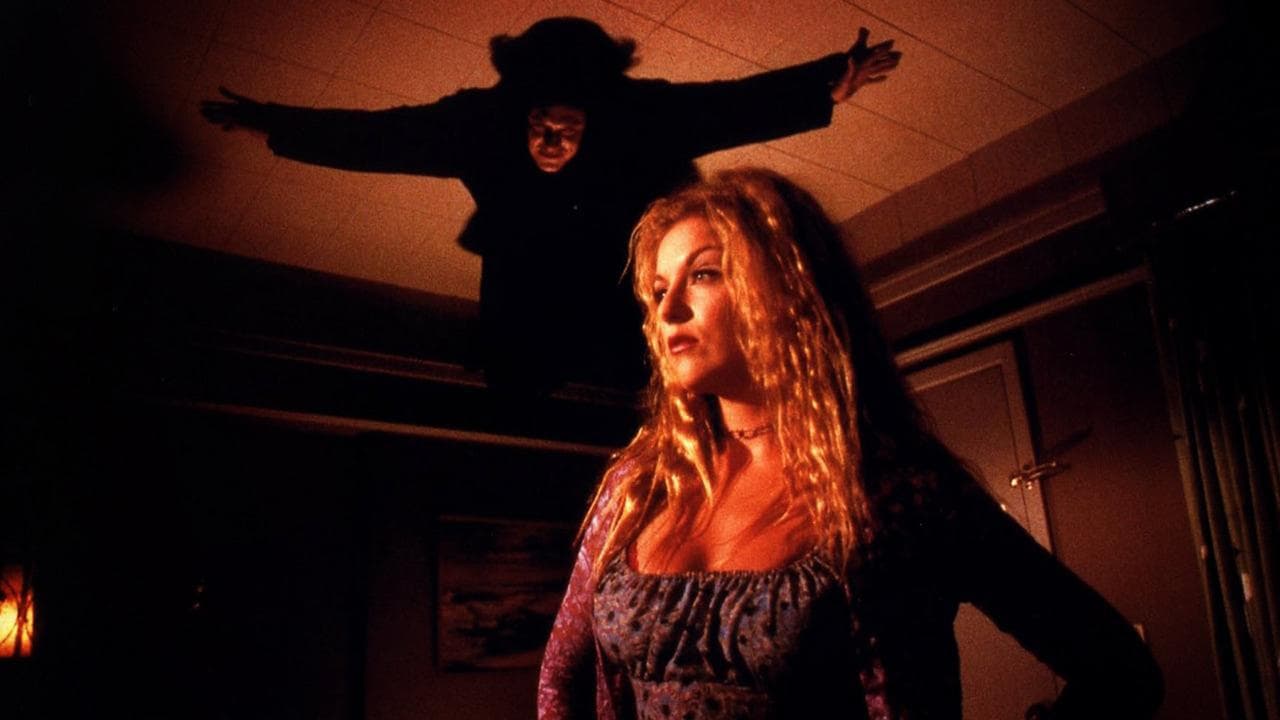
However, the film’s treatment of its female lead, Sheryl Lee, is... let’s call it "product of its time" and leave it at that. As Katrina, a sex worker who is bitten by Valek and used as a psychic link to track him, she spends most of the movie tied up, catatonic, or being barked at by James Woods. Sheryl Lee, who gave such a haunting performance in Twin Peaks: Fire Walk with Me, is largely wasted here, though she does her best with a role that requires her to be a human GPS for ninety minutes. It’s the one area where the film’s "tough guy" attitude feels less like a stylistic choice and more like a missed opportunity for a better character arc.
The Sound of the Sun Going Down
You can’t talk about a John Carpenter movie without talking about the score. Eschewing the synthesizers that made him famous in Halloween or Escape from New York, Carpenter delivers a bluesy, guitar-heavy soundtrack performed by "The Texas Toads." It’s twangy, rhythmic, and fits the sun-bleached aesthetic like a pair of well-worn boots. It reinforces the idea that these guys aren't mystical warriors; they’re just guys doing a dirty job in the middle of nowhere.
The plot eventually settles into a race for the "Black Cross of Berziers," an ancient relic that would allow Valek to survive in the sunlight. It’s a standard MacGuffin, but it brings in Maximilian Schell as Cardinal Alba and Tim Guinee as a naive young priest who has to learn the "real" way to kill monsters. Guinee is actually the secret weapon of the cast, providing a much-needed foil to Woods’ abrasive machismo. Watching his Father Guiteau evolve from a trembling clerk to a guy willing to hold a shotgun to a vampire's head is one of the film's few genuine character payoffs.
Ultimately, Vampires is a film that feels like it belongs in a dive bar. It’s not looking for awards, and it’s certainly not looking to be "elevated horror." It’s a B-movie with an A-list director’s eye for framing and a veteran actor’s willingness to be completely unlikable. It captures that late-90s transition where movies were getting bigger and louder, but some filmmakers were still trying to keep things tactile and grounded in the dirt.
If you’re looking for a vampire movie where the monsters are actually monstrous and the "hero" is a jerk who’s really good with a winch, this is your weekend watch. It hasn't aged perfectly—the gender politics are rough and the middle act drags a bit—but as a sun-soaked Western masquerading as a blood-fest, it still hits the spot. It’s a reminder of a time when John Carpenter could take $20 million and a desert and turn it into a mean-spirited, fire-breathing good time.
Keep Exploring...
-
End of Days
1999
-

In the Mouth of Madness
1995
-

Village of the Damned
1995
-
The Covenant
2006
-
Escape from L.A.
1996
-
The Ward
2010
-

Blade II
2002
-
New Nightmare
1994
-
The Craft
1996
-
Lake Placid
1999
-
Stigmata
1999
-
Eight Legged Freaks
2002
-

Legion
2010
-
Mighty Joe Young
1998
-
Soldier
1998
-

Mystery Men
1999
-
Brotherhood of the Wolf
2001
-
Final Fantasy: The Spirits Within
2001
-

Ginger Snaps
2001
-

Queen of the Damned
2002