American Beauty
"Suburban bliss is a beautiful lie."

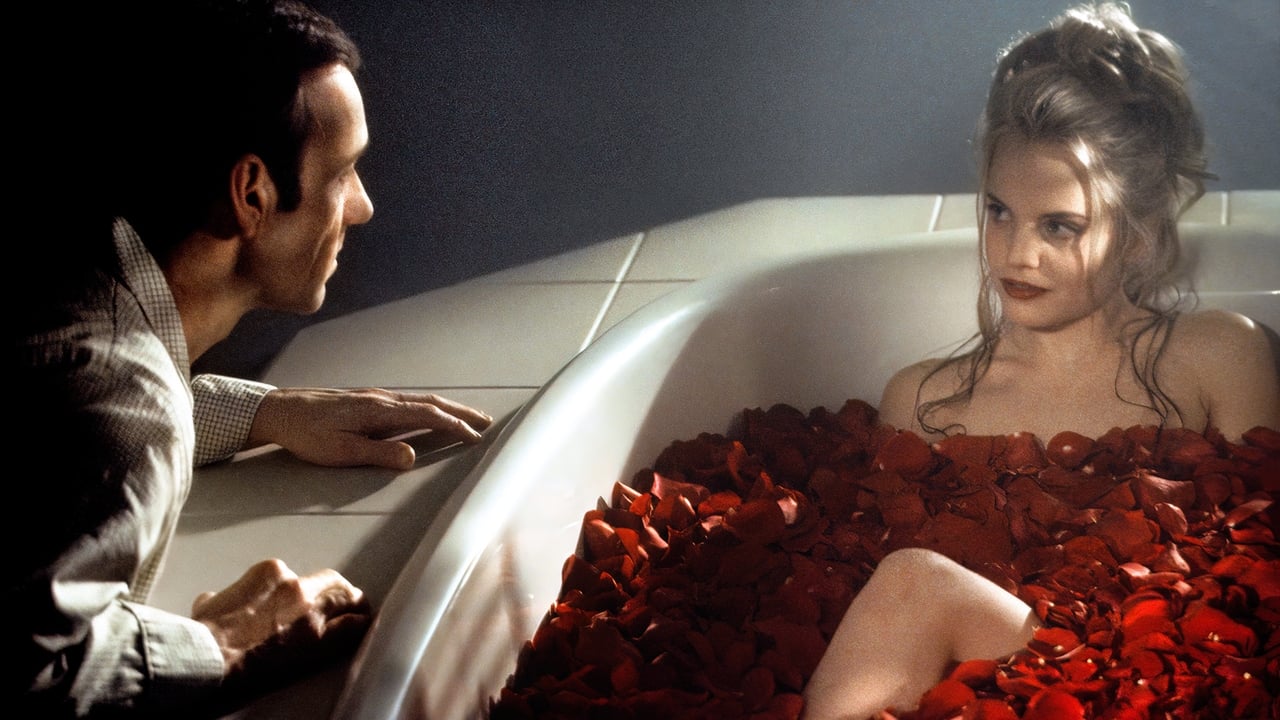
1999 was the year Hollywood decided that the American Dream was actually a very expensive, well-manicured nightmare. Between the cubicle-crushing anarchy of Fight Club and the red-pill reality of The Matrix, we were obsessed with the idea that our comfortable lives were a cage. But while those movies used soap-bombs and leather trench coats to make their point, Sam Mendes used a bottle of expensive Chardonnay and a spray of red roses.

I watched this most recent re-watch while eating a slightly stale bag of Nacho Cheese Doritos, and the rhythmic crunching weirdly synchronized with Lester Burnham’s frantic garage workout. It’s a film that demands that kind of mundane, slightly messy proximity because, despite its "prestige" pedigree, it’s a movie about the grime underneath the fingernails of the middle class.
The Mannequin in the Middle-Class Cage
At its heart, this is a movie about people who have forgotten how to be human. Kevin Spacey delivers a performance that, regardless of how you feel about him now, remains a masterclass in controlled detonation. His Lester Burnham begins the film as a ghost haunting his own life—a man whose "best part of the day" is his morning shower. When he finally "wakes up" after becoming infatuated with his daughter’s friend, played with a perfect mix of bravado and insecurity by Mena Suvari, it isn't a traditional hero’s journey. It’s a mid-life crisis fueled by pot, classic rock, and a refusal to keep pretending.
But for me, the real powerhouse is Annette Bening. As Carolyn Burnham, she’s a frantic bird trapped in a house she’s decorated to death. Watching her break down while cleaning a window to the tune of "Don't Rain on My Parade" is both hilarious and devastating. She’s the personification of the "keep it together" culture of the late 90s, and she makes Martha Stewart look like a chill beach bum. While Lester gets to find his "freedom," Carolyn is stuck trying to sell a house in a silk slip, and Bening plays every twitch of her lip like a high-wire act.
The Hall and Newman Effect

What elevates this from a standard "suburbs are bad" drama into something transcendent is the technical craft. This was the feature debut for Sam Mendes, who came from the London stage, and he brought a theatrical precision to every frame. He teamed up with legendary cinematographer Conrad L. Hall, and honestly, this movie looks better than almost anything released in the last decade. Hall used a "static" style—the camera rarely moves unless the characters are losing control. It makes the suburban streets of Southern California look like a beautiful, sterile prison.
Then there’s the score by Thomas Newman. You know that "minimalist, plinky-plonky" piano sound that every indie drama used for the next fifteen years? This is where it started. The music doesn't tell you how to feel; it just floats there, like that famous plastic bag in the wind.
Speaking of the bag: I remember when this film hit DVD—one of those early DreamWorks releases with the translucent case—the special features revealed that the "plastic bag" scene wasn't some high-tech CGI marvel. They used a real bag and a leaf blower. In an era where we were starting to see the first waves of heavy digital effects, there was something deeply grounded about the film’s most poetic moment being a piece of trash dancing in a driveway.
A Complicated Inheritance
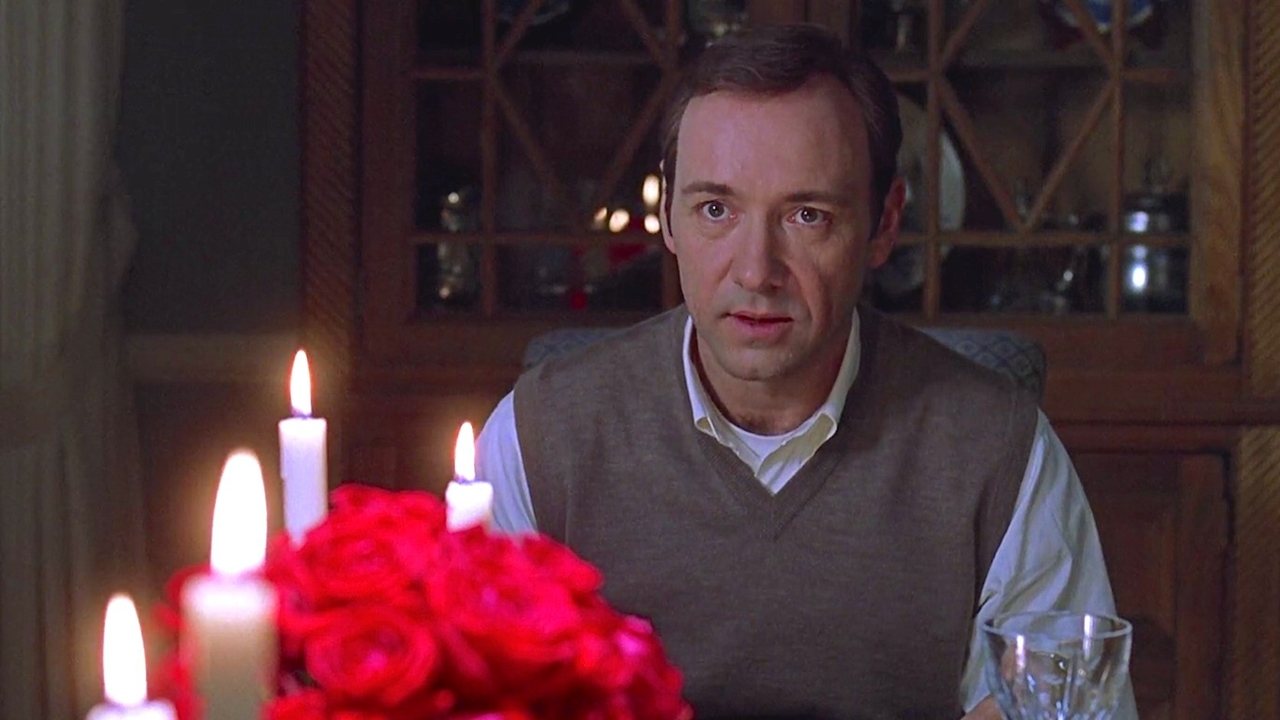
Revisiting this in the 2020s is a different experience than it was in 1999. Back then, it was a "Best Picture" juggernaut that swept the Oscars, winning five statues and cementing itself as the definitive "important" movie of the turn of the millennium. Today, the central plot point—a grown man’s obsession with a teenager—feels significantly more skin-crawling, which is exactly how Sam Mendes intended it, though modern audiences might have less patience for Lester's "awakening."
However, the film’s critique of the "look at me" culture feels eerily prophetic. Long before Instagram, the Burnhams were living for the curated image. They were the original influencers of their own misery. The supporting cast—particularly Thora Birch and Wes Bentley as the cynical teens—serve as the only moral compass in a world where the adults have completely lost the plot. Wes Bentley’s Ricky Fitts is basically the patron saint of every kid who ever thought they were deep for filming a dead bird.
The film earns its prestige not through its "message," which can be a bit heavy-handed, but through its impeccable execution. From the script by Alan Ball, which crackles with a biting, cynical wit, to the way Peter Gallagher perfectly captures the "King of Real Estate" smarm, every piece fits. It’s a drama that manages to be both a thriller and a dark comedy, wrapped in some of the most beautiful cinematography of the analog era.
American Beauty is a time capsule of a very specific moment in American history—the brief window of peace and prosperity before 9/11 changed our collective anxieties. It suggested that our biggest problem was that our houses were too big and our souls were too small. Whether you find Lester’s journey redemptive or pathetic, the film remains an essential piece of 90s cinema that still has the power to make you look a little closer at your own white picket fence.

Keep Exploring...
-
L.A. Confidential
1997
-
Road to Perdition
2002
-

The Lion King
1994
-
The Shawshank Redemption
1994
-
The Usual Suspects
1995
-
Fargo
1996
-
Good Will Hunting
1997
-

American History X
1998
-
The Sixth Sense
1999
-
Mulholland Drive
2001
-

A Walk to Remember
2002
-

Eternal Sunshine of the Spotless Mind
2004
-
Million Dollar Baby
2004
-
The Notebook
2004
-
The Help
2011
-

Jarhead
2005
-
Forrest Gump
1994
-

Léon: The Professional
1994
-
Before Sunrise
1995
-

Braveheart
1995