Analyze This
"The Mob has a new boss: Anxiety."
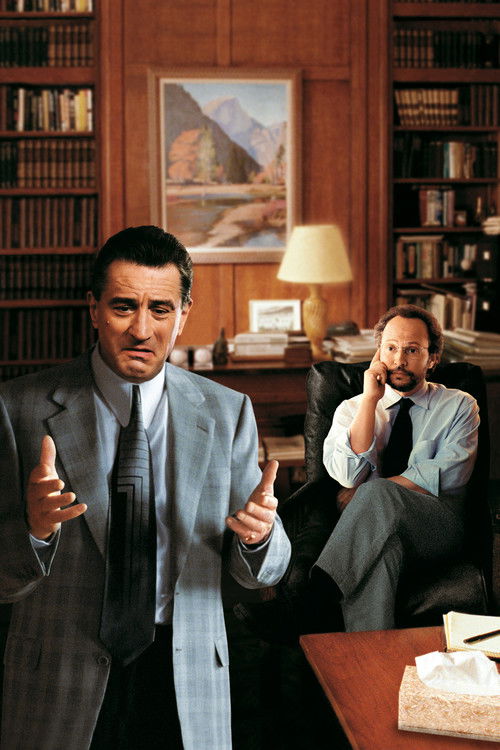
I vividly remember the first time I saw Robert De Niro—the man who once stared down a mirror in Taxi Driver and redefined the cinematic gangster in Goodfellas—sobbing uncontrollably over a TV commercial for pasta sauce. In 1999, this wasn't just a funny scene; it was a cultural seismic shift. Watching it again recently, while I was aggressively failing to assemble a flat-pack bookshelf and swearing at a Swedish hex key, I realized that the film’s central conceit—a powerful man losing his grip on his own narrative—has actually aged better than the baggy suits the characters wear.

The Year of the Depressed Don
1999 was a strange, fertile time for the "sensitive mobster" trope. Just months before Analyze This hit theaters, a little show called The Sopranos debuted on HBO. Suddenly, the most feared men in America weren't worried about federal indictments; they were worried about their mothers and their panic attacks. But where Tony Soprano went dark, Harold Ramis (the comedic genius behind Groundhog Day and Caddyshack) went for the jugular of the funny bone.
The setup is a classic "odd couple" dynamic pushed to the extreme. Billy Crystal plays Dr. Ben Sobel, a psychiatrist whose biggest problem is his overbearing father and a lackluster wedding rehearsal. Enter Paul Vitti (Robert De Niro), a high-ranking Mafioso who is suddenly experiencing "chest tightness" and "spontaneous weeping." The chemistry here is what keeps the movie afloat. Crystal is the king of the high-pitched, neurotic stammer, while De Niro plays the "tough guy in crisis" with a sincerity that makes the comedy land. De Niro’s transition to 'Comedy Bob' started here, and frankly, it's a performance that doesn't get enough credit for its restraint. He isn't playing a caricature; he’s playing a terrifying man who is genuinely terrified of his own feelings.
A Masterclass in Reactive Comedy
While the plot follows a fairly standard trajectory—Sobel gets sucked into the mob world, Vitti tries to "fix" his brain before a major gangland summit— the joy is in the margins. Lisa Kudrow, fresh off the peak of Friends fame, is somewhat underused as Sobel's fiancée, Laura, but she provides the necessary "What is actually happening?" grounding that a farce like this requires.

The real scene-stealer, though, is the late-90s production design. This film captures that specific transition from analog to digital; there are car phones, chunky monitors, and a general sense of pre-9/11 New York bravado. Chazz Palminteri (legendary from A Bronx Tale) plays the rival boss Primo Sidone with such straight-faced menace that he makes the surrounding silliness feel dangerous. There’s a specific rhythmic pacing to the dialogue—Billy Crystal’s panicked 'mob speak' is the only reason I’ve ever considered buying a tuxedo.
One of the best bits of trivia I dug up from the old DVD special features is that Robert De Niro was actually quite nervous about the comedy. He reportedly asked Billy Crystal if he should "try to be funny," and Crystal told him to just play it straight. That advice saved the movie. If Vitti had been a clown, the stakes would have vanished. Instead, the humor comes from the collision of two incompatible worlds. Apparently, during the filming of the famous "You, you're good" scene, the crew kept breaking into hysterics because De Niro kept adding subtle, improvised facial tics that weren't in the script.
Why It Still Earns Your 5 Minutes
Is it a deep dive into the human psyche? Not really. But as a piece of "Modern Cinema" retrospection, it’s a fascinating look at how we started to deconstruct the "tough guy" mythos. The jokes about Prozac and Freud might feel a little "101" today, but the execution remains top-tier. The scene where Vitti tries to "express his anger" by shooting a pillow instead of a person is a perfect encapsulation of Ramis’s directorial philosophy: find the humanity in the absurdity.
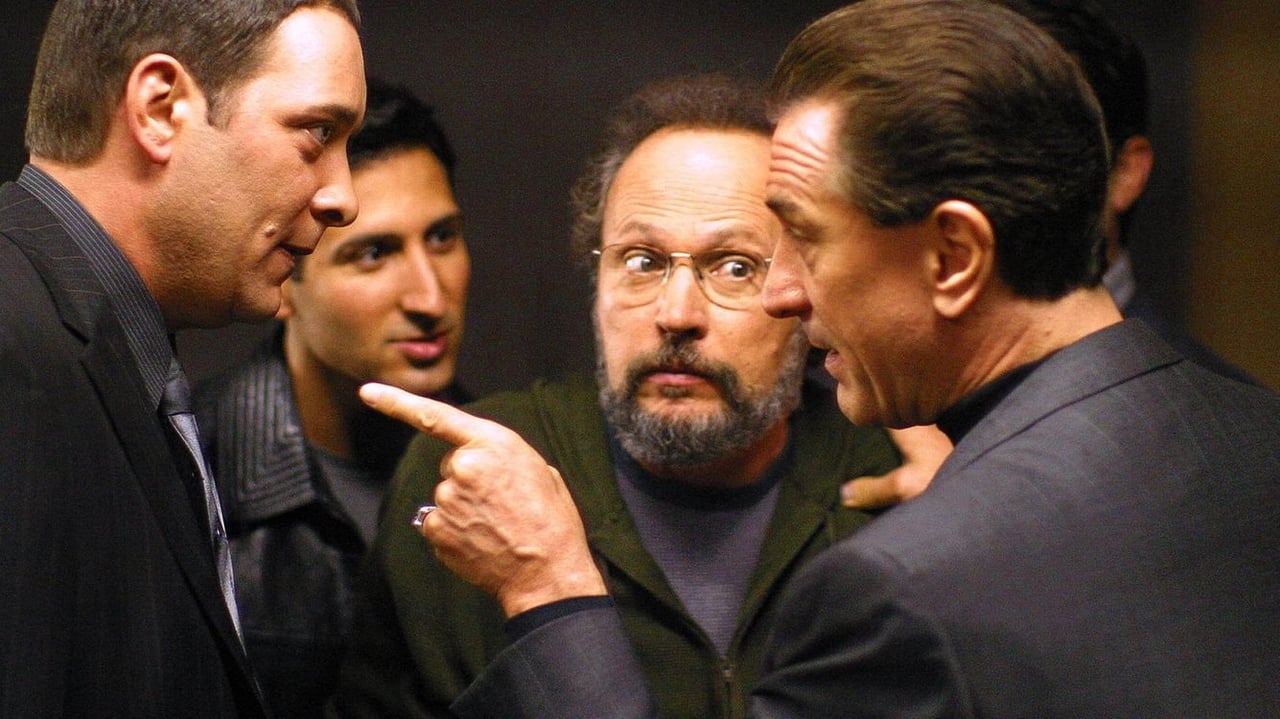
The movie’s only real crime is being slightly too reliant on its formulaic ending, but by the time you get there, the Crystal-De Niro rapport has bought enough goodwill to see you through. It’s the kind of movie that feels like a warm blanket—if that blanket was made of Italian wool and smelled faintly of cannoli and gunpowder. It reminds me of a time when a $80 million budget could be spent on a talky comedy rather than a superhero origin story, and there’s something genuinely refreshing about that.
Ultimately, Analyze This is a testament to the power of a great premise executed by actors who understand the assignment. It’s a breezy, sharp, and occasionally touching look at the anxieties we all carry, whether we’re middle-class doctors or guys who "know a guy." If you haven't revisited it since the days of Blockbuster rentals, give it another spin. Just don't expect it to help you with your own panic attacks—unless your therapist is as funny as Billy Crystal.

Keep Exploring...
-
Analyze That
2002
-
Bedazzled
2000
-

The Family
2013
-
Lethal Weapon 4
1998
-
Bad Boys II
2003
-
Starsky & Hutch
2004
-
Groundhog Day
1993
-
Ronin
1998
-

Austin Powers: International Man of Mystery
1997
-

O Brother, Where Art Thou?
2000
-
The Whole Nine Yards
2000
-

Adaptation.
2002
-
Bad Santa
2003
-

Gangs of New York
2002
-

Fun with Dick and Jane
2005
-
The Longest Yard
2005
-
The Pink Panther
2006
-

Rush Hour 3
2007
-

The A-Team
2010
-

The Green Hornet
2011