Notting Hill
"Just a girl, standing in front of a stuttering bookseller."
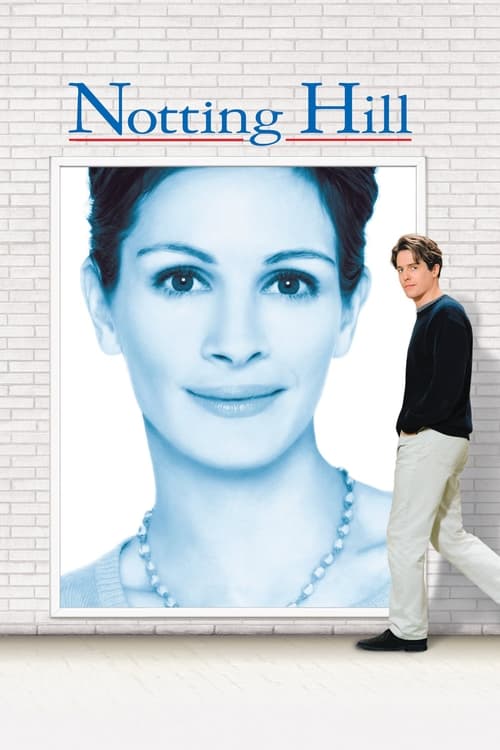
There is a specific kind of geographical lie that only 1990s cinema could tell with a straight face. It’s the London of Roger Michell’s Notting Hill, a place where the sun always hits the pastel-colored houses at a perfect forty-five-degree angle, and even the eccentric local weirdos seem to have a curated, cinematic charm. Released in the summer of 1999, right between the high-concept digital wizardry of The Matrix and the looming tech-anxiety of Y2K, this film arrived like a warm, cashmere blanket. It wasn’t trying to reinvent the wheel; it was trying to prove that the wheel—specifically the romantic comedy wheel—could still spin gold if you just added enough British self-deprecation.

I watched this again recently while eating a slightly stale digestive biscuit, and it struck me how much the film relies on the sheer, tectonic-plate-shifting power of Julia Roberts’ smile. In 1999, she wasn't just an actress; she was the closest thing the Western world had to a living, breathing logo for "Movie Star." Pairing her with Hugh Grant, who was then the undisputed heavyweight champion of the "flustered posh man" genre, was a stroke of commercial genius that almost felt like cheating.
The Architecture of the Perfect Rom-Com
The premise is the ultimate "it could happen to you" fantasy for every person who has ever worked a retail job. William Thacker (Hugh Grant, playing a version of himself so distilled he practically evaporates) owns a failing travel bookshop. In walks Anna Scott (Julia Roberts), the most famous woman on the planet. One spilled orange juice later, and we’re off to the races.
Writer Richard Curtis (who gave us Four Weddings and a Funeral and would later unleash Love Actually) has a very specific "Calculus of Charm." He knows exactly when to drop a swear word to make a scene feel "real" and exactly when to pivot to a grand, sweeping emotional gesture. Looking back, the script is a marvel of pacing. It understands that for the central romance to work, the world around it has to feel lived-in, even if it is a highly sanitized version of London.
What fascinates me now is how the film handles the "DVD era" transition of its time. The late 90s saw the rise of the movie star as a brand, and Notting Hill is surprisingly meta about it. When Anna Scott mentions her $15 million salary for a film, she isn't just reciting a line; Julia Roberts was literally paid $15 million to appear in Notting Hill. It’s a film that eats its own tail, acknowledging the absurdity of celebrity while simultaneously asking us to swoon over it. Hugh Grant’s hair is effectively the third lead of the movie, acting as a barometer for his emotional distress.
The Power of the Supporting Player
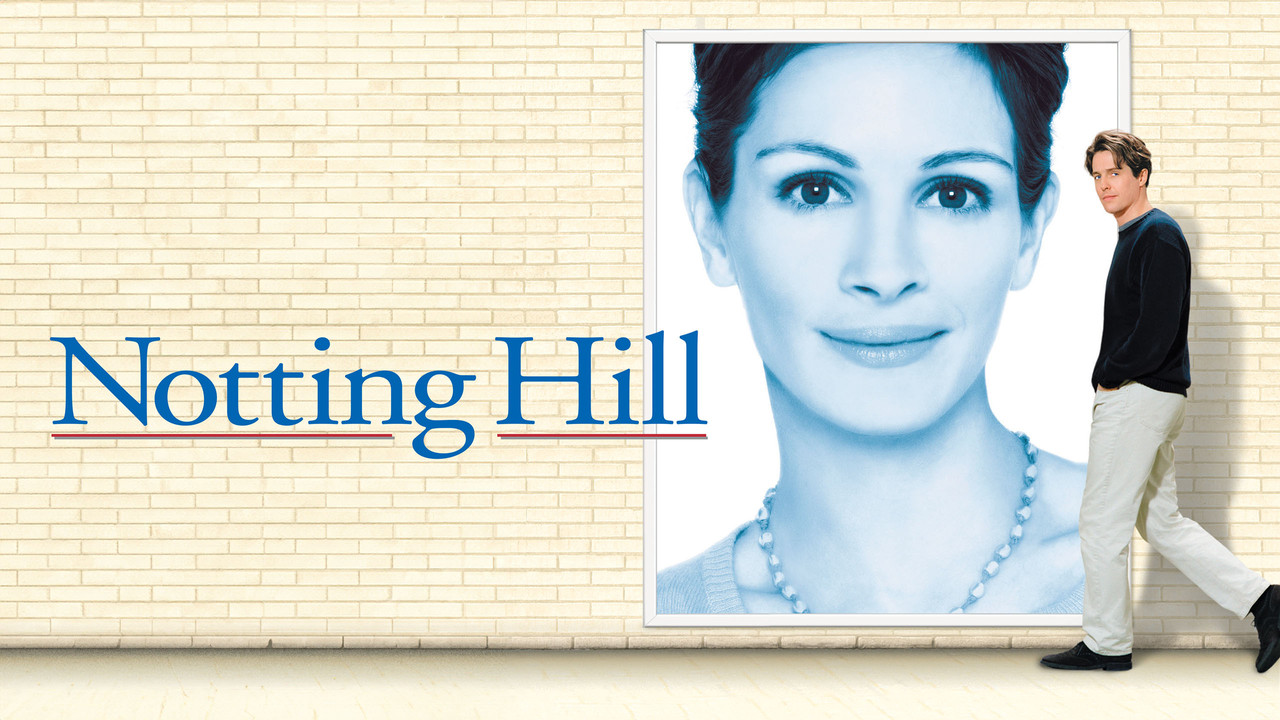
While the posters focused on the megastars, the secret sauce of Notting Hill is the ensemble. Rhys Ifans, as the unwashed, yogurt-eating roommate Spike, almost steals the entire movie by being the only person who acts like they aren't in a polished Hollywood production. Rhys Ifans is the only person in this movie who actually looks like he lives in a real London flat. His "scuba suit" scene is the kind of physical comedy that earns its keep every time it’s rewatched.
Then there’s the dinner party scene with William’s friends—Gina McKee, Tim McInnerny, and Emma Chambers. It’s here that the film earns its heart. The "Last Brownie" competition, where the characters compete to see who has the most pathetic life, is peak Richard Curtis. It grounds the astronomical fame of Anna Scott by placing her at a table with a woman in a wheelchair and a man who can’t cook. It’s a reminder that even in a blockbuster, the best moments are usually the quietest ones.
A $363 Million Cup of Tea
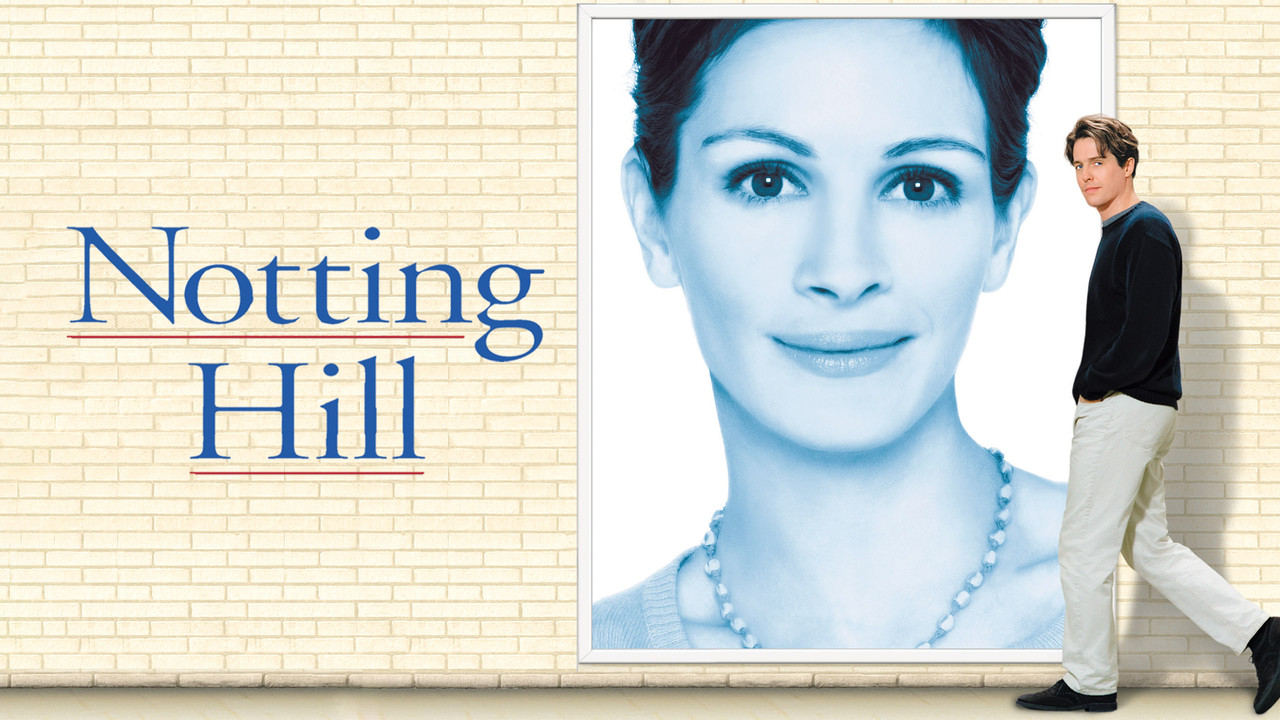
From a commercial standpoint, Notting Hill was an absolute juggernaut. With a budget of $42 million, it went on to gross over $363 million worldwide. At the time, it became the highest-grossing British film in history, a record it held until Bridget Jones's Diary (another Richard Curtis project) came along. It wasn't just a movie; it was a tourism advertisement. The famous "Blue Door" of William’s flat actually belonged to Richard Curtis, and after the film became a phenomenon, the owner had to sell it because fans wouldn't stop knocking on it. The door eventually sold at auction for a staggering amount, and the replacement was painted black to deter tourists. It didn't work.
Looking back with twenty-five years of hindsight, does it hold up? Mostly, yes. The lack of smartphones makes the "hiding from the paparazzi" plot feel much more urgent and physically grounded. Today, Anna Scott couldn't hide in a bookstore for five minutes without a TikTok being uploaded. There’s a tangible, analog quality to the cinematography by Michael Coulter that feels rich and inviting, capturing a version of West London that exists more in our collective memory than on a map.
The film does have its 90s blind spots—it is famously "white" for a neighborhood as diverse as Notting Hill—but as a fairy tale, it remains incredibly effective. It’s a movie that knows exactly what it is: a high-gloss, expertly acted, occasionally cynical, but ultimately hopeful look at how we project our desires onto the famous people we don't actually know.
Ultimately, Notting Hill succeeds because it trusts its leads to do the heavy lifting. Hugh Grant stutters with the precision of a master clockmaker, and Julia Roberts proves that "The Smile" was worth every penny of that $15 million. It’s a cozy, witty, and shamelessly romantic experience that reminds me why we used to go to the cinema just to see two people talk in a garden. If you haven't visited the travel bookshop in a while, it's time for a return trip.


Keep Exploring...
-
Stepmom
1998
-

Morning Glory
2010
-

Bridget Jones's Diary
2001
-
Two Weeks Notice
2002
-

Love Actually
2003
-
The Mask
1994
-

While You Were Sleeping
1995
-
My Best Friend's Wedding
1997
-
Shakespeare in Love
1998
-
The Wedding Singer
1998
-

There's Something About Mary
1998
-
About a Boy
2002
-
Freaky Friday
2003
-

Bean
1997
-
Four Weddings and a Funeral
1994
-
As Good as It Gets
1997
-
Lost in Translation
2003
-
Something's Gotta Give
2003
-
Shall We Dance?
2004
-
Shrek 2
2004