Office Space
"Die, corporate world, die."

The sound of a dot-matrix printer struggling to birth a TPS report is the unofficial anthem of a generation that was promised the moon but given a cubicle. There is a specific, agonizing frequency to late-90s office equipment—a rhythmic, grinding whine that sounds exactly like a soul being slowly processed through a paper shredder. When Mike Judge (the genius who gave us Beavis and Butt-Head) released Office Space in early 1999, he wasn’t just making a comedy; he was filing a grievance on behalf of every white-collar worker currently staring at a "PC Load Letter" error and contemplating arson.
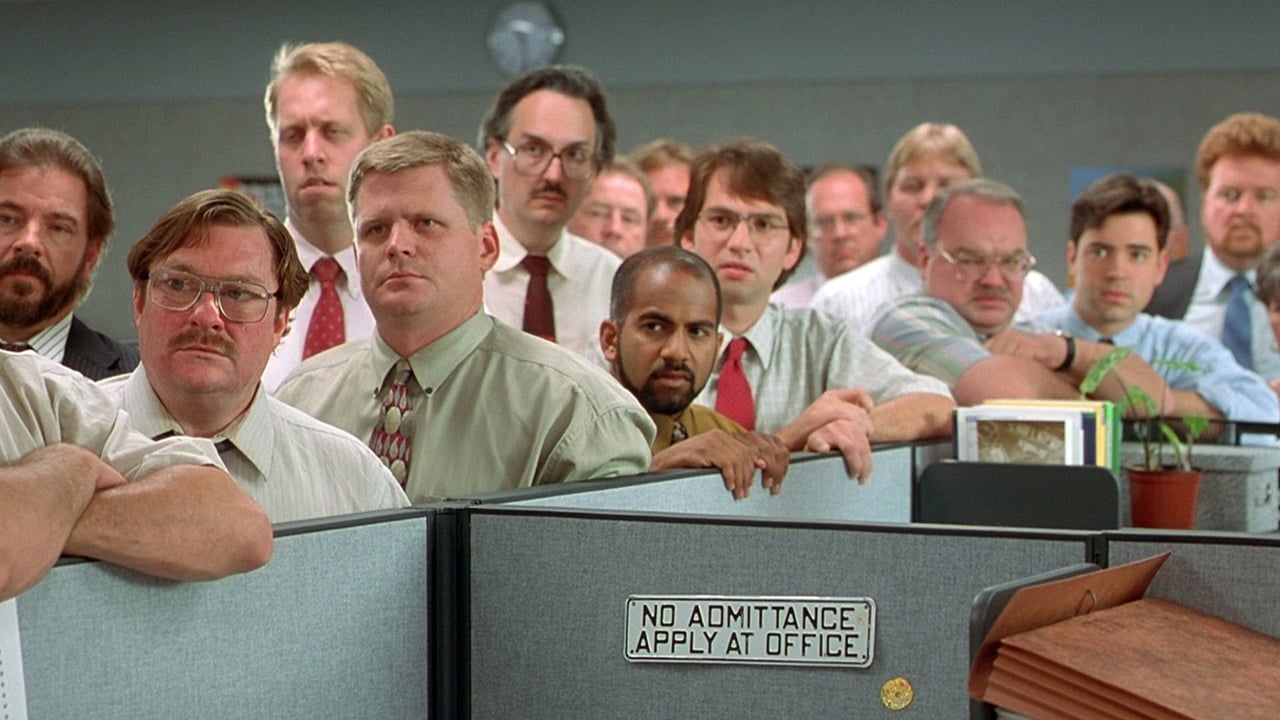
I watched this most recently on a Tuesday while eating a slightly-too-cold Lean Cuisine, and the sheer accuracy of the microwave-safe sadness felt like 4D cinema. It is a film that captures a very specific moment in the transition from analog to digital—a world of chunky CRT monitors and floppy disks—yet it remains painfully relevant in our era of "Slack notifications" and "quiet quitting."
The Beige Purgatory of Initech
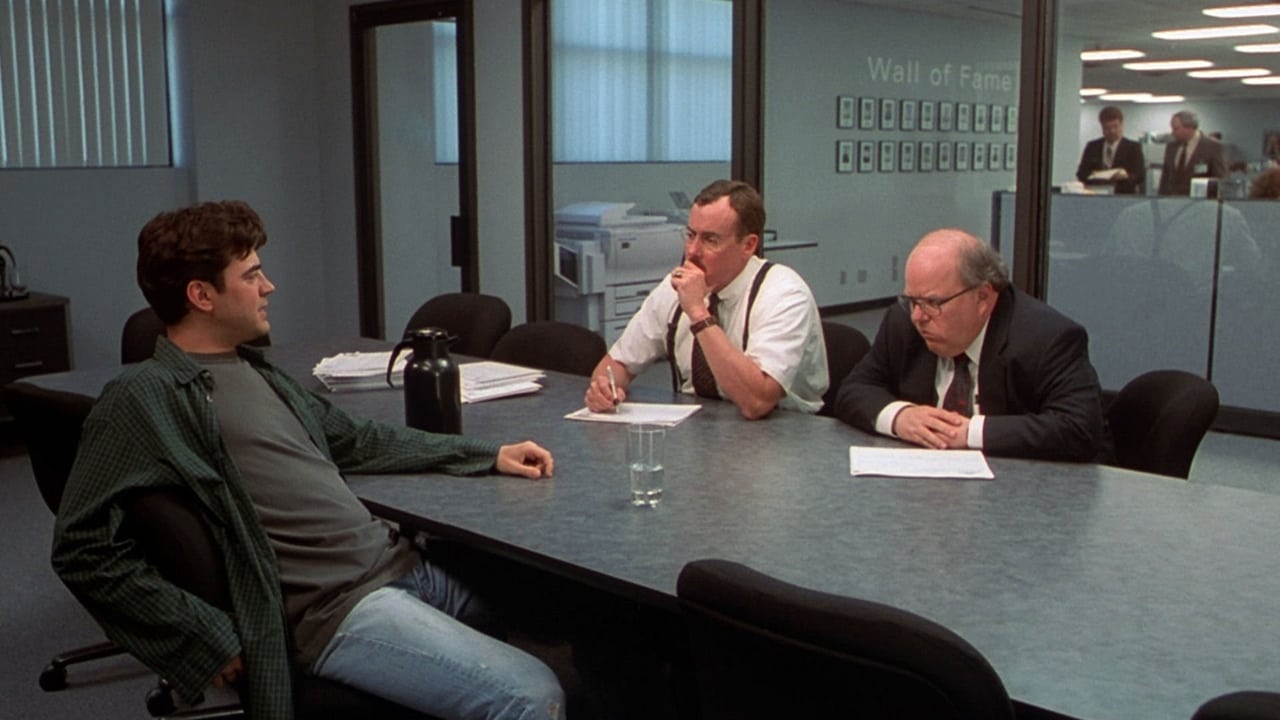
The plot is deceptively simple: Peter Gibbons (Ron Livingston), a man who measures his life in increments of ten-minute late arrivals, is pushed to the brink by a phalanx of middle managers. After a hypnotherapy session goes hilariously right (leaving the therapist dead and Peter in a state of permanent bliss), he decides to stop caring. What follows is a blueprint for corporate rebellion involving flip-flops, gutting fish at his desk, and a very poorly executed embezzlement scheme.
Ron Livingston is the king of the "90s Everyman" shrug. He plays Peter with a flat, glazed-eye sincerity that makes his eventual liberation feel earned. But the movie truly sings when he’s flanked by his cohorts: David Herman as Michael Bolton (a man who hates his name more than his job) and Ajay Naidu as Samir Nagheenanajar. Their chemistry is a masterclass in shared misery. Watching them navigate the "flair" requirements of a generic TGI Fridays-style restaurant with Jennifer Aniston’s Joanna provides a perfect counterpoint to the office drudgery. Jennifer Aniston, fresh off the peak of Friends fame, brings a grounded warmth here that often gets overlooked; she’s the only thing tethering the movie to any sense of real-world stakes.
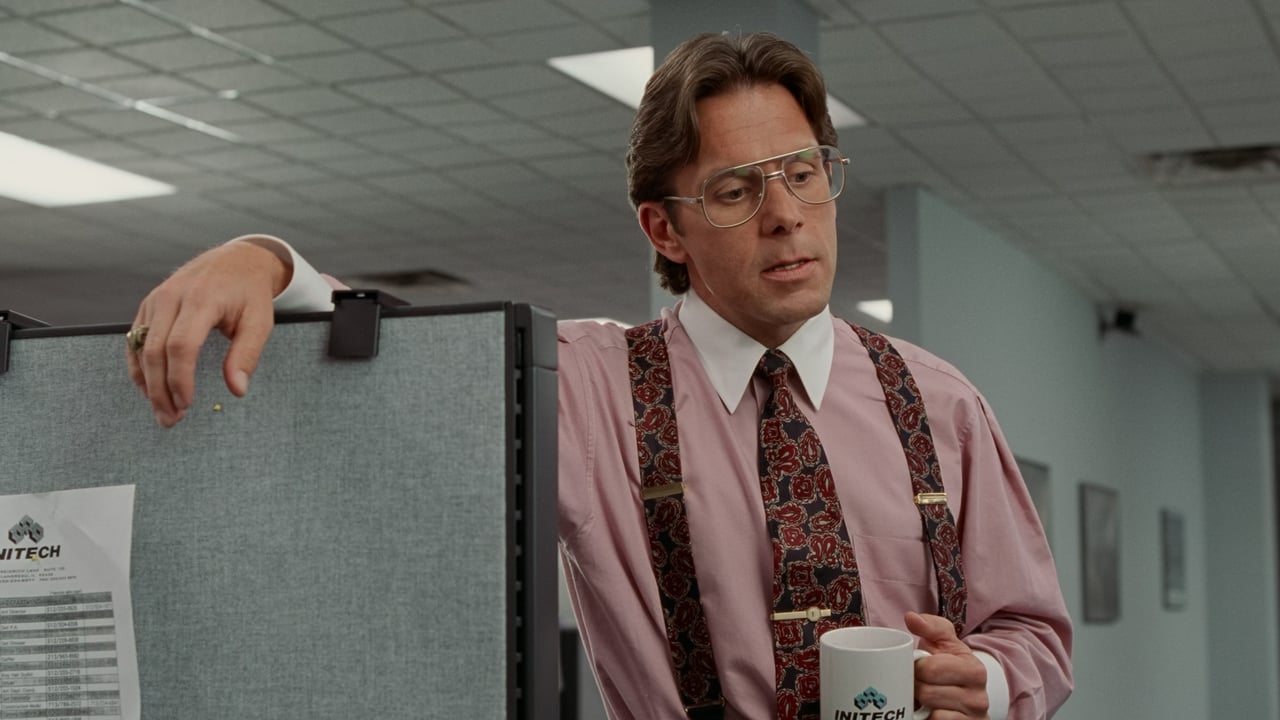
Then, of course, there is Gary Cole as Bill Lumbergh. With his suspenders, his soul-less "Yeah..." and his ever-present coffee mug, Cole created the ultimate cinematic avatar for passive-aggressive management. He doesn’t yell; he just politely requests your weekend in a way that makes you want to drive into a bridge abutment.
From Box Office Bomb to Cultural Gospel
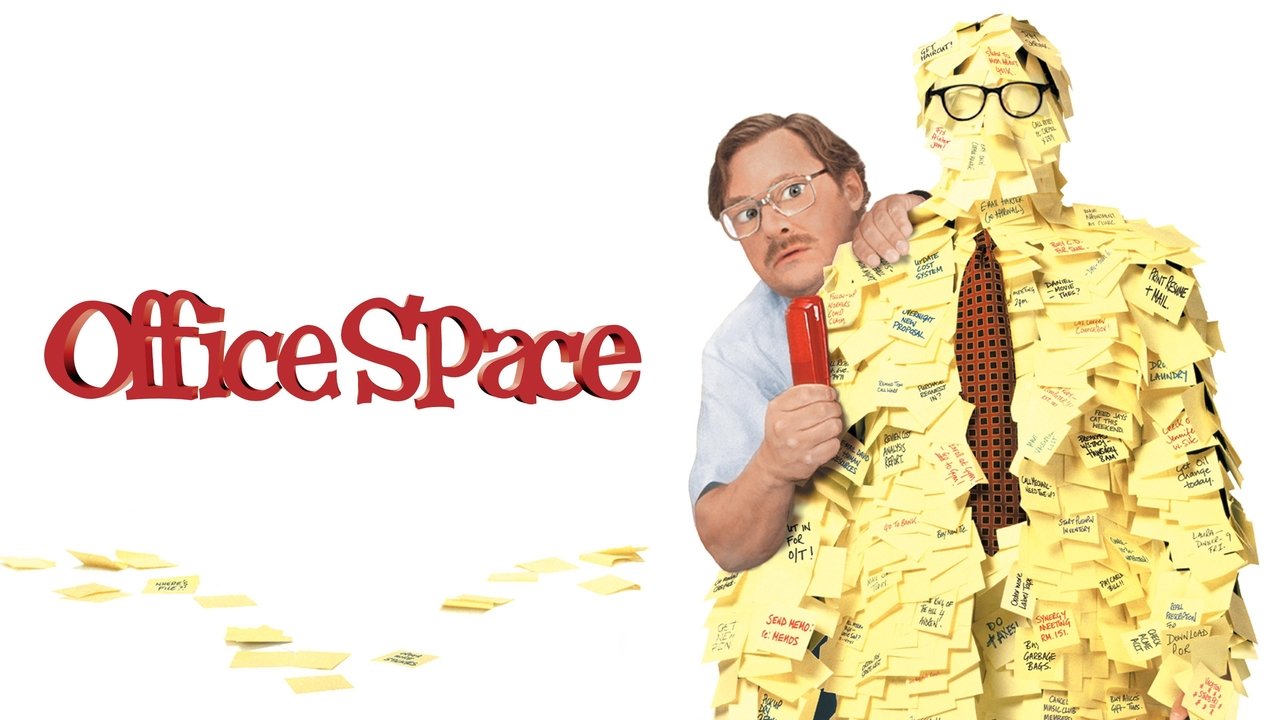
It’s hard to believe now, but 20th Century Fox had absolutely no idea how to sell this movie. The marketing was a disaster, focusing on a guy covered in Post-it notes, and the film tanked at the box office, making barely over its $10 million budget. It wasn't until the DVD era—the golden age of the "blind buy"—that Office Space found its people. Fans passed the disc around like forbidden literature. It became a cult classic because it spoke a language the marketing department didn't understand: the language of the disenfranchised cubicle dweller.
The trivia surrounding the film is as legendary as the scenes themselves. Did you know the red Swingline stapler used by Stephen Root's Milton didn't actually exist? The production team had it painted red to pop against the beige office. After the movie became a hit, Swingline was flooded with requests for red staplers, eventually forcing them to put the color into mass production. It’s a rare case of a movie literally willed a piece of stationery into existence.
Also, Mike Judge famously fought the studio over the soundtrack. Fox wanted "safe" contemporary hits, but Judge insisted on the hardcore gangsta rap of the Geto Boys. That juxtaposition—three nerdy programmers walking into a beige building to the lyrics of "Still"—is one of the smartest comedic choices of the decade. It perfectly captures the internal fantasy life of someone who spends eight hours a day formatting spreadsheets.

Why the "O-Face" Still Matters
Looking back, Office Space is a fascinating relic of the Y2K transition. The tech anxiety is palpable, yet the human problems are eternal. We might have replaced the "Jump to Conclusions" mat with LinkedIn think-pieces, but the core frustration remains. The "O-Face" guy is the true villain of the 20th century, a reminder that corporate culture has always been a thin veneer of forced cheerfulness covering a pit of absolute banality.
The film's visual comedy is deceptively precise. The scene where Peter, Michael, and Samir take a malfunctioning printer to a field and beat it to death with a baseball bat is shot with the dramatic intensity of a Scorsese hit. It’s catharsis in its purest form. My only real gripe? The third-act heist plot feels a little "movie-ish" compared to the brilliant observational humor of the first half, but Stephen Root's final, mutter-heavy scenes as the wronged Milton Waddams bring it all home with a literal bang.
Office Space is the rare comedy that actually gets funnier as you age and your resume grows longer. It’s a beautifully cynical, expertly timed middle finger to the "synergy" and "efficiency" of the modern world. Whether you're watching it for the twentieth time or discovering it while hiding from a Zoom call, it remains the ultimate anthem for anyone who has ever dreamed of just... walking out. Grab a red stapler and enjoy the rebellion.
Keep Exploring...
-
Idiocracy
2006
-
Bad Santa
2003
-
EuroTrip
2004
-
Ed Wood
1994
-
Clueless
1995
-
Happy Gilmore
1996
-
Matilda
1996
-
Austin Powers: International Man of Mystery
1997
-

Fear and Loathing in Las Vegas
1998
-

Rushmore
1998
-
Small Soldiers
1998
-
The Big Lebowski
1998
-

The Parent Trap
1998
-
10 Things I Hate About You
1999
-

Being John Malkovich
1999
-

Dogma
1999
-

Galaxy Quest
1999
-
South Park: Bigger, Longer & Uncut
1999
-
High Fidelity
2000
-
O Brother, Where Art Thou?
2000