South Park: Bigger, Longer & Uncut
"Blame Canada, praise Parker, and ignore the censors."
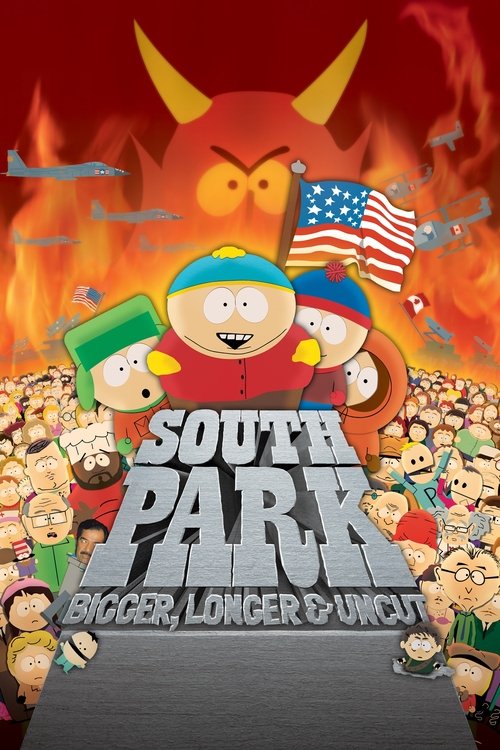
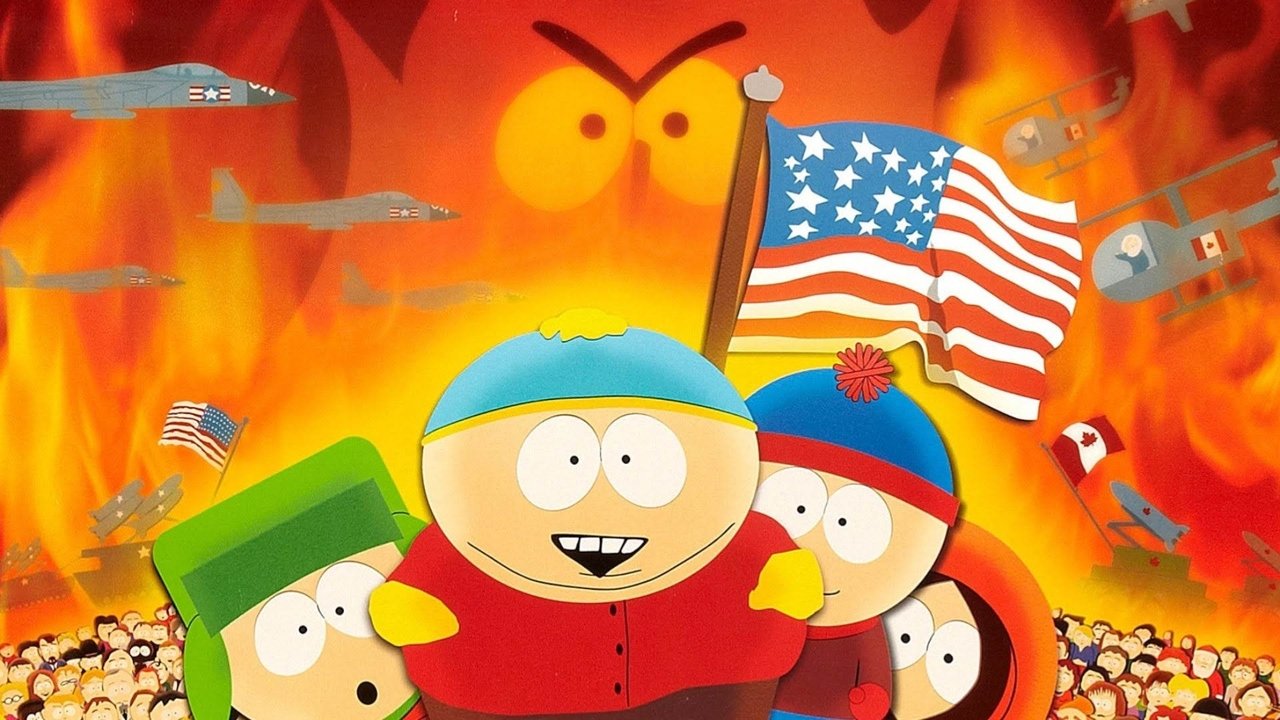
I distinctly remember watching South Park: Bigger, Longer & Uncut for the first time on a chunky laptop with a failing hinge that I had to prop up with a half-eaten bag of generic-brand Cheez-Its. Even through the grainy 1999-era compression, the opening notes of "Mountain Town" hit me like a ton of bricks. I expected fart jokes; I didn’t expect a sophisticated homage to the Disney Renaissance that would eventually earn an Oscar nomination.
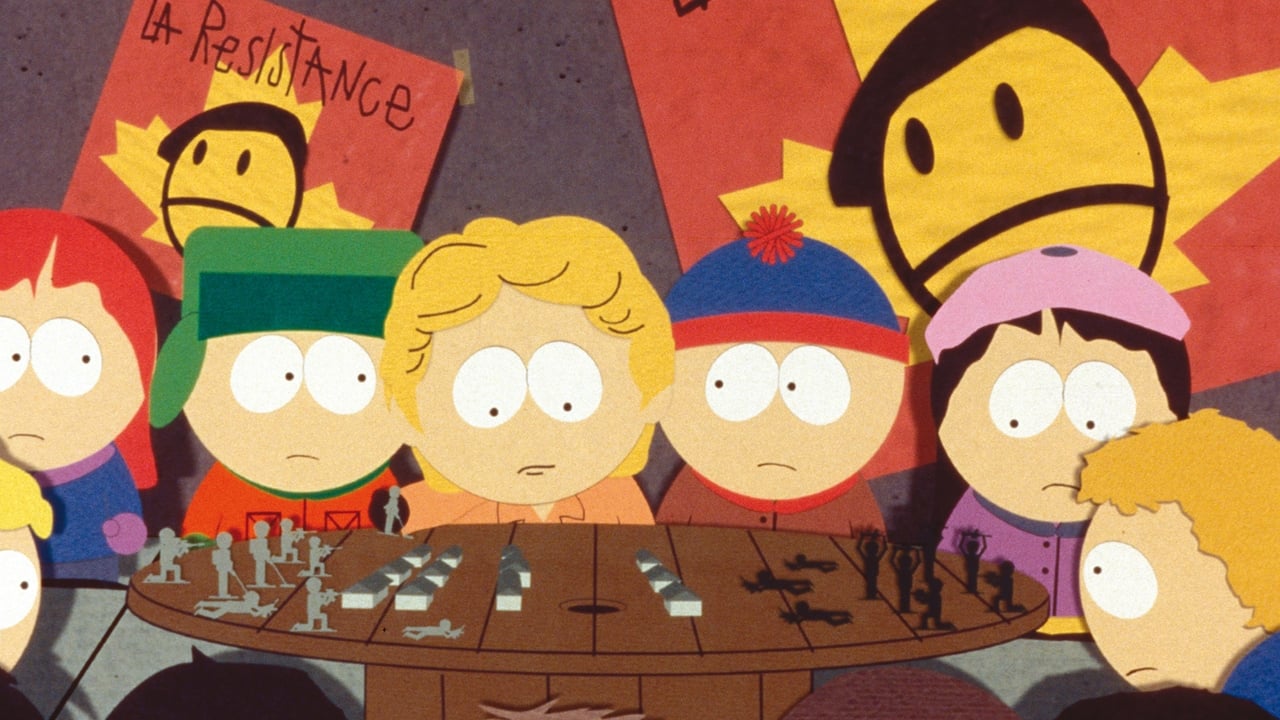
In 1999, the South Park TV show was the ultimate parental nightmare. It was the peak of "Moral Panic" culture, where talking pieces of poop and foul-mouthed eight-year-olds were seen as the harbingers of societal collapse. Trey Parker and Matt Stone didn't just lean into that reputation for their big-screen debut; they weaponized it. The result isn't just a longer episode of the show—it’s one of the greatest satirical musicals ever put to film.
The Broadway of Back-Alleys
What separates this from the average "TV show turned movie" is the music. Collaborating with Marc Shaiman (the genius behind Hairspray), Trey Parker revealed himself to be a legitimate theater nerd. The songs aren't just funny; they are structurally brilliant. "What Would Brian Boitano Do?" is a perfect anthem of misplaced childhood heroism, and "Hell Isn’t Good" captures the frantic anxiety of Kenny’s descent into the afterlife.
The sheer ambition of the score is basically a middle finger wrapped in a Broadway playbill. By using the language of Beauty and the Beast or The Little Mermaid to deliver lines about "Uncle F*cka," the film creates a hilarious cognitive dissonance. When Mary Kay Bergman (who voiced nearly every female character before her tragic death shortly after the film's release) sings as Sheila Broflovski, she perfectly captures the shrill, well-meaning "think of the children" hysteria that defined the era's censorship battles.
Meta-Satire at its Peak

The plot is a masterclass in "feeding the trolls." The kids in the movie sneak into an R-rated Canadian film, start swearing, and their parents blame the movie rather than their own parenting. In the real world, parents were terrified their kids would sneak into this movie and start swearing. It’s a closed-loop of irony that still feels fresh today.
Looking back, the animation is a fascinating relic of the "Modern Cinema" transition. While the show started with literal construction paper, the movie utilized PowerAnimator on SGI workstations to create cinematic lighting and scale that the TV show couldn't dream of. Yet, it never loses that "cheap" aesthetic. It’s expensive-looking garbage, and I mean that as the highest possible compliment. The sequence where Satan and Saddam Hussein (voiced by Matt Stone with a high-pitched, toxic-boyfriend energy) discuss their relationship in the depths of Hell is visually ambitious while remaining gloriously crude.
A Cult Snapshot of '99
This film was a lightning rod. It famously held the Guinness World Record for "Most Swearing in an Animated Film" for years (399 profanities, if you’re counting). But beyond the shock value, there’s a surprising amount of heart. The friendship between Stan, Kyle, Cartman, and the doomed Kenny feels genuine, even when they’re trying to prevent a literal apocalypse sparked by a US-Canada war.
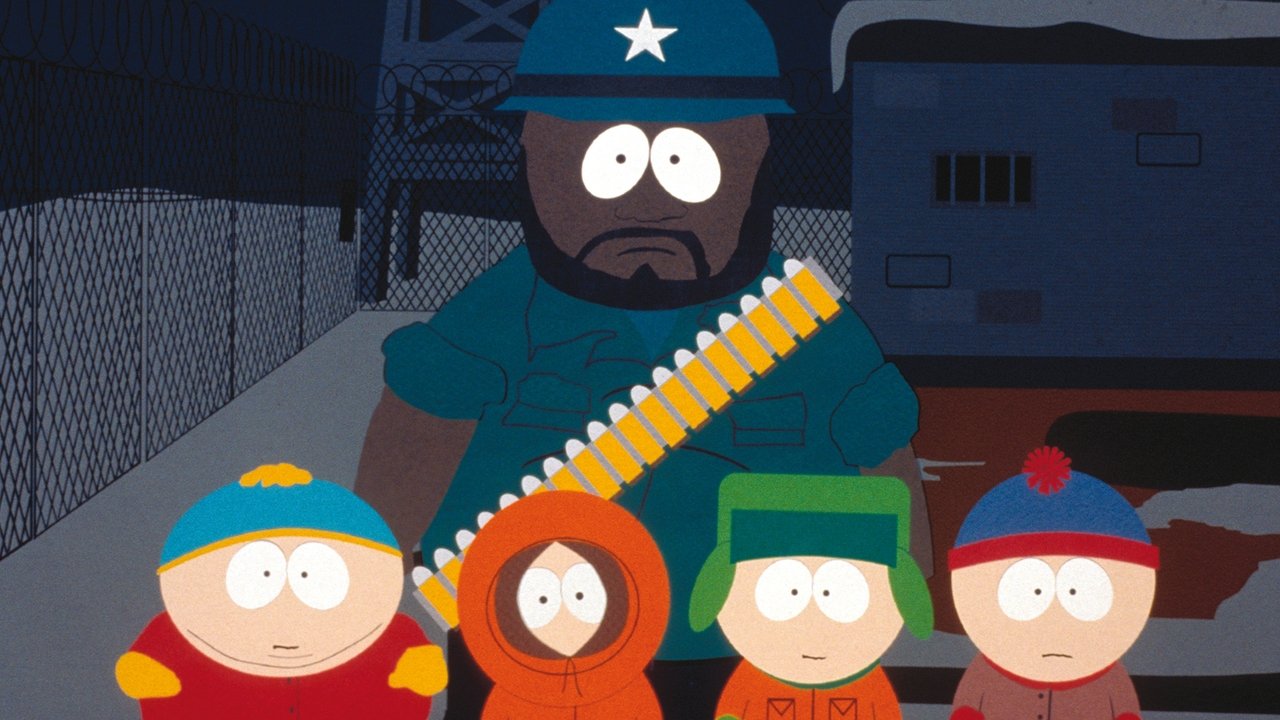
The supporting cast is a 90s time capsule. You’ve got Isaac Hayes as Chef delivering his soulful wisdom, and unexpected cameos like Dave Foley and Eric Idle. It captures that specific pre-9/11 window where our biggest national anxieties were about "bad words" and V-chips. It’s the most intelligent movie ever made about stupidity, and it’s aged surprisingly well because the cycle of outrage it parodies has only accelerated in the internet age.
Stuff You Didn't Notice
The MPAA Battle: The film was sent back from the ratings board several times with an NC-17. The title Bigger, Longer & Uncut was actually a dick joke designed to fly over the heads of the censors who had rejected the original title, South Park: All Hell Breaks Loose. The Clooney Cameo: George Clooney, a huge fan of the early show, provides the "voice" of the doctor who replaces Kenny’s heart with a baked potato. He has about two lines, and they are mostly flat medical jargon. Saddam's Fate: The real Saddam Hussein was reportedly forced to watch the movie while in custody after his capture in 2003. One can only imagine his reaction to being portrayed as a needy, singing lover of the Prince of Darkness. The "Blame Canada" Effect: When the song was nominated for an Oscar, the producers had to find someone to sing it because the lyrics were too "colorful." Robin Williams ended up performing it at the ceremony, complete with duct-taped mouths for the background dancers. * The Hidden "Mole": The character of Christophe (Ze Mole) was a parody of the grit-and-grime action heroes of the time, yet he became a massive fan favorite in the burgeoning online fan-fiction communities of the early 2000s.
Ultimately, South Park: Bigger, Longer & Uncut is a rare example of a film that understands exactly what it is and plays the part perfectly. It’s loud, offensive, and occasionally exhausting, but it’s underpinned by a level of craft and comedic timing that most "serious" comedies fail to reach. It’s a snapshot of a time when we thought a few four-letter words could end the world, and looking back from the 2020s, that almost feels quaint. If you haven't revisited it lately, do yourself a favor—just make sure your laptop hinge is sturdy first.
Keep Exploring...
-
Team America: World Police
2004
-
Hercules
1997
-

The Emperor's New Groove
2000
-
The Road to El Dorado
2000
-

Sinbad: Legend of the Seven Seas
2003
-
The Lion King 1½
2004
-
Fantastic Mr. Fox
2009
-
Frankenweenie
2012
-
Slayers Return
1996
-
Porco Rosso
1992
-
A Goofy Movie
1995
-
Toy Story
1995
-
Chicken Run
2000
-

The SpongeBob SquarePants Movie
2004
-

Flushed Away
2006
-
Monster House
2006
-
Meet the Robinsons
2007
-
Surf's Up
2007
-

Bolt
2008
-
Cloudy with a Chance of Meatballs
2009