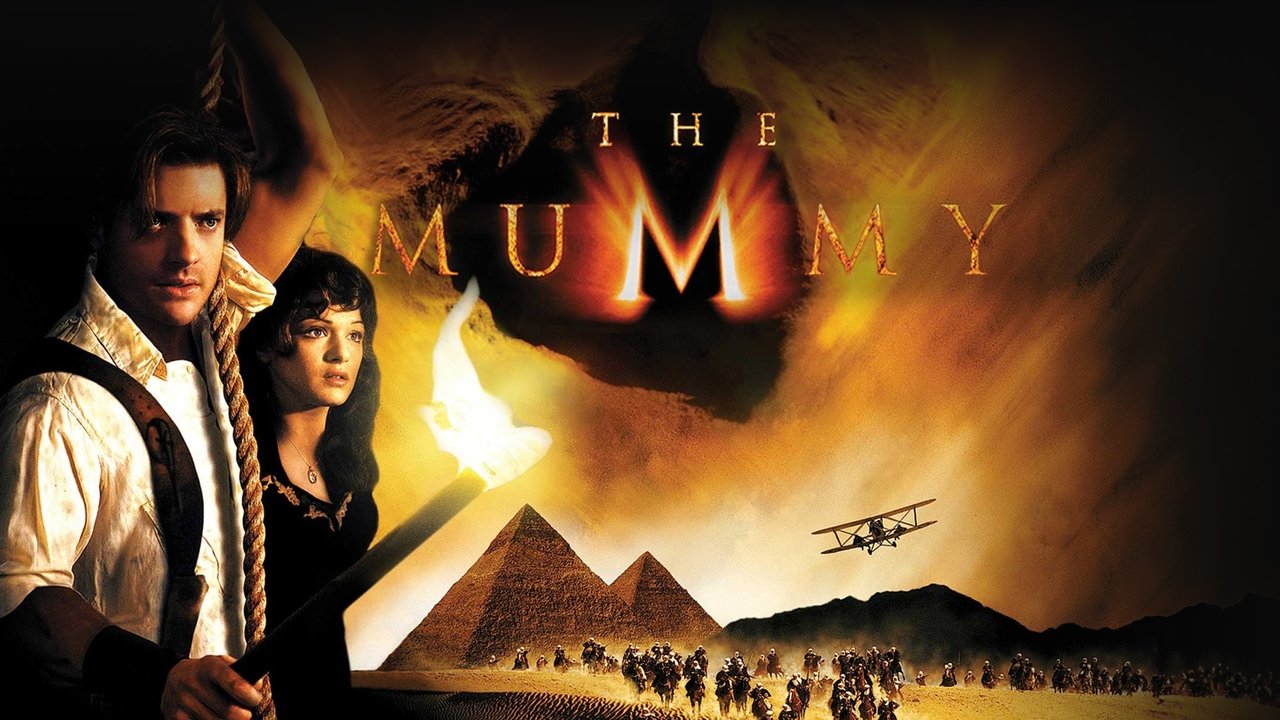
The Mummy
"Death is only the beginning of the fun."
If you ever want to see the exact moment a film studio accidentally discovered the recipe for the perfect adventure cocktail, look no further than the year 1999. While everyone was losing their minds over the digital philosophy of The Matrix or the return of a certain galaxy far, far away, Stephen Sommers was in the Moroccan desert quietly building a bridge between the classic swashbucklers of the 1930s and the high-octane CGI spectacles of the new millennium. The result wasn't just a remake of a Boris Karloff classic; it was a genre-defining lightning bolt that somehow feels fresher today than it did twenty-five years ago.
I watched this recently on a CRT television that sat on a milk crate, and the speakers hummed every time Arnold Vosloo roared, which honestly added to the atmosphere in a way 4K Dolby Atmos just can't replicate.
The Power of the "Bimbo-Hero" and the Librarian
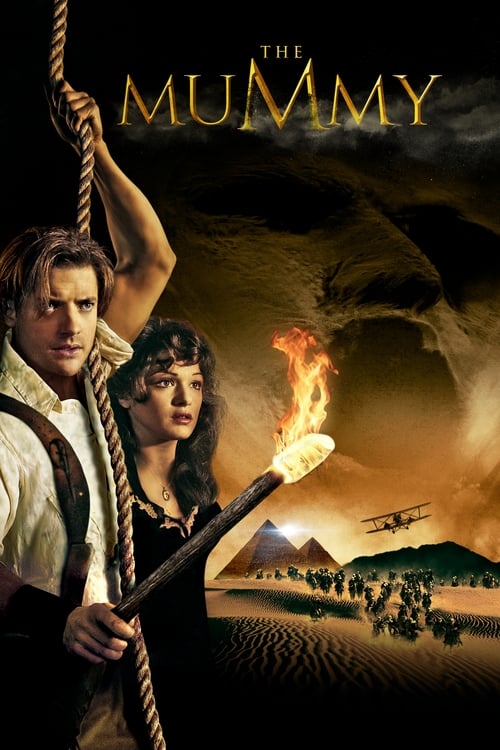
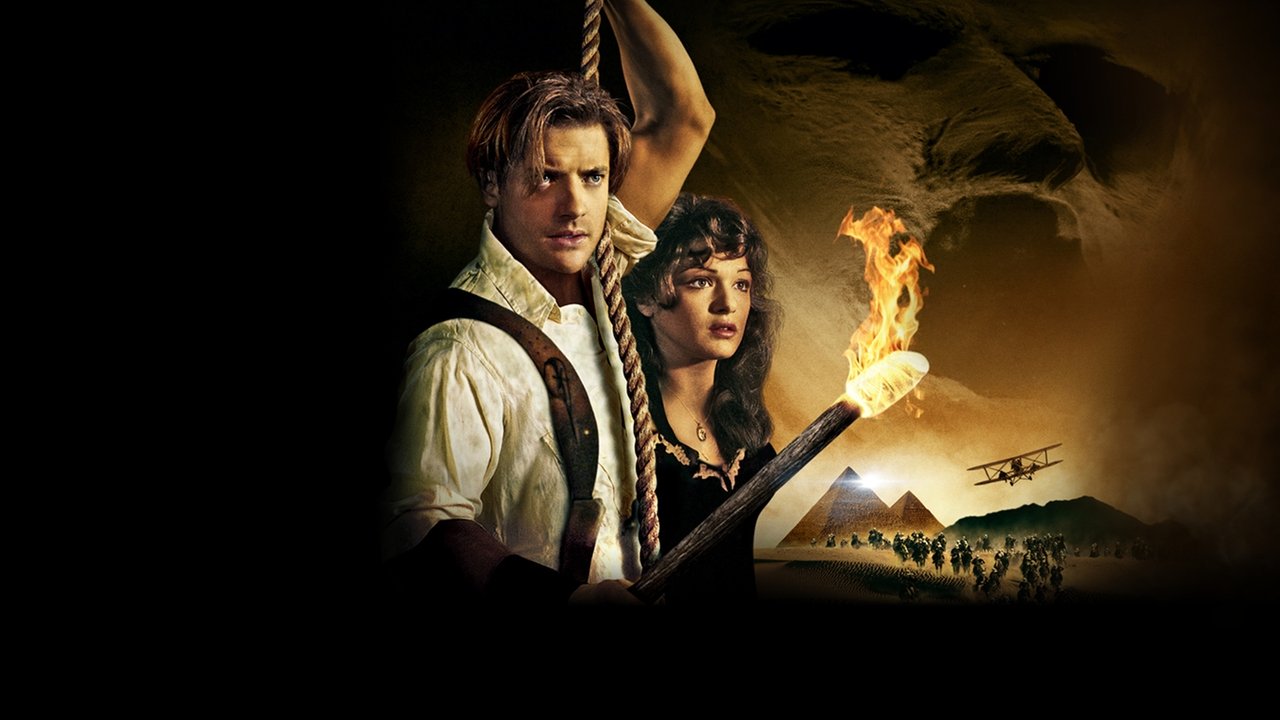
The secret sauce here isn't the ancient curses or the gold; it’s the chemistry. Brendan Fraser as Rick O’Connell is a revelation in retrospect. In an era where action heroes were often stoic, brooding, or hyper-masculine, Fraser played Rick with a sort of chaotic, wide-eyed "how am I still alive?" energy. He’s essentially a golden retriever with a double-holster. Rick O’Connell is the only action hero who looks like he’s actually having a panic attack while winning a sword fight, and that vulnerability makes him infinitely more likable than your standard invulnerable lead.
Then you have Rachel Weisz as Evelyn Carnahan. At a time when "the girl" in action movies was often relegated to screaming from a distance, Evie is the engine of the plot. She’s clumsy, brilliant, and arguably more dangerous with a book than Rick is with a shotgun. Watching her go from an overlooked librarian to the woman who stares down a resurrected High Priest is one of the most satisfying arcs in 90s cinema. When you add John Hannah as the cowardly, comic-relief brother Jonathan, you get a trio that feels like a family you actually want to spend two hours with.
Pixels, Practicality, and Permanent Nightmares
We have to talk about the effects, because The Mummy was a pivotal moment for Industrial Light & Magic (ILM). This was the era of the CGI Revolution, and while some 1999 digital effects now look like blurry PlayStation 1 cutscenes, Imhotep mostly holds up. Why? Because Sommers balanced the digital with massive, tangible sets. The city of Hamunaptra wasn't a green-screen void; it was a colossal physical build in a dormant volcano crater in Morocco. When the actors are covered in real dust and sweat, the digital skeletons they’re fighting feel like they occupy real space.
The action choreography is equally tactile. Whether it’s the chaotic brawl on the burning barge or the frantic shootout in the library, the movement is clear and the stakes feel physical. The Mummy is basically a romantic comedy where the third wheel is a 3,000-year-old corpse, and the film leans into that absurdity without ever losing its sense of peril. The sound design by Jerry Goldsmith—whose score is an absolute masterclass in bombastic adventure—punctuates every punch and every supernatural roar with a weight that modern blockbusters often lack.
The $415 Million Sleeper Hit
Technically, The Mummy was a massive gamble. Universal spent $80 million on a director known for Deep Rising and a cast without a traditional "A-list" superstar. But the cultural penetration was immediate. It stayed in the top ten at the box office for weeks, eventually pulling in over $415 million worldwide. It wasn't just a movie; it was a phenomenon that launched a franchise, a cartoon, and a theme park ride that people still wait two hours for today.
The production was notoriously grueling, which adds a layer of "real" grit to the fun. Apparently, the crew had to deal with everything from desert heat to literal kidnappings—the production actually had to buy "kidnap insurance" for the main cast. Even more terrifying? Brendan Fraser actually stopped breathing during the scene where Rick is being hanged. He was clinically dead for about 18 seconds before being resuscitated. When you see his face turning purple in that scene, that’s not "acting"; that’s a man nearly meeting the real Anubis. Also, Arnold Vosloo had to be shaved from head to toe twice a day to maintain that smooth, otherworldly High Priest look, which is a level of commitment I can't even fathom.
Stuff You Didn't Notice
If you look closely during the scene where the plagues of Egypt begin to manifest, the "locusts" were a mix of CGI and real grasshoppers. The actors' reactions to things crawling on them are often genuine because Sommers delighted in surprising them with real insects. It’s that blend of "Old Hollywood" practical torture and "New Hollywood" digital wizardry that gives the film its unique texture. It’s also worth noting how much the film influenced the "adventure-archeology" subgenre—without this version of The Mummy, we likely don't get the National Treasure films or the Uncharted games in the way we know them today.
Ultimately, The Mummy is the gold standard for how to make a blockbuster that respects its audience’s intelligence while catering to their inner ten-year-old. It’s a film that understands that horror is scarier when you care about the victims, and action is more exciting when the hero is just as scared as we are. It’s a perfect slice of 90s entertainment that has aged like fine wine—or perhaps like a well-preserved pharaoh. If you haven't revisited Hamunaptra lately, grab some snacks and head back. Just remember: don't read from the book.
Keep Exploring...
-
The Mummy Returns
2001
-
The Mummy: Tomb of the Dragon Emperor
2008
-
Van Helsing
2004
-
Pirates of the Caribbean: The Curse of the Black Pearl
2003
-

Night at the Museum
2006
-

Pirates of the Caribbean: Dead Man's Chest
2006
-
Pirates of the Caribbean: At World's End
2007
-
Avatar
2009
-

Puss in Boots
2011
-
The Hobbit: An Unexpected Journey
2012
-

The Hobbit: The Desolation of Smaug
2013
-
How to Train Your Dragon 2
2014
-
Maleficent
2014
-
Stargate
1994
-
Jumanji
1995
-
DragonHeart
1996
-
Mighty Joe Young
1998
-

Sinbad: Legend of the Seven Seas
2003
-
The Lord of the Rings: The Fellowship of the Ring
2001
-
The Lord of the Rings: The Two Towers
2002