Audition
"Be careful who you cast. She’s listening."

If you walked into the first hour of Audition without knowing its reputation, you’d be forgiven for thinking you’d stumbled into a quiet, perhaps slightly ethically questionable, romantic drama. There is a stillness to the early scenes that feels almost medicinal. We follow Ryo Ishibashi (who many will recognize from the later The Grudge) as Shigeharu Aoyama, a widower whose son suggests it’s time he finds a new wife. It’s a gentle setup, filmed with a soft, naturalistic palette by cinematographer Hideo Yamamoto, who also shot the neon-soaked chaos of Ichi the Killer (2001).
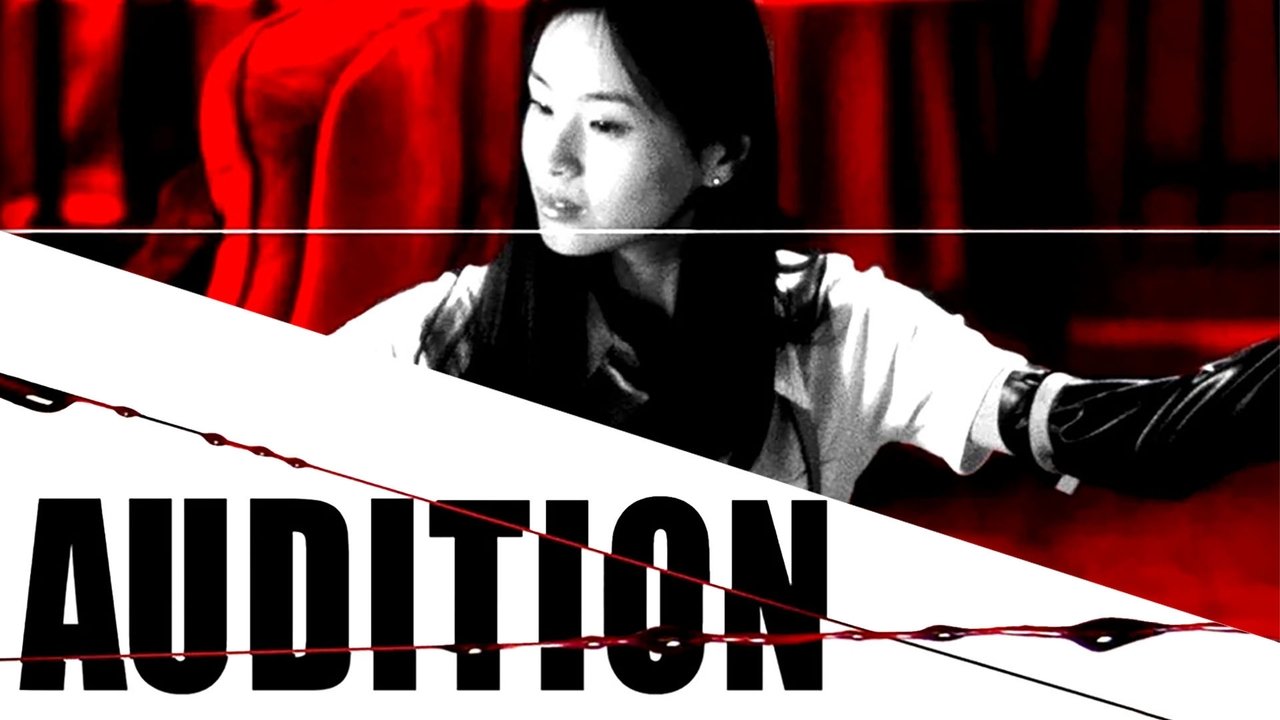
But there is a rot at the center of the premise. Aoyama’s friend, a film producer played with a slick, cynical energy by Jun Kunimura, suggests they hold a fake casting call to find the "perfect" woman. They sit behind a desk, interviewing dozens of hopeful actresses under the guise of a film project that doesn't exist. It’s a predatory, uncomfortable sequence that Takashi Miike—a director usually known for frantic, hyper-violent outbursts—treats with unsettling patience. I first watched this on a flickering CRT monitor while my roommate was loudly microwaving leftover fish in the next room, and even that smell couldn't distract me from the mounting sense of wrongness radiating from the screen.
The Art of the Slow Curdle
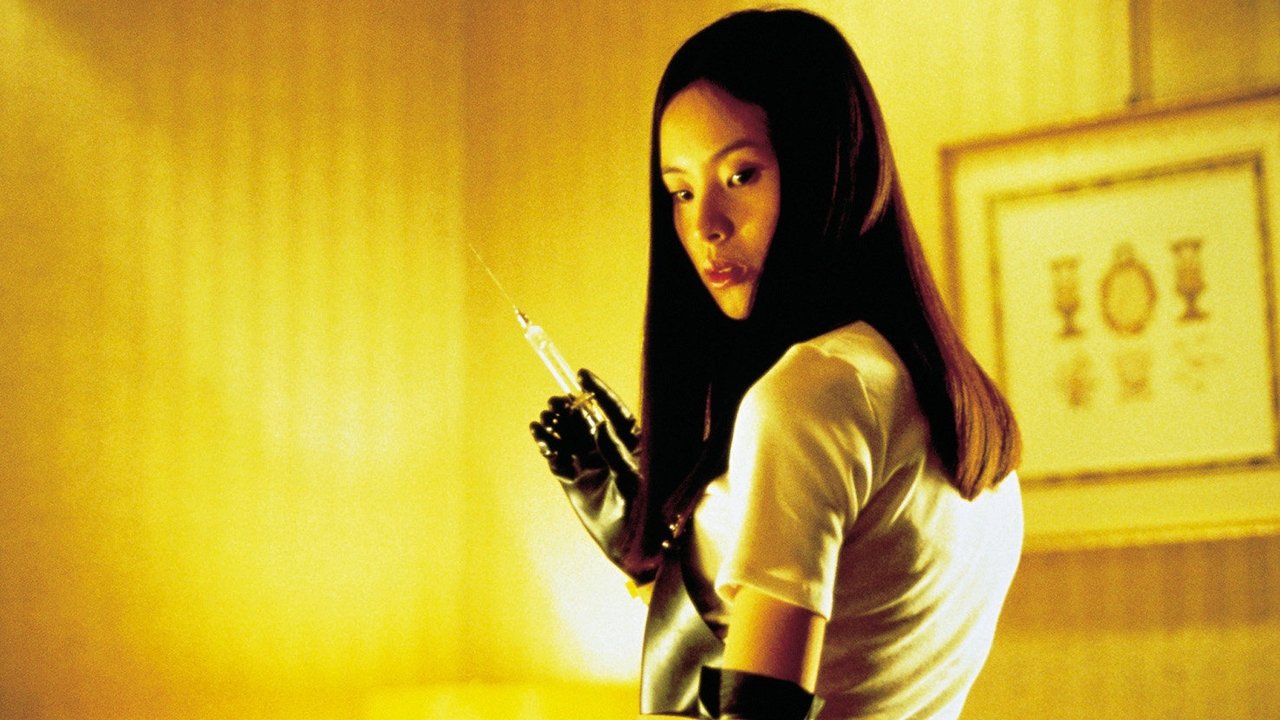
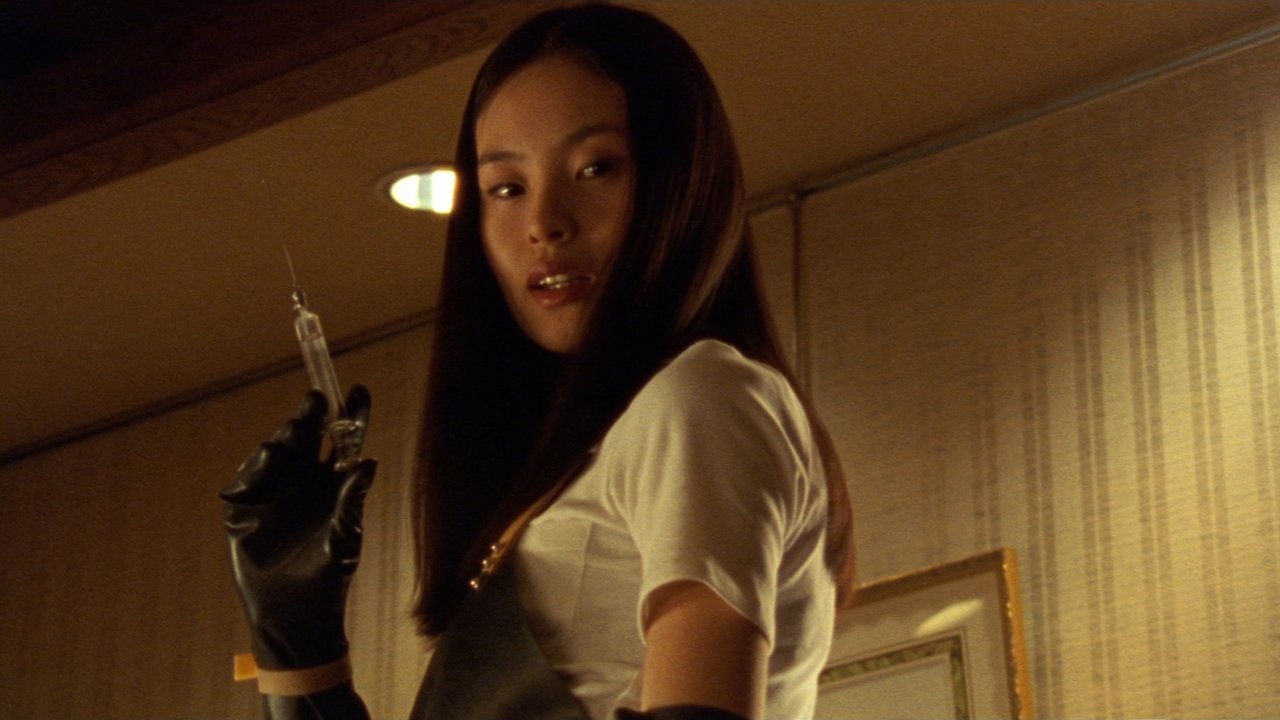
The movie hinges entirely on the introduction of Asami Yamazaki, played by former fashion model Eihi Shiina. When she enters the room, the air seems to leave it. She is dressed in white, her posture is perfect, and her voice is a whisper. Aoyama is instantly smitten, seeing in her the "ideal" traditional woman he’s been mourning. He misses the red flags that the audience begins to see in glimpses—the way she sits perfectly still for hours by a phone, or the mysterious, lumpy burlap sack sitting in the corner of her apartment.
Looking back, Audition was a pivotal moment for J-horror in the West. While Ringu (1998) gave us supernatural ghosts and cursed tapes, Audition offered something far more grounded and, frankly, much more terrifying. It arrived during that transition from VHS to DVD, becoming a "holy grail" for collectors who traded stories of audience members fainting at film festivals. The protagonist, Shigeharu Aoyama, is a low-key creep who thinks he’s the hero of a rom-com, and his entitlement is exactly what blinds him.
A Masterclass in Tension
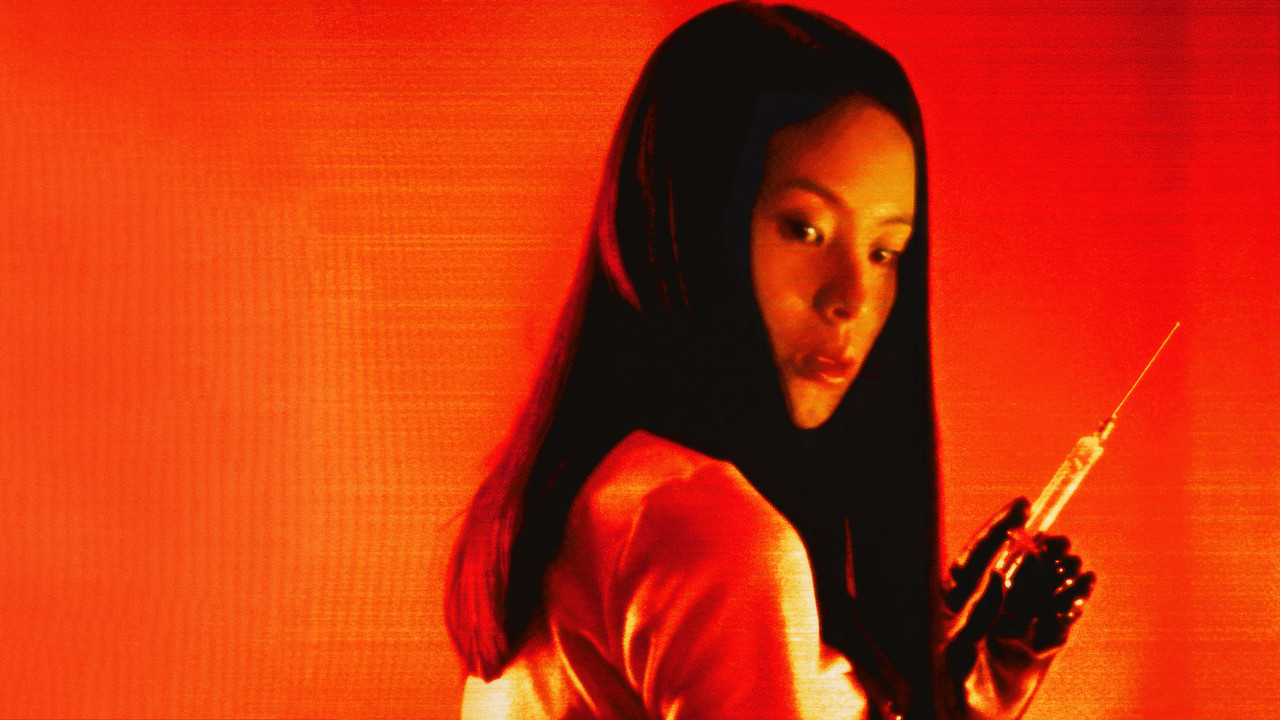
What makes this work so well is the sheer restraint Takashi Miike shows. For a director who once had a character fly through the air using only their skin, his work here is remarkably disciplined. The film is a slow-burn fuse that takes nearly 90 minutes to reach the powder keg. When the shift happens, it isn't a jump scare; it’s a total collapse of reality. The final act dissolves into a hallucinatory nightmare where the timeline blurs and the dream of a "perfect wife" turns into a literal, agonizing sharp-edged reality.
The practical effects in the climax are legendary. There’s no early-2000s CGI here to soften the blow. It’s all wires, needles, and a sound design that will make your teeth ache. The "kiri-kiri-kiri" sound Asami makes while she... works... is one of the most haunting audio cues in cinema history. If you have a phobia of acupuncture or piano wire, this movie is essentially a targeted psychological attack on your well-being.
The Beauty of Independent Constraints
It’s easy to forget that this was an independent production made on a shoestring budget of roughly $250,000. It was shot in just three weeks. That lack of resources forced Miike and screenwriter Daisuke Tengan to rely on atmosphere and performance rather than spectacle. Most of the film takes place in quiet rooms, offices, and bars, which only makes the eventual intrusion of the grotesque feel more invasive.

The film's legacy is tied to that "Extreme Cinema" label of the early 2000s, but that does it a disservice. It’s not just about the shock. It’s a biting critique of the male gaze and the way men project their own fantasies onto women without ever really seeing them. Asami isn't just a monster; she’s a mirror reflecting Aoyama’s own deceptive behavior back at him with interest. The movie premiered at the Vancouver International Film Festival to reports of walkouts, which is the ultimate badge of honor for a film designed to get under your skin and stay there.
Audition is a rare breed of horror that rewards your patience with a traumatic, unforgettable payout. It subverts the "Modern Cinema" tropes of the era by refusing to rush, building a world of grief and loneliness before tearing it down with surgical precision. It remains a high-water mark for Takashi Miike and a chilling reminder that the person you're looking for might be exactly who you deserve to find. Just don't expect to feel comfortable around piano wire for a few weeks after the credits roll.
Keep Exploring...
-

Ichi the Killer
2001
-

The Devil's Backbone
2001
-
The Orphanage
2007
-
Let the Right One In
2008
-

13 Assassins
2010
-
Ring
1998
-
Battle Royale
2000
-
Session 9
2001
-
The Hole
2001
-
Funny Games
1997
-
The Devil's Advocate
1997
-
A Tale of Two Sisters
2003
-
The Basketball Diaries
1995
-
Bound
1996
-
Open Your Eyes
1997
-
Pi
1998
-
Run Lola Run
1998
-
Following
1999
-
Ghost Dog: The Way of the Samurai
1999
-
Amores Perros
2000