Dude, Where's My Car?
"Lost car. Alien cults. Total brain-freeze."
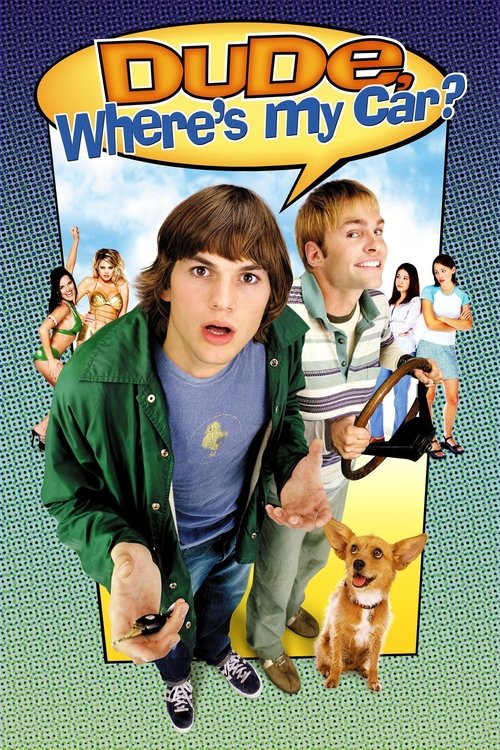
The year 2000 was a strange, transitional pocket of time where the world hadn't quite decided if it was ready for the future or if it just wanted to stay in bed and nurse a hangover. While high-concept sci-fi was busy trying to reinvent the wheel with digital wizardry, a movie came along that dared to ask the most profound question of the new millennium: "Dude, where’s my car?" It’s a film that arrived right as the teen-sex-comedy wave of the late ‘90s was beginning to curdle, opting instead for a brand of surreal, stoner-lite absurdity that felt like a Saturday morning cartoon directed by someone who had just discovered The X-Files.
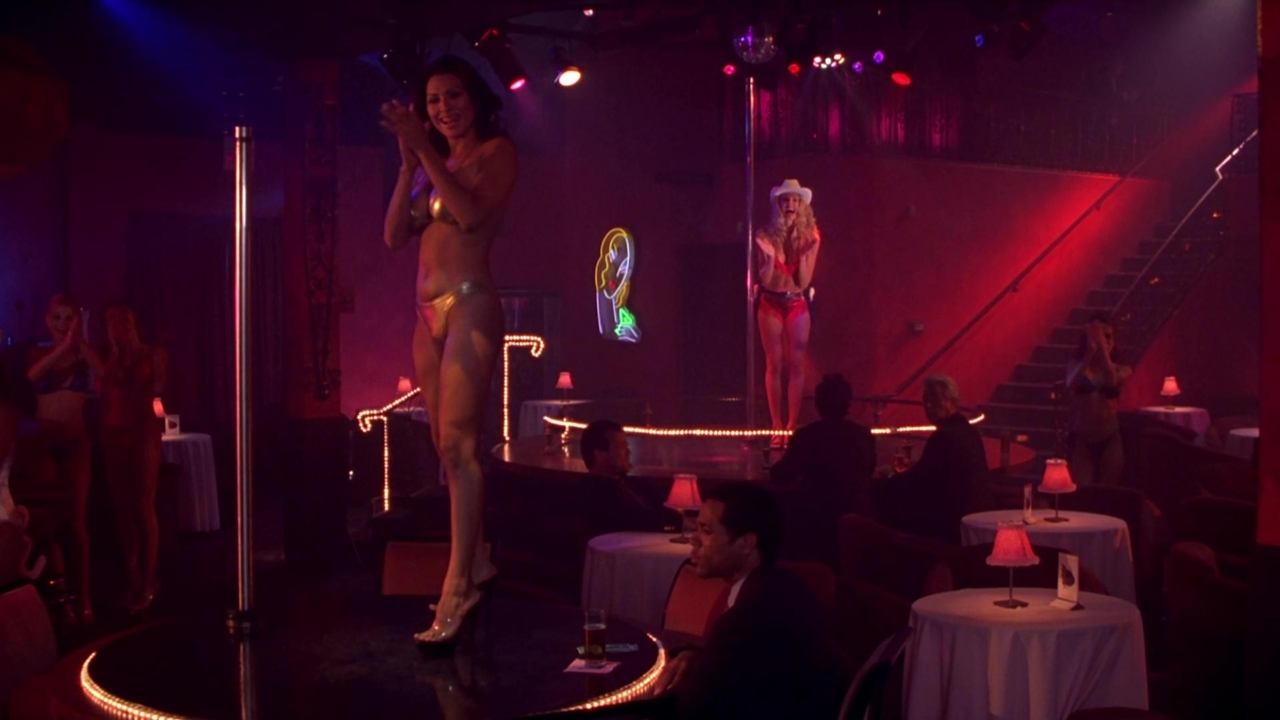
I recently re-watched this on a flight where the person in the middle seat was aggressively knitting a neon-green scarf, and the rhythmic clicking of the needles strangely synced up with the movie’s frantic, knuckleheaded energy.
The Tao of Stupidity
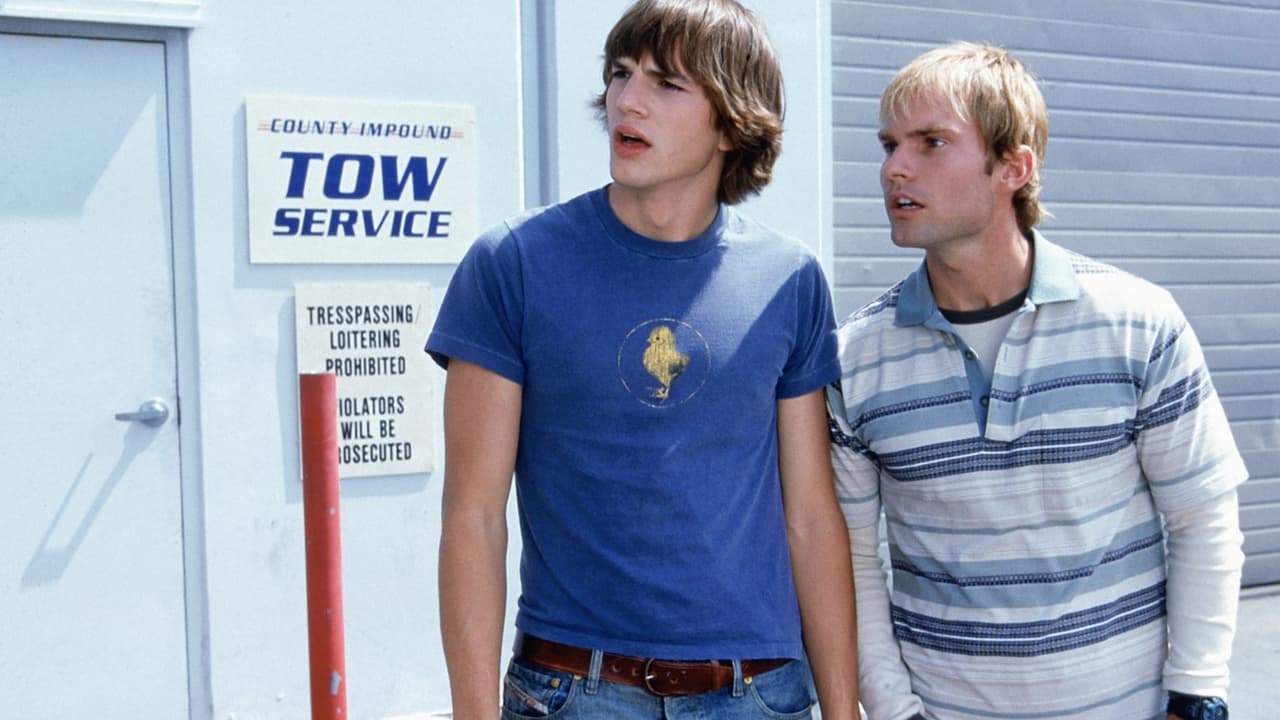
At its core, Dude, Where's My Car? is a mystery movie for people who can’t find their own shoes. Ashton Kutcher (fresh off the early success of That '70s Show) and Seann William Scott (who had just cemented his "lovable jerk" persona in American Pie) play Jesse and Chester. They are two remarkably dim-witted best friends who wake up with no memory of the previous night and a missing Renault Le Car.
What starts as a mundane search for transportation quickly spirals into a cosmic conspiracy involving a "Continuum Transfunctioner," a cult of jumpsuit-wearing zealots led by David Herman (of Office Space fame), and a group of "Hot Chicks" who are actually intergalactic scouts.
The chemistry between Ashton Kutcher and Seann William Scott is the only reason this movie doesn't evaporate under the heat of its own thin premise. They play stupidity with a sincere, wide-eyed sweetness that is surprisingly endearing. They aren’t mean-spirited; they’re just intellectually vibrating at the frequency of a toaster. Watching them navigate the "Sweet/Dude" back-and-forth while getting matching tattoos is a masterclass in low-brow timing. It’s the kind of scene that would be annoying if anyone else did it, but here, it feels like a foundational text for the "bro-comedy" era that followed.
Low-Fi Sci-Fi and Y2K Effects
Being a product of the year 2000, the film sits right on the edge of the CGI revolution. Director Danny Leiner (who would later give us the equally munchie-driven Harold & Kumar Go to White Castle) uses digital effects in a way that feels deliberately kitschy. The "Super Hot Giant Lady" in the finale is a perfect example of early 2000s digital work—it looks like a high-resolution character from a PlayStation 2 cutscene, yet it fits the movie's "anything goes" logic perfectly.
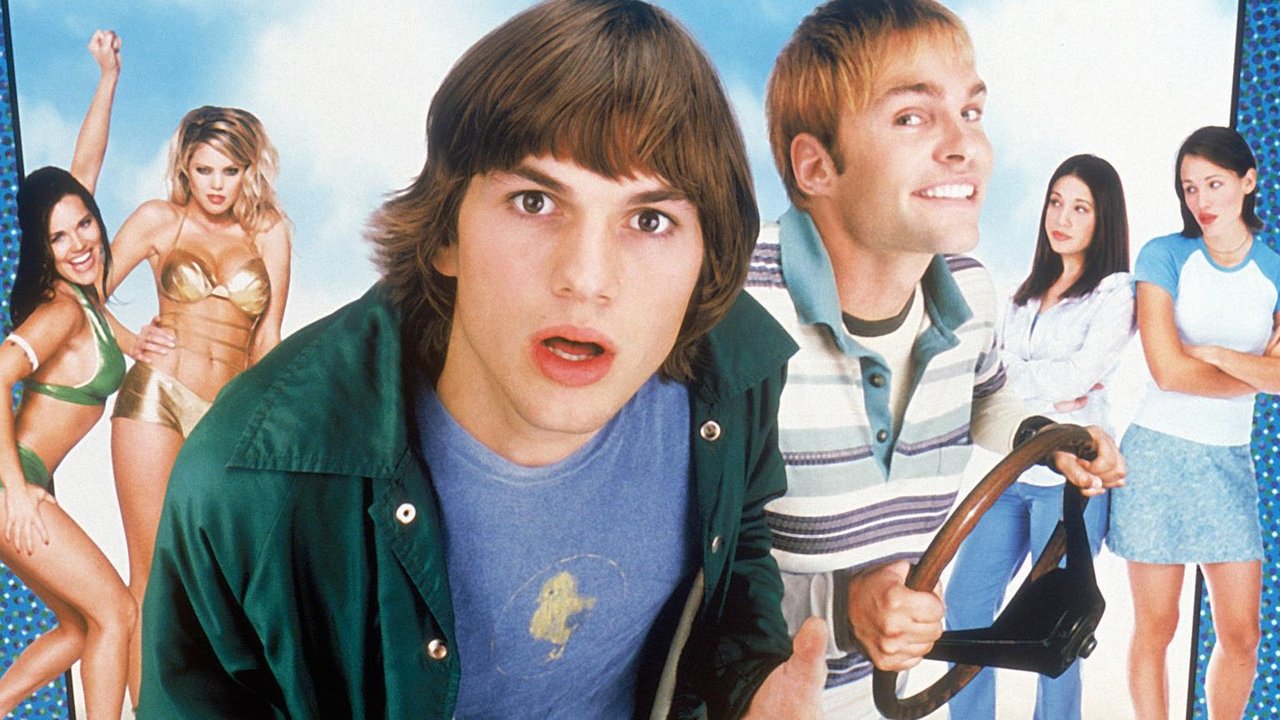
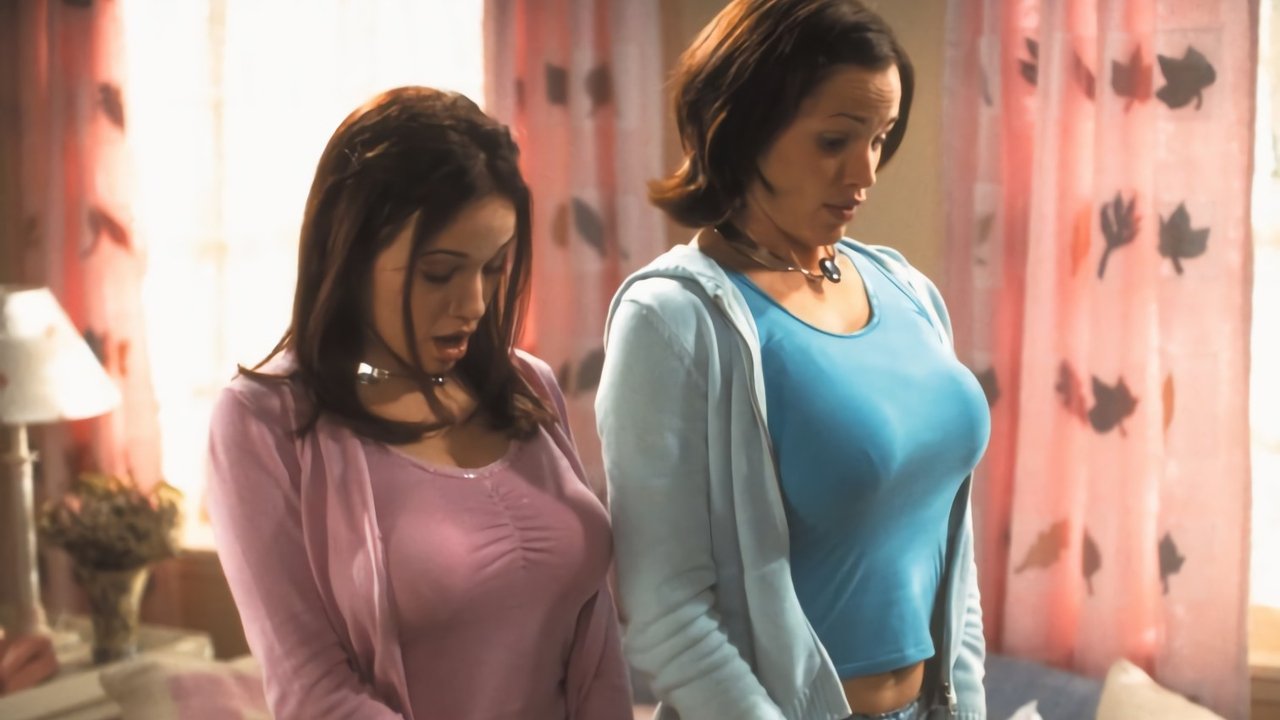
The sci-fi elements here are less about world-building and more about providing a playground for weirdness. We get Kristy Swanson (the original Buffy the Vampire Slayer) as an alien, a group of Swedish-accented "Nordic" extraterrestrials, and a persistent ostrich. It’s science fiction by way of a fever dream, where the rules of the universe are secondary to the next gag. It captures that pre-9/11 sense of levity; the stakes are technically the destruction of the universe, but the characters are much more worried about whether their girlfriends, played by Jennifer Garner and Marla Sokoloff, are still mad at them for forgetting their anniversary.
Interestingly, Jennifer Garner filmed this right before her career exploded with Alias (2001) and Daredevil (2003). Seeing her in a "Double-Double" twin role is a fun reminder of the era when future A-listers were frequently paid to look confused in stoner comedies.
The DVD Boom and the Cult of Zoltan
While critics originally treated the film like a cinematic grease fire, audiences felt differently. This was one of the early benefactors of the DVD boom. I recall the special features on the early Fox discs—the commentary tracks and "Zoltan" easter eggs—helping to build a community around the movie. It’s a film designed for repeat viewings, not because it’s deep, but because it’s packed with quotable, rhythmic dialogue.
The "And then?" drive-thru scene is arguably the film’s peak, a perfectly paced bit of escalating frustration that everyone who has ever ordered fast food has wanted to reenact. It’s these specific, weird vignettes that transformed a "dumb movie" into a genuine cult classic. Apparently, the "Z" hand gesture used by the Zoltan cult wasn't some deep occult symbol—the writers just stole it from a group of kids at a local high school who used it as a "cool" greeting. That’s the level of creative lifting we’re dealing with here, and it’s glorious.
Ultimately, Dude, Where's My Car? is a time capsule of a very specific, uncomplicated brand of fun. It doesn’t have the satirical bite of Galaxy Quest or the technical polish of Men in Black, but it has an undeniable heart and a refusal to take its own sci-fi stakes seriously. It’s a movie that invites you to turn off your brain, lean into the absurdity, and wonder where you parked your own sense of maturity for 83 minutes.
The film serves as a neon-lit bridge between the slapstick of the '90s and the Judd Apatow-led comedies of the mid-2000s. It’s a messy, ridiculous, often-dated, but perpetually charming relic. If you’re looking for a film that explores the human condition, look elsewhere. But if you want to see two guys try to pay for a meal with a "Continuum Transfunctioner" that looks like a Rubik's Cube on steroids, you’ve found your destination. Just don't expect to find the car.
Keep Exploring...
-

The Nutty Professor
1996
-
S1m0ne
2002
-
Just Married
2003
-
Killers
2010
-
Evolution
2001
-
Bedazzled
2000
-
Coyote Ugly
2000
-
Vanilla Sky
2001
-
Idiocracy
2006
-
Ghosts of Girlfriends Past
2009
-

The Invention of Lying
2009
-
Harold & Kumar Go to White Castle
2004
-

Mars Attacks!
1996
-
Flubber
1997
-
The 6th Day
2000
-

Maid in Manhattan
2002
-
The Tuxedo
2002
-
The Haunted Mansion
2003
-
Scooby-Doo 2: Monsters Unleashed
2004
-
Herbie Fully Loaded
2005