Little Nicky
"Evil has a new face. And it’s really, really weird."
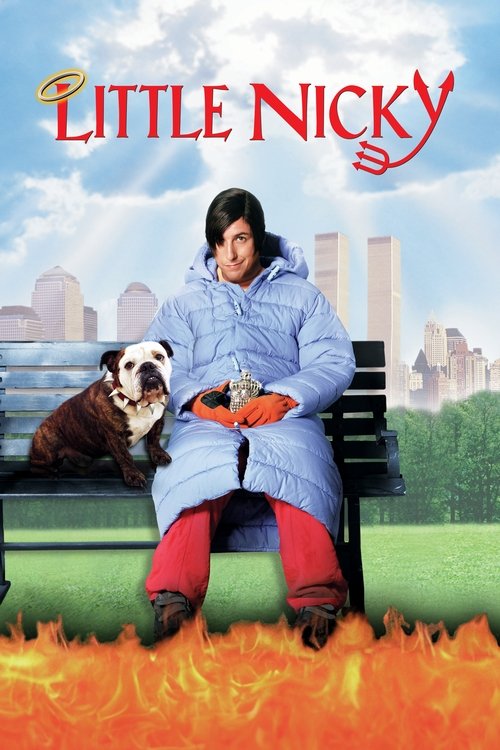
I watched this while wearing a pair of itchy wool socks I found in the back of my drawer, and honestly, the physical discomfort helped me empathize with Nicky’s permanent squint. There is a specific kind of madness that only existed in the window between 1998 and 2003—a period where studios were throwing ungodly amounts of money at "high-concept" comedies, trusting that a bankable lead and some primitive CGI could print money. Little Nicky is the ultimate artifact of that era, a $85 million descent into a hell that looks suspiciously like a PlayStation 2 cutscene.
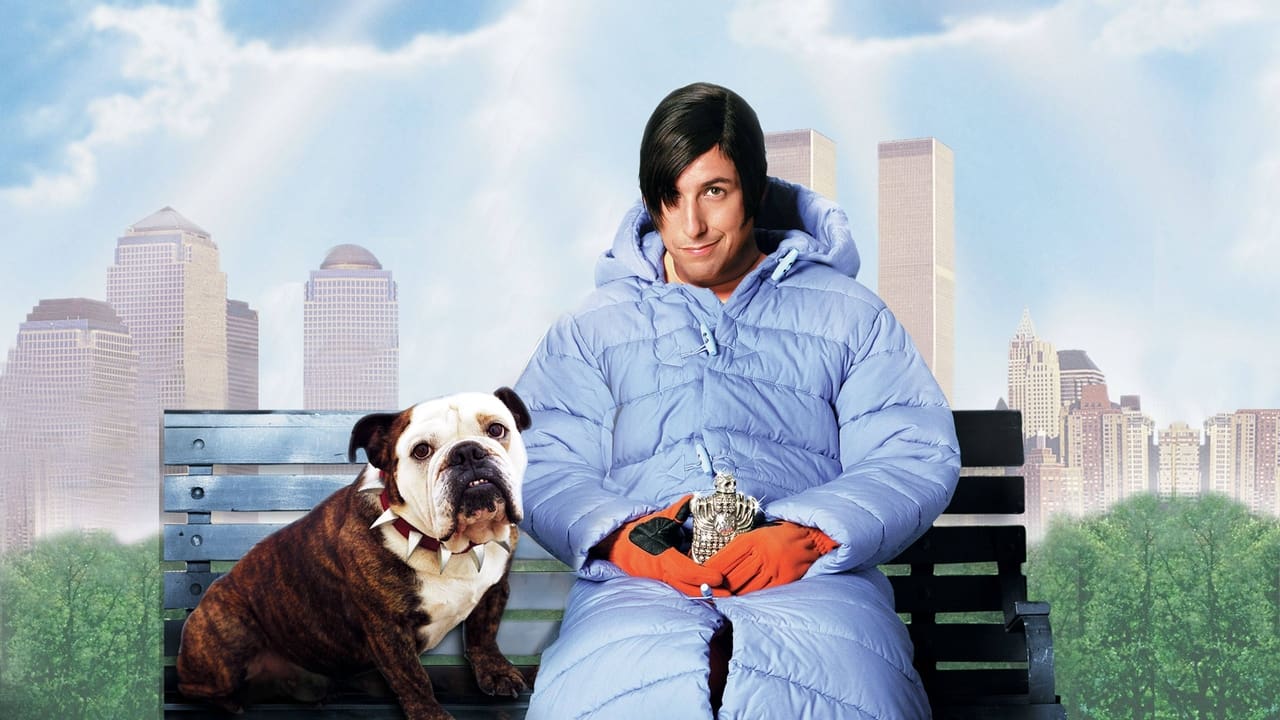
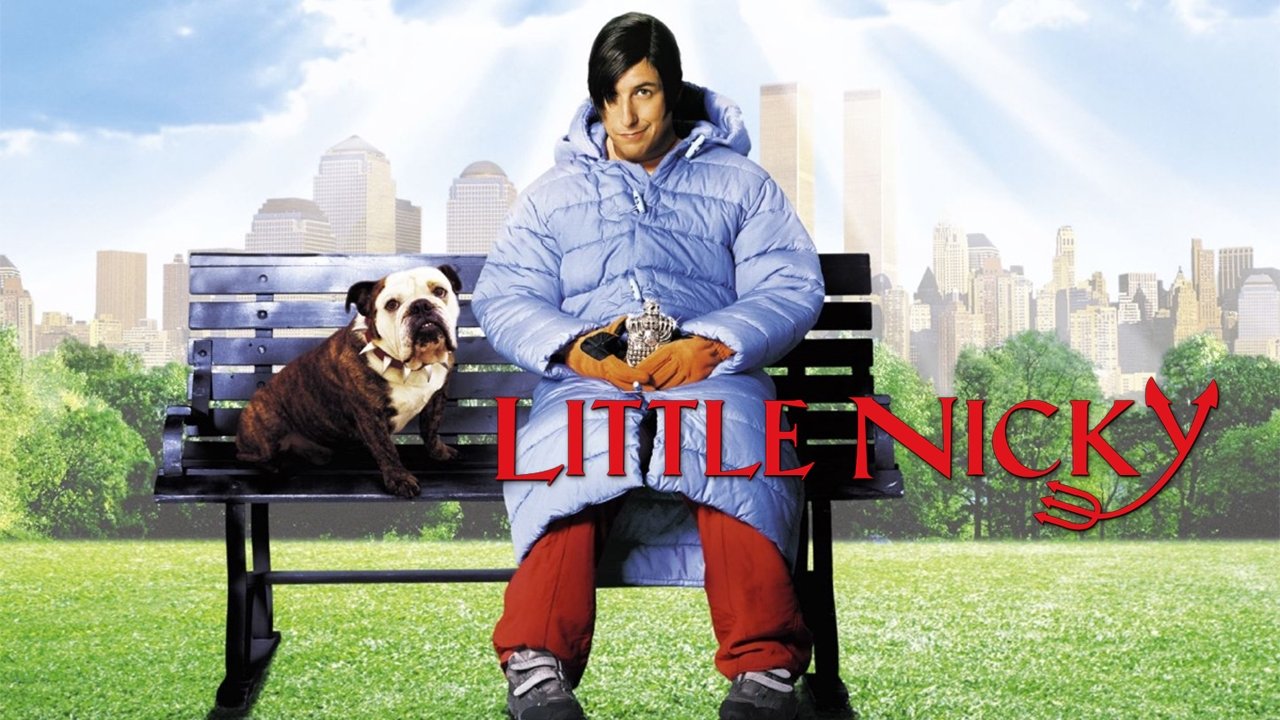
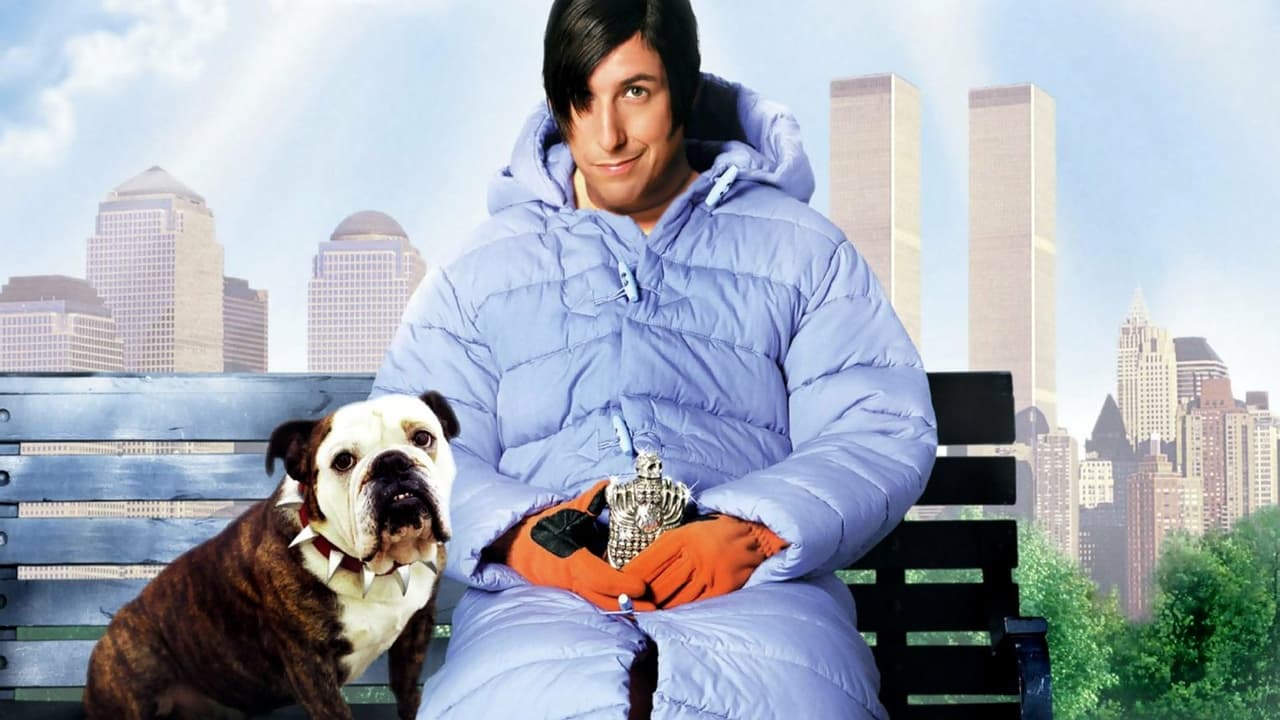
Looking back, it’s hard to overstate how much of a "blank check" movie this was. Adam Sandler was coming off a legendary heater—The Wedding Singer, The Waterboy, and Big Daddy—and New Line Cinema clearly decided to let him do whatever he wanted. What he wanted, apparently, was to play the lopsided, speech-impaired son of Satan who loves heavy metal and Popeyes chicken. It’s a performance that feels like Sandler is doing a 90-minute impression of a guy who just got hit in the face with a shovel, and your mileage will vary wildly on whether that’s charming or a form of psychological warfare.
The Holy Grail of Bizarre Casting
The first thing that hits you upon a re-watch is the cast. It is absolutely, unintentionally prestigious. You’ve got Harvey Keitel—the man from Mean Streets and Pulp Fiction—playing Satan with a straight face while his ears fall off. You’ve got Patricia Arquette, fresh off working with Martin Scorsese in Bringing Out the Dead, playing the "quirky" love interest who somehow finds Nicky’s facial contortions endearing.
Then there’s the supporting roster: Rhys Ifans (who I’ll always remember as the naked roommate from Notting Hill) and the late, great Tommy Lister Jr. as Nicky’s meaner, more competent brothers. Even Rodney Dangerfield shows up as "Grandpa" Lucifer, dropping one-liners in a hell-scape that looks like a neon-lit Spencer’s Gifts. This was the peak of the "Happy Madison Ensemble" era, where you could count on seeing Peter Dante, Jonathan Loughran, and a truly unhinged cameo by Quentin Tarantino as a blind street preacher. The chemistry is less "professional production" and more "summer camp for people with nine-figure net worths," but that’s part of the cult appeal. It’s a movie made by friends who were clearly having more fun than the audience was allowed to have.
Y2K Ambition and Rubber-Faced CGI
Technologically, Little Nicky is a fascinating time capsule of the CGI revolution. In 2000, we were still figuring out the "uncanny valley." The film is packed with digital effects that were incredibly expensive at the time but now carry a charmingly grotesque, rubbery quality. Beefy, the talking bulldog (voiced by Robert Smigel), is a prime example. The way his mouth moves is nightmare fuel by modern standards, but at the time, it was the height of comedic tech.
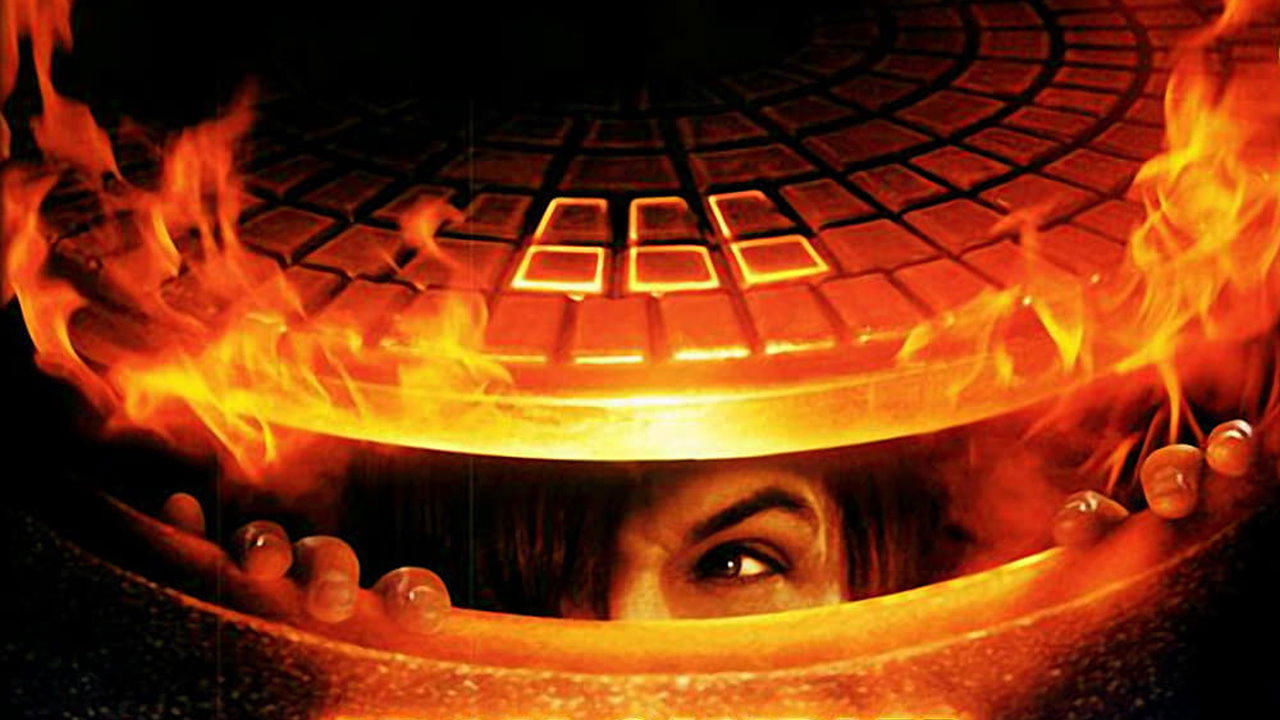
The production design by Theo van de Sande (who also shot Wayne's World) actually manages some striking imagery. The version of Hell presented here—all jagged red rocks and floating tortures—captures that specific Y2K aesthetic where everything had to look like a music video from a nu-metal band. It’s loud, it’s over-saturated, and it’s basically a fever dream directed by someone who accidentally ate a whole tray of pot brownies. Looking back from our current era of polished, corporate-mandated Marvel visuals, there’s something almost refreshing about how ugly and daring the movie's visual palette is.
Why It Vanished (and Why to Seek It Out)
So, why did a movie starring the biggest comedy lead in the world fail to break even? It was a victim of its own weirdness. It was too dark for the kids who loved The Billy Madison Show and too juvenile for the adults who were starting to appreciate Sandler’s range in films like Punch-Drunk Love (which would come just two years later). It’s a comedy that relies on a joke-hit-to-miss ratio that is remarkably chaotic; for every clever sight gag, there are three jokes about someone’s "tits on their head."
But I’d argue it’s a "forgotten" gem precisely because it’s so singular. There isn't another movie that features Ozzy Osbourne decapitating a CGI demon with his teeth as a pivotal plot point. It represents a moment in Hollywood history where the "Indie Film" boom of the 90s met the "Franchise Mentalities" of the 2000s, resulting in a big-budget movie that feels like it was written on a cocktail napkin during a bender.
Apparently, the production was so chaotic that Sandler and co-writer Tim Herlihy were constantly rewriting scenes on the fly to accommodate the ballooning budget and the complex (for the time) green-screen requirements. You can feel that frantic energy on screen. It’s messy, it’s occasionally annoying, but it’s never boring. In an age of algorithm-approved comedies, Little Nicky stands as a monument to the glorious, expensive mistakes of the new millennium.
Little Nicky isn’t a "good" movie by any traditional metric, but it is a fascinating piece of pop-culture debris. It’s the sound of a superstar pushing his persona to the absolute breaking point to see if the audience would follow him into the fire. They didn’t, but the view from the bottom of the pit is still pretty entertaining if you’re in the right mood. If you haven't seen it since your local Blockbuster closed down, give it another look—even if just for the "Release the Awesome" sequence.
***
Trivia Note: Keep an eye out for the "globey" awards in the background of certain scenes—they’re a subtle nod to the film’s obsession with its own internal lore, much of which was cut during a frantic editing process to keep the runtime at a tight 90 minutes.
Keep Exploring...
-
Mr. Deeds
2002
-

Walk of Shame
2014
-
Bedtime Stories
2008
-
Hubie Halloween
2020
-
The Cobbler
2014
-
The Kid
2000
-
The Santa Clause 2
2002
-

Drillbit Taylor
2008
-
Big Daddy
1999
-

Spanglish
2004
-
Jack Frost
1998
-
Bulletproof Monk
2003
-
Billy Madison
1995
-
Happy Gilmore
1996
-
The Waterboy
1998
-

The Ant Bully
2006
-
Shrek the Halls
2007
-

When in Rome
2010
-
The Do-Over
2016
-
The Visitors II: The Corridors of Time
1998