Memento
"The truth is just the lie you tell yourself."
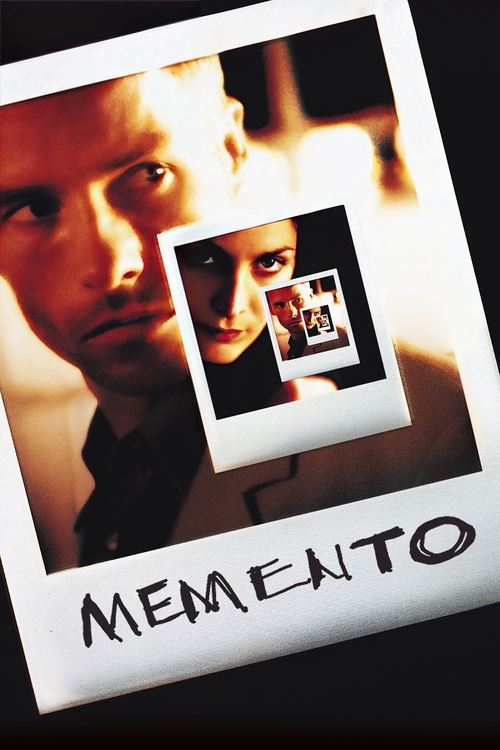
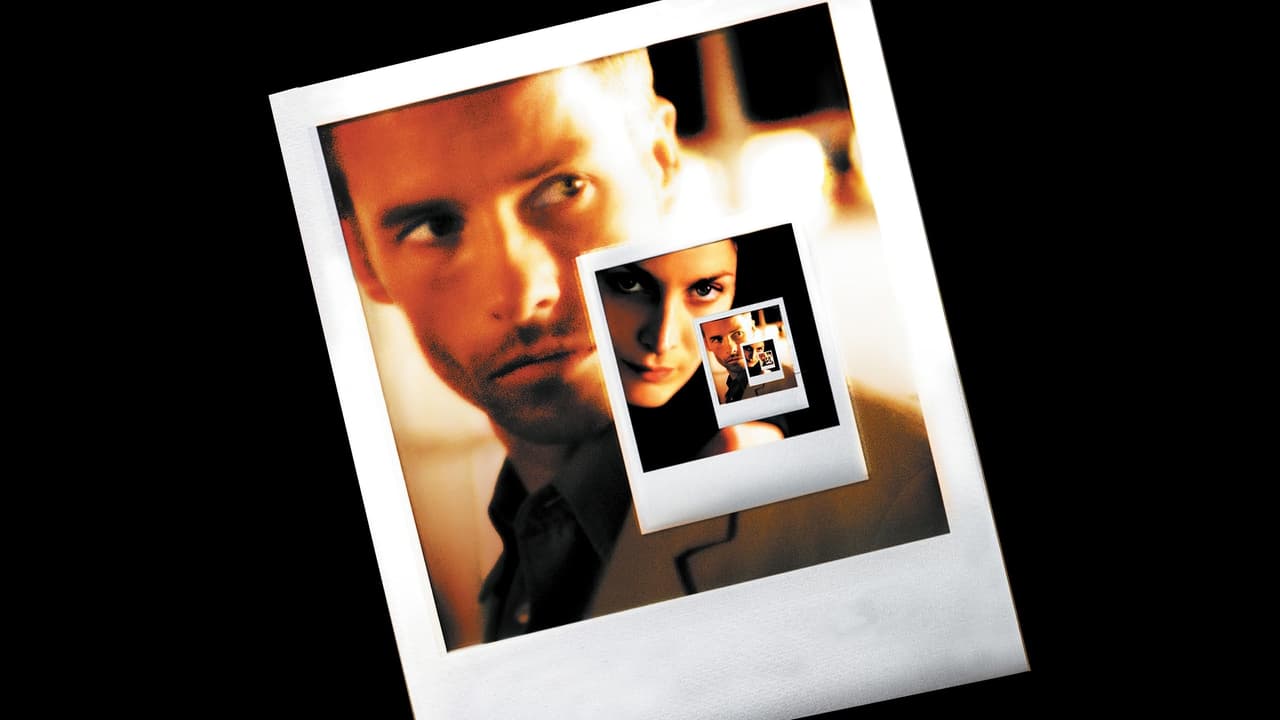
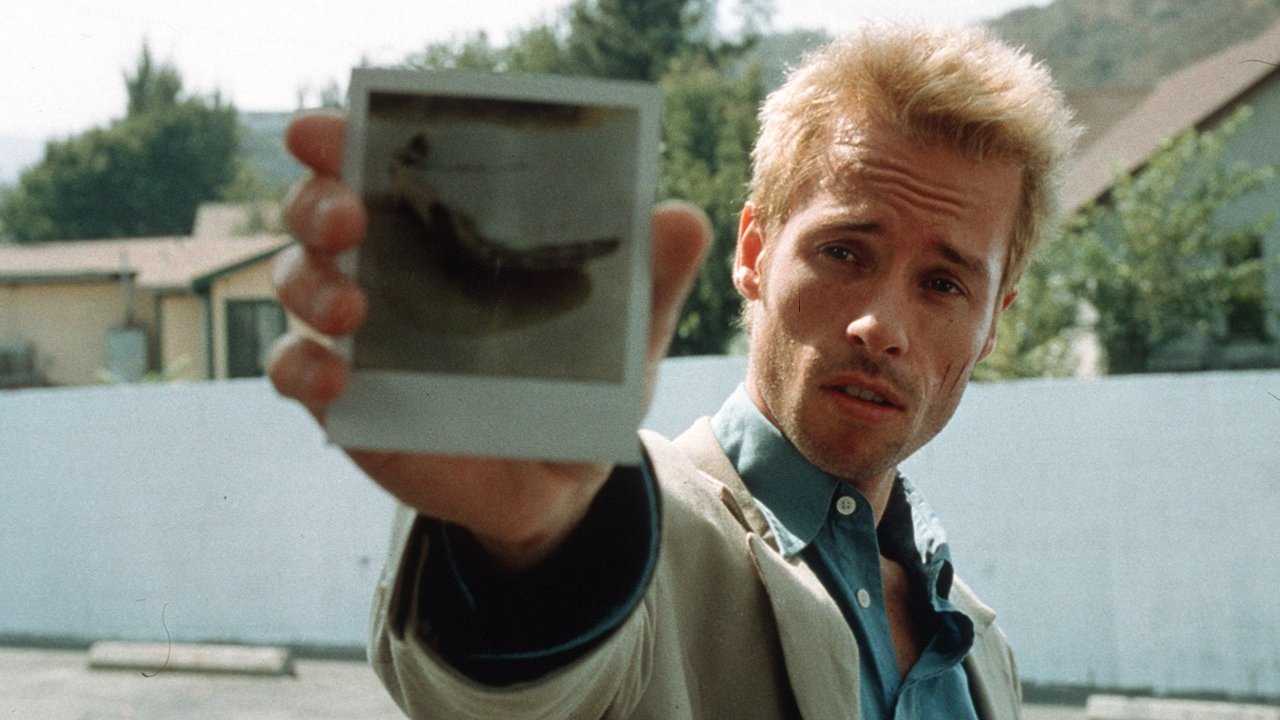
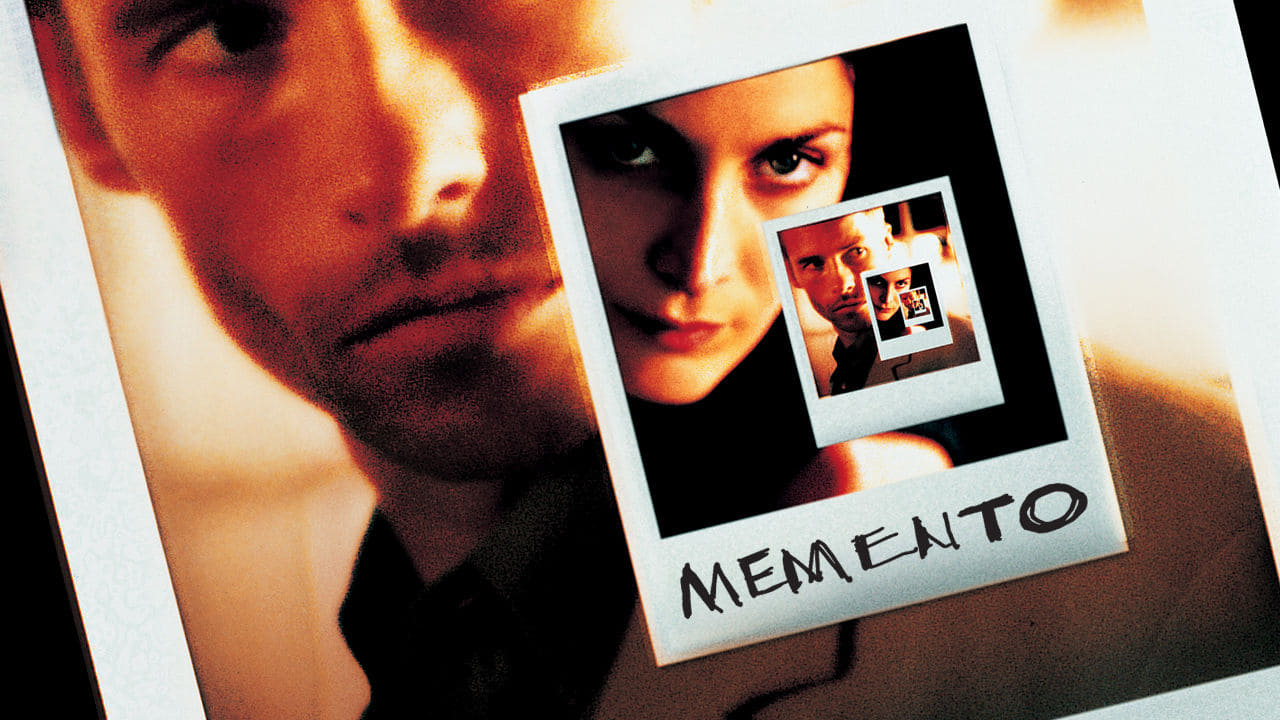
A Polaroid photo sits in a man’s hand. Instead of developing into a clear image, the colors bleed out, the shadows retreat, and the picture fades into a pristine, blank white sheet. It is a visual trick that immediately tells you everything you need to know about Christopher Nolan’s breakout masterpiece: time is a predator, and your perception of it is probably wrong.
When I first sat down to watch Memento, I was in a basement apartment that smelled faintly of damp laundry and old pizza boxes. I had borrowed the DVD from a guy who insisted it would "break my brain." At the time, I thought he was being dramatic. By the time the credits rolled—upward, naturally—I realized that most movies are just bedtime stories compared to the psychological workout Nolan puts you through.
The Architecture of a Broken Mind
At the heart of the film is Leonard Shelby, played with a twitchy, haunted precision by Guy Pearce (L.A. Confidential, The Proposition). Leonard is a man who can’t make new memories. He knows who he was before "the incident," but he doesn't know what he did five minutes ago. To function, he’s turned his body into a biological filing cabinet, tattooing "facts" across his chest and thighs and snapping Polaroids of everyone he meets.
What makes Memento so legendary isn't just the amnesia—it's the structure. The film is told in two alternating timelines. One moves forward in black and white, while the other moves backward in color. Every time a new color sequence begins, you are just as lost as Leonard is. You don't know why he’s holding a bottle of wine, why he’s running, or why there’s a bleeding man in the closet. You are forced to inhabit his disability.
Looking back from 2024, it’s easy to forget how radical this was in 2000. This was the dawn of the "puzzle movie" era, coming right on the heels of The Sixth Sense and The Matrix. But while those films relied on a single "aha!" moment, Memento is a constant, rhythmic unfolding of betrayal.
The Art of the Untrustworthy
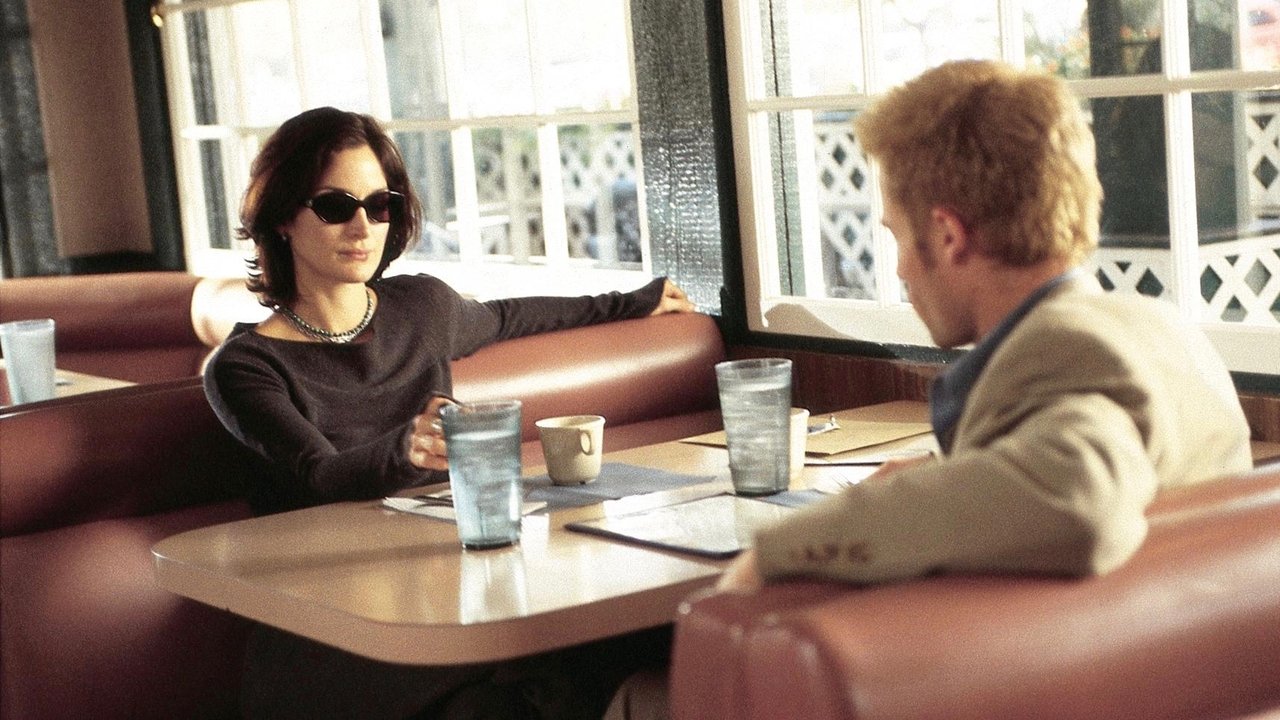
The supporting cast is a masterclass in ambiguity. Joe Pantoliano (The Sopranos) plays Teddy, a man who radiates the kind of oily charm that makes you want to check your pockets after he leaves the room. Then there’s Carrie-Anne Moss, fresh off her iconic turn in The Matrix, playing Natalie. She gives a performance that is chillingly pragmatic; she understands Leonard’s condition better than he does, and she isn't above using it as a weapon.
The chemistry between these three is less about sparks and more about friction. Because Leonard can't remember their previous interactions, every scene feels like a first meeting for him, but a chess move for them. Carrie-Anne Moss has one specific scene involving a lost pen that still makes my skin crawl with its sheer, calculated cruelty. It reminds you that in the world of a drama this dark, there are no heroes—only survivors and predators.
The film's look, captured by cinematographer Wally Pfister (Inception, The Dark Knight), avoids the flashy CGI that was beginning to take over Hollywood at the turn of the millennium. Instead, it relies on high-contrast lighting and a gritty, sun-bleached neo-noir aesthetic that feels grounded and tactile. Every tattoo looks painful; every Polaroid looks cheap and disposable.
The DVD Revolution and Hidden Truths
For those of us who grew up during the DVD boom, Memento was the ultimate "Special Features" trophy. The limited-edition release came in a package that looked like a psychological case file. Apparently, the production was a frantic 25-day shoot on a shoestring budget of $9 million, but you’d never know it from the polished final product.
One of the most famous pieces of trivia involves the "Chronological Cut." If you knew which hidden menu buttons to press on the DVD, you could watch the movie in the correct time order. Watching the movie in chronological order is a fun party trick, but it actually makes the film significantly less interesting. It strips away the empathy we feel for Leonard’s confusion and reveals the narrative for what it truly is: a tragedy about a man who chooses to be a monster because he can’t live with being a victim.
A Legacy Written in Ink
It’s fascinating to see how well Memento has aged. While the cell phones look like bricks and the cars feel like relics, the core theme—the way we curate our own history to suit our ego—is more relevant now than ever. We all have "tattoos" of a sort; we all selectively remember the parts of our lives that make us look like the protagonist.
Director Christopher Nolan would go on to play with time in much bigger, louder ways with Interstellar and Tenet, but there is an intimacy here that he has rarely recaptured. It’s a lean, mean, 113-minute machine that doesn't waste a single frame. It’s a film that demands your full attention and rewards it with a lingering sense of existential dread that stays with you long after the screen goes black.
Ultimately, Memento works because it isn't just a gimmick. It’s a deeply sad story about a man who is so desperate for a purpose that he’s willing to lie to himself forever. It challenges the very idea of justice. If you kill a man but can't remember doing it, did you actually get revenge? It’s a dark, intense ride that proves you don't need a $200 million budget to create a cinematic universe—you just need a guy, a camera, and a really, really good pen.

Keep Exploring...
-

Batman Begins
2005
-
Gattaca
1997
-
Lost Highway
1997
-
The Dark Knight
2008
-

The Game
1997
-
Sleepy Hollow
1999
-

The Dark Knight Rises
2012
-
Lucky Number Slevin
2006
-
Eyes Wide Shut
1999
-
The Prestige
2006
-
Se7en
1995
-
Twelve Monkeys
1995
-
Primal Fear
1996
-
L.A. Confidential
1997
-
Following
1999
-
The Sixth Sense
1999
-
Mulholland Drive
2001
-
The Others
2001
-
Mystic River
2003
-

Zodiac
2007