Men of Honor
"The deepest battles are fought in 200 pounds of steel."
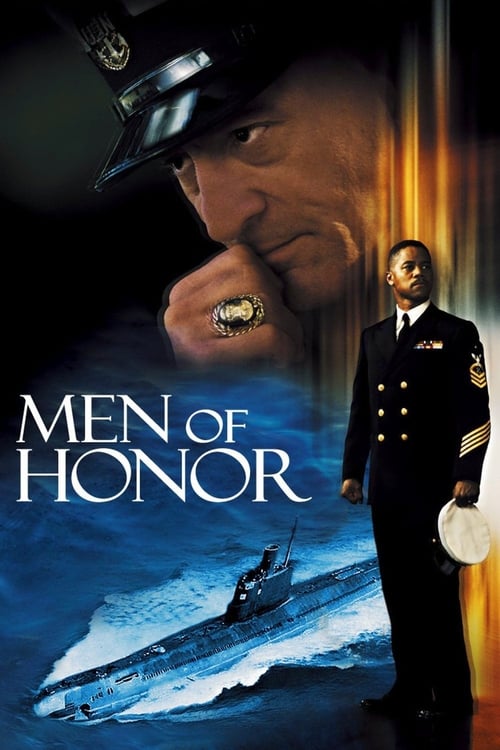
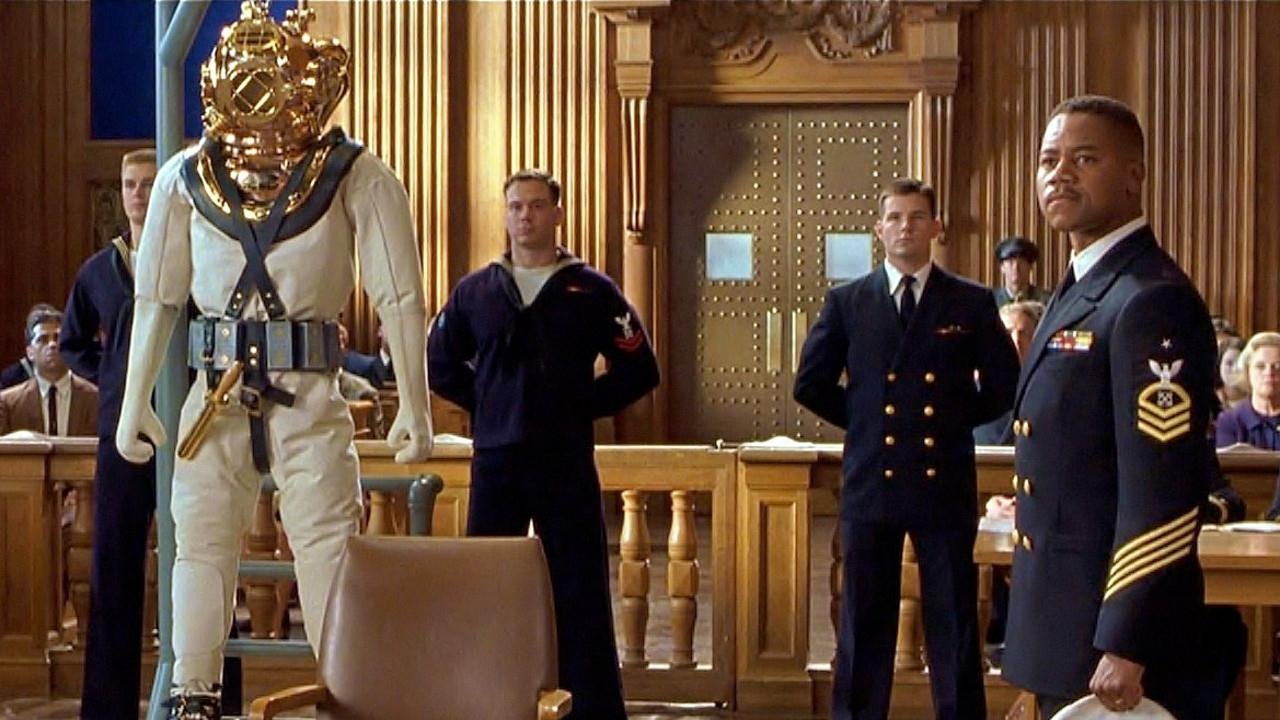
The first time I saw the Mark V diving helmet in Men of Honor, I didn’t see a piece of equipment; I saw a prison. It’s a terrifying copper bulb that looks like something Jules Verne would use to haunt a child’s dreams. Watching Cuba Gooding Jr. get bolted into that suit is an exercise in claustrophobia, and yet, this movie somehow turns that metallic tomb into a symbol of absolute, stubborn freedom.
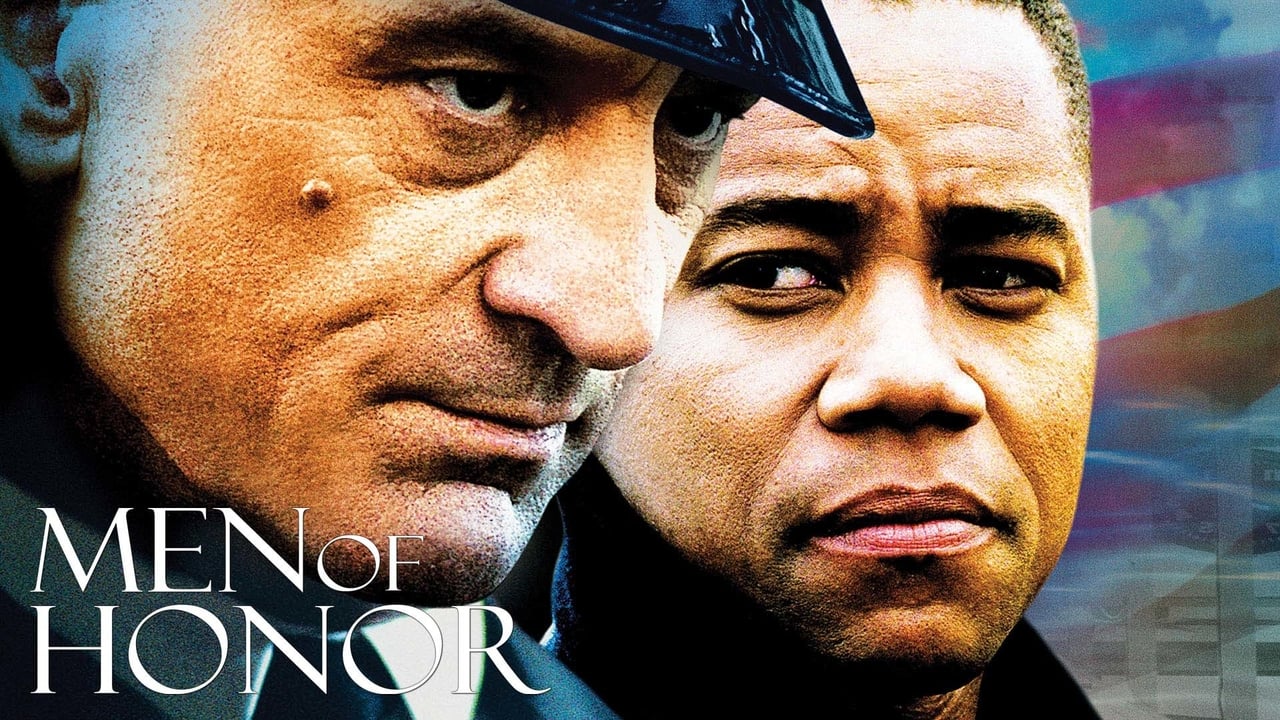
I recently revisited this one on a rainy Tuesday while wearing a weighted fitness vest I bought three years ago and have used exactly twice. Sitting there, feeling the slight pull on my shoulders while Gooding Jr. lugged 290 pounds of gear across a courtroom floor, made me feel singularly pathetic—but that’s the magic of the 2000-era inspirational drama. It makes you want to be a better person, or at least a person who stands up a little straighter while reaching for the remote.
The Grump and the Go-Getter
At its core, Men of Honor is a "clash of the titans" acting exercise, even if one titan is significantly more caffeinated than the other. Cuba Gooding Jr. plays Carl Brashear with an earnestness that feels almost alien today. In an era where every protagonist needs a layer of irony or a dark secret, Brashear’s pure, unadulterated "I’m going to do this because you told me I couldn't" energy is refreshing. It’s the performance that reminded everyone why he had an Oscar in the first place, before the mid-2000s took his career on a strange detour through "direct-to-DVD" woods.
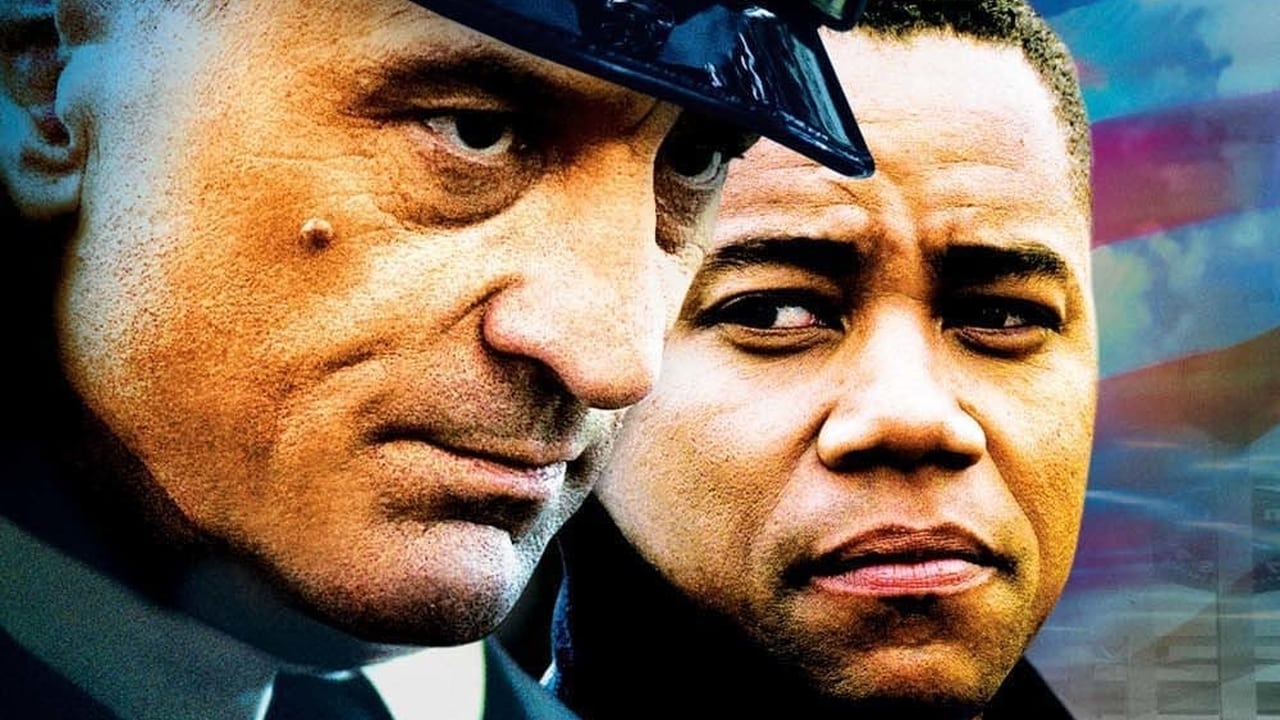
Then you have Robert De Niro as Billy Sunday. By the year 2000, De Niro was entering his "Experimental Scowl" phase. He plays Sunday like a sentient piece of beef jerky that’s been soaked in bourbon and salt water. It’s a big, loud, theatrical performance, but in the context of a Navy diving school that feels more like a gladiatorial pit, it works. When he’s screaming at recruits, you don’t just hear the spit; you feel the decades of institutionalized bitterness. The chemistry between the two isn't about friendship—it’s about two men who are both too stubborn to die, eventually realizing they’re looking in a mirror.
A Relic of a Sturdier Cinema
Watching this twenty-four years later, I’m struck by how "analog" it feels. We were right on the cusp of the CGI revolution—The Matrix had just changed the game a year prior—but director George Tillman Jr. opted for something tactile. When the divers are underwater, the silt is real, the bubbles are thick, and the danger feels heavy. There is a weight to the production that you just don't get in modern green-screen equivalents.
The film also captures that specific Y2K-era approach to history. It’s a Modern Cinema transition piece: it has the high-gloss production values of a blockbuster but the soul of a 1950s social drama. It doesn’t shy away from the horrific racism Brashear faced, but it packages it in a way that feels destined for a "Best Picture" montage. Is it a bit formulaic? Sure. The movie treats the U.S. Navy like a Catholic school run by angry, seafaring gods. But the formula exists because, when executed with this much craft, it hits the emotional marks every single time.
The Cult of the Mark V
While it was a solid hit at the box office, Men of Honor has developed a massive, almost obsessive following in the decades since, particularly within the military and diving communities. It’s one of those films that people "discover" on cable at 2:00 AM and find themselves unable to turn off. The "12 steps" sequence at the end has become the stuff of legend—the kind of scene that gets played at graduation ceremonies and in locker rooms.
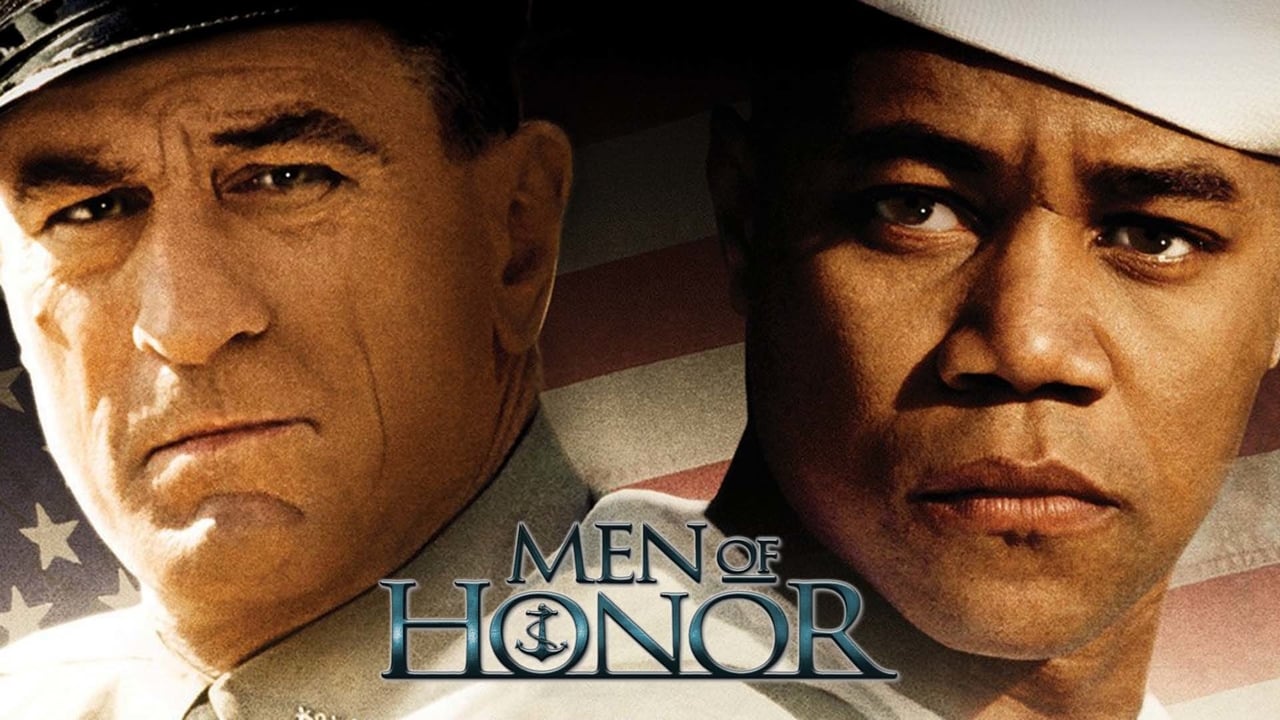
The behind-the-scenes details are what fuel this lingering devotion. Apparently, the real Carl Brashear was on set almost every day, acting as a consultant to ensure the diving procedures were as accurate as a Hollywood budget would allow. Gooding Jr. actually had to train in a functional version of that 200-pound suit, which isn't just "acting"—it's a workout that would break most humans.
There’s also the Charlize Theron factor. She plays Gwen Sunday, a role that, in retrospect, feels like the "thankless wife" trope that the early 2000s loved to waste talented women on. Looking back, you can see the sparks of the powerhouse she was becoming, even if the script only gives her about ten percent of the oxygen the men get. It’s a fascinating snapshot of a star on the rise, proving she could hold her own in a scene with a peak-intensity De Niro.
Men of Honor is the cinematic equivalent of a firm, slightly sweaty handshake. It doesn't reinvent the wheel, but it polishes it until you can see your own reflection in the hubcap. It’s a story about the sheer, stupid beauty of refusing to quit, anchored by two lead performances that demand your attention. Whether you're a history buff or just someone who appreciates seeing Robert De Niro chew on a pipe like it owes him money, it’s a journey to the bottom of the sea that’s well worth the dive.
Keep Exploring...
-

Awakenings
1990
-
A Bronx Tale
1993
-
Faster
2010
-
The Score
2001
-
The Devil's Advocate
1997
-

What Dreams May Come
1998
-
Boogie Nights
1997
-

Jackie Brown
1997
-

Lost Highway
1997
-
Fear and Loathing in Las Vegas
1998
-

Rushmore
1998
-
10 Things I Hate About You
1999
-

Being John Malkovich
1999
-

Cruel Intentions
1999
-

Girl, Interrupted
1999
-
Magnolia
1999
-
American Psycho
2000
-
High Fidelity
2000
-

I Am Sam
2001