Red Planet
"The planet is red, the blood is redder."
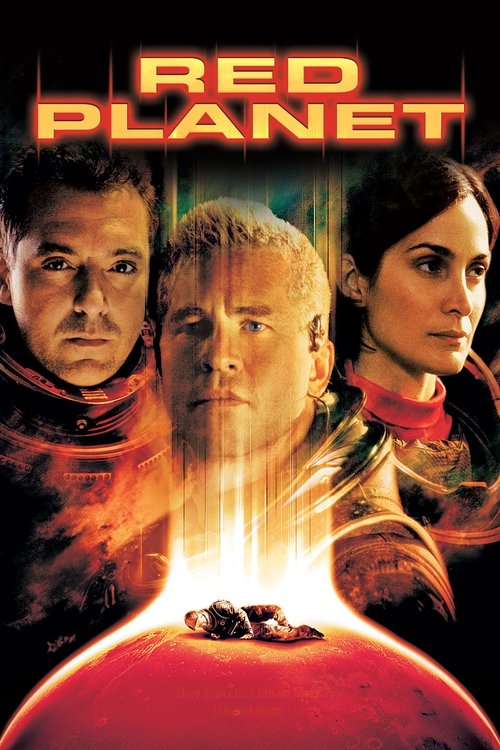
I remember sitting in a sticky-floored multiplex in late 2000, nursing a bag of blue Haribo Smurfs that had turned my entire tongue an alarming shade of cyan, and wondering why Hollywood was so obsessed with the fourth planet from the sun. Within eight months, we got two big-budget Martian epics. Brian De Palma gave us the bizarre, metaphysical Mission to Mars, and then Antony Hoffman arrived with Red Planet, a movie that decided the best way to save humanity was to send a space janitor and a homicidal robot to the dustiest rock in the solar system.
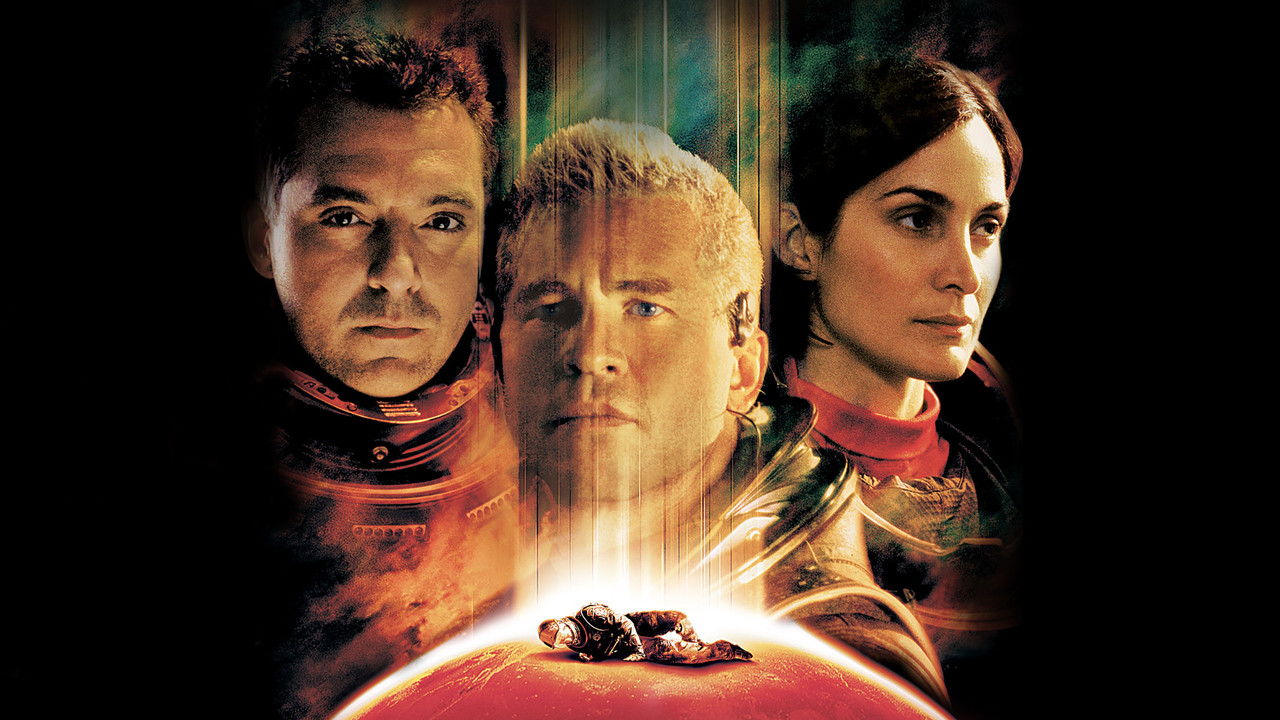
Looking back, Red Planet is the quintessential "middle-of-the-road" turn-of-the-millennium blockbuster. It’s caught in that awkward puberty between the tactile, grimy practical effects of the 80s and the glossy, weightless CGI saturation of the late 2000s. It’s a film that tries to be a hard sci-fi procedural about terraforming, only to lose its nerve halfway through and transform into a slasher movie where the killer is a high-tech "Navigation and Logistics" droid.
Ego, Oxygen, and the Space Janitor
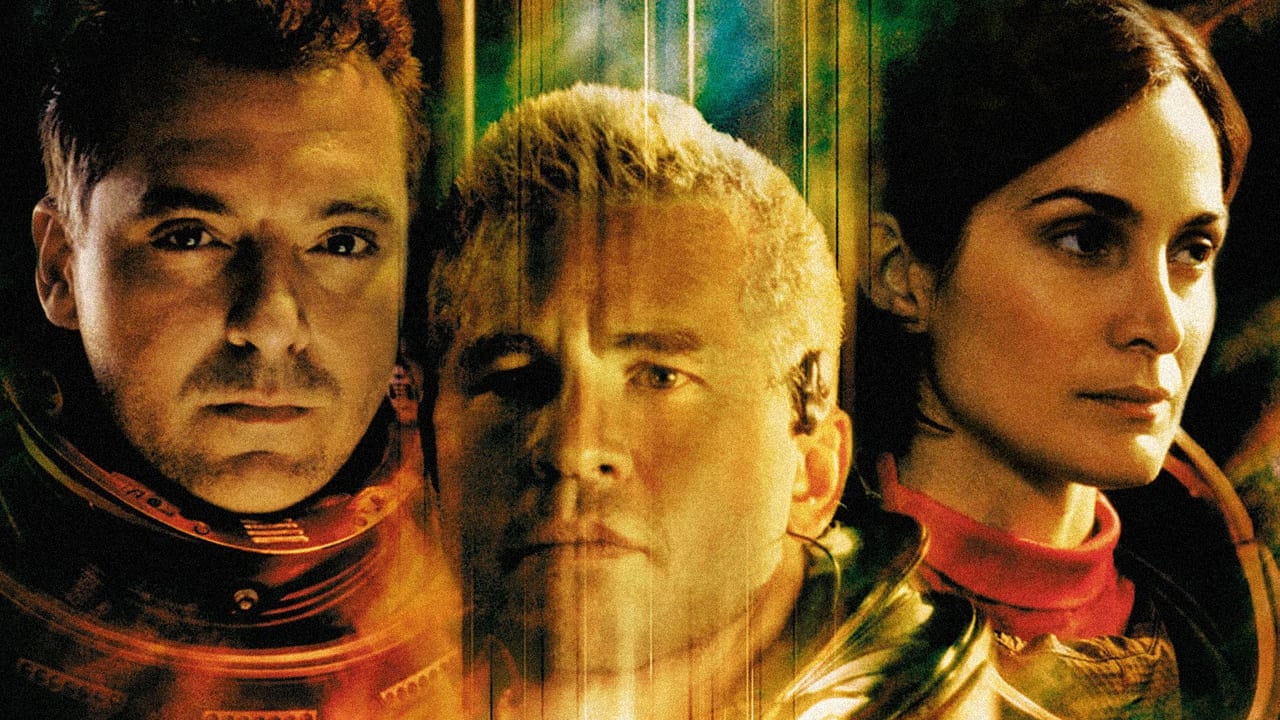
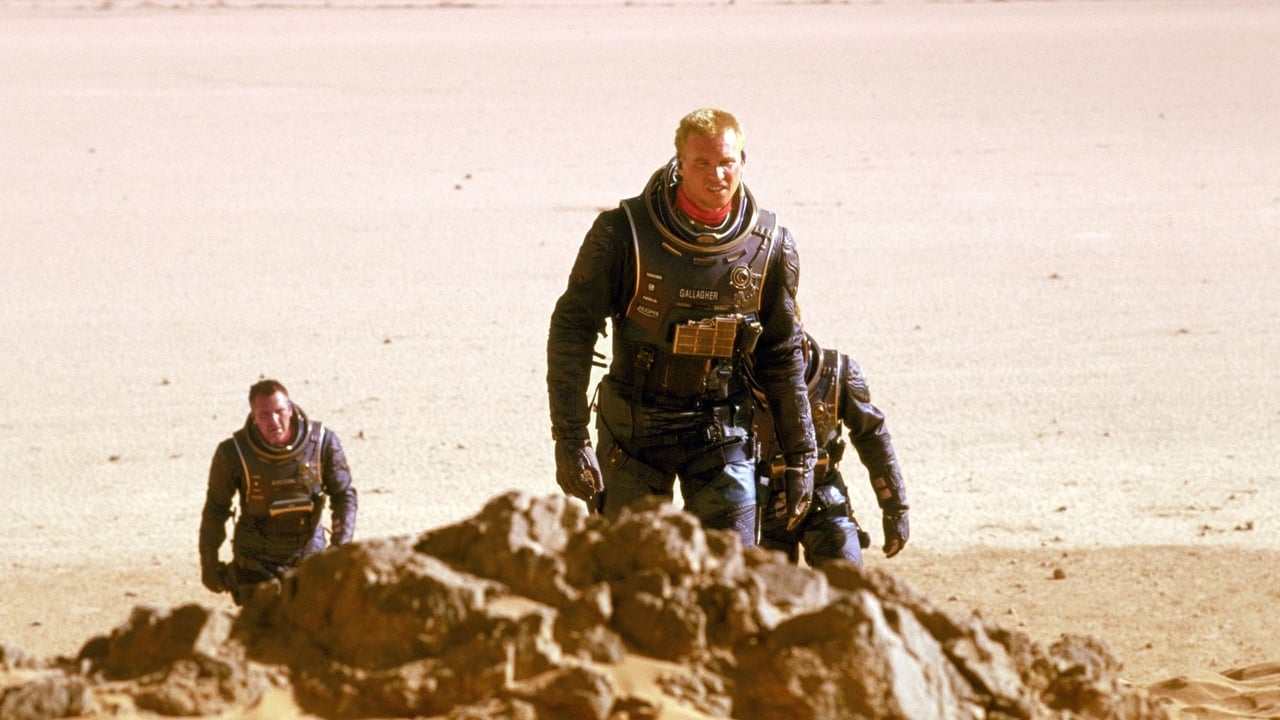
The setup is pure Y2K anxiety. Earth is dying (pollution, overpopulation—the usual suspects), and our only hope is a plan to seed Mars with oxygen-producing algae. When the algae mysteriously vanishes, a crew is sent to investigate. Leading the pack is Val Kilmer as Robby Gallagher, the mission’s systems engineer. I’ve always had a soft spot for Val Kilmer in this era; he has this effortless "I’d rather be literally anywhere else" energy that actually works for a guy whose job is essentially space plumbing.
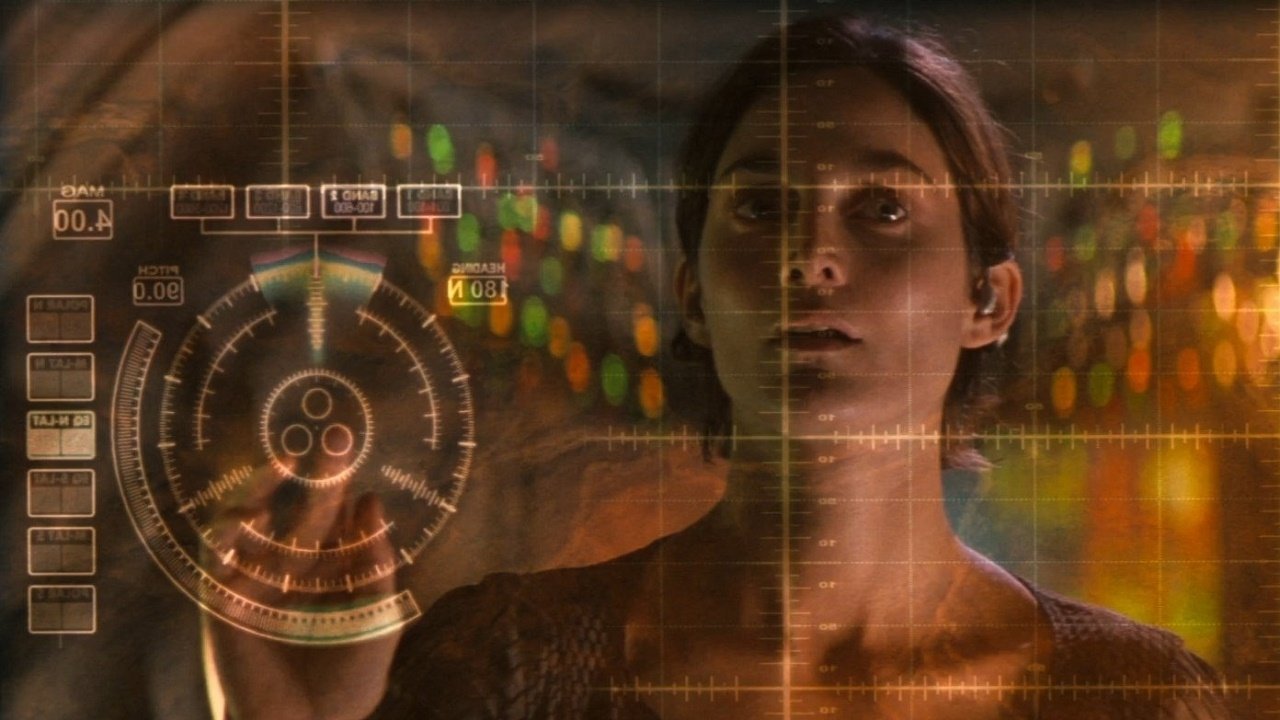
Rounding out the crew is Carrie-Anne Moss as Commander Kate Bowman, fresh off her iconic turn in The Matrix. She’s mostly stuck in the orbiting ship while the boys go down to the surface, which feels like a waste of the era’s premier action heroine. Then you have Tom Sizemore—fresh from Saving Private Ryan—playing a cynical geneticist, Benjamin Bratt, Simon Baker, and the legendary Terence Stamp.
The chemistry here is... tense. And I don’t just mean the script. The legendary behind-the-scenes drama between Val Kilmer and Tom Sizemore is the stuff of cinema lore. Apparently, the two stars hated each other so much they refused to be on set at the same time, with Sizemore reportedly demanding that Kilmer not be allowed to speak to him. Val Kilmer is the only man who could make space-plumbing look like a legitimate existential crisis while simultaneously feuding over a gym equipment shipping crate. That friction bleeds into the film, giving the crew’s desperation a jagged, uncomfortably real edge.
AMEE: The Murderous Swiss Army Knife
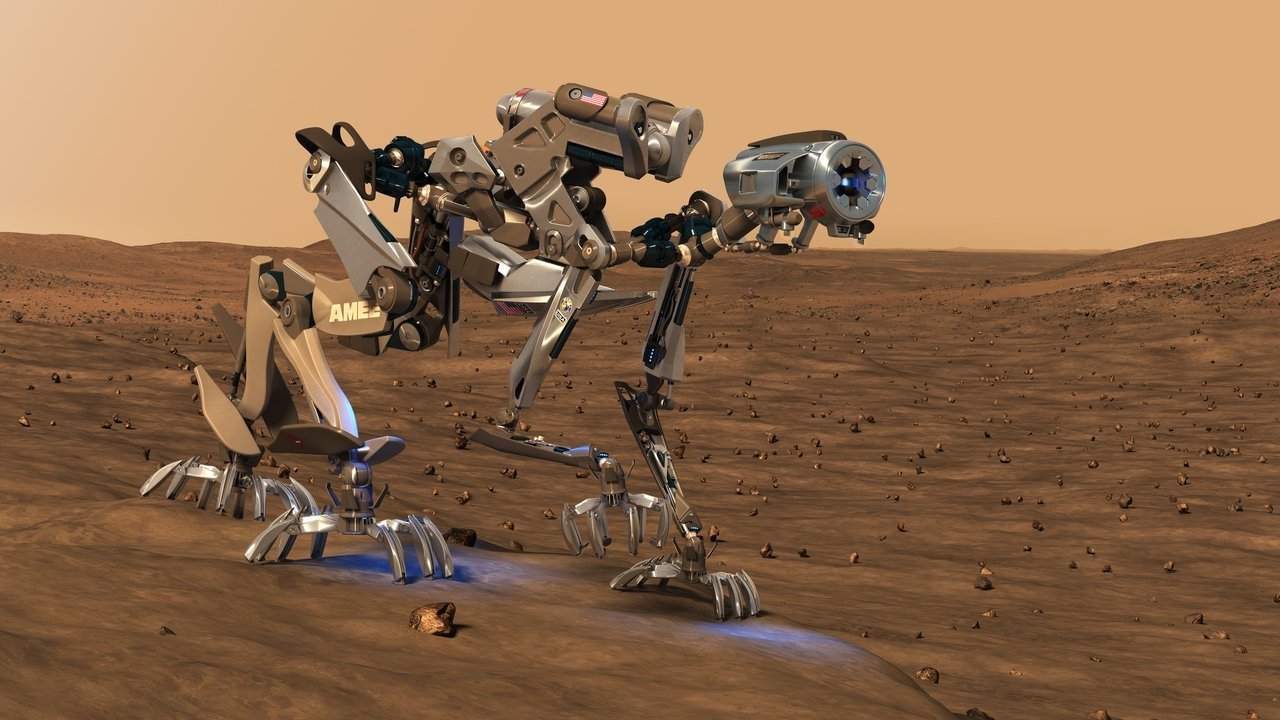
The real star of the show, however, isn't human. It’s AMEE (Autonomous Mapping Evaluation and Evasion), a robotic scout that looks like a metallic panther. During a disastrous crash landing, AMEE’s "war mode" is accidentally triggered. AMEE is effectively a murderous Swiss Army Knife with a grudge, and once she starts hunting the crew through the Martian canyons, the movie finally finds its pulse.
The action choreography here is surprisingly clear for the era. Before the "shaky-cam" craze of the mid-2000s took over, director Antony Hoffman and cinematographer Peter Suschitzky (who shot The Empire Strikes Back, which explains why this movie looks way more expensive than it is) leaned into wide shots and physical momentum. When AMEE attacks, the blend of practical puppet work and early CGI is remarkably effective. There’s a weight to the robot’s movements that digital effects often lack today. The sequence where the crew realizes they aren't alone in the shadows of the red rocks is genuinely tense, even if you know the plot beats by heart.
The film also captures that weird transition in DVD culture. I remember the special features on the disc being a goldmine for tech-nerds, detailing how they used the deserts of Jordan to stand in for Mars. Looking at it now, the orange-filtered landscapes feel both beautiful and strangely claustrophobic. It’s a "pre-9/11" action movie—it’s earnest, slightly goofy, and hasn't yet adopted the grim, desaturated gray palette that would define the genre a few years later.
A Forgotten Relic of the New Millennium
Is Red Planet a masterpiece? Absolutely not. It’s a movie where Simon Baker gets pushed off a cliff and Terence Stamp talks about the intersection of science and God before wandering off into a dust storm. It’s messy, the science is questionable at best (space bugs eating algae, anyone?), and the ending feels like it was rewritten during a lunch break.
However, as a relic of the year 2000, it’s fascinating. It represents a moment when studios were still willing to throw $80 million at a standalone, R-rated sci-fi thriller that didn't have a "Cinematic Universe" attached to it. It’s a film that values atmosphere and physical stunts over relentless world-building. While it flopped hard at the box office—losing out to the glitz of the holiday season—it’s stayed in my brain as a cozy, slightly clunky space adventure.
If you’re looking for a dose of turn-of-the-century nostalgia or just want to see Val Kilmer be charmingly grumpy while fighting a robot cat, Red Planet is a solid Friday night watch. It doesn’t reinvent the wheel, but it spins it with enough conviction to keep you watching. Just keep an eye on your Roomba after the credits roll—you never know when "war mode" might kick in.
Keep Exploring...
-

The Saint
1997
-
Chain Reaction
1996
-
Escape from L.A.
1996
-
Volcano
1997
-
Star Trek: Insurrection
1998
-
Final Fantasy: The Spirits Within
2001
-
Star Trek: Nemesis
2002
-

Paycheck
2003
-
Sky Captain and the World of Tomorrow
2004
-
Lake Placid
1999
-
The One
2001
-
Race to Witch Mountain
2009
-
Darkman
1990
-

Outbreak
1995
-
Godzilla
1998
-
Hollow Man
2000
-
The 6th Day
2000
-

Jurassic Park III
2001
-
Planet of the Apes
2001
-

The Tuxedo
2002