The Family Man
"The road not taken has a minivan."
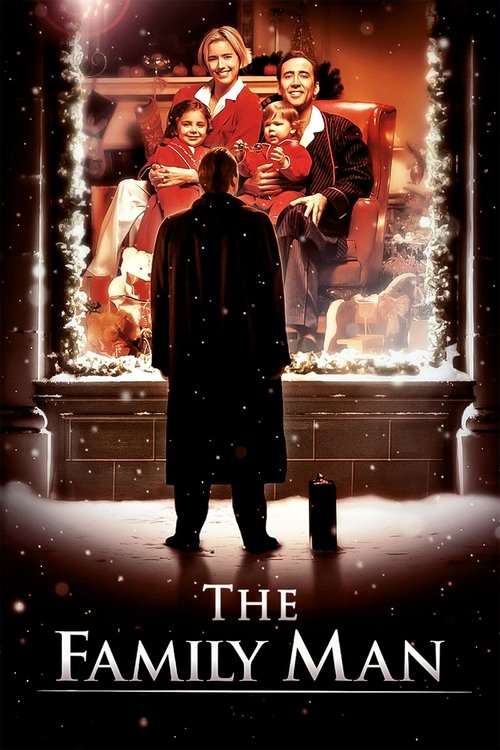
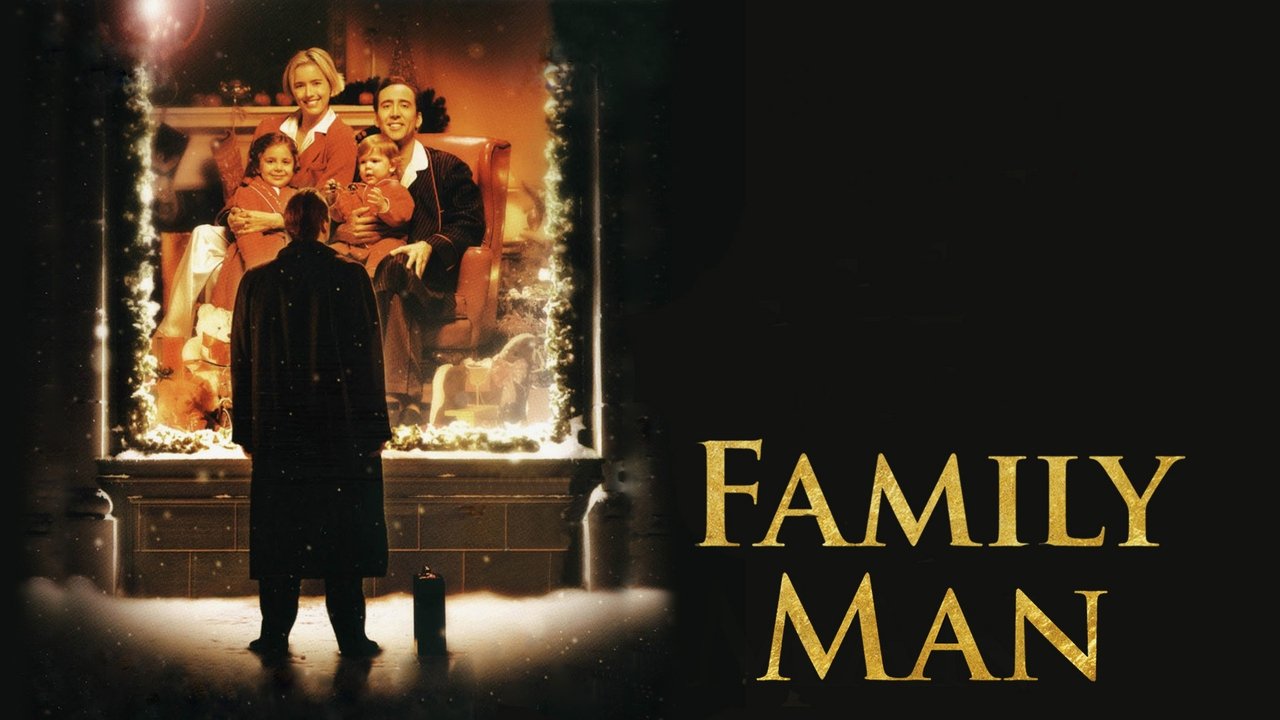
The turn of the millennium was a weird time for the "Alpha Male" archetype. We were transitioning out of the cocaine-fueled, Gordon Gekko excess of the late 80s and early 90s and barreling toward a tech-heavy future that felt increasingly cold. In the middle of that identity crisis sat Nicolas Cage, an actor who, in the year 2000, was still fresh off his "Holy Trinity" of action blockbusters (The Rock, Con Air, Face/Off). He was the biggest star on the planet, yet he chose to spend Christmas headlining a high-concept, sentimental drama about a man who swaps his Ferrari for a salt-stained minivan.
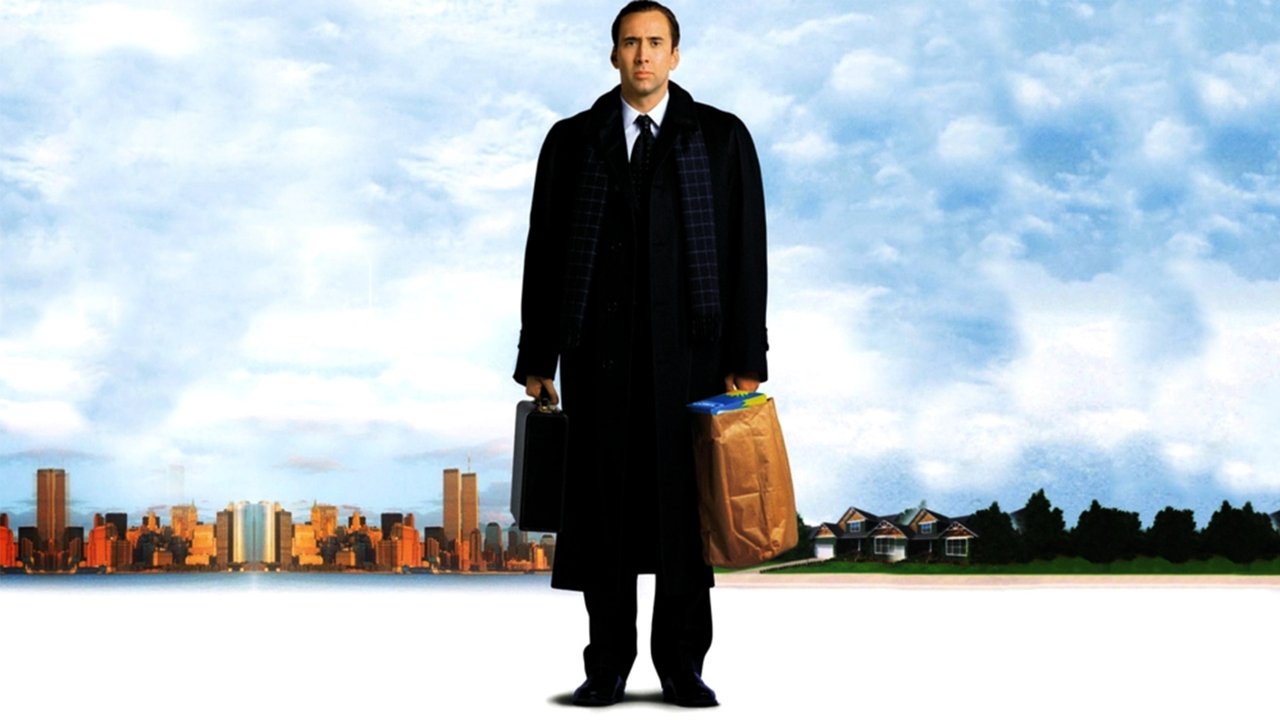
I watched this most recently while wearing mismatched socks—one with a significant hole in the big toe—and eating a piece of leftover gingerbread that had reached the structural density of a roof shingle. There is something about the "What If" genre that demands a certain level of domestic disarray to truly appreciate the stakes. The Family Man isn't just a holiday movie; it’s a time capsule of Y2K anxieties regarding success, urban isolation, and the terrifying realization that your choices actually matter.
The Cage Contradiction
What strikes me most, looking back at this twenty-four years later, is how remarkably restrained Nicolas Cage is as Jack Campbell. We’ve become so accustomed to "Mega-Cage"—the wide-eyed, scenery-chewing force of nature—that we forget he is an Oscar-winning performer capable of immense subtlety. As the high-powered Jack, he is slick and soulless, but once he’s "glimpsed" into an alternate reality where he stayed with his college sweetheart, his performance shifts into a masterclass of bewildered frustration.
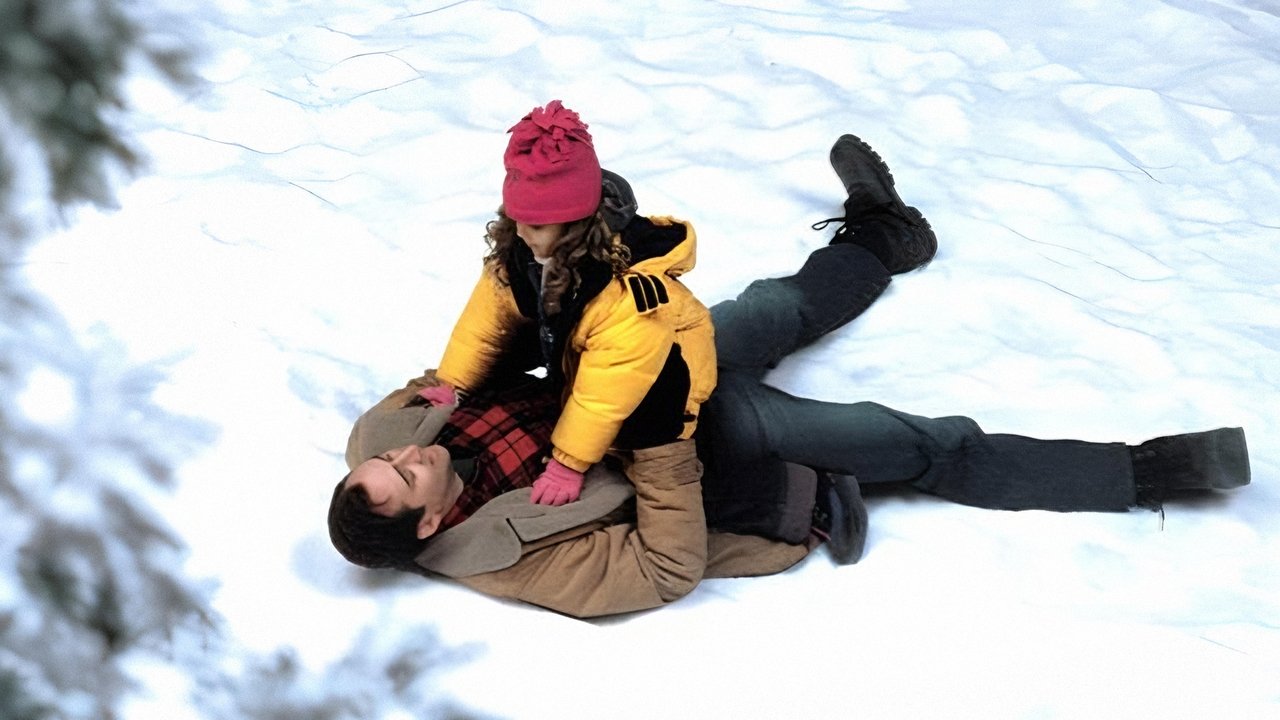
He doesn't just play "sad dad"; he plays a man who is genuinely mourning a private jet he never actually lost. It’s a delicate balance. If Jack is too likable, there’s no arc; if he’s too much of a jerk, we don't want him to find redemption. Cage finds the middle ground in the small moments—the way he looks at a chocolate cupcake like it’s a biological weapon, or the frantic, wide-eyed terror of realizing he has to change a diaper. The man treats a dirty diaper with the same intensity he used to disarm a chemical bomb in The Rock.
The Leoni Factor and Visual Polish
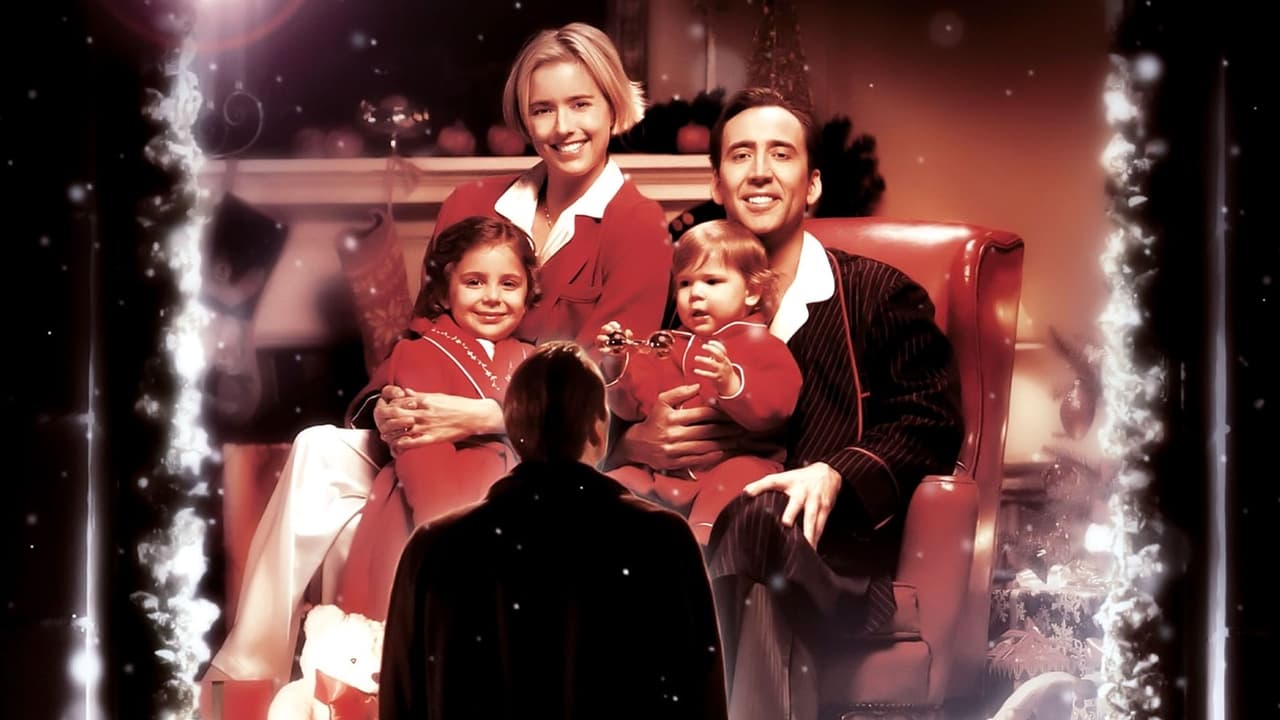
If Cage is the engine, Téa Leoni is the soul of this film. It is a crime that she wasn't a bigger A-list mainstay in the 2000s. As Kate, she has the impossible task of playing a "perfect" wife who remains a fully realized human being. Her chemistry with Cage is palpable—the kind of effortless, lived-in warmth that makes you believe these two people have a decade of unspoken shorthand.
The film also benefits from a pedigree that most rom-coms lack. It was shot by Dante Spinotti, the legendary cinematographer behind Heat and L.A. Confidential. Because of him, the film avoids the flat, fluorescent look of early-2000s comedies. The New York sequences are cold, metallic, and sharp, while the suburban New Jersey "glimpse" is bathed in amber, gold, and soft shadows. Even the score by Danny Elfman avoids his usual Oingo Boingo quirkiness, opting instead for a whimsical, bell-heavy melody that feels like a modern update to It's a Wonderful Life. It’s a polished production that knows exactly which heartstrings it wants to yank.
The "Glimpse" Lore and Cult Status
While The Family Man was a respectable hit, it has grown into a genuine cult classic for the suburban set, largely because it doesn't offer a clean, easy resolution. It asks a heavy question: Can you ever really go back?
The behind-the-scenes details only add to its charm. For instance, the Ferrari 550 Maranello that Jack drives in his "real" life actually belonged to Nicolas Cage at the time. He sold it shortly after filming, perhaps realizing, like his character, that high-performance Italian engineering can't hug you back. There’s also the legendary "La La Means I Love You" singing scene; director Brett Ratner (doing his best work here before the Rush Hour sequels consumed him) reportedly encouraged Cage to just go for it, resulting in a moment that is equal parts cringe-inducing and heart-melting.
Interestingly, the film's "Angel" figure, played with cool, cryptic charisma by Don Cheadle, was a role sought after by several heavy hitters. But Don Cheadle brings a street-level pragmatism to the supernatural element that keeps the movie from drifting into "Preacher’s Wife" territory. The film’s cult status is cemented by its refusal to be a simple "The grass is greener" story. Jack doesn't just realize that family is better; he realizes that his life in New York was a performance, and he’s forgotten his lines.
Ultimately, The Family Man earns its sentiment because it acknowledges the cost of the trade. It’s a drama that understands the allure of the penthouse while making a compelling case for the messy, loud, tire-rotating reality of the suburbs. It’s a film that asks us to look at our own "what ifs" without flinching, and in the pantheon of holiday cinema, it remains one of the most thoughtful gifts under the tree.
The ending remains one of my favorites of the era because it chooses hope over certainty. We don't see them move into a house with a picket fence; we just see two people having a cup of coffee in an airport, trying to remember who they were. It’s not a fairy tale ending; it’s a beginning. If you haven't revisited this one since the days of DVD carousels, it’s time to give it another glimpse.
Keep Exploring...
-
Just Like Heaven
2005
-
Stranger Than Fiction
2006
-
City of Angels
1998
-

Shallow Hal
2001
-
Hercules
1997
-
Meet Joe Black
1998
-
What Dreams May Come
1998
-

Maid in Manhattan
2002
-
Herbie Fully Loaded
2005
-
Just My Luck
2006
-
Ghost Town
2008
-
Sliding Doors
1998
-
10 Things I Hate About You
1999
-

Being John Malkovich
1999
-
Bedazzled
2000
-
Coyote Ugly
2000
-
High Fidelity
2000
-
Punch-Drunk Love
2002
-

13 Going on 30
2004
-

17 Again
2009