Traffic
"High stakes, blurred lines, and no easy exits."
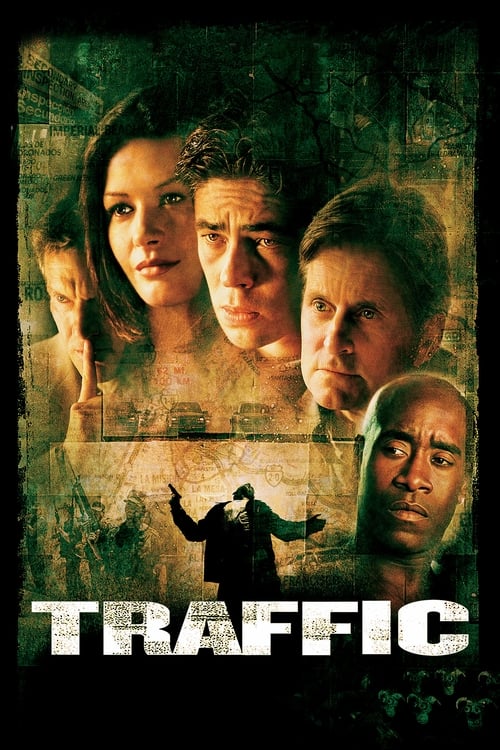
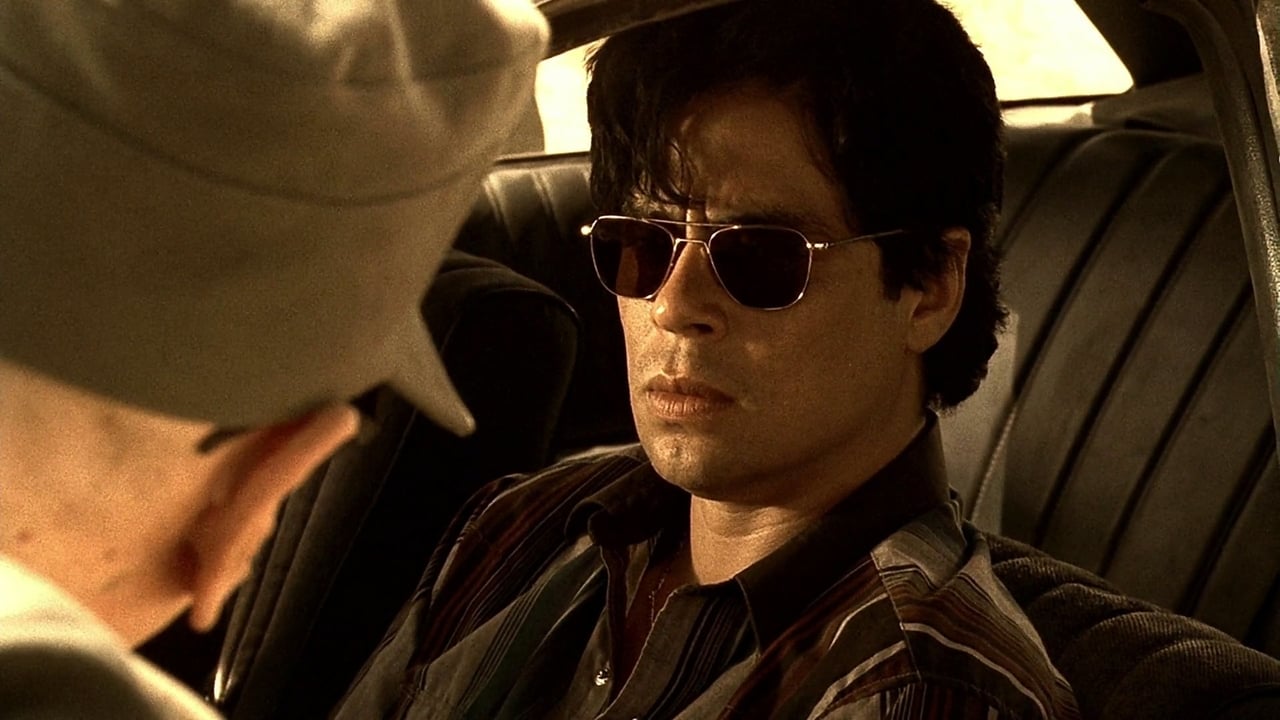
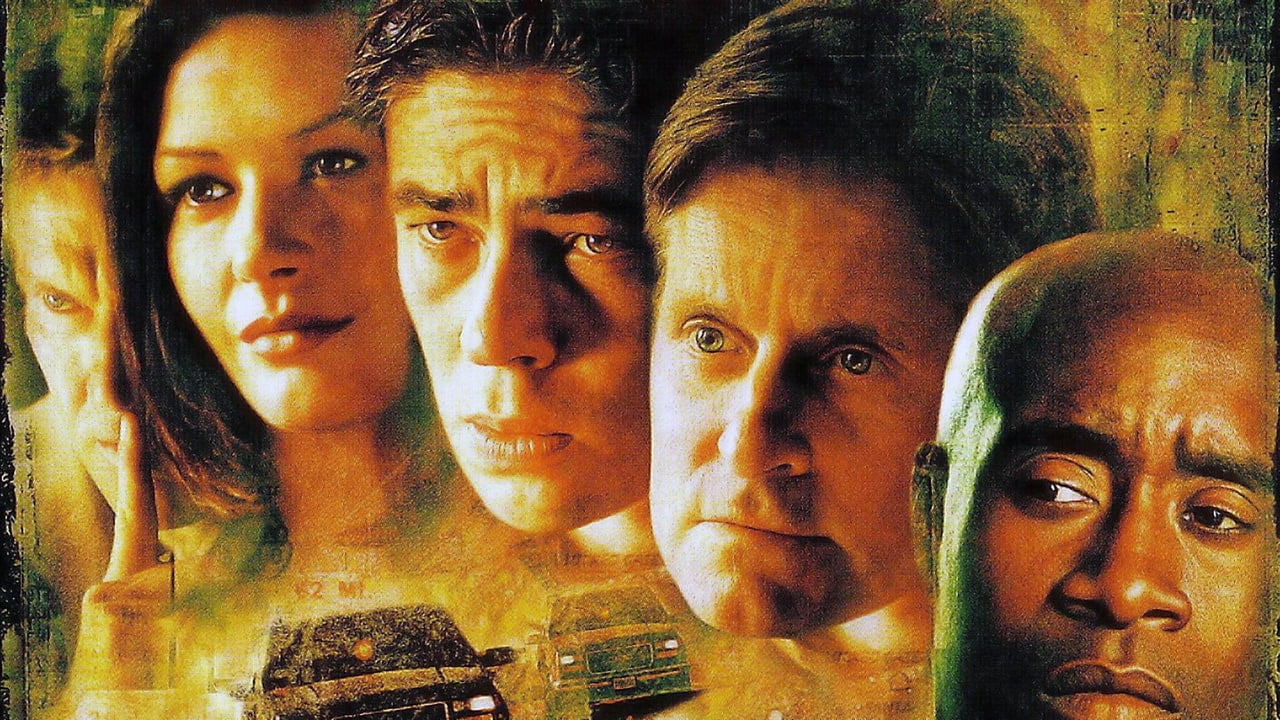
The first thing I remember about seeing Traffic in the theater wasn't the plot or the heavy-hitting cast. It was the color. In the year 2000, we were still getting used to films that didn't look "perfect," but Steven Soderbergh—acting as his own cinematographer under the pseudonym Peter Andrews—pushed it to a fascinating extreme. I remember leaning over to my friend and asking if the projector was broken because the Mexico scenes were so aggressively yellow and grainy. Turns out, I was just witnessing a director reinventing the visual language of the modern blockbuster.
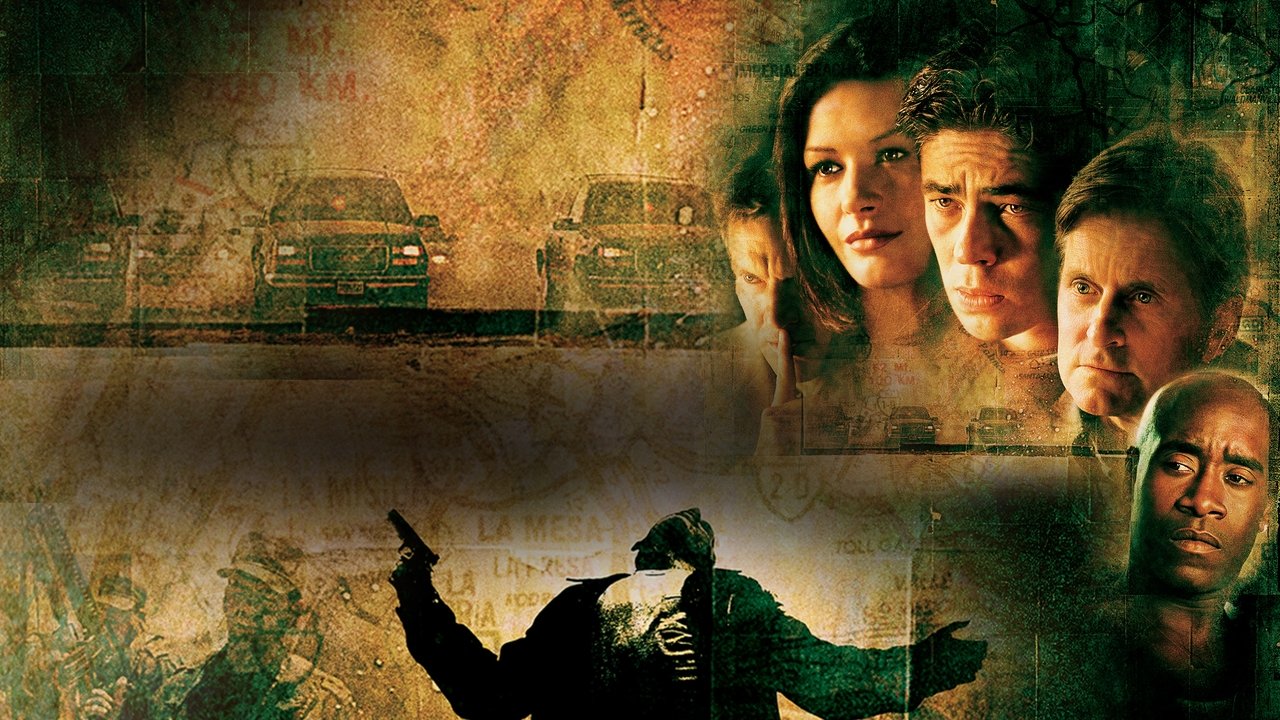
I revisited the film last week while sitting in a slightly lumpy beanbag chair that smelled vaguely of old cedar, and honestly, the "three-strip" color coding still works brilliantly. It’s a roadmap for a narrative that could easily have become a tangled mess. You have the tobacco-stained, sun-scorched yellow of Tijuana; the cold, antiseptic blue of Washington D.C.; and the lush, over-saturated glow of San Diego. It’s not just a stylistic quirk; it’s a psychological anchor.
A Blockbuster for Thinking Adults
It’s easy to forget now, but Traffic was a genuine phenomenon. It pulled in over $200 million at the box office—a staggering amount for a 147-minute, R-rated drama that is partially in Spanish and features a depressing amount of needles. It hit at a time when Hollywood was still willing to gamble big money on "prestige" stories that didn't involve capes or wizards. Looking back, it feels like the pinnacle of the "Indie-as-Mainstream" movement that defined the late 90s and early 2000s.
The film handles the "War on Drugs" not as a series of action set-pieces, but as a systemic failure. We follow Michael Douglas as Robert Wakefield, a conservative judge appointed as the nation's new drug czar. Douglas plays Wakefield with a wonderful, brittle dignity that slowly cracks as he realizes his own daughter, played with terrifying vulnerability by Erika Christensen, is spiraling into freebase cocaine addiction. Seeing Gordon Gekko look completely powerless in his own suburban hallway is a stroke of casting genius.
Simultaneously, we’re in the trenches with Benicio del Toro as Javier Rodriguez, a Mexican cop trying to stay honest in a landscape where "honesty" is a death sentence. Del Toro won the Oscar for this, and he deserved it. He communicates more with a tired squint and a heavy sigh than most actors do with a five-minute monologue. He is the moral center of a world that has no center.
The Human Cost of High Profit

While the DC and Mexico storylines provide the grit, the San Diego thread offers a different kind of tension. Catherine Zeta-Jones plays Helena Ayala, the pregnant, pampered wife of a drug kingpin who has no idea where the money comes from—until the DEA, led by a wonderfully dogged Don Cheadle and Luis Guzmán, kicks in her door.
Zeta-Jones’s transformation from a "trophy wife" to a cold-blooded protector of her lifestyle is one of the film's most chilling arcs. It reminds me that the most dangerous person in the room is often the one who has the most to lose at the country club. Her chemistry with the rest of the cast is non-existent primarily because her character is on her own island, which only highlights the isolation of the upper class.
The script by Stephen Gaghan is a marvel of economy. Even with dozens of characters, you never feel lost. He avoids the "meditation on" trap by keeping the stakes personal. When Michael Douglas is searching for his daughter in a drug den, the political implications of his job vanish; he’s just a father who failed to see what was happening under his own roof. It’s heavy stuff, but Soderbergh keeps the camera moving—literally. The handheld 35mm work gives the whole movie a nervous, caffeinated energy that prevents it from ever feeling like a lecture.
Behind the Grainy Lens
One of the coolest details about the production is that Soderbergh didn't just direct; he was the cameraman, lugging the equipment around himself to maintain that "fly-on-the-wall" intimacy. Because the film had a relatively modest $48 million budget for its scale, they had to be resourceful. Many of the people you see in the D.C. cocktail party scenes weren't actors; they were real politicians and lobbyists, including some actual U.S. Senators who probably didn't realize they were appearing in a film that would eventually make their policies look about as effective as a screen door on a submarine.
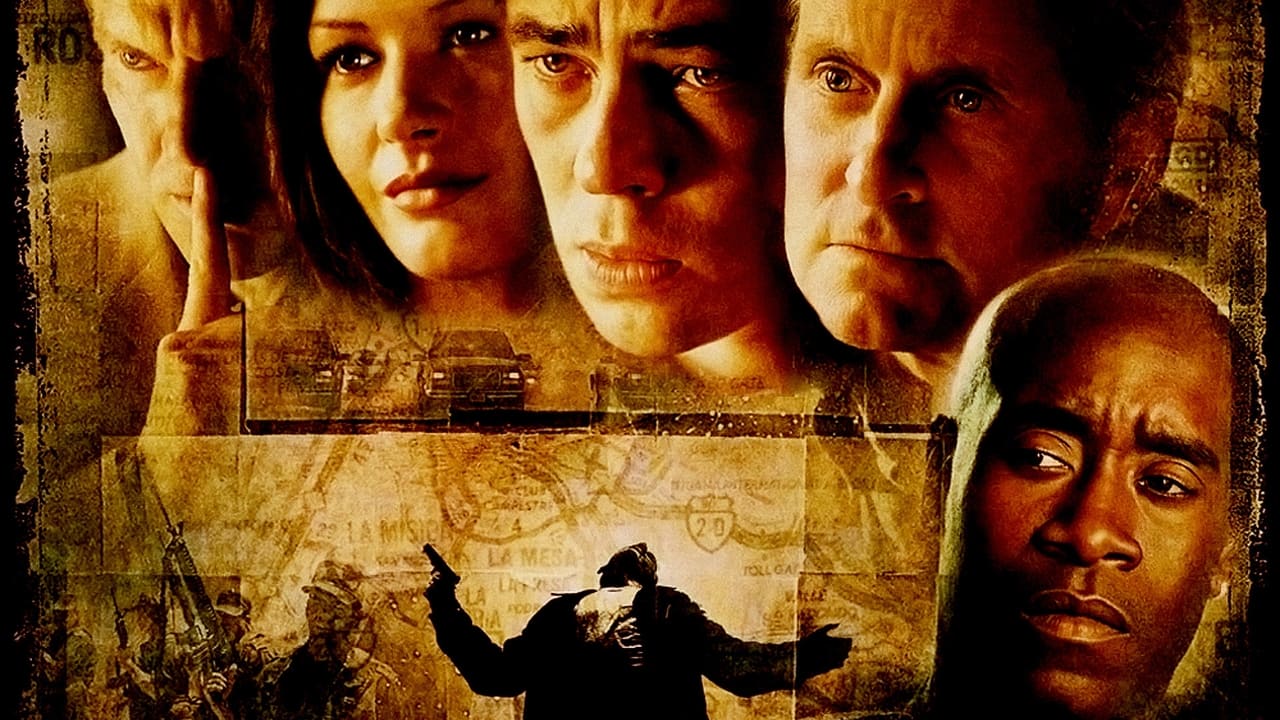
The film also captures that specific Y2K-era anxiety—the transition from the analog world to a more complex, interconnected digital age where borders were becoming porous and the "enemy" was no longer a country, but a marketplace.
Traffic is that rare beast: a commercial hit that refuses to provide a happy ending or an easy answer. It’s a dark, intense experience that manages to be wildly entertaining because it treats the audience like adults. It doesn't offer a "solution" to the drug trade; it just shows you the plumbing. It’s a film that demands your attention and earns it through sheer craft and some of the best ensemble acting of the last thirty years. If you haven't seen it since the DVD era, it’s time to head back into the grain.
Just be prepared for those Mexico scenes—they’re still just as yellow as you remember.
Keep Exploring...
-
Ocean's Eleven
2001
-

Side Effects
2013
-
A Time to Kill
1996
-
Primal Fear
1996
-

Sleepers
1996
-
Donnie Brasco
1997
-
The Talented Mr. Ripley
1999
-

Mystic River
2003
-

Falling Down
1993
-
Collateral
2004
-
21 Grams
2003
-
Cape Fear
1991
-
A Perfect World
1993
-
Ocean's Twelve
2004
-

Inside Man
2006
-
The Town
2010
-
Ocean's Thirteen
2007
-
Disclosure
1994
-
Strange Days
1995
-
Fargo
1996