A Beautiful Mind
"The most dangerous place is inside your head."
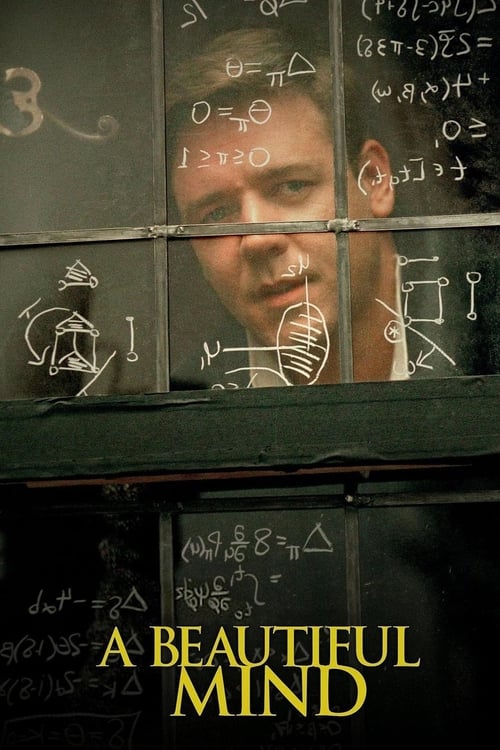
I remember the first time I saw John Nash staring at a window in a Princeton library, tracing patterns in the dust motes with a look of terrifying intensity. At the time, I was watching this on a DVD I’d borrowed from my uncle, which weirdly still had a "Be Kind, Rewind" sticker on the case despite being a disc. That little bit of technological confusion felt appropriate for a movie that spends two hours gaslighting its audience in the most prestige-heavy way possible.

The Math of Madness
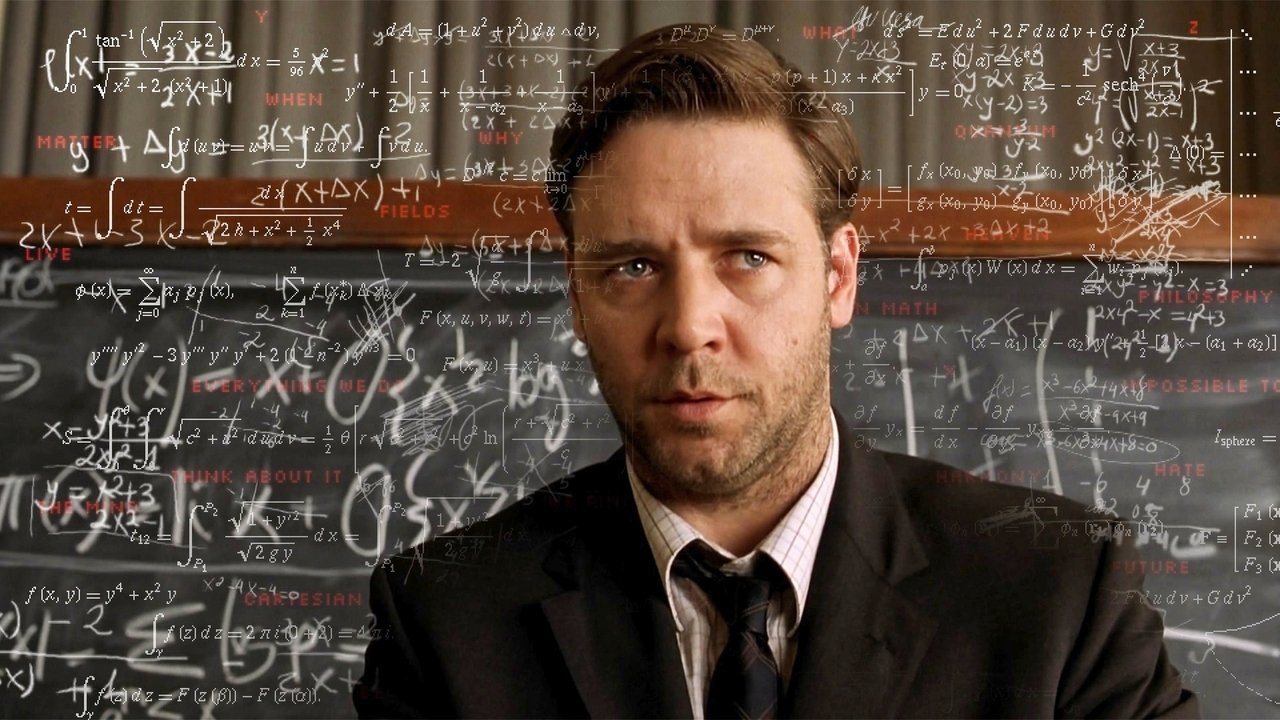
Russell Crowe was coming off the back-to-back highs of The Insider and Gladiator, and you can tell he was hungry for the hat trick. He trades the Roman leather for a series of increasingly rumpled cardigans, but he keeps that same physical presence. He plays Nash not as a "quirky" genius, but as a man literally vibrating with the effort of existing in a world that moves too slowly for his brain. I’ve always felt that Russell Crowe’s neck was far too thick for a math nerd, but he makes it work by leaning into the social awkwardness—the darting eyes, the stuttering cadence, the way he touches his forehead like he’s trying to keep his thoughts from leaking out.
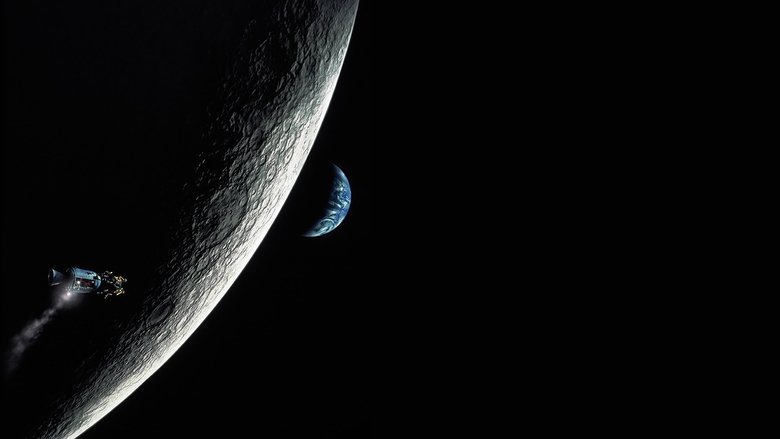
What’s fascinating looking back at this 2001 era of cinema is how it handled "the reveal." This was the tail end of the Sixth Sense and Fight Club hangover, where every major drama felt the need to pull the rug out from under the viewer. Director Ron Howard (who gave us the equally technical Apollo 13) manages the transition from a Cold War thriller into a psychological tragedy with a sleight of hand that still feels earned. He uses Roger Deakins (the lens master behind The Shawshank Redemption) to bathe the early scenes in an amber, nostalgic glow that feels safe—until it isn't.
The Connelly Factor
If Russell Crowe is the engine, Jennifer Connelly is the soul of the machine. Fresh off her haunting turn in Requiem for a Dream, she plays Alicia Nash with a steeliness that prevents the movie from dissolving into a "long-suffering wife" trope. There’s a scene involving a smashed bathroom mirror that remains one of the most gut-wrenching moments in 2000s drama. It’s no wonder she walked away with the Oscar; she’s the one who has to anchor the reality when the script by Akiva Goldsman (who wrote Cinderella Man) starts blurring the lines between what’s there and what’s projected.
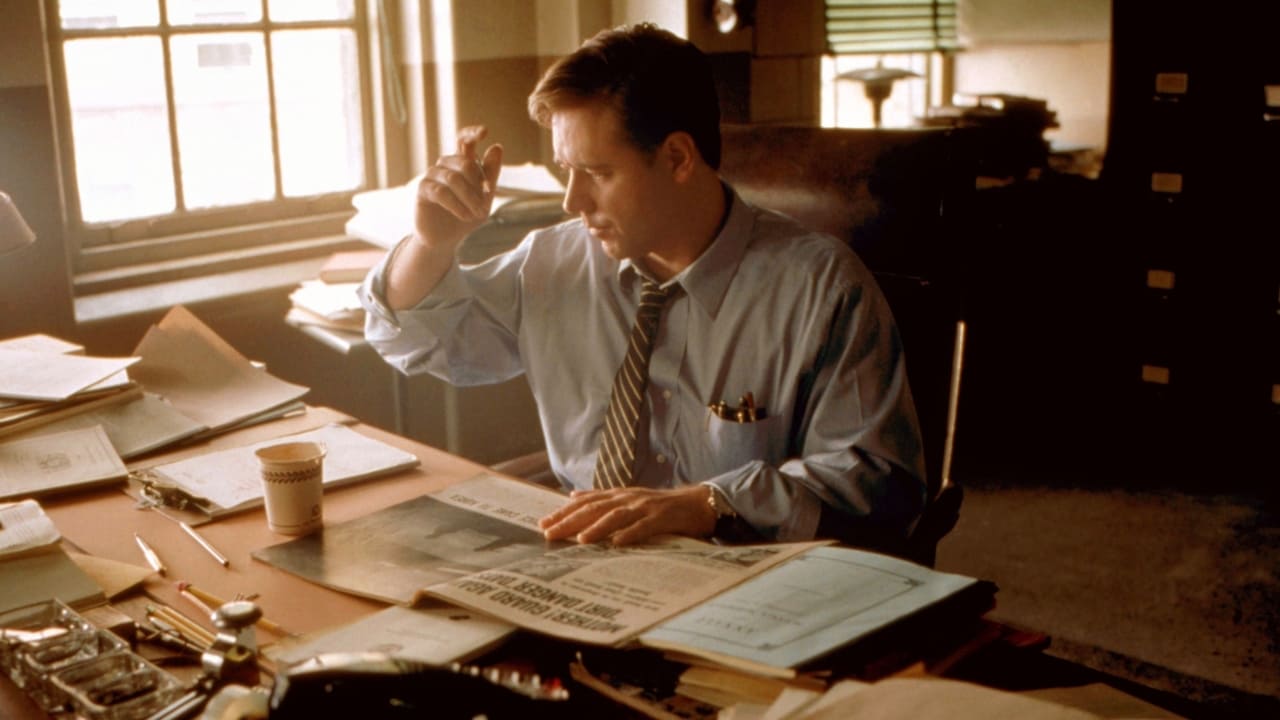
Then you have the "hallucinations." Paul Bettany (who had just charmed us in A Knight’s Tale) is the perfect "roommate," and Ed Harris (The Truman Show) does his best "men in black" routine with a gravelly authority that makes the conspiracy elements feel plausible. The chemistry between Paul Bettany and Crowe is so natural that when the truth is revealed, it doesn't just feel like a plot twist—it feels like a personal loss for the viewer. I genuinely missed that imaginary roommate.
The 2001 Prestige Machine
Looking back, A Beautiful Mind is the quintessential "Modern Classic" from that transitional period where Hollywood was still obsessed with the big, emotional biopic. This was released just months after 9/11, and I think audiences were uniquely primed for a story about an American genius overcoming internal "shadows" to find peace. It was a massive hit, raking in over $300 million, which is wild to think about today—try pitching a $60 million math drama to a studio executive in 2024 without mentioning a multiverse.
The film swept the 74th Academy Awards, famously beating out the first Lord of the Rings for Best Picture. While the fantasy nerds (myself included) were outraged at the time, there’s no denying the craft on display here. Apparently, the real John Nash visited the set and was so impressed by Crowe’s mimicry of his mannerisms that he said it was like seeing a ghost. Turns out, the "Pen Ceremony" at Princeton—one of the film's most famous scenes—was actually entirely made up for the movie. I read somewhere that Princeton graduates now get asked about it constantly, much to their annoyance.
Behind the Chalkboard
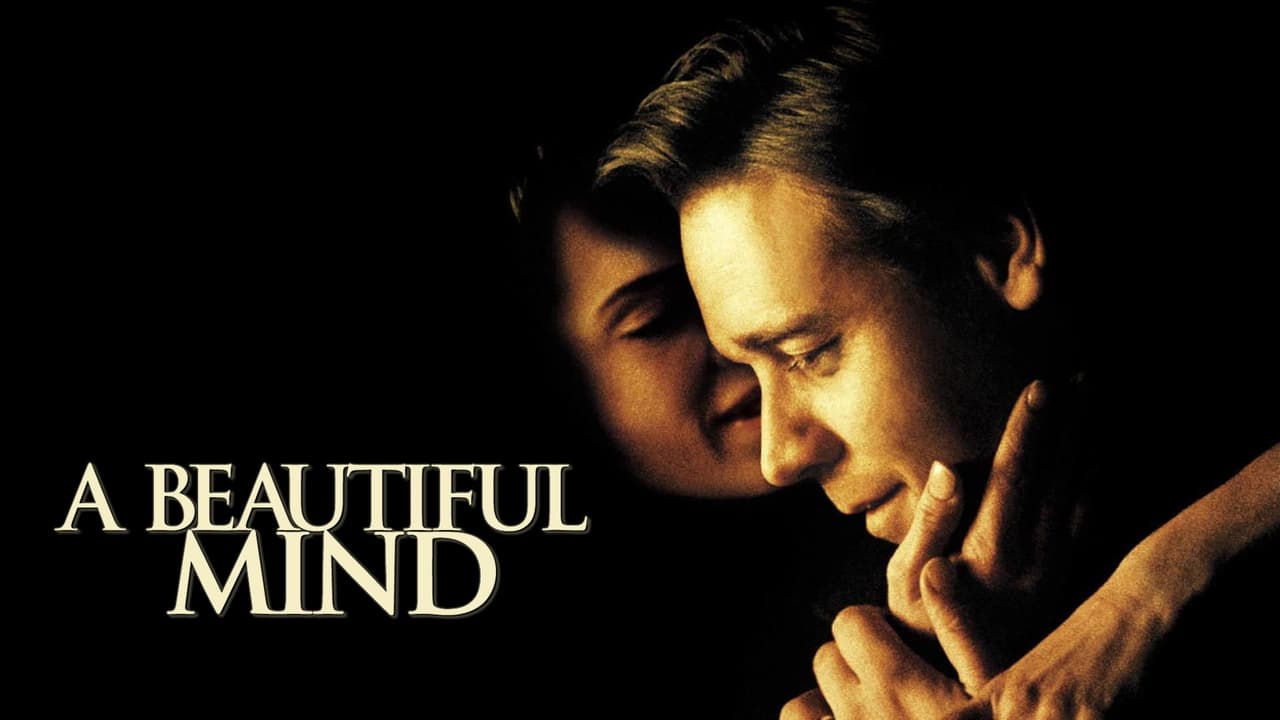
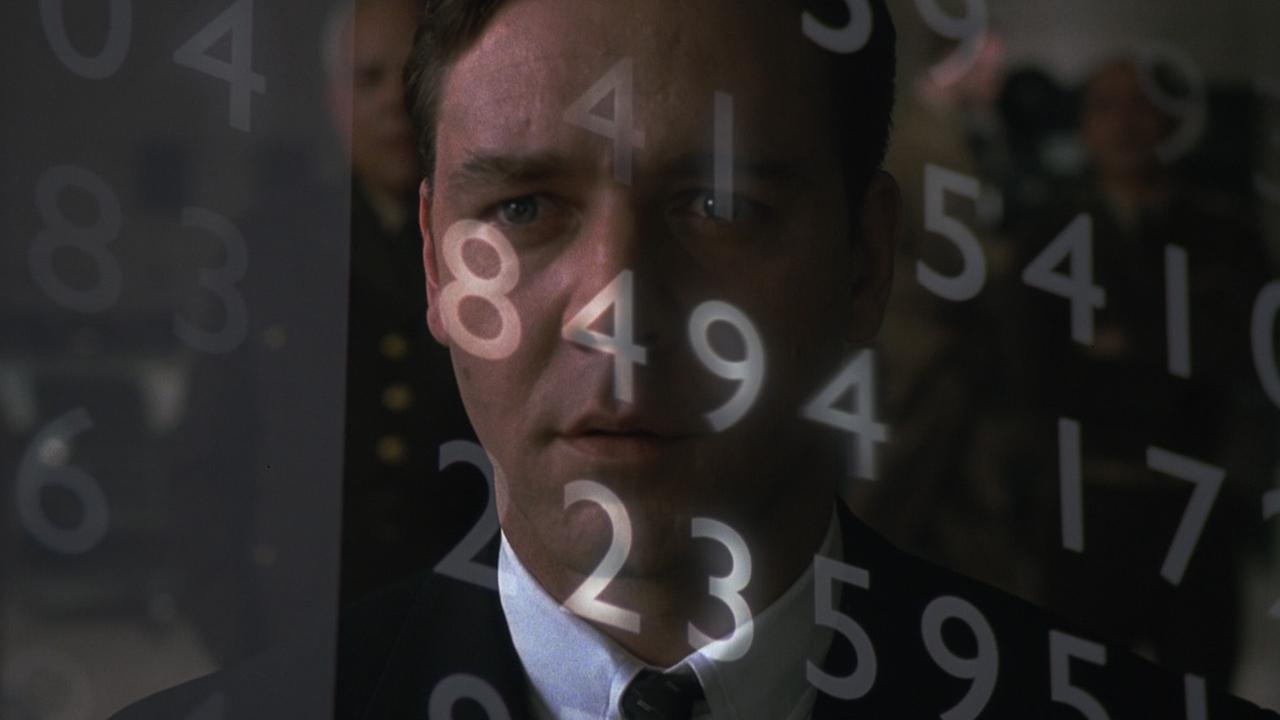
I’ve always been a sucker for the way this movie visualizes thought. In an era before CGI was used for everything, the way Ron Howard uses light and simple overlays to show Nash "solving" codes feels tactile and real. It’s a "prestige" film that doesn't feel like homework. Even the score by James Horner (Titanic) uses these fluttering, mathematical piano cycles that mimic the frantic pace of a brain that can't turn off.
Does it take liberties with the truth? Absolutely. The real John Nash’s life was significantly more complicated, darker, and less "Hollywood" than what we see on screen. Biopics that lie to your face are often more honest than the ones that stick to the facts, because they’re trying to capture a feeling rather than a Wikipedia entry. A Beautiful Mind captures the feeling of a brilliant mind being its own worst enemy, and it does it with a grace that hasn't faded.
Ultimately, this is the film that proved Russell Crowe could do more than just swing a sword and that Ron Howard could handle genuine darkness without losing his populist touch. It’s a beautifully shot, expertly acted piece of "Dad Cinema" that still has the power to wreck you by the time the Nobel Prize speech rolls around. If you haven't revisited it since the days of physical rental stores, it's time to see those patterns again.
Keep Exploring...
-

Cinderella Man
2005
-

Titanic
1997
-
Apollo 13
1995
-

Gladiator
2000
-
Far and Away
1992
-

A Walk to Remember
2002
-
Eternal Sunshine of the Spotless Mind
2004
-
The Notebook
2004
-
Stepmom
1998
-
A Knight's Tale
2001
-

Enemy at the Gates
2001
-

Forrest Gump
1994
-
In the Mood for Love
2000
-

Master and Commander: The Far Side of the World
2003
-

Before Sunset
2004
-

Pride & Prejudice
2005
-
The Next Three Days
2010
-

Little Children
2006
-
The Lake House
2006
-
Before Sunrise
1995