Behind Enemy Lines
"Survival is the only mission that matters."
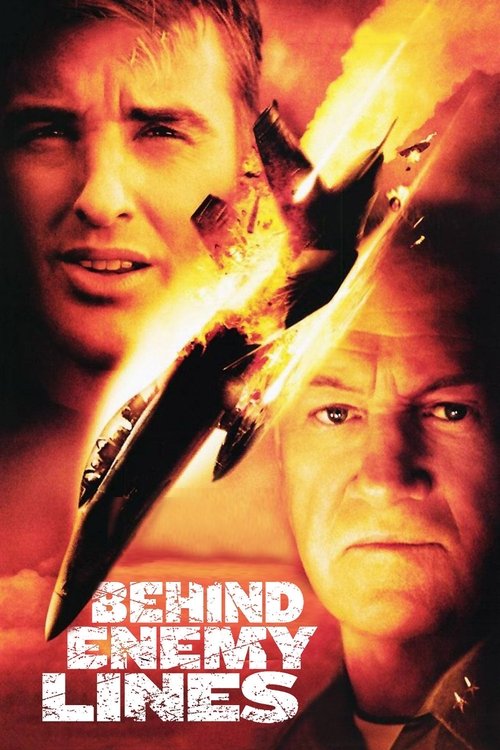
If you close your eyes and try to picture the "Blue Tracksuit Guy" from Grand Theft Auto IV, you’re actually picturing Vladimir Mashkov in Behind Enemy Lines. It is one of those strange cinematic ripples where a moderately successful 2001 action flick leaves a permanent mark on pop culture without everyone realizing where it came from. I recently revisited this one on a Tuesday night while nursing a lukewarm Gatorade and a case of mild insomnia, and honestly, it’s a fascinating time capsule of a very specific moment in Hollywood history.
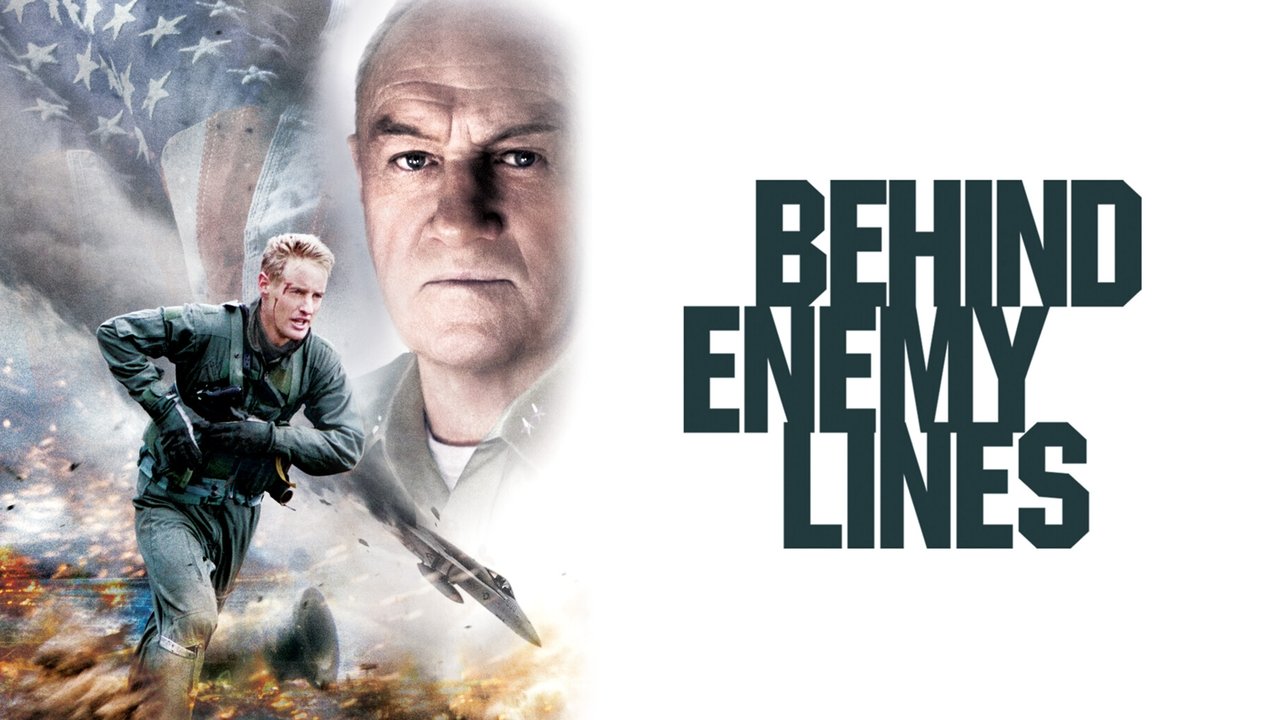
Released just two months after 9/11, Behind Enemy Lines accidentally became the vanguard of a new wave of American military cinema. While it was filmed well before the world changed, its story of a stranded American pilot being hunted through the snowy, war-torn landscape of Bosnia hit a raw nerve. It felt immediate, desperate, and—thanks to director John Moore—unapologetically loud.
The MTV Aesthetic of War
John Moore (who later gave us the Omen remake and the ill-fated A Good Day to Die Hard) came from the world of commercials and music videos, and it shows in every single frame. This movie doesn't just have cinematography; it has an attitude. Brendan Galvin’s camera work is a frantic collage of crash-zooms, shutter-angle manipulation, and speed-ramping. In retrospect, it’s basically a $40 million Nike commercial with landmines, and I mean that as a compliment to its energy.
The centerpiece of the film—the surface-to-air missile (SAM) chase—remains one of the most effective action sequences of the early 2000s. It’s a masterclass in building dread through sound design. You hear the mechanical whine of the missiles before you see them, and when the ejection sequence finally happens, the film uses this weird, stuttering slow-motion that makes you feel the disorientation of Lt. Chris Burnett. Looking back, this was the era where CGI was starting to take over, but Behind Enemy Lines still feels grounded in the dirt. When things explode, they look heavy. When Owen Wilson slides down a mountain of slate, you can almost feel the skin coming off his palms.
The "Wow" Factor: Wilson as Action Hero
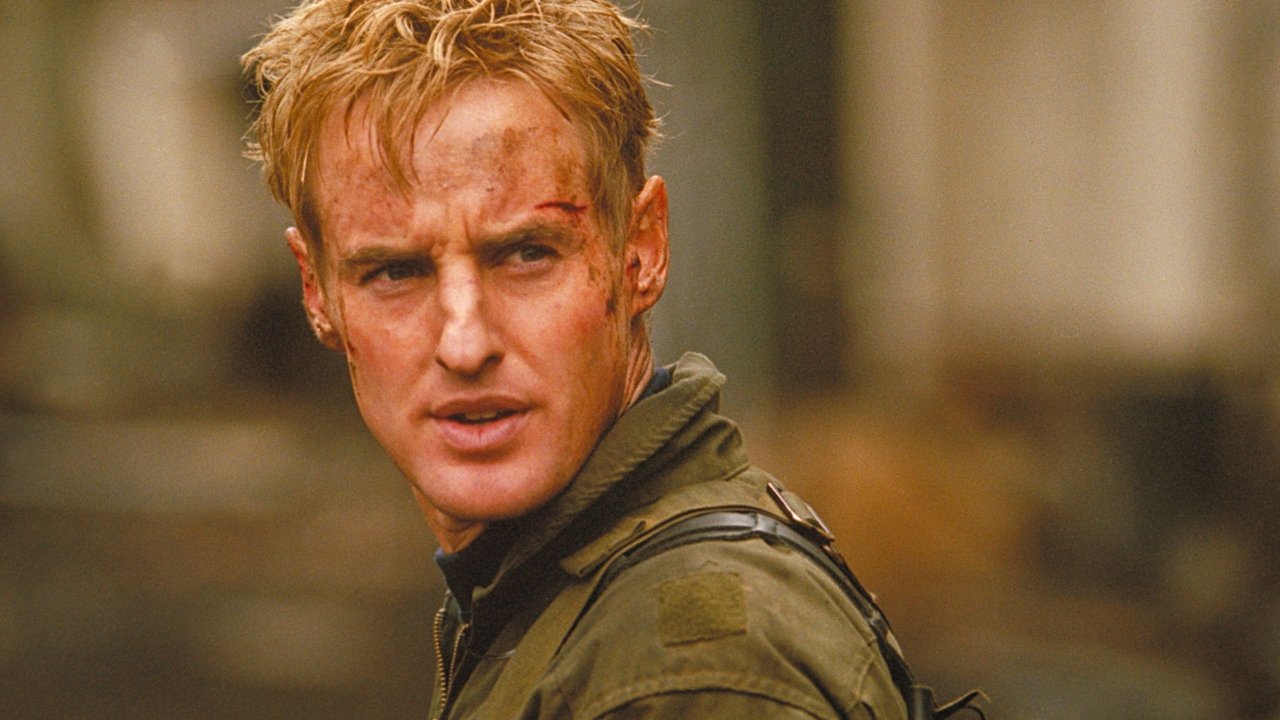
The most "2001" thing about this movie is the casting. At the time, Owen Wilson was the quirky sidekick from Shanghai Noon or the narcissistic model from Ben Stiller's Zoolander. Seeing him lead a gritty war thriller was a massive pivot. He plays Burnett not as a super-soldier, but as a guy who is profoundly annoyed that he’s about to die in a place he can’t find on a map.
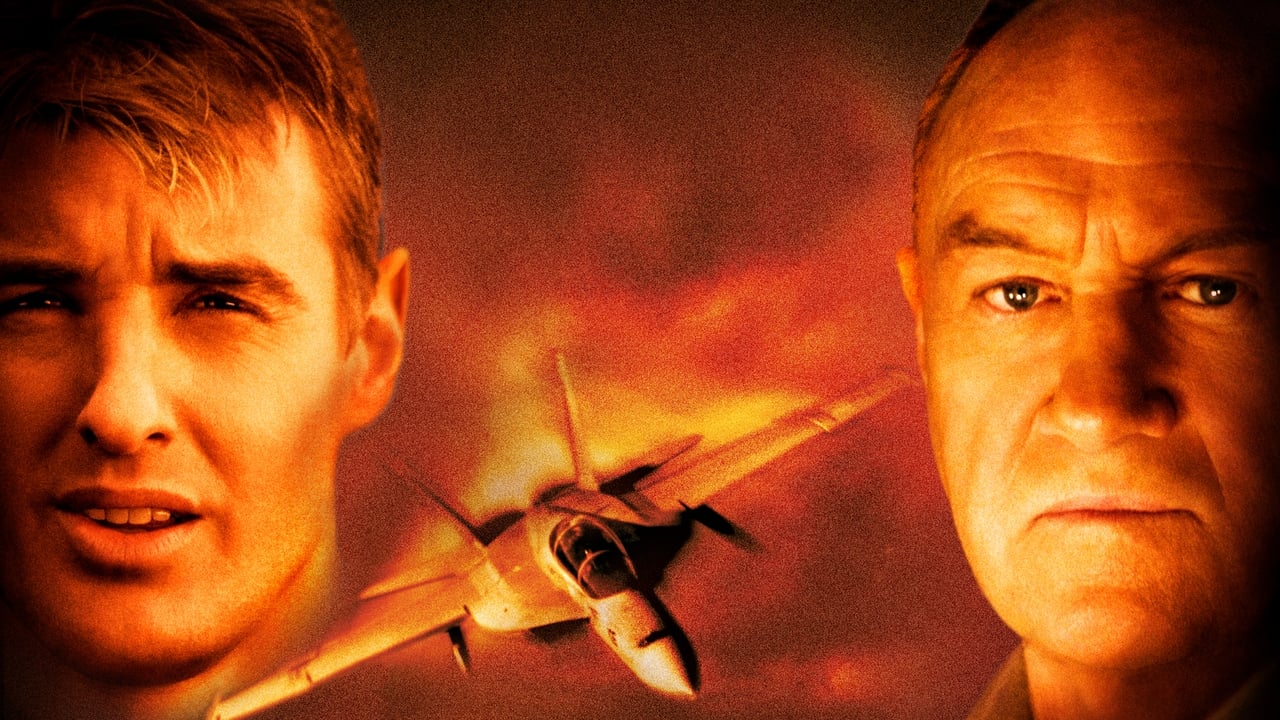
Wilson brings a vulnerability that most action stars of the 80s would have traded for a bicep curl. He spends 90% of the movie running, hiding, and looking genuinely terrified. It’s a performance that works because it lacks the invincibility of a Tom Cruise or Arnold Schwarzenegger. On the flip side, you have Gene Hackman as Admiral Reigart. Gene Hackman could play "stern man in a command center" in his sleep, but he brings a weary, gravel-voiced gravitas that the movie desperately needs to balance out the hyperactive editing. Watching him spar with the NATO bureaucracy is a reminder of why he was the king of the "authority figure with a conscience" trope in films like The French Connection or Crimson Tide.
A Relic of the Transition Era
What’s most striking about watching this now is how it straddles the line between the analog past and the digital future. We see the birth of the "shaky cam" that would eventually be perfected (or overused) by the Bourne franchise. It’s also a film that predates the hyper-political complexity of later war films. It’s a simple rescue story, but it’s told with a visual language that felt revolutionary at the time.
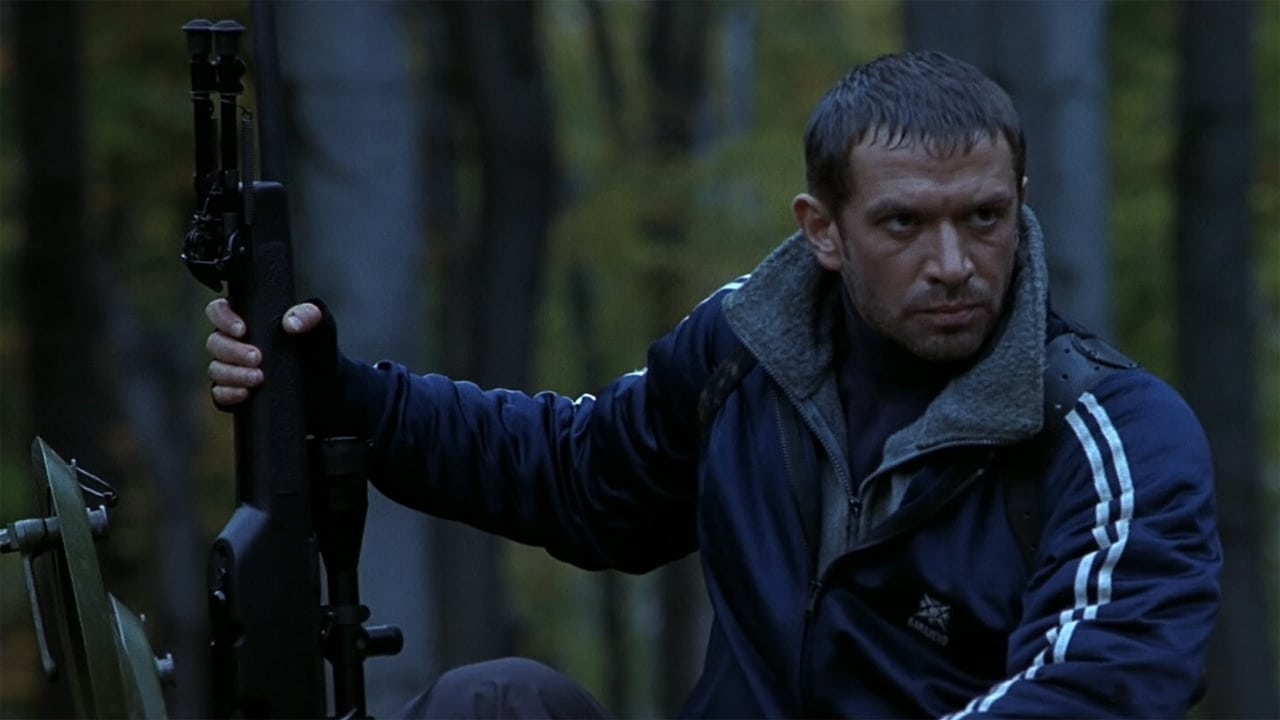
I remember watching this in a theater where the air conditioning was cranked so high I felt like I was in the Bosnian wilderness myself, and that tactile memory sticks with me. The film doesn't ask much of you. It doesn't want to "meditate" on anything; it wants to show you a guy in a blue tracksuit (Vladimir Mashkov’s "Tracker") being the coolest, most silent hunter on celluloid. The Tracker is a phenomenal villain—no monologues, no grand plan, just a relentless professional with a cigarette and a sniper rifle.
In the grand scheme of war cinema, Behind Enemy Lines isn't Saving Private Ryan, and it isn't trying to be. It’s a high-octane survival thriller that captures the exact moment Hollywood decided that "cool" was more important than "clutter-free." While the editing might give some modern viewers a headache, the practical stunt work and the sheer commitment of the cast keep it from being a total relic. It’s the kind of movie that makes you miss the days when a simple 100-minute chase could command a blockbuster budget. If you find it on a streaming service some rainy Sunday, give it a shot—if only to see where Niko Bellic got his fashion sense.
Keep Exploring...
-
Crimson Tide
1995
-
Flight of the Phoenix
2004
-
'71
2014
-

How I Live Now
2013
-
Courage Under Fire
1996
-
Breakdown
1997
-
Walking Tall
2004
-
Undisputed II: Last Man Standing
2006
-
The Quick and the Dead
1995
-
Executive Decision
1996
-
Conspiracy Theory
1997
-
Volcano
1997
-
The Siege
1998
-
Payback
1999
-
The Last Castle
2001
-

Collateral Damage
2002
-
The Sum of All Fears
2002
-
Basic
2003
-
The Hunted
2003
-
The Protector
2005