Cowboy Bebop: The Movie
"Jazz, smoke, and a bounty hunter’s bad luck."

I once spent three hours in a 2003 internet forum arguing whether Spike Spiegel’s hair is dark green or black, a debate that remains the most productive use of my early twenties. Watching Cowboy Bebop: The Movie today, I realized that the color doesn't matter as much as the vibe. Re-watching this film is like slipping into a well-worn leather jacket that still smells faintly of cigarette smoke and expensive jazz. Released in that strange, transitional pocket of 2001, it arrived just as the world was shifting from the analog warmth of the 90s into a colder, more digital reality, and the film feels like it’s caught in that exact same existential gears.
The Last Stand of the Hand-Drawn Hero
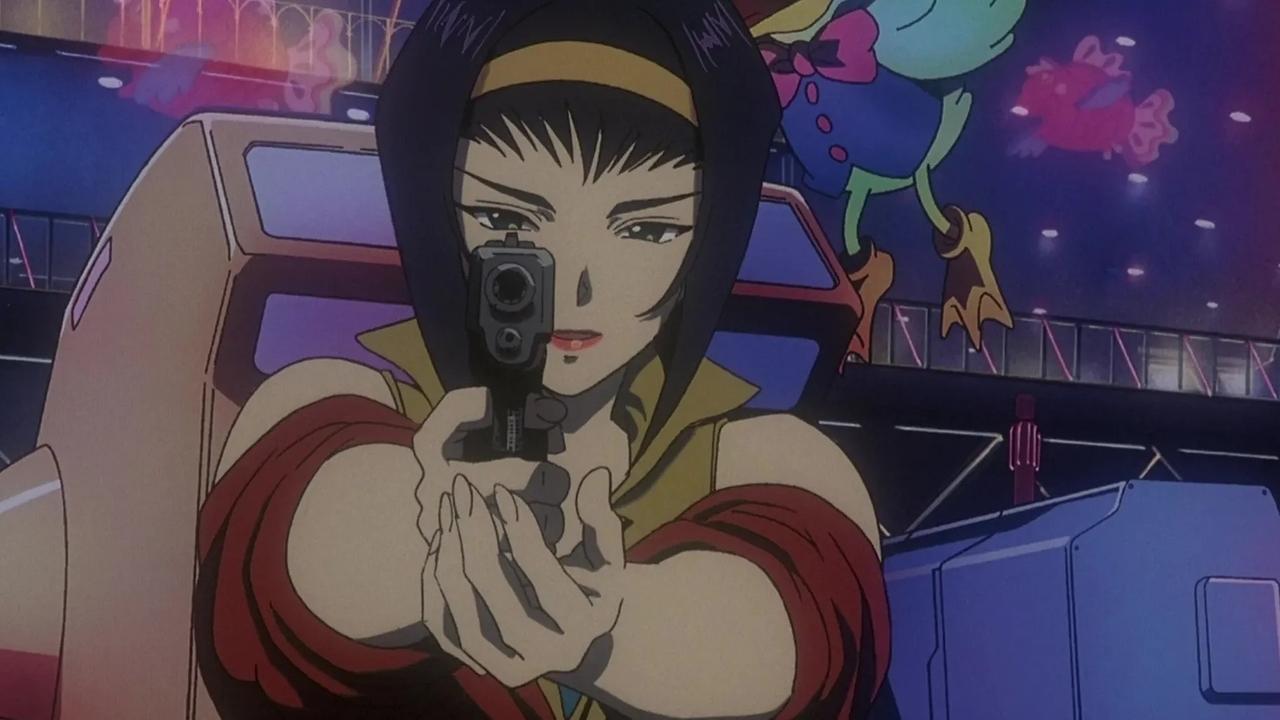
In an era where Shrek was signaling the death knell for traditional animation, Shinichiro Watanabe and his team at studio Bones delivered what might be the peak of the medium. Looking back, the detail here is borderline obsessive. This isn't just "good for its time"—the fluidity of the hand-to-hand combat is better than 90% of the CGI-choked action we get today. When Koichi Yamadera (voicing Spike) lets out that weary sigh before a fight, you feel the weight of his bones.
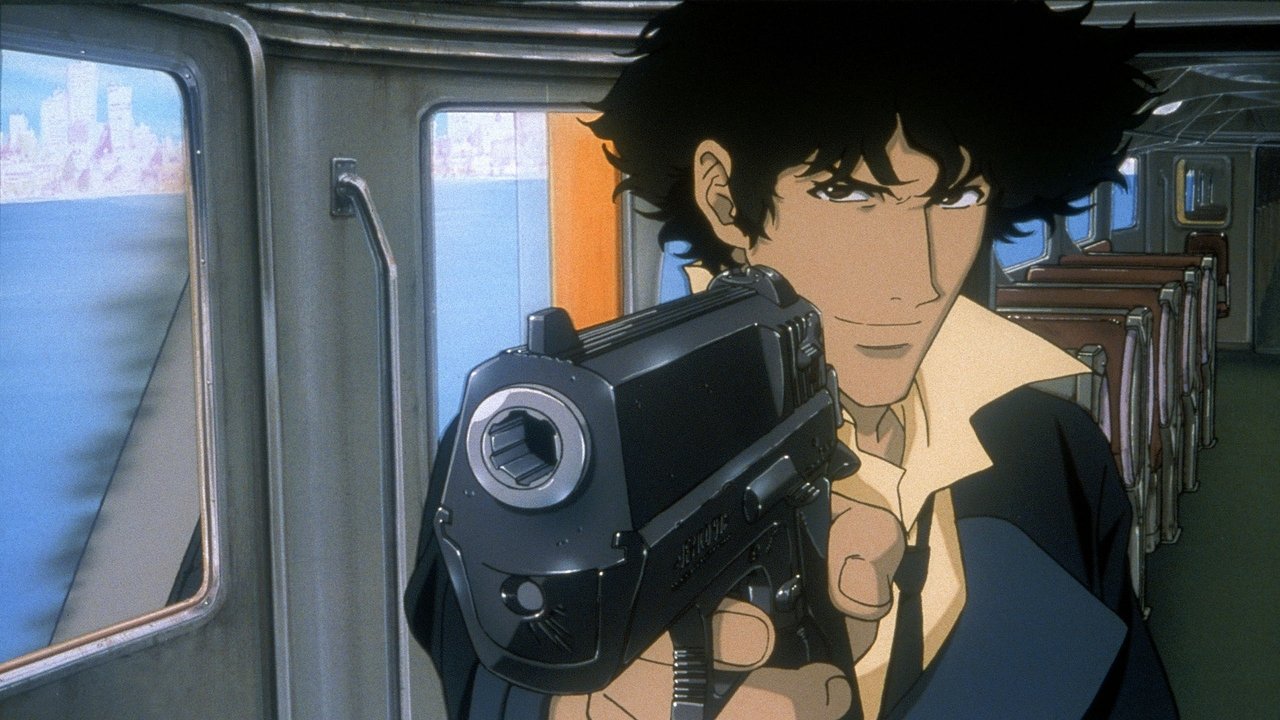
The action choreography isn't just about punches; it’s about geography. The legendary train fight sequence is a masterclass in using tight spaces to create tension. There’s a physical weight to every movement. When Spike engages in Jeet Kune Do, it’s not a flurry of "power-ups"—it’s a desperate, sweaty scramble for survival. "The film’s plot is basically a feature-length excuse for Spike Spiegel to look cool while failing to actually catch anyone," and honestly, I wouldn’t have it any other way. It captures that specific early-2000s fascination with "cool" that was effortless rather than marketed.
A Post-9/11 Ghost Story
Though it premiered in Japan just weeks before September 11th, the film’s Western release was inextricably linked to that cultural shadow. The plot—a terrorist releasing a mysterious pathogen into a civilian population on Mars—felt uncomfortably prescient. But where Hollywood would eventually respond with gritty realism or superhero escapism, Bebop went cerebral.
The villain, Vincent (voiced by Mickey Curtis), isn't your standard "burn the world" megalomaniac. He’s a man who has lost the ability to distinguish between dreams and reality, haunted by glowing golden butterflies that only he can see. He’s a mirror to Spike. Both are ghosts wandering through a world that’s moving too fast for them. The film asks a genuinely heavy question: if you can't tell the difference between a dream and the waking world, does it matter which one you’re in? It’s a very Y2K-era anxiety—the feeling that reality is becoming increasingly simulated and thin.
The Crew and the Chaos
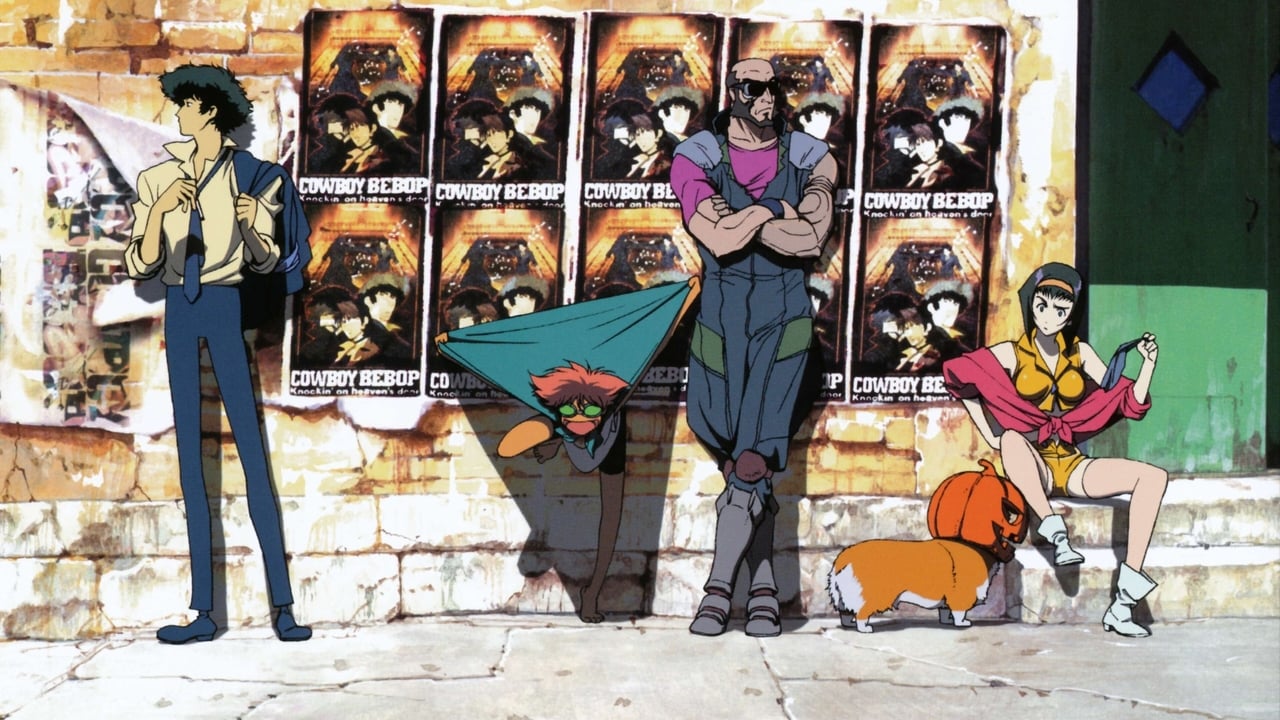
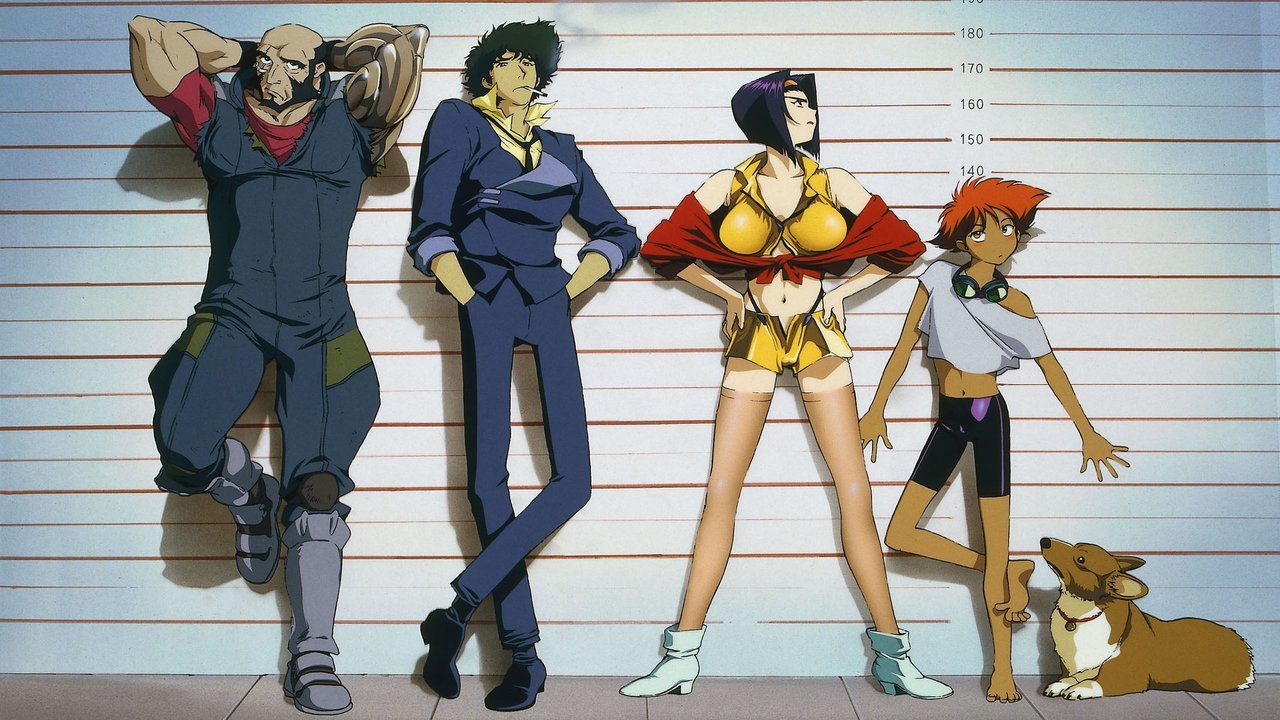
The joy of the movie is seeing the "family" back together. Jet Black (the late, great Unsho Ishizuka) remains the grumpy, bonsai-clipping dad we all need, while Megumi Hayashibara brings a sharp, desperate edge to Faye Valentine that reminds us she’s more than just a femme fatale trope. And then there’s Ed. Aoi Tada captures the pure, uninhibited chaos of Edward Wong Hau Pepelu Tivruski IV so well that you almost forget how much she should technically clash with the film’s noir tone. "Edward is a walking chaotic-neutral fever dream," providing the necessary levity to keep the film from sinking into its own philosophical gloom.
One of the most impressive "new" additions is Electra, voiced by Ai Kobayashi. She isn't just a love interest or a sidekick; she’s a professional who holds her own against Spike in a way few characters ever did in the series. Her presence adds a layer of maturity to the story, grounding the more fantastical elements of the virus plot.
Stuff You Didn't Notice
Interestingly, the film’s "Mars" is clearly modeled after Moroccan architecture, specifically the streets of Casablanca. The production team actually traveled there for a location scout, which is why the city feels lived-in and dusty rather than like a sterile sci-fi set. It’s a perfect example of how the era’s "world-building" relied on physical observation rather than just digital imagination.
Also, keep your ears open for the score. Yoko Kanno and her band, Seatbelts, outdid themselves here. The track "Ask DNA" is an all-time banger, but it’s the quieter, Arabic-influenced pieces that really set the mood. In the DVD era, this was the disc you used to show off your surround sound system. If the opening credits don't make you want to start a street fight or buy a trumpet, you might need to check your pulse.
Ultimately, Cowboy Bebop: The Movie is a rare beast: a spin-off that justifies its own existence by being better than most standalone films. It captures a moment in time when anime was becoming a global powerhouse, yet it remains stubbornly personal and melancholic. It’s a film about being lonely in a crowded city, about the weight of the past, and about the beauty of a well-timed punch. Whether you’re a die-hard fan of the show or a newcomer looking for a high-octane noir, this is a masterpiece of the "Modern Cinema" era that has aged like a fine bourbon. Just don't expect them to catch the bounty—that’s not really the point, is it?
Keep Exploring...
-

Evangelion: 1.0 You Are (Not) Alone
2007
-
Evangelion: 2.0 You Can (Not) Advance
2009
-
Neon Genesis Evangelion: The End of Evangelion
1997
-

Dragon Ball Z: Fusion Reborn
1995
-
The Animatrix
2003
-
Justice League: The Flashpoint Paradox
2013
-
Final Fantasy VII: Advent Children
2005
-

Evangelion: 3.0 You Can (Not) Redo
2012
-
Evangelion: 3.0+1.0 Thrice Upon a Time
2021
-

Ghost in the Shell
1995
-
Batman Beyond: Return of the Joker
2000
-

Dragon Ball Z: Broly - The Legendary Super Saiyan
1993
-
Resident Evil: Damnation
2012
-
Dragon Ball Z: Battle of Gods
2013
-

Superman/Shazam!: The Return of Black Adam
2010
-
Batman: The Dark Knight Returns, Part 1
2012
-
Justice League: Doom
2012
-

Batman: The Dark Knight Returns, Part 2
2013
-
The Girl Who Leapt Through Time
2006
-
Ghost in the Shell 2: Innocence
2004