Enemy at the Gates
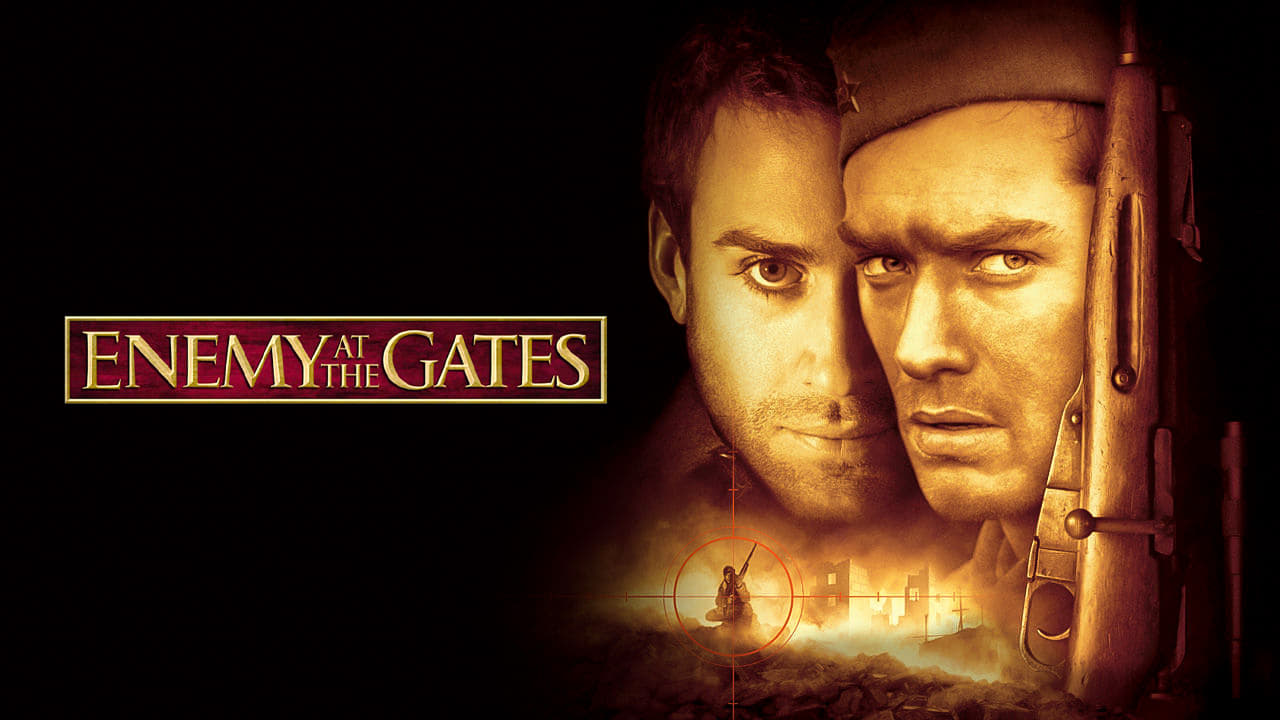
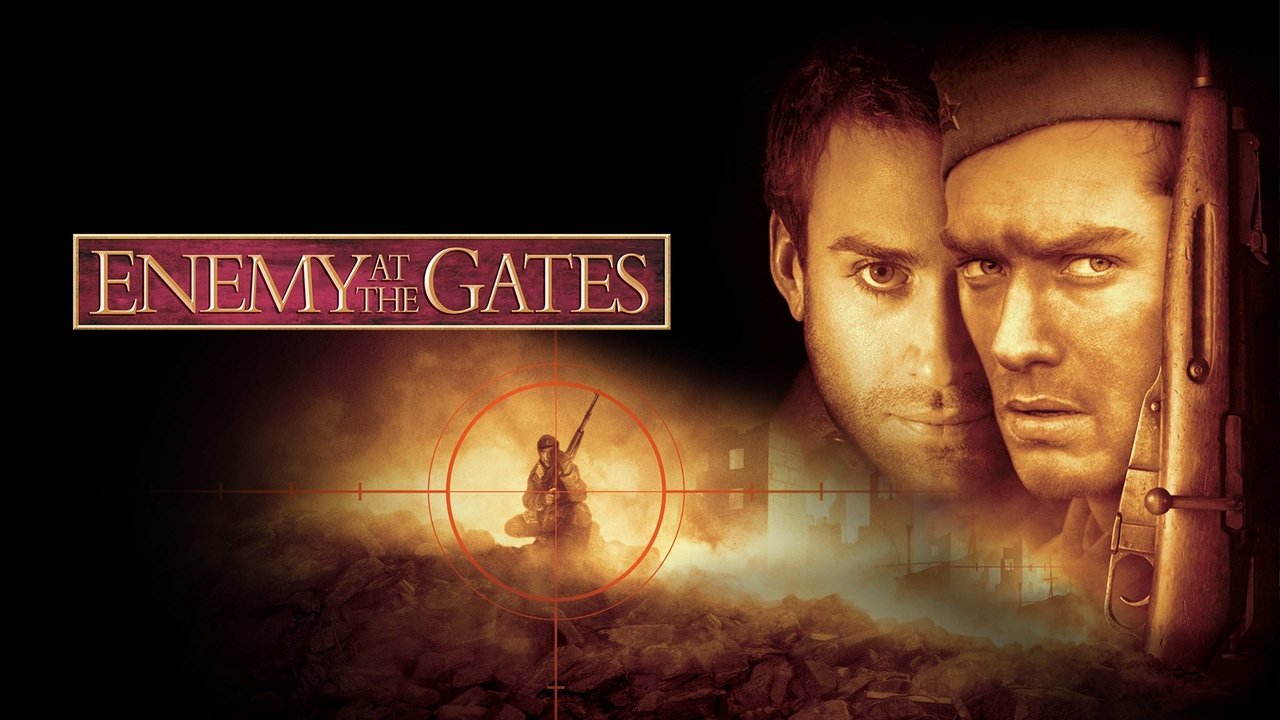
"Two scopes. One city. No room for error."
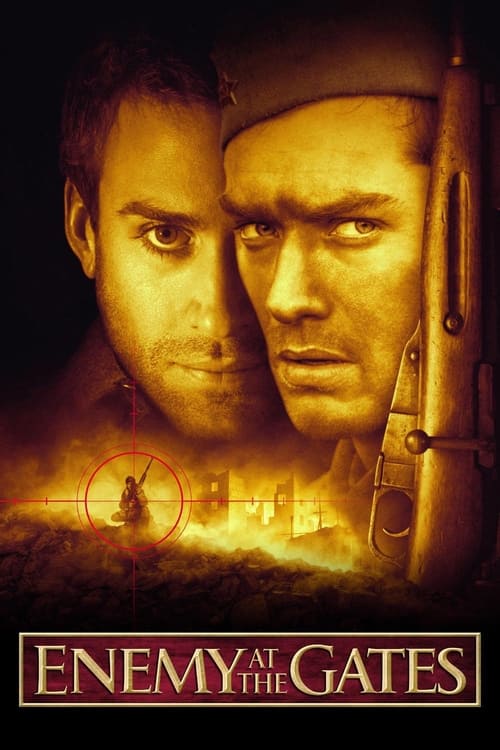
The opening ten minutes of Enemy at the Gates are a panic attack rendered in 35mm. We see the Volga River not as a waterway, but as a killing floor. Young Russian conscripts are packed into rowboats, strafed by Stukas, and then handed either a rifle or a five-round clip of ammunition—but rarely both. If you have the bullets, you follow the man with the gun. When he dies, you pick it up. It is a terrifying, claustrophobic introduction to the Battle of Stalingrad, capturing the sheer, industrial-scale waste of human life that defined the Eastern Front.
I first watched this film on a scratched DVD while nursing a mild case of food poisoning from a questionable gas station sandwich, and even through a haze of nausea, that opening sequence pinned me to the couch. It felt like director Jean-Jacques Annaud was trying to out-Spielberg Saving Private Ryan, trading the sandy chaos of Omaha Beach for the frozen, soot-stained ruins of a city named after a dictator.
The Propaganda of the Scope
At the center of the rubble is Jude Law as Vassili Zaitsev, a humble shepherd from the Urals who happens to be a crack shot with a Mosin-Nagant. Law plays Vassili with a wide-eyed, quiet intensity—he’s a man who would rather be invisible, which is exactly what makes him a great sniper and a terrible celebrity. But 1942 Russia doesn't need soldiers; it needs myths. Enter Joseph Fiennes as Danilov, a political officer who realizes that "hope" is a more effective weapon than any artillery shell.
Fiennes is excellent here, portraying a man who is simultaneously idealistic and deeply cynical. He turns Vassili into a Soviet superstar through front-line newspapers, creating a folk hero to keep the demoralized Red Army from folding. It’s a fascinating look at the machinery of war-time PR, showing how a single person can be distilled into a symbol to serve a state's agenda.
The problem for the Germans is that symbols are hard to kill with conventional infantry. To solve the "Vassili Problem," they dispatch their own legend: Major König, played with chilling, aristocratic precision by Ed Harris. Harris is the secret weapon of this movie. He doesn't chew the scenery; he freezes it. With his pale eyes and steady hands, he represents the cold, professional efficiency of the Wehrmacht, providing a perfect foil to Law’s more instinctual, reactive survivalism.
A Duel in the Gray
When the film narrows its focus to the cat-and-mouse game between Jude Law and Ed Harris, it’s arguably the best sniper movie ever made. Annaud understands the geography of suspense—the way a person can be "hidden" in plain sight behind a pile of bricks or a piece of twisted rebar. There is a specific, agonizing tension in watching two men wait for hours for a single inch of movement.
However, the film stumbles when it tries to widen its scope beyond the rifles. We get a romantic subplot involving Rachel Weisz as Tania, a brave soldier who finds herself caught between Vassili and Danilov. Weisz does her best with the material, and she brings a necessary grit to the role, but the romantic triangle feels like it was mandated by a studio executive who was terrified that audiences wouldn't sit through two hours of men staring at each other through telescopes. It saps the momentum of the central duel and leads to a sex scene in a crowded barracks that is more awkward than intimate, regardless of the "war makes us desperate" justification.
Looking back from the 2020s, the "British Russian" phenomenon is also hard to ignore. This was a peak era for the "everyone in Europe speaks with an English accent" trope. You have Bob Hoskins playing Nikita Khrushchev with a Cockney-adjacent growl and Ron Perlman—appearing briefly as a veteran sniper—bringing his unmistakable American baritone to the mix. It doesn’t ruin the film, but it does lend the production a slightly theatrical, "Old Hollywood" feel that clashes with the grimy, realistic production design.
The Legend vs. The Reality
One of the coolest details about the production is the scale of the sets. Before the industry moved almost entirely to digital backlot shooting, Annaud had a massive, sprawling recreation of Stalingrad built at the Altes Lager near Berlin. You can feel the physical weight of the environment; when the characters are shivering, they look genuinely cold. The mud looks heavy. The dust feels like it’s coating your own lungs.
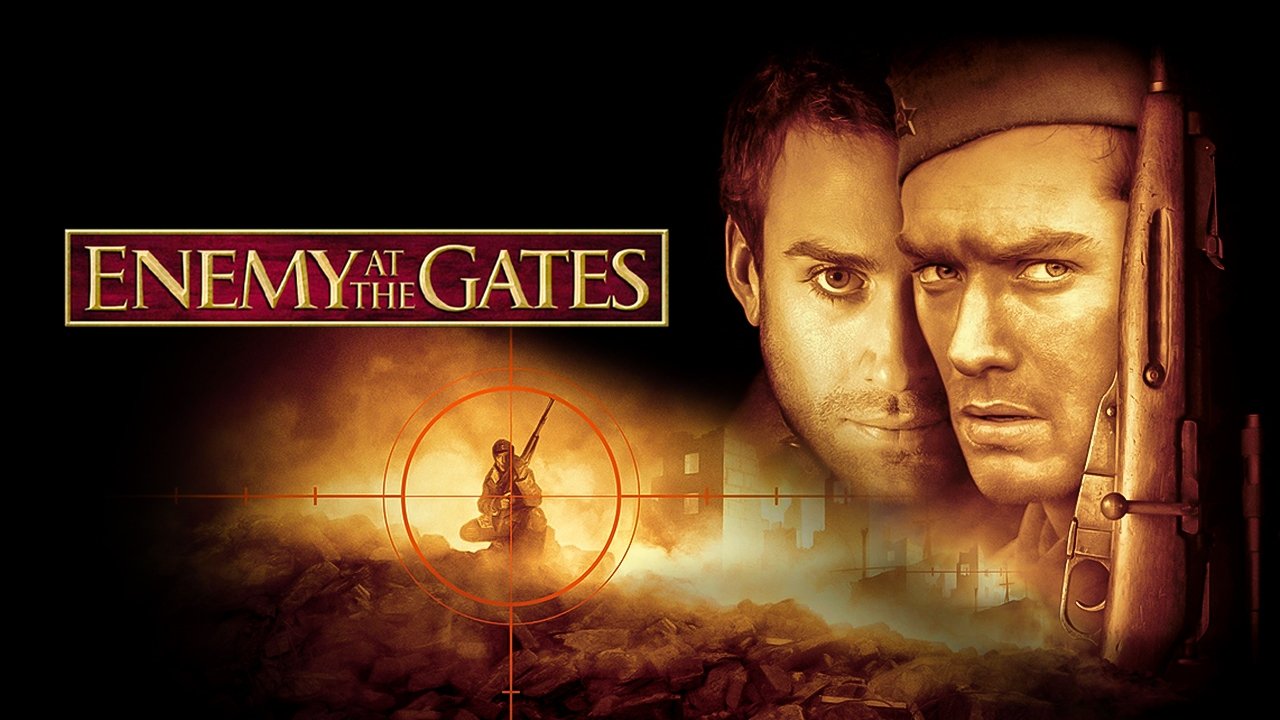
It’s also worth noting how the film leans into the "myth" of the Zaitsev/König duel. In reality, historians have found little evidence that this specific high-stakes sniper showdown ever happened quite this way—it was likely a piece of Soviet propaganda that took on a life of its own. But in the context of a Modern Cinema epic, the truth matters less than the tension. Enemy at the Gates captures the vibe of the Eastern Front—the desperation, the scale of the loss, and the bizarre way individuals become icons in the middle of a meat-grinder.
Even with its uneven pacing and the unnecessary romantic fluff, the film remains a staple of the genre. It's a dark, atmospheric drama that treats its violence with a somber weight rather than celebratory glee. It’s about the cost of being a hero when you never asked to be one, and the terrifying silence of a city where every window might be a barrel.
Enemy at the Gates is a gorgeously shot, intensely acted war drama that excels when it stays in the shadows and falters when it steps into the light of conventional romance. Ed Harris delivers one of the most underrated villain performances of the early 2000s, and while the film takes massive liberties with history, it captures the psychological toll of a very specific kind of warfare. It’s a "dad movie" classic for a reason—it’s gritty, focused, and just polished enough to keep you watching, even when the mud and blood become overwhelming.
Keep Exploring...
-
The Thin Red Line
1998
-
The Patriot
2000
-
Kingdom of Heaven
2005
-

Seven Years in Tibet
1997
-
Joyeux Noel
2005
-
Hotel Rwanda
2004
-
The Wind Rises
2013
-
The Last of the Mohicans
1992
-
Saving Private Ryan
1998
-

Alexander
2004
-

Cinderella Man
2005
-

Memoirs of a Geisha
2005
-
The English Patient
1996
-

Cold Mountain
2003
-
Black Hawk Down
2001
-
Gangs of New York
2002
-
We Were Soldiers
2002
-
Master and Commander: The Far Side of the World
2003
-
Troy
2004
-
Munich
2005