From Hell
"London is bleeding and the shadows have teeth."
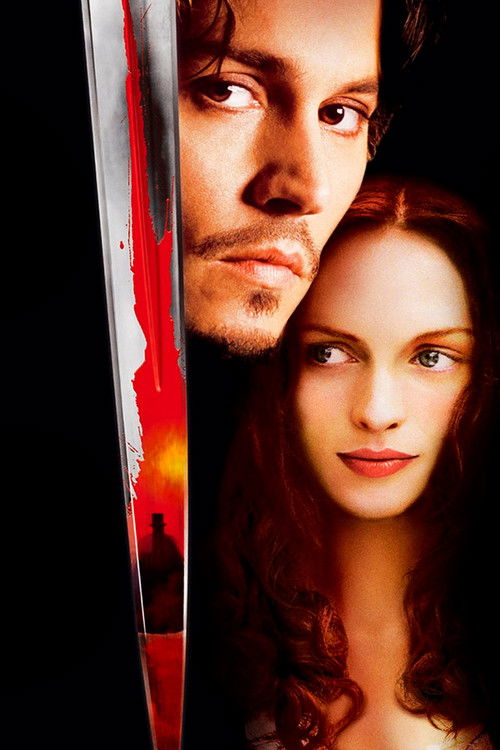
I remember first seeing From Hell on a scratched DVD I bought for three dollars at a pawn shop back in 2004. I watched it in a basement apartment that smelled faintly of damp laundry and old pizza boxes, and honestly, that humid, slightly depressing environment was the perfect sensory pairing for the Hughes brothers’ vision of Whitechapel. It’s a movie that feels like it’s been dipped in a vat of absinthe and then left to dry in a gutter.

Coming off the back of Menace II Society and Dead Presidents, directors Allen Hughes and Albert Hughes were an inspired, if slightly left-field, choice for a Victorian slasher. They brought an urban sensibility to 1888 London that shifted the "Jack the Ripper" mythos away from the stuffy, fog-machine-heavy clichés of Hammer Horror and into something that felt aggressively modern for 2001. It’s a film that straddles the line between the lush, high-budget period dramas of the 90s and the gritty, "everything must be brown and grey" aesthetic that would dominate the mid-2000s.
The Absinthe-Soaked Aesthetic
The first thing that hits you is the color. This isn't a historically accurate London; it’s a fever dream. The sky is often a bruised, glowing crimson—the result of Peter Deming’s cinematography, which makes the whole city look like it’s reflecting the fires of a very literal hell. Deming, who also shot Mulholland Drive for David Lynch, knows how to make a street corner feel predatory.
The production design opted for massive sets built in Prague, which allowed the camera to sweep through the filth of the East End in a way that felt expansive yet claustrophobic. Watching it now, the lack of ubiquitous CGI is a breath of fresh air. There is a weight to the cobblestones and a genuine stench to the sets that you just don't get from a green-screen volume. When Johnny Depp's Inspector Abberline retreats into an opium den to "chase the dragon," the hazy, distorted visuals feel like they were earned through practical lighting and lens tricks rather than a digital filter applied in post-production.
Depp Before the Compass
Looking back, this was a pivotal moment for Johnny Depp. This was the "Peak Brooding Depp" era, occurring just before Pirates of the Caribbean turned him into a permanent caricature of himself. As Fred Abberline, he’s doing some of his most restrained and effective work. He plays the inspector as a man whose psychic "visions" are likely just the byproduct of a massive drug habit, yet he carries a quiet, tragic dignity. Johnny Depp’s Victorian detective is basically just a goth kid’s Pinterest board come to life, but somehow, in the context of this movie, it absolutely works.
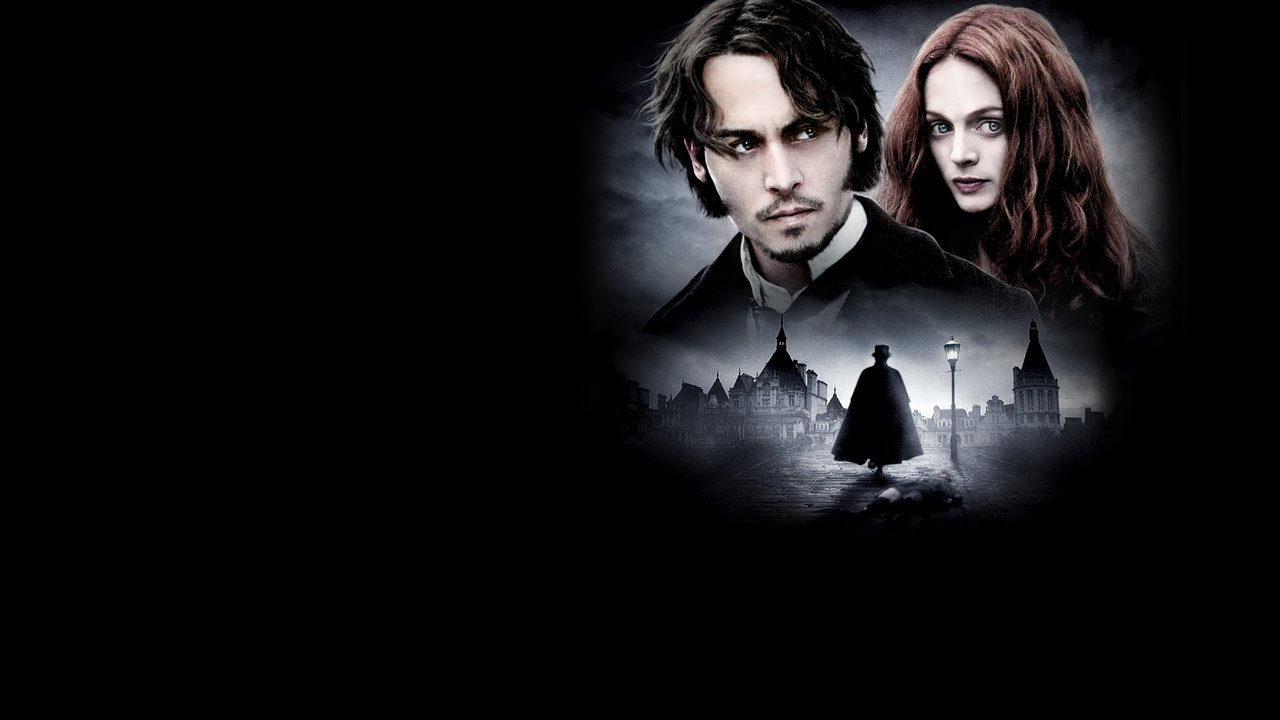
Supporting him is the late, great Robbie Coltrane (forever our Hagrid from Harry Potter) as Sergeant Godley. The chemistry between the two is the heart of the movie; Coltrane provides the necessary groundedness to balance out Depp’s ethereal drifting. Then there’s Heather Graham as Mary Kelly. I’ll be honest: Heather Graham’s accent is basically a hate crime against the East End, and she looks far too healthy and well-moisturized to be a starving streetwalker in 1880s London. She sticks out like a sore thumb in a cast filled with character actors who look like they were actually pulled out of a Dickensian workhouse.
However, the real MVP is Ian Holm. Fresh off his turn as Bilbo Baggins in The Lord of the Rings, he plays Sir William Gull with a chilling, surgical precision. His performance anchors the "Royal Conspiracy" theory that the film borrows from the legendary graphic novel by Alan Moore and Eddie Campbell. While the movie strips away about 80% of the book’s complex occult masonry and architectural philosophy, Ian Holm manages to keep the sense of grand, looming evil alive in every scene he’s in.
The Ripper’s Gory Legacy
As a horror film, From Hell understands the power of the aftermath. It doesn't show us the Ripper’s blade actually hitting the skin as often as you’d expect; instead, it focuses on the clinical, terrifying results of his "work." The makeup effects are brutal and lingering. There’s a specific focus on the anatomical precision of the killings that makes the horror feel grounded in science rather than supernatural slasher tropes.
Interestingly, the film captures that Y2K-era obsession with the "secret history" of the world. Much like The Matrix or Eyes Wide Shut, it suggests that the world we see is just a thin veil over a much darker, organized structure. The film treats historical accuracy like a suggestion at a drunken dinner party, but as a piece of speculative fiction, it’s incredibly compelling. It posits that the Ripper wasn't just a random lunatic, but the birth of the 20th century—the first modern media-driven monster.

One of my favorite bits of trivia is that the Hughes brothers actually wanted the film to be even more "street." They viewed the various prostitute gangs of Whitechapel as the Victorian equivalent of the Crips and Bloods, fighting for turf and survival. While the studio definitely polished some of those rougher edges, you can still feel that DNA in the way the "unfortunates" interact—there’s a desperate, sisterly bond that makes the mounting body count feel genuinely tragic rather than just a plot device.
From Hell is a movie that has aged surprisingly well, mostly because it leans so hard into its own stylized atmosphere. It’s a gorgeous, Giallo-inspired take on British history that prioritizes "vibes" over strict facts. If you can ignore Heather Graham’s wandering vowels and the fact that the Ripper’s identity is fairly easy to guess if you’re paying attention to the casting, it remains one of the most visually arresting horror-thrillers of its decade.
It’s the kind of film that makes you want to lock your doors, light a candle, and maybe stay away from grapes for a few days. It reminds me of a time when major studios were still willing to spend $35 million on a R-rated, depressing, drug-fueled occult mystery. We don't get many of those anymore, and for that alone, it’s worth a revisit on a rainy Tuesday night.

Keep Exploring...
-
The Ninth Gate
1999
-
Sleepy Hollow
1999
-
House of Wax
2005
-
The Skeleton Key
2005
-

Secret Window
2004
-
Ghost Ship
2002
-
Pandorum
2009
-
Devil
2010
-
I Know What You Did Last Summer
1997
-

Stir of Echoes
1999
-

The Gift
2000
-
The Others
2001
-
Gothika
2003
-
The Grudge
2004
-
Inland Empire
2006
-
Case 39
2009
-

Red Riding Hood
2011
-
The Skin I Live In
2011
-

Transcendence
2014
-
What Lies Beneath
2000