Ichi the Killer
"The screen isn't bleeding, you are."
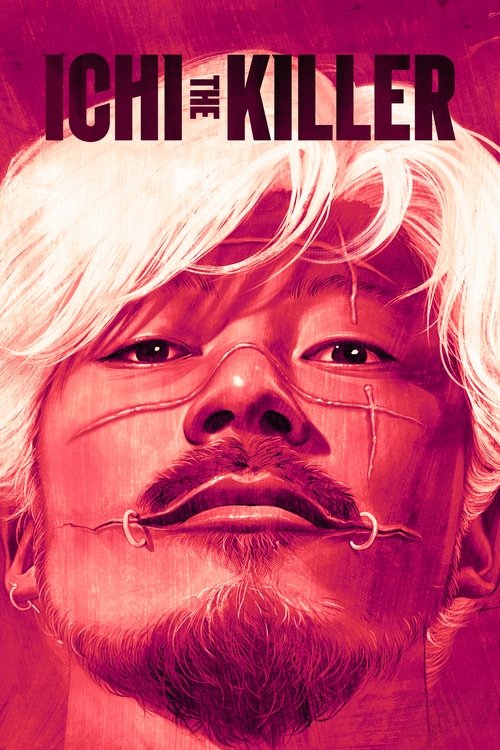
The first time I encountered Takashi Miike’s Ichi the Killer, it wasn’t in a theater or on a streaming platform. It was a bootleg DVD with a grainy cover that looked like it had been dragged through a Shinjuku gutter. In the early 2000s, this film was a whispered legend in the "Asian Extreme" scene, the kind of movie you heard about on message boards before you actually saw it. At the Toronto International Film Festival, they famously handed out barf bags to the audience. Whether that was a marketing gimmick or a genuine health precaution is debatable, but after five minutes of the opening credits, you realize the bags were probably a sensible investment.

The Symphony of Scars
I watched this most recent viewing while nursing a lukewarm cup of instant coffee that had a film of oil on top, and honestly, that slightly nauseating domestic detail felt like the perfect accompaniment to the grit on screen. Ichi the Killer is not a "fun" movie in the traditional sense, but it is an undeniably fascinating one. It’s a neon-drenched, blood-soaked exploration of the threshold where pain and pleasure become indistinguishable.
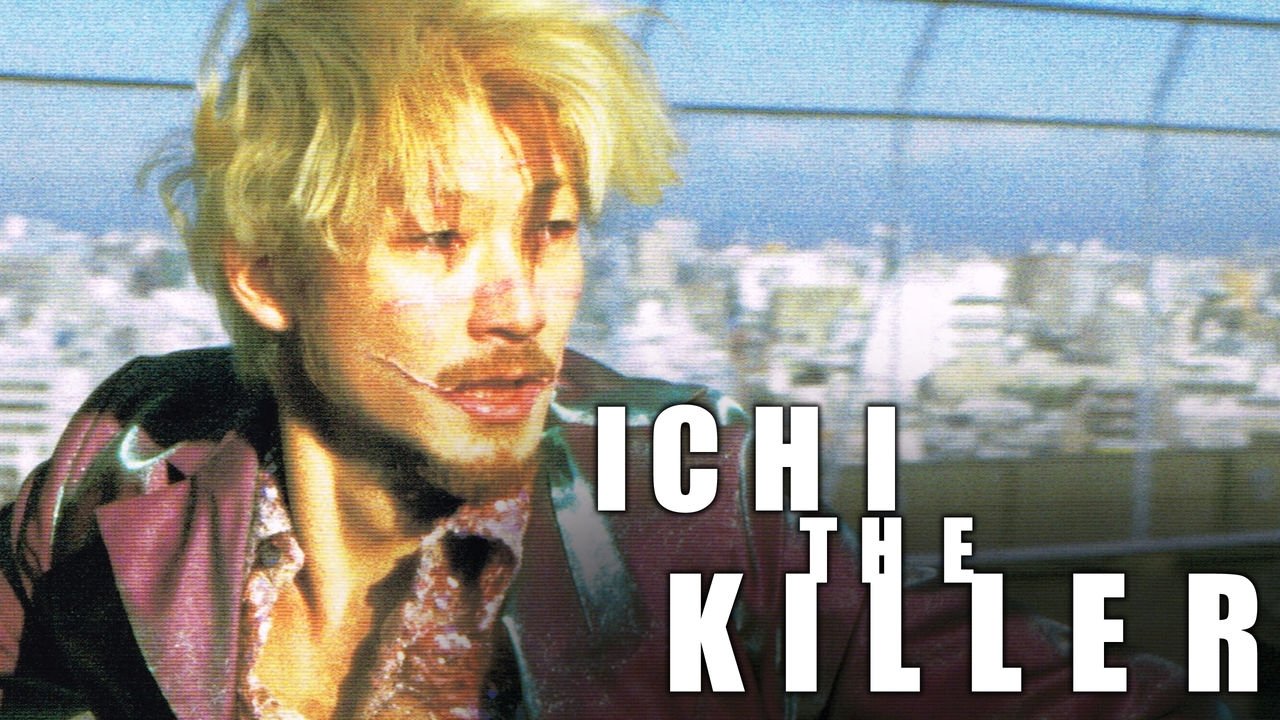
The plot, adapted from Hideo Yamamoto’s manga by screenwriter Sakichi Sato, follows the disappearance of a yakuza boss. His enforcer, Kakihara—played with terrifying, feline charisma by Tadanobu Asano—goes on a scorched-earth search to find him. Kakihara is a bored masochist who has run out of ways to feel alive, until he hears rumors of Ichi (Nao Omori). Ichi isn't a badass; he’s a sobbing, repressed, psychologically shattered mess who happens to be a human meat grinder when triggered. Kakihara doesn’t just want to catch Ichi; he wants Ichi to destroy him in ways he’s only dreamed of.
Digital Decay and Practical Nightmares
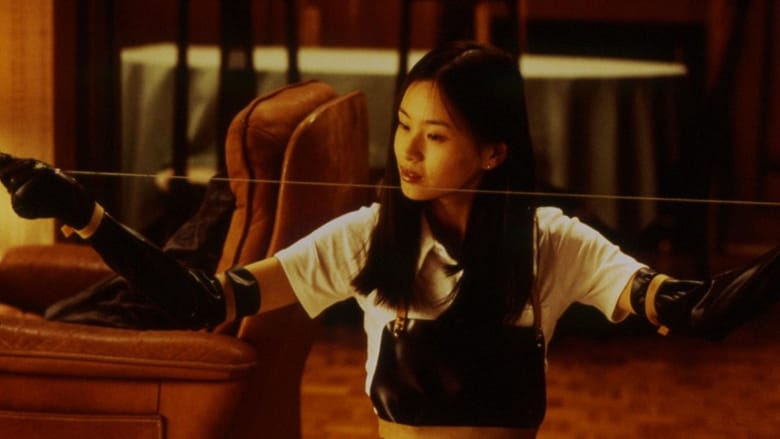
Coming out in 2001, the film sits right at the intersection of the analog and digital transition. You can feel the era’s fingerprints all over the production. Takashi Miike (who was famously directing about seven movies a year at this point, including the haunting Audition) leans into a manic, almost "found footage" energy in some scenes, while others are hyper-stylized with vibrant, sickly greens and purples.
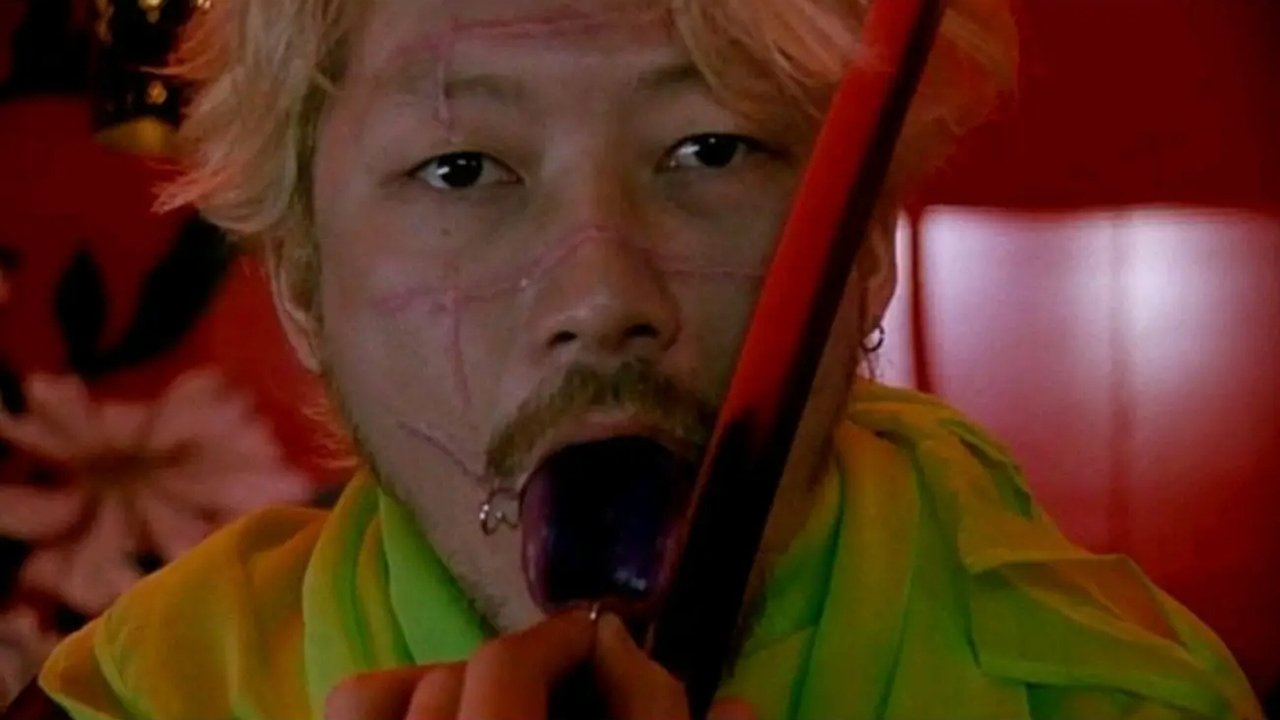
Interestingly, for a film so obsessed with the physical body, the special effects are a jarring mix. While there are plenty of incredible practical prosthetic works—the stuff that makes your skin crawl—there’s also a significant amount of early-2000s CGI blood. Back then, digital blood was the "new" thing, and Miike used it to create physics-defying sprays that wouldn't have been possible with tubes and pumps. While some of the digital effects haven’t aged gracefully, they contribute to the film’s surreal, nightmarish quality. It feels less like a grounded crime drama and more like a live-action cartoon that has been dipped in acid. The CGI gore often looks like a glitch in reality, which strangely suits a movie about a man who is a glitch in humanity.
A Legend Born of Constraints
Despite its reputation as a high-octane gorefest, Ichi was an independent production with a relatively modest budget of $1.4 million. It’s a testament to the crew’s ingenuity that it looks as expansive and expensive as it does. The cinematographer, Hideo Yamamoto (who also shot the original The Grudge), manages to make the claustrophobic apartments and back alleys of Kabukicho feel like an alien planet.
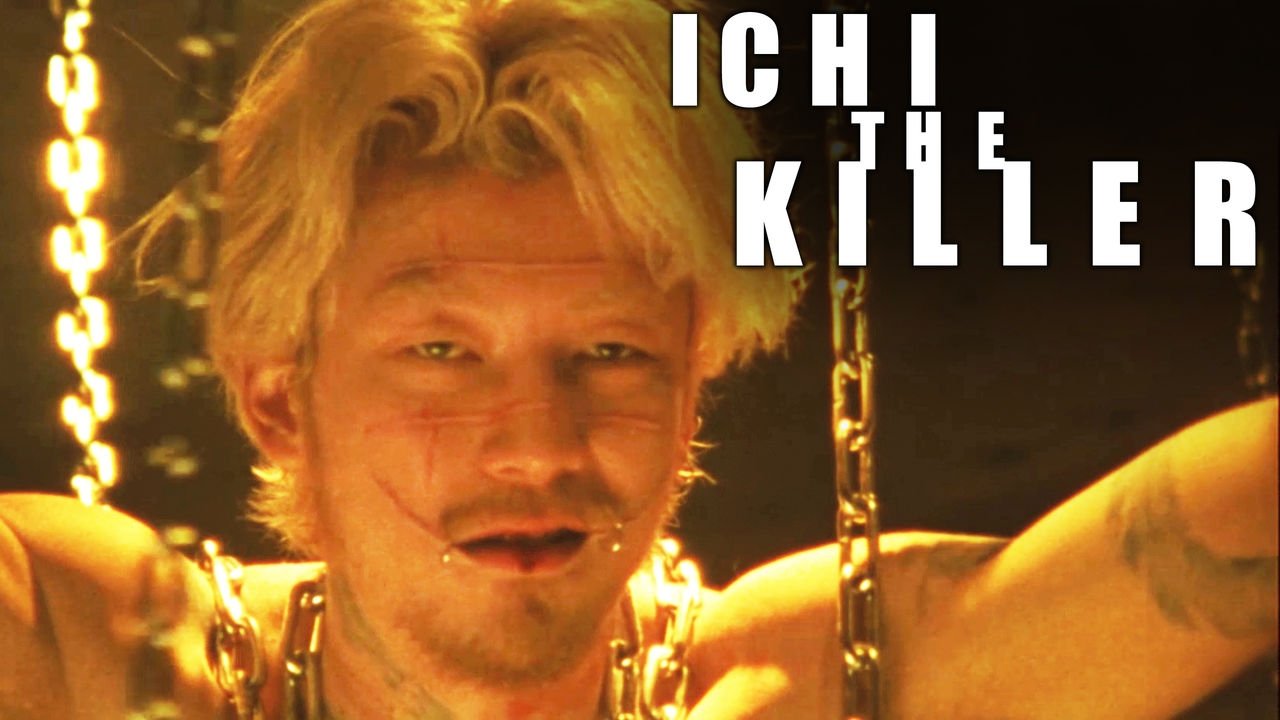
The trivia surrounding the shoot is as legendary as the film itself. Apparently, Tadanobu Asano’s iconic bleached-blonde hair and split-mouthed scars were so striking that he couldn't go out in public without being swarmed, yet the production was so low-key that they often shot in public spaces without proper permits. There’s also the fact that the film was banned or heavily censored in several countries, including Norway and Germany, for years. This censorship only fueled its status as a must-see for the DVD-collector generation. It was the ultimate "forbidden fruit" of the 2000s, a film that challenged you to see if you could actually make it to the end credits without looking away.
Beyond the Butchery
What keeps Ichi the Killer from being mere exploitation is the central performance of Tadanobu Asano. He creates a villain who is oddly relatable in his loneliness. Kakihara is looking for a soulmate, and in his warped world, a soulmate is someone who can hurt him enough to make him feel real. Kakihara is a more compelling nihilist than any version of the Joker we’ve seen on screen, largely because his madness is born of a desperate, honest need for sensation.
Opposite him, Nao Omori’s Ichi is a pathetic figure. It’s a brave performance that subverts the "cool killer" trope. He’s a victim of manipulation by the shadowy Jijii (Shinya Tsukamoto, the director of the cyberpunk classic Tetsuo: The Iron Man), and his violence is a literal discharge of trauma. The film doesn't celebrate Ichi; it treats him like a ticking bomb that everyone is trying to use for their own ends.
Ichi the Killer is a heavy, difficult, and frequently repulsive piece of cinema that remains essential viewing for anyone interested in the boundaries of the medium. It captures a specific moment in the early 2000s when international cinema was becoming more accessible and more extreme, pushing against the sanitized blockbuster culture of the West. It is a film that demands you engage with it, even if that engagement involves shielding your eyes. You won't walk away from it feeling "good," but you will walk away knowing you've seen something that could only have been made by a director with absolutely nothing to lose.
Keep Exploring...
-
Audition
2000
-
From Dusk Till Dawn
1996
-
Ong-Bak
2003
-
Hard Boiled
1992
-
Felon
2008
-

The Chaser
2008
-

Blood and Bone
2009
-
Bronson
2009
-
The Girl Who Kicked the Hornet's Nest
2009
-

The Man from Nowhere
2010
-
Undisputed III: Redemption
2010
-
The Raid
2012
-
The Raid 2
2014
-
Saw
2004
-
Ring
1998
-
Battle Royale
2000
-

Tremors 2: Aftershocks
1996
-
The Hole
2001
-

Dog Soldiers
2002
-
Scream
1996