K-PAX
"Is he a visitor, or just a lost soul?"
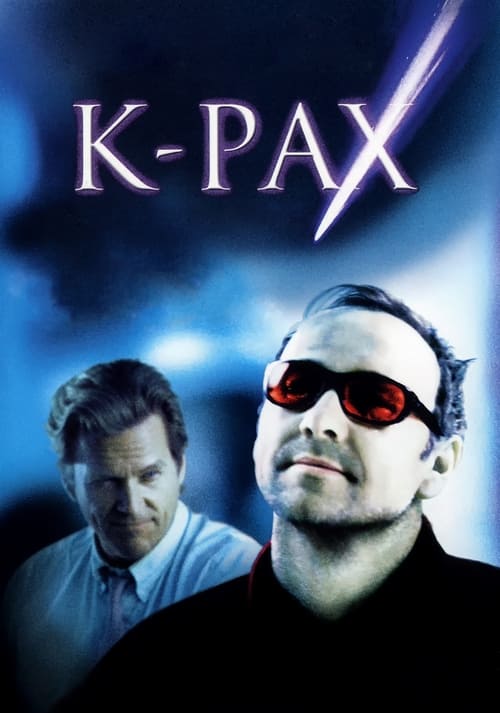
Grand Central Station usually smells like damp stone and hurried commuters, but in the opening frames of K-PAX, it looks like a cathedral of light. Dust motes dance in the sunbeams as a man appears out of thin air—or perhaps he just stepped out from behind a pillar. This is Prot, played with an eerie, unblinking stillness by Kevin Spacey. He claims he’s from a planet 1,000 light-years away. The police, naturally, think he’s from a different kind of "space" and ship him off to the Psychiatric Institute of Manhattan.
Watching this again recently, I was struck by how much it feels like a relic of that brief, shimmering window between the indie explosion of the 90s and the superhero saturation of the late 2000s. It’s a $48 million drama that doesn't feature a single explosion, relying entirely on the chemistry between two men sitting in a dimly lit office. I watched my old DVD copy on a beanbag chair that was slowly leaking its foam pellets onto the carpet, and honestly, the slight physical discomfort perfectly matched the movie’s itchy, "what if?" energy.
The Anchor and the Alien
The heavy lifting here isn't done by CGI—though the light-refraction effects are surprisingly tasteful for 2001—but by Jeff Bridges. As Dr. Mark Powell, Bridges is the ultimate audience surrogate. He’s tired, he’s skeptical, and he has that rumpled, "I need a third cup of coffee" energy that he perfected long before he became everyone’s favorite grizzled mentor in films like True Grit (2010).
There’s a wonderful subtextual irony in casting the man who played an actual alien in Starman (1984) as the doctor who refuses to believe in them. Bridges provides the necessary friction; without his grounded, cynical presence, the movie would float away into New Age fluff. When he brings Prot home for a barbecue, the tension isn't about a space-alien invasion—it's about the domestic anxiety of a man who realized his patient might be smarter than him. Mary McCormack plays Powell’s wife, Rachel, with a graceful patience, though I wish the script gave her more to do than just look concerned over a plate of grilled corn.
A Masterclass in Fruit Consumption
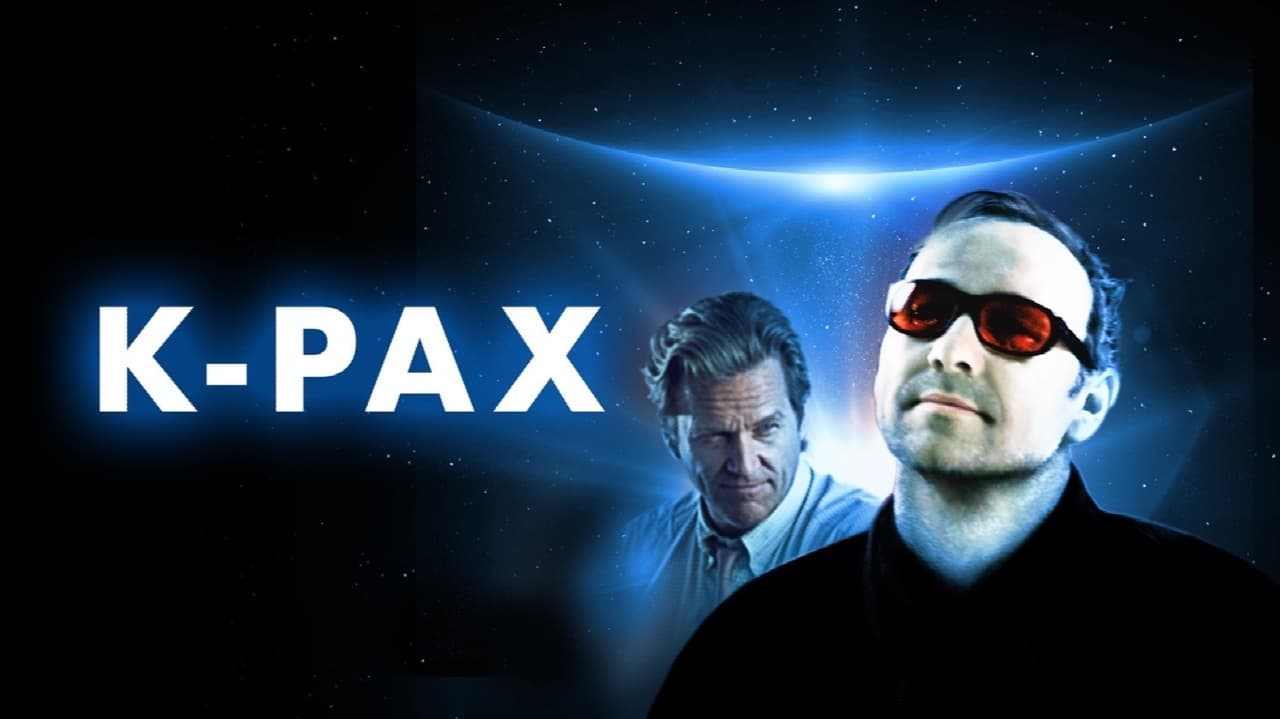
If you ask anyone what they remember about K-PAX, they’ll tell you about the banana. In a scene that allegedly took 27 takes, Prot eats a whole banana—peel and all. It’s a small, bizarre character beat that does more to establish his "otherness" than a thousand lines of dialogue. Spacey’s performance is built on these tiny, unsettling choices. He doesn't blink. He wears cheap sunglasses because our sun is too bright. He has a way of tilting his head that makes him look like a bird observing a particularly confusing worm.
The film excels when it leans into the mystery. Is he a traveler from a binary star system, or is he Robert Porter, a man fleeing a trauma so horrific his mind had to leave the planet to survive? The screenplay by Charles Leavitt keeps the scales balanced with frustrating precision. One minute, Prot is explaining advanced astrophysics to a room full of stunned scientists (a sequence that actually used real astronomical data provided by planetary experts), and the next, he’s being triggered by the sound of a lawn sprinkler.
The Cult of Ambiguity
K-PAX didn't exactly set the world on fire at the box office, barely recouping its budget. It was released just weeks after 9/11, a time when American audiences were perhaps too rattled for a story about a mysterious man appearing in a New York train station. Yet, it found a massive second life on home video. It’s the quintessential "DVD era" movie—the kind of film people bought at a Blockbuster clearance sale and then spent hours debating with their friends.
I’ve always felt that the movie’s greatest strength is its refusal to blink first. It wants you to argue. The hospital ensemble, including a neurotic David Patrick Kelly as Howie and a soulful Saul Williams as Ernie, represents different facets of the audience’s belief. They aren't just "crazy" people; they are people who want to believe in something better than the grey walls of their ward. Alfre Woodard provides a steady, administrative counterpoint as the head of the clinic, reminding us that even if Prot is from K-PAX, his bill still needs to be paid.
In retrospect, K-PAX is a beautifully shot, somber mystery that survives its own occasional sentimentality. The ending is essentially a high-budget episode of The Twilight Zone that forgot to have a twist, and I mean that as a sincere compliment. It trusts you to sit in the silence and decide for yourself what happened on that July morning. It’s a film that appreciates the "human condition" without being too condescending about it, anchored by a Jeff Bridges performance that remains one of his most underrated "dad-energy" roles. If you’re looking for a quiet night in and don’t mind a bit of existential yearning, it’s well worth the trip.
Keep Exploring...
-

The Skeleton Key
2005
-
Contact
1997
-
The Giver
2014
-

The Jacket
2005
-
Arlington Road
1999
-

Signs
2002
-
Gattaca
1997
-
Lost Highway
1997
-

Lucky Number Slevin
2006
-

The Fountain
2006
-

The Lake House
2006
-
The 6th Day
2000
-

The Forgotten
2004
-
The Devil's Advocate
1997
-

The Game
1997
-

Dark City
1998
-
Bicentennial Man
1999
-
The Bone Collector
1999
-
A.I. Artificial Intelligence
2001
-

Vanilla Sky
2001