Monsters, Inc.
"A brilliant subversion of childhood fears that turns the closet into a cubicle."
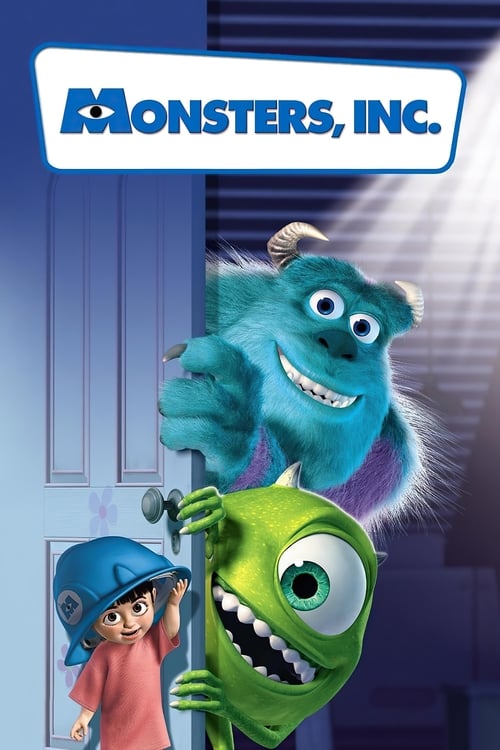
I remember sitting in a sticky-floored theater in late 2001, clutching a tub of popcorn that cost more than my bus fare, and feeling a genuine sense of dread when the lights dimmed. It was only two months after 9/11, and the world felt heavy. I didn't need a lecture; I needed a laugh. Then, Pete Docter and the wizards at Pixar gave us a blue-collar comedy about the monsters under our beds, and for 92 minutes, the world felt okay again. I actually watched this particular anniversary viewing on a scratched DVD while eating lukewarm SpaghettiOs, and the slight digital skip during the "23-19" scene somehow made the timing of the joke even funnier.
The Buddy Comedy That Clocked In
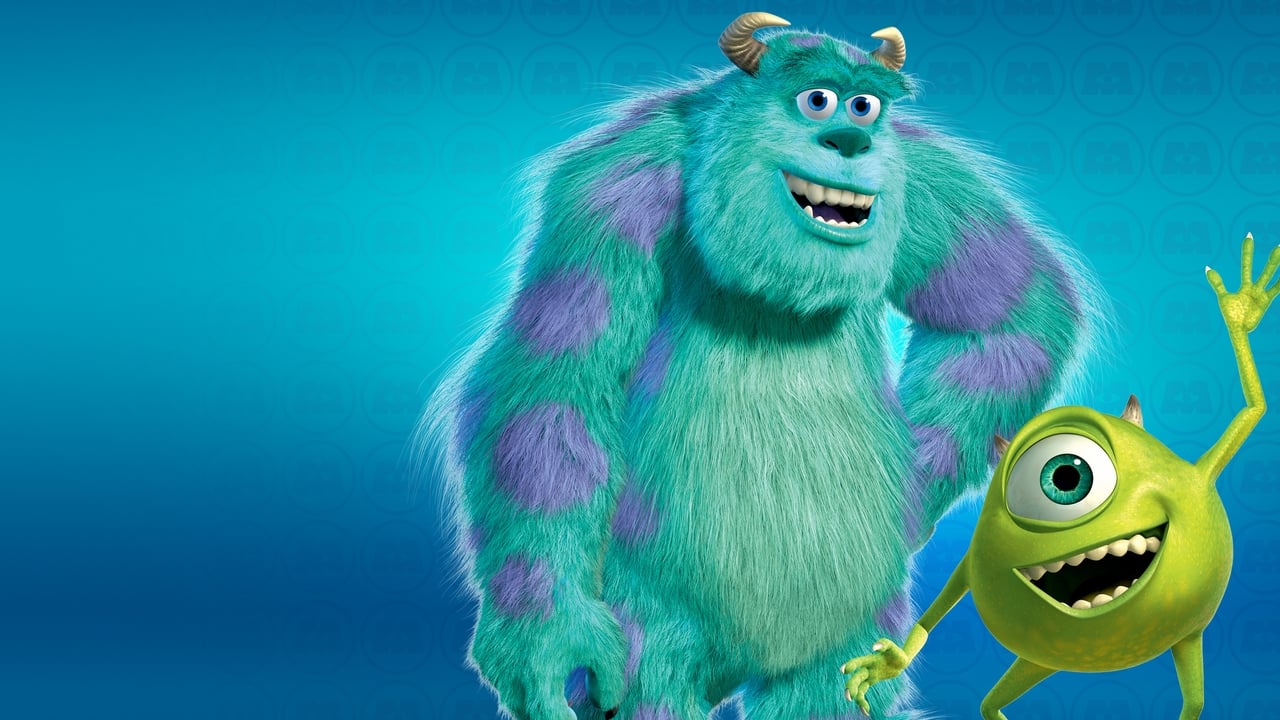
At its heart, Monsters, Inc. isn’t just a "kids' movie"—it’s a workplace sitcom that happens to feature a one-eyed lime and a sentient shag rug. The chemistry between John Goodman (Sulley) and Billy Crystal (Mike) is the secret sauce here. In a move that was practically unheard of for animation at the time, Pete Docter had the two actors record their lines in the same room. Usually, voice acting is a lonely booth affair, but here, they were allowed to riff, interrupt, and lean into each other’s energy. You can hear it in the frantic "Put that thing back where it came from, or so help me!" musical number. It feels lived-in, like two guys who have shared a locker room for a decade.
Billy Crystal is a whirlwind of neurotic energy, playing Mike Wazowski like a caffeinated tennis ball with a mortgage. He’s the perfect foil to John Goodman, whose Sulley is the ultimate "gentle giant" with a roar that pays the bills but a heart that’s clearly not in the corporate ladder-climbing game. When they find Boo—played by Mary Gibbs, who was essentially a toddler the crew followed around with a microphone because she wouldn't sit still to record—the movie shifts from a satire of corporate energy crises into something deeply moving.
A 2.3 Million Hair-Raising Achievement
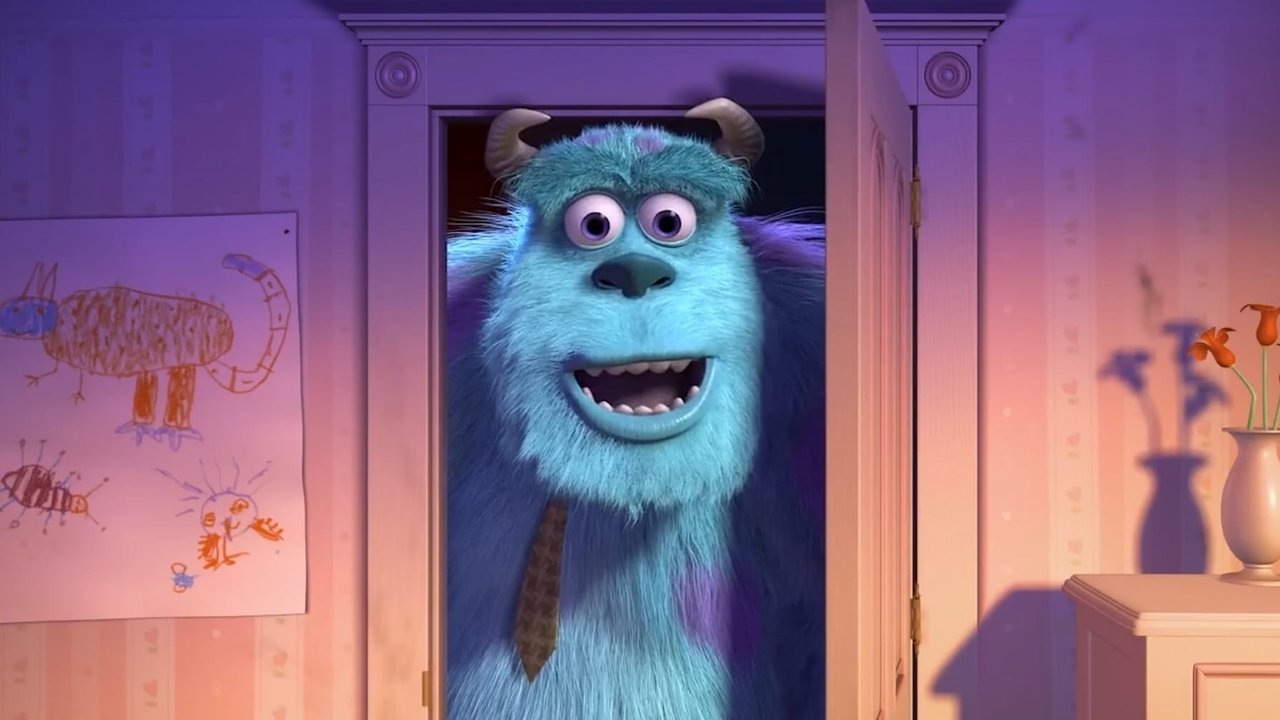
Looking back from an era where we can digitally de-age actors and create entire planets in a computer, it’s easy to forget how much of a technical gamble this film was. This was the "fur movie." In 2001, rendering hair was the Mount Everest of CGI. Sulley has 2,320,413 individual hairs, and every single one of them had to react to wind, movement, and Boo’s tiny hands. If you watch closely when Sulley enters a room, the way his fur undulates is still more impressive than half the stuff we see in modern blockbusters. It’s early CGI that hasn't just aged well; it’s kept its soul.
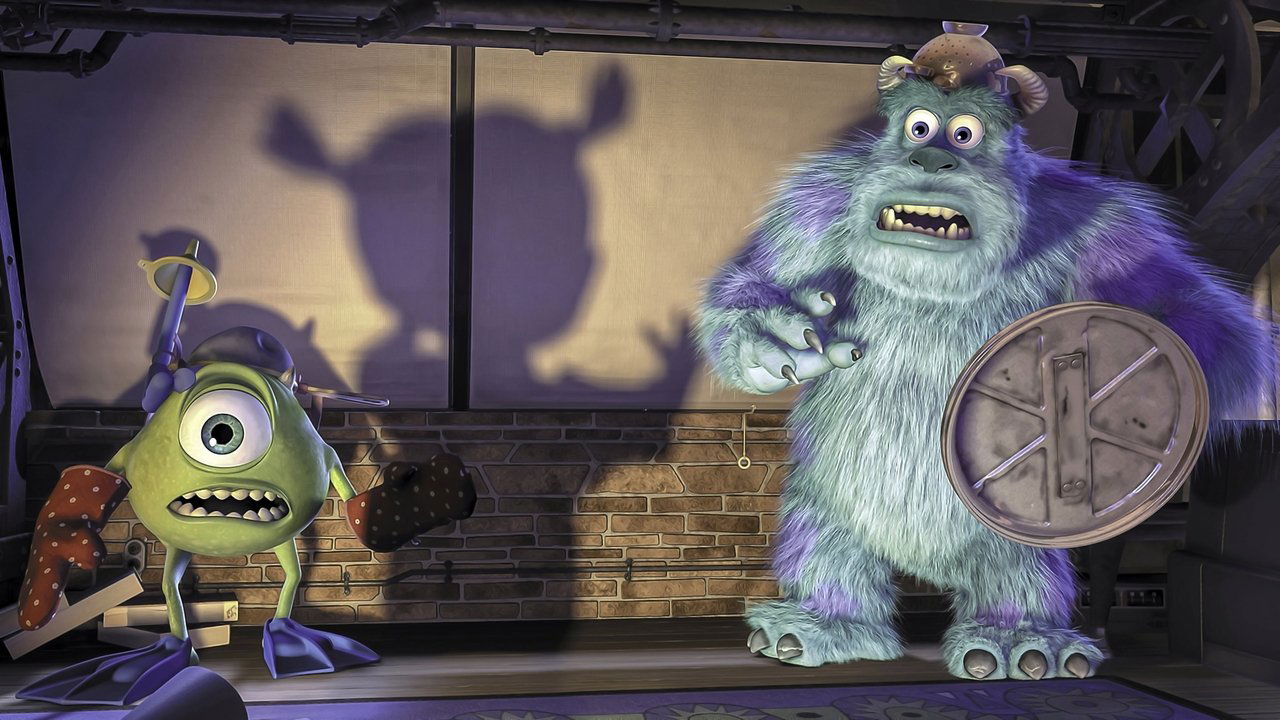
The production design also leans into that "Modern Cinema" transition from the analog 90s to the digital 2000s. Monstropolis looks like a mid-century industrial city that’s running out of steam—literally. The "Scream" technology feels clunky and mechanical, a brilliant contrast to the slick, predatory vibe of Steve Buscemi’s Randall. Buscemi is deliciously oily here, providing a villain who feels like he’d be just as comfortable in a Coen Brothers flick as he is in a child’s closet.
The Corporate Grind and The DVD Goldmine
The film also captures a very specific 2001 anxiety: the energy crisis. It’s a movie about a society built on a resource that is inherently cruel, and the eventual realization that joy (laughter) is ten times more powerful than fear. Mike Wazowski is the actual protagonist of the story because he’s the one who has to lose his entire worldview to save a friend. It’s a sophisticated arc wrapped in a bright green package.
I’d be remiss not to mention the era of the DVD, which was peaking right as this film hit home video. I spent more time than I’d like to admit exploring the "Disc 2" special features of the collector’s edition. From the "Employee Handbook" to the outtakes—which were fully animated "blooper reels" that Pixar pioneered—this film helped build the "film literacy" of a generation. It invited us behind the curtain, showing us how the render farms worked and how the jokes were polished until they shone.
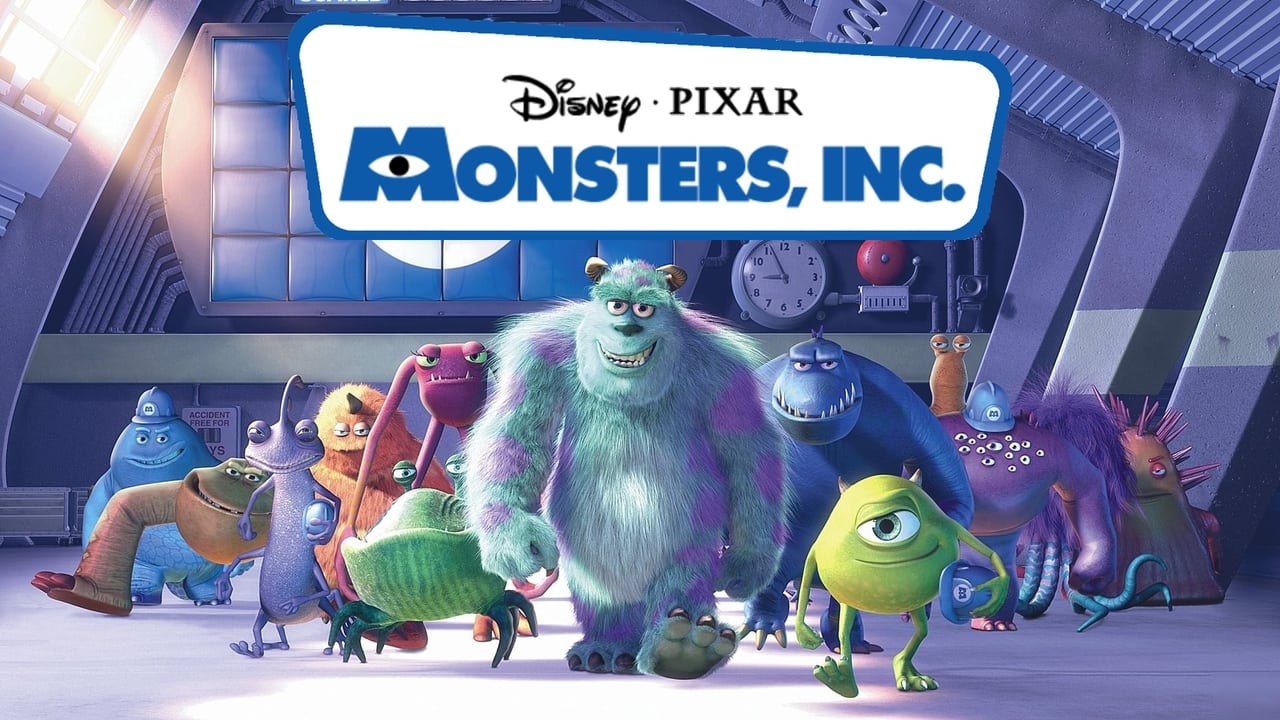
There’s a beautiful homage to Ray Harryhausen, the stop-motion legend, in the name of the monsters’ favorite sushi spot ("Harryhausen’s"). It’s a bridge between the old practical effects world and the new digital frontier Pixar was manifest-destinying its way across. The CDA (Child Detection Agency) are basically just heavily-funded mall cops with better PPE, and the way the film mocks their over-the-top bureaucracy still hits home for anyone who has ever dealt with a middle-manager in a yellow jumpsuit.
Monsters, Inc. is a rare beast that manages to be a technical marvel, a top-tier buddy comedy, and a tear-jerker all at once. It’s a film that respects its audience’s intelligence enough to make jokes about "scare quotas" and "toxic touch" while keeping the slapstick sharp enough for the five-year-olds. It’s a high-water mark for Pixar’s golden age, proving that even the things that go bump in the night have bills to pay and hearts that can be melted by a "Kitty!" and a hug.
The final shot of the film—which I won’t spoil, though I suspect you’ve seen it—is arguably the best ending in the history of animation. It’s simple, quiet, and relies entirely on the audience’s imagination and a single, glowing eye. It’s a reminder that the best special effect in the world is still a genuine human emotion. If you haven't revisited Monstropolis lately, do yourself a favor: open the door.

Keep Exploring...
-
Monsters University
2013
-

Up
2009
-

Toy Story 2
1999
-

A Bug's Life
1998
-
Toy Story
1995
-
Big Hero 6
2014
-
Shrek
2001
-

Ice Age
2002
-

Lilo & Stitch
2002
-
Shrek 2
2004
-

Madagascar
2005
-
Cars
2006
-
Toy Story 3
2010
-
Hotel Transylvania
2012
-

The SpongeBob SquarePants Movie
2004
-

Wallace & Gromit: The Curse of the Were-Rabbit
2005
-
Ratatouille
2007
-

The Simpsons Movie
2007
-
Kung Fu Panda
2008
-
Despicable Me
2010