Planet of the Apes
"Rule the planet, lose the plot."
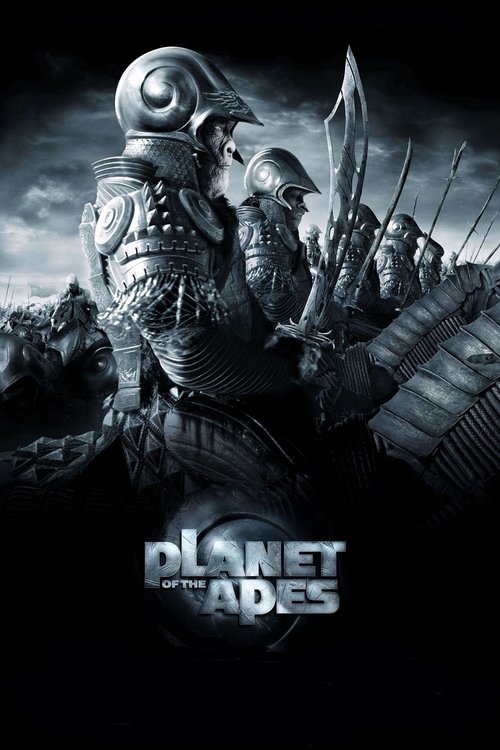
In the summer of 2001, the word "reboot" hadn't yet poisoned our collective cinematic vocabulary, but Tim Burton was about to give us a front-row seat to the perils of the "re-imagining." The hype for this film was inescapable. It was the era of the mega-blockbuster transition—post-Matrix, pre-Lord of the Rings—where studios were desperately trying to figure out how to marry the burgeoning power of CGI with the prestige of classic IP. I watched this for the third time recently on a DVD that smelled faintly of an old basement, and somehow that musty scent made the jungle scenes feel more immersive, even if the script still feels like it was written on a series of napkins during a particularly stressful lunch at Planet Hollywood.
Practical Magic in a Digital Dawn
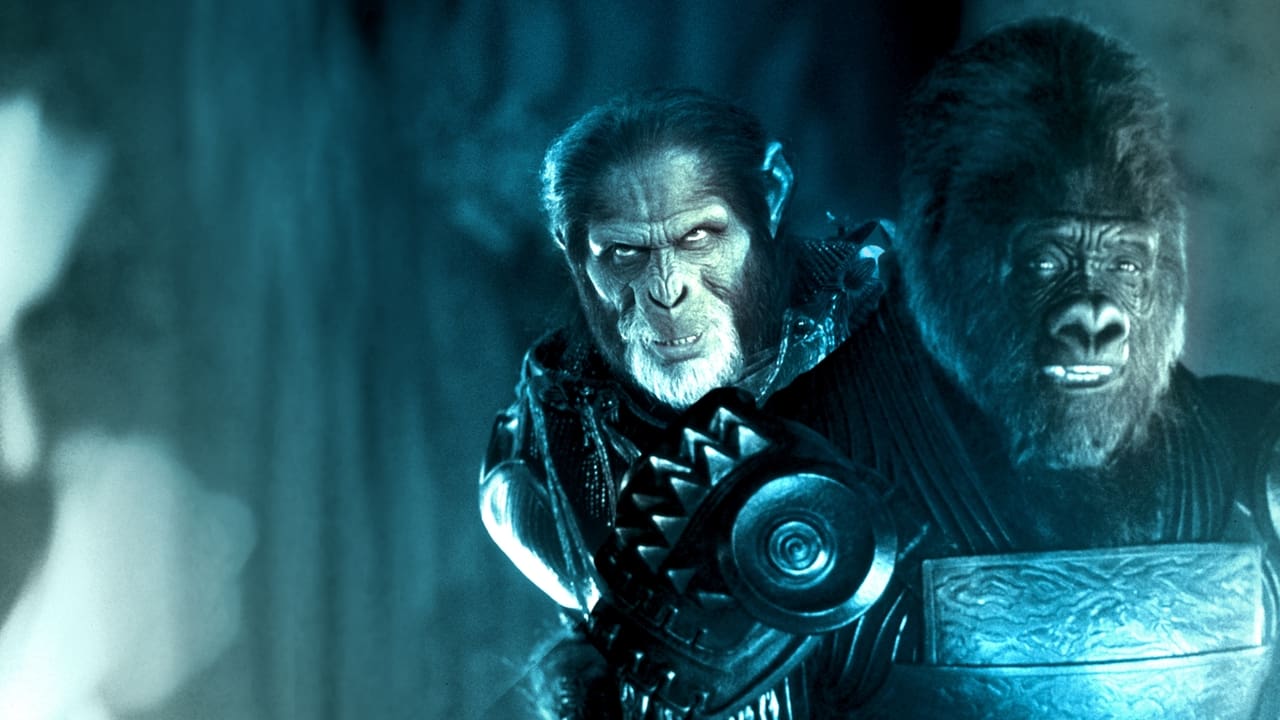
The one thing that absolutely holds up—and frankly, looks better than half the Marvel movies of the last five years—is the makeup. Rick Baker (An American Werewolf in London, Men in Black) is the undisputed MVP here. In an era where George Lucas was busy replacing entire sets with green screens for the Star Wars prequels, Burton insisted on physical reality.
The apes aren’t just actors in masks; they are terrifying, expressive, and physically imposing biological wonders. When Tim Roth (Reservoir Dogs, Pulp Fiction) as the villainous General Thade snarls, you see every twitch of his prosthetic lip. There’s a weight to the performances that CGI simply couldn't replicate in 2001. The action choreography leans into this physicality too. The apes don't just run; they leap, bound, and tumble with a chaotic energy that feels genuinely dangerous. Michael Clarke Duncan (The Green Mile) as Attar is a mountain of silverback muscle, and the way he moves in that heavy armor is a testament to the stunt team’s commitment to "ape-style" combat. It’s clear the actors went through a rigorous "Ape School" to unlearn their human gaits, and that effort pays off in every frame.
A Leading Man Lost in Space

If only the human elements were as interesting as the simian ones. Mark Wahlberg (Boogie Nights, The Departed) plays Captain Leo Davidson, and I’ll be honest: Wahlberg’s acting here has all the emotional depth of a glass of lukewarm tap water. He’s ostensibly our hero, but he spends most of the movie looking mildly inconvenienced by the fact that he’s been catapulted through a space-time anomaly into a world of talking chimpanzees.
The script, handled by a revolving door of writers including William Broyles Jr. and Mark Rosenthal, never gives him anything to chew on. He’s a blank slate in a flight suit. Compare him to Charlton Heston’s scenery-chewing, cynical Taylor in the 1968 original, and you realize how much this movie misses a pulse. Even the supporting humans, like Estella Warren, feel like they were cast more for their ability to look good in "primitive" rags than for their ability to convey the stakes of a global revolution. Helena Bonham Carter (Fight Club, Sweeney Todd) tries her hardest as Ari, the sympathetic chimp activist, but she’s essentially playing a primate version of a bored socialite. It’s a weirdly cold film for something that should be a sprawling epic of survival.
The Twist That Broke the Logic

We have to talk about that ending. In 2001, "The Twist" was the ultimate currency, largely thanks to M. Night Shyamalan. Burton clearly felt pressured to top the original’s Statue of Liberty reveal, but the result is a logic-defying head-scratcher that left audiences in a state of confused silence rather than awe. Without spoiling it for the three people who haven’t seen it, let’s just say it attempts to bridge the gap between the film’s two timelines but ends up falling into a giant plot hole instead.
Behind the scenes, the production was a bit of a nightmare. The film was fast-tracked with a locked release date before a script was even finished. Richard D. Zanuck, the producer who also greenlit the original '68 film, reportedly spent $100 million to make this happen, which was a staggering sum at the time. Despite the mixed reviews, the "Burton Apes" was a commercial juggernaut, raking in over $360 million worldwide. It proved that the brand had legs—or rather, prehensile feet—even if the storytelling wasn't quite there yet. Looking back, this movie feels like a bridge between two eras of Hollywood: the last gasp of the big-budget practical effects extravaganza and the beginning of the "franchise first, story second" mentality that would soon dominate the industry.
Ultimately, this is a film of incredible textures and hollow centers. You watch it for the sheer craft of the ape designs, the thumping Danny Elfman (Batman, Edward Scissorhands) score, and the way Tim Roth manages to be genuinely unsettling while buried under three inches of latex. It’s a 5-minute bus-stop movie because you can jump in at any point, marvel at the costumes, and skip the parts where the humans talk. It didn't launch the trilogy 20th Century Fox wanted, but it paved the way for the much stronger Rise of the Planet of the Apes a decade later. For that, and for Paul Giamatti’s hilarious turn as a sleazy orangutan slave trader, I can’t quite write it off entirely.


Keep Exploring...
-

Jurassic Park III
2001
-

Paycheck
2003
-
The Island
2005
-
Armageddon
1998
-
Transformers: Age of Extinction
2014
-
Star Trek: Generations
1994
-
Escape from L.A.
1996
-
The Saint
1997
-
Star Trek: Insurrection
1998
-

Final Fantasy: The Spirits Within
2001
-
Star Trek: Nemesis
2002
-
The Matrix Revolutions
2003
-
Sky Captain and the World of Tomorrow
2004
-

X-Men: The Last Stand
2006
-

The Matrix Reloaded
2003
-

The Lost World: Jurassic Park
1997
-

Star Wars: Episode I - The Phantom Menace
1999
-
Mission: Impossible II
2000
-

Star Wars: Episode II - Attack of the Clones
2002
-
xXx
2002