Shallow Hal
"Beauty is in the eye of the hypnotized."

I watched this while sitting on a beanbag chair that was slowly leaking its Styrofoam guts across my carpet, which felt strangely appropriate for a movie about what’s on the inside. Looking back at the year 2001, we were at the peak of a very specific kind of Hollywood experiment: the "high-concept comedy with a heart of gold and a foot in its mouth." At the center of this particular storm were Bobby Farrelly and Peter Farrelly, two directors who had spent the late 90s weaponizing cringe into box office gold with Dumb and Dumber and There’s Something About Mary.
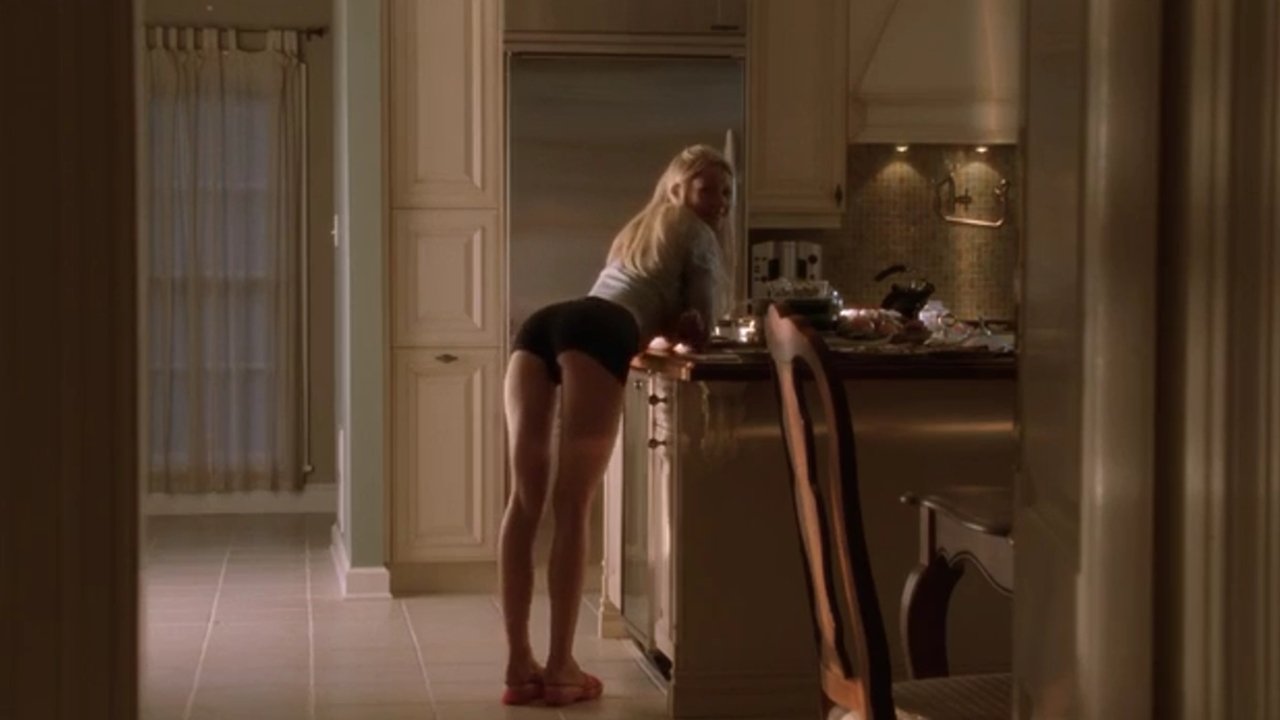
With Shallow Hal, they tried something daring for the era. They tried to grow up—or at least, they tried to give their signature gross-out humor a moral compass. Reassessing it two decades later is a bit like looking at your high school yearbook photos; you recognize the person, but you’re occasionally horrified by the fashion choices.
The Gospel According to Tony Robbins
The movie kicks off with a premise that feels like a literal fever dream. Hal, played by a kinetic and surprisingly vulnerable Jack Black, is a man-child living by his father’s deathbed decree to only date "perfect" women. It’s a shallow existence, fueled by the equally cynical advice of his best friend Mauricio (Jason Alexander, essentially playing George Costanza with a secret).
Everything flips when Hal gets stuck in an elevator with self-help guru Tony Robbins. In a sequence that highlights the era's fascination with "mind-hacking" and Y2K-era spirituality, Robbins hypnotizes Hal to see the "inner beauty" of people manifested as their external reality. Enter Rosemary. To Hal, she’s Gwyneth Paltrow in her prime—slender, luminous, and ethereal. To the rest of the world, she’s a 300-pound woman who breaks chairs and buys two seats on the bus.
What struck me during this rewatch wasn't the physical comedy—most of which lands with the grace of a bowling ball in a library—but rather the chemistry between the leads. This was Jack Black’s first real shot as a romantic lead after his scene-stealing turn in High Fidelity, and he carries it with an earnestness that prevents Hal from being totally irredeemable. He’s not playing a caricature; he’s playing a man who is genuinely, confusedly in love.
The Paltrow Paradox and the "Suit"
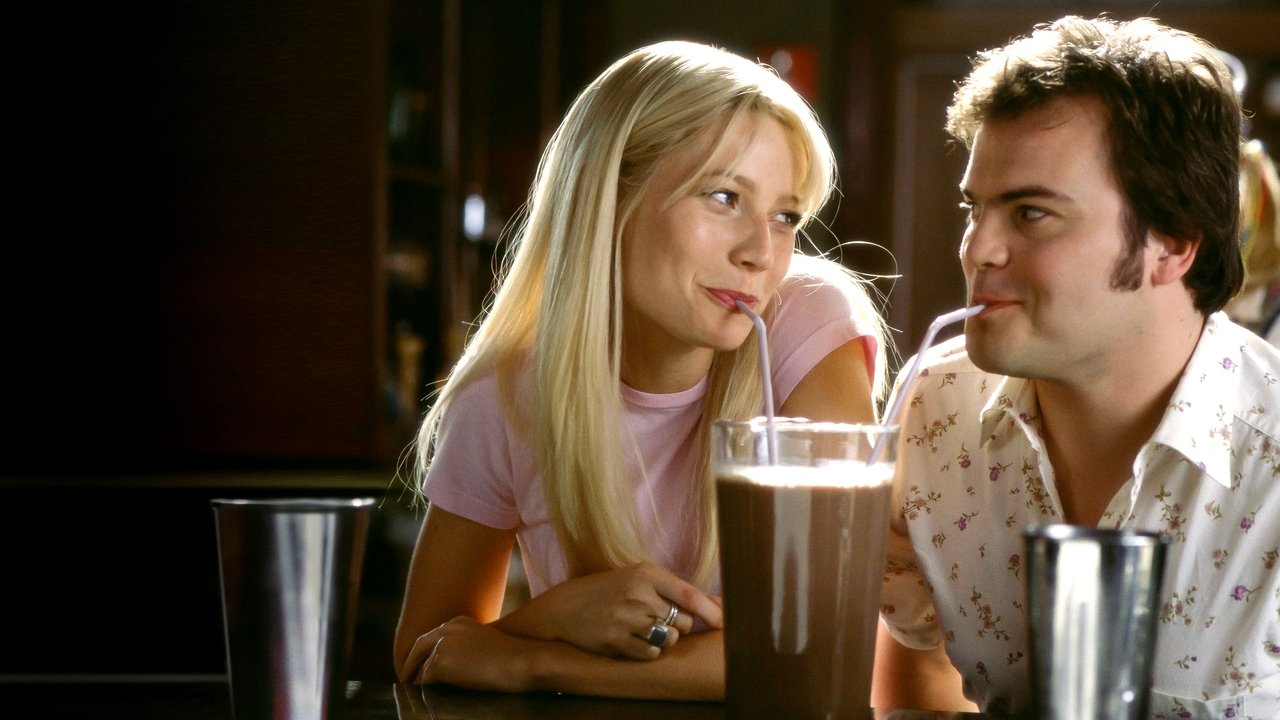
We have to talk about the elephant in the room—or rather, the "fat suit." In the early 2000s, putting a thin A-list actress in prosthetic makeup was seen as a transformative feat of "acting." Today, it’s a cultural lightning rod. Gwyneth Paltrow delivers a performance that is remarkably soft and understated, especially considering the chaotic energy surrounding her. She plays Rosemary with a heartbreaking expectation of rejection that feels incredibly real.
Apparently, Paltrow actually wore the makeup out in public during filming to "test" the character. She later recounted how people wouldn't even make eye contact with her, treating her as if she were invisible or a nuisance. That real-world cruelty bleeds into the film’s better moments. When the Farrelly brothers stop trying to make jokes about Rosemary breaking things and instead focus on the quiet indignity of how the world treats her, the movie shifts from a comedy to a surprisingly heavy drama.
However, the film often trips over its own shoelaces. It wants to tell you that "beauty is internal" while simultaneously using plus-sized bodies as the visual punchline for its "shock" humor. It’s the cinematic equivalent of someone giving you a sincere compliment and then immediately farting. It creates a tonal whiplash that I found much harder to ignore in 2024 than I did in 2001.
A Legacy of Good Intentions and Bad Jokes
Despite the dated execution, there’s a soul to Shallow Hal that's missing from a lot of modern, "sanitized" comedies. The Farrelly brothers have always had a penchant for casting people with actual disabilities and unique physicalities—not to mock them, but to include them in the world of the film. Look at Rene Kirby, who plays Walt. Kirby has spina bifida and walks on all fours, and the movie treats him with a casual, cool-guy respect that felt groundbreaking for a blockbuster.
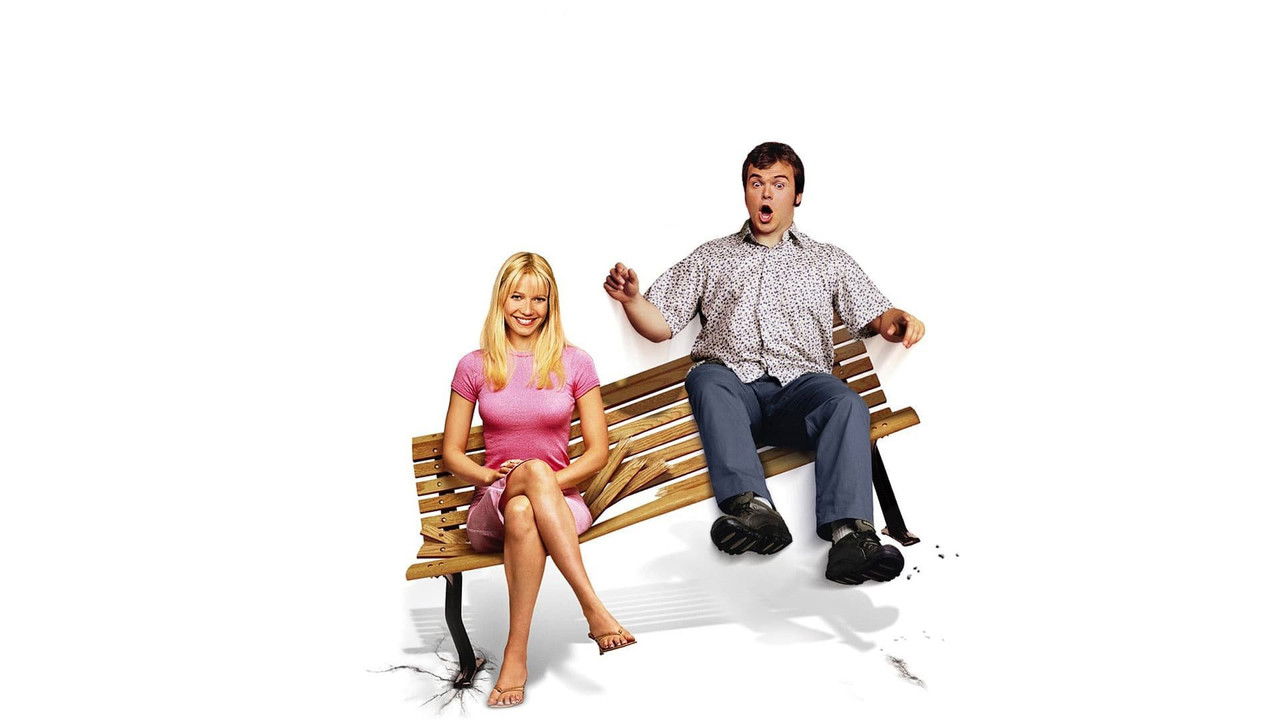
Financially, the film was a massive hit, raking in over $141 million against a $40 million budget. It captured a moment where audiences were hungry for something that felt "nice," even if the path to that niceness was paved with prosthetic latex and questionable jokes. It was the #2 movie in America on its opening weekend, proving that the Farrelly brand still had immense pull even when they swapped the hair gel for life lessons.
Looking back, Shallow Hal is a fascinating artifact of the DVD era. It’s a film that earns its emotional beats in spite of its script, largely thanks to Jack Black’s puppy-dog eyes and Gwyneth Paltrow’s gentle dignity. It’s messy, it’s occasionally offensive, and it’s deeply empathetic in the strangest possible ways.
The film is a time capsule of a transition period in Hollywood—a bridge between the "anything goes" 90s and the more socially conscious 2010s. It doesn't always age well, and some of the sight gags feel genuinely mean-spirited, but the central performances carry a weight that the script doesn't always deserve. If you can look past the 2001-era "gross-out" tropes, you'll find a movie that is trying, however clumsily, to say something kind. It’s a flawed film about flawed people, and maybe that’s why it still lingers in the memory.

Keep Exploring...
-

There's Something About Mary
1998
-

17 Again
2009
-
Just My Luck
2006
-
Hall Pass
2011
-
Sliding Doors
1998
-
The Family Man
2000
-
Just Like Heaven
2005
-

Phenomenon
1996
-
Chocolat
2000
-
About a Boy
2002
-
Freaky Friday
2003
-
The Princess Diaries 2: Royal Engagement
2004
-
The Heartbreak Kid
2007
-
Dumb and Dumber
1994
-
Ghost Town
2008
-

Ruby Sparks
2012
-
Dumb and Dumber To
2014
-
City of Angels
1998
-
Stepmom
1998
-
Me, Myself & Irene
2000