Swordfish
"Log on. Hack in. Steal everything."
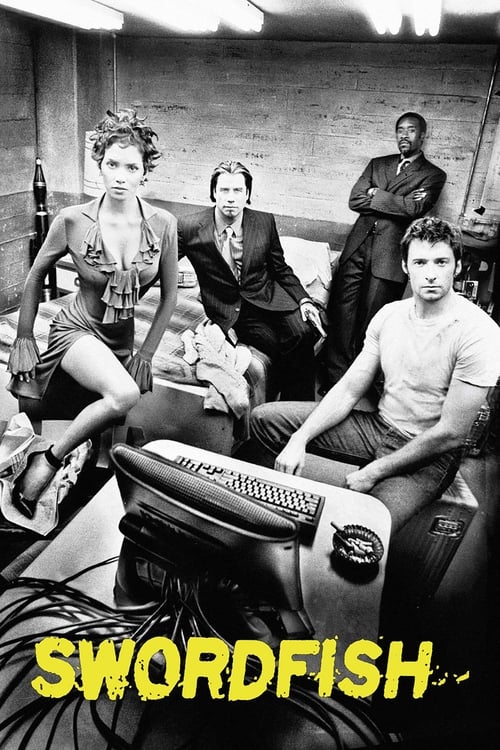
There is a moment early in Swordfish where the screen literally stands still, frozen in a 360-degree "bullet time" explosion that sends debris, bodies, and ball bearings hurtling toward the lens. It was 2001, the height of the post-Matrix fever dream, and director Dominic Sena (fresh off the neon-soaked Gone in 60 Seconds) wanted us to know that physics were merely a suggestion. Looking back, this film is the ultimate time capsule of Y2K "cool"—a high-gloss, techno-thriller where the hackers look like movie stars and the villains give monologues about the decline of modern cinema.
I watched this last Tuesday on a laptop while waiting for my toaster to finish a particularly thick bagel, and I found myself typing rhythmically along with the hacking scenes as if I, too, could crack a government mainframe with a catchy techno beat playing in my head.
The Art of the Impossible Hack
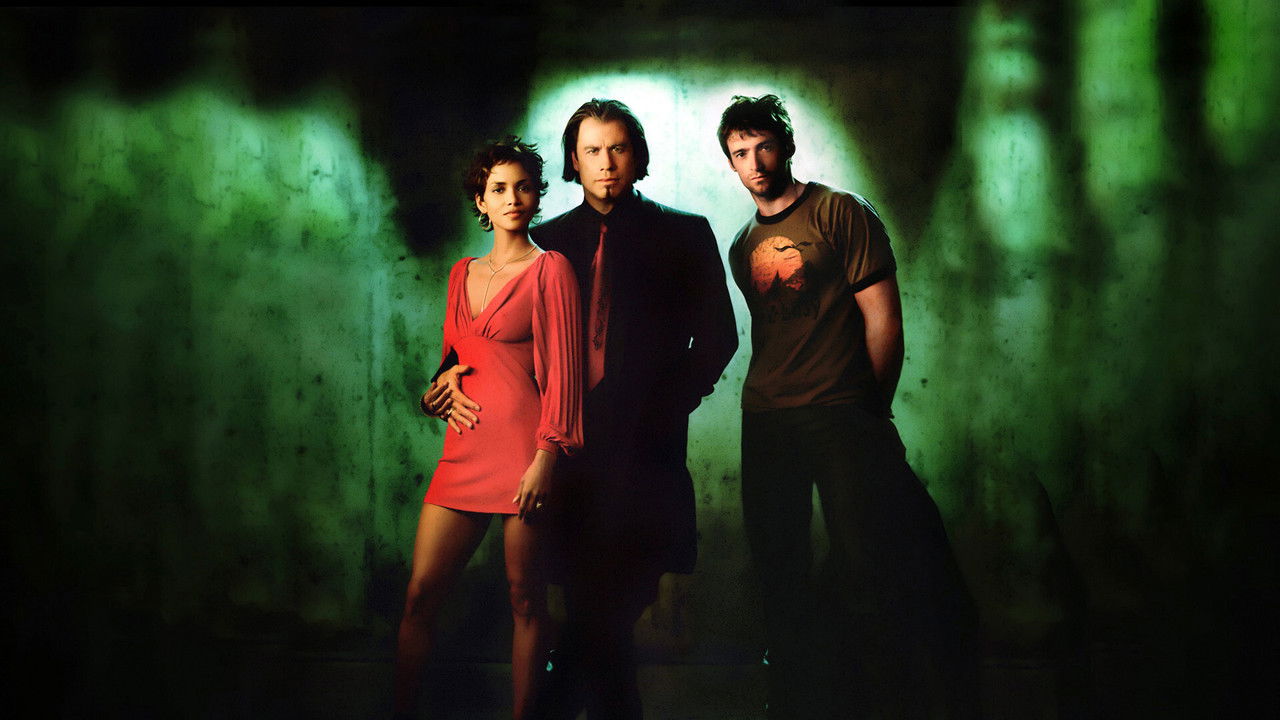
At the center of this chaos is Hugh Jackman, who was just beginning his ascent to superstardom. As Stanley Jobson, a world-class hacker living in a trailer and banned from touching a keyboard, he’s recruited by the mysterious Ginger (Halle Berry) to work for a shadowy operative named Gabriel Shear. John Travolta plays Gabriel with a soul patch that deserves its own billing and a wardrobe that screams "Euro-trash mastermind."
The plot involves stealing $9 billion from a dormant government slush fund to finance a private war on terror. It’s a premise that feels very of-the-moment for 2001—wrestling with themes of surveillance and dirty wars just months before those conversations became the daily news. But Swordfish isn’t interested in a somber debate. It wants to show you Hugh Jackman trying to crack a 512-bit encryption while a gun is held to his head and a woman is... well, distracting him. It is peak Hollywood absurdity. The hacking scenes are essentially interpretive dance for nerds.
Practical Chaos and Digital Dreams
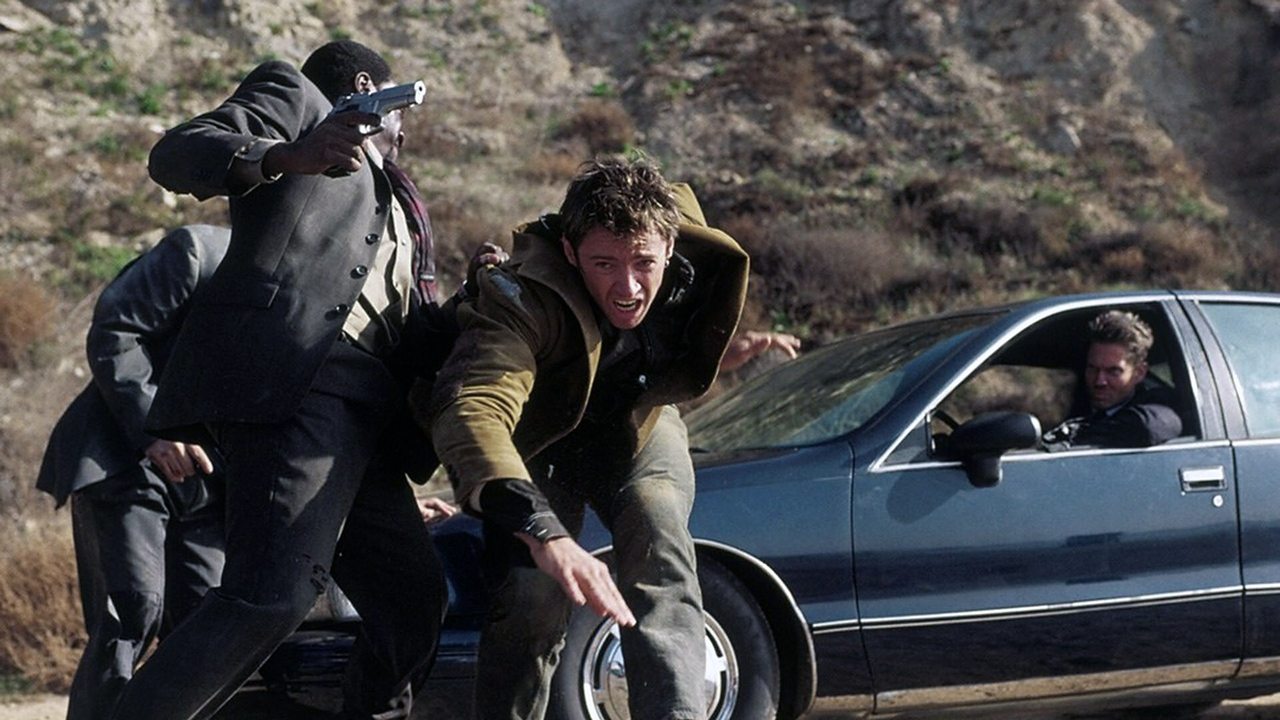
While the hacking is pure fantasy, the action sequences in Swordfish actually have some serious practical muscle behind them. Producer Joel Silver wasn’t afraid to spend money, and it shows. The climax features a full-sized transit bus being airlifted through the skyscrapers of downtown Los Angeles by a heavy-lift Sikorsky helicopter. This wasn't some early-2000s CGI shortcut; they actually dangled a bus from a crane to get those shots.
The cinematography by Paul Cameron (who also shot Collateral) gives the film a high-contrast, greenish-blue tint that was the visual shorthand for "the internet age" back then. It feels slick, expensive, and just a little bit greasy. The score by Christopher Young and Paul Oakenfold provides the perfect thumping backdrop, ensuring the momentum never drops, even when the logic does.
A Cult of Aesthetic and Excess
Why does Swordfish still hold a place in the hearts of genre fans? It’s partly because it refuses to be boring. John Travolta is leaning into a very specific brand of hammy villainy that he perfected in Face/Off, and his opening monologue about the movie Dog Day Afternoon is genuinely compelling, even if it feels like it belongs in a Tarantino flick. Then there's the supporting cast: Don Cheadle as the frustrated agent Roberts and Vinnie Jones as a monosyllabic thug named Marco. They all seem to understand exactly what kind of movie they are in.
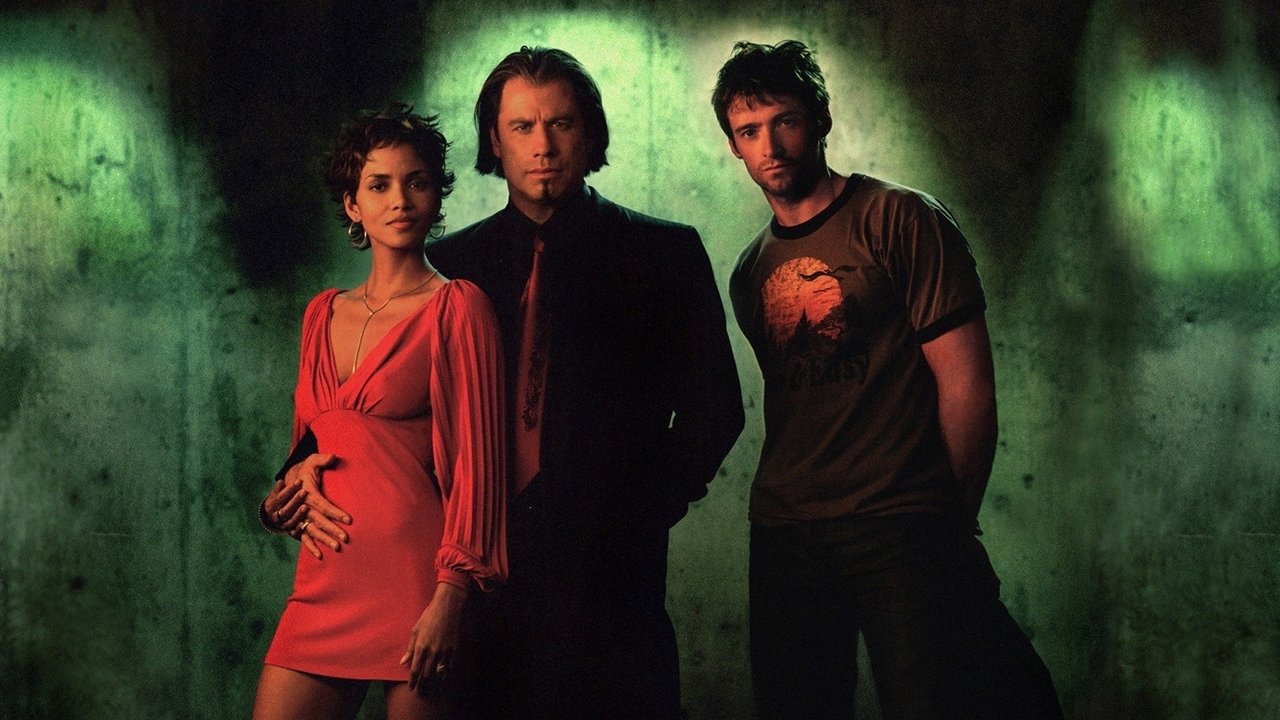
The film has also earned a bit of "cult" notoriety for its behind-the-scenes trivia. Apparently, the legendary 360-degree opening explosion required an array of 135 still cameras firing in sequence—a massive technical undertaking at the time. There was also the much-publicized story that Halle Berry received a $500,000 bonus just to appear topless for a few seconds, a detail that feels like a relic of a very specific era of studio marketing. Even the casting had its quirks; Hugh Jackman reportedly took typing classes to make his "hacking" look more convincing, though I’m not sure any amount of training could make "typing really fast while sweating" look like actual computer science.
The film is a fascinating relic of a time when we weren't quite sure what the internet was, but we were certain it involved glowing cubes and 3D interfaces. It’s flashy, it’s loud, and Travolta’s facial hair looks like a fuzzy caterpillar lost its way. Yet, there is a craft to the madness that makes it infinitely watchable. It captures that pre-9/11 sense ofinvincibility and the early digital era's obsession with style over substance. If you’re looking for a thrill ride that doesn’t ask for much brain power but gives you plenty of practical explosions and scenery-chewing, Swordfish is a vintage log-in worth making.
Keep Exploring...
-
Gone in Sixty Seconds
2000
-

Basic
2003
-
From Paris with Love
2010
-
Con Air
1997
-
The Jackal
1997
-
Lethal Weapon 4
1998
-
Ronin
1998
-

The Negotiator
1998
-
Spy Game
2001
-
S.W.A.T.
2003
-

16 Blocks
2006
-

The Fast and the Furious: Tokyo Drift
2006
-
From Dusk Till Dawn
1996
-
Once Upon a Time in Mexico
2003
-
Cellular
2004
-
Crank
2006
-

X-Men: The Last Stand
2006
-
The Taking of Pelham 1 2 3
2009
-
Gangster Squad
2013
-
RED 2
2013